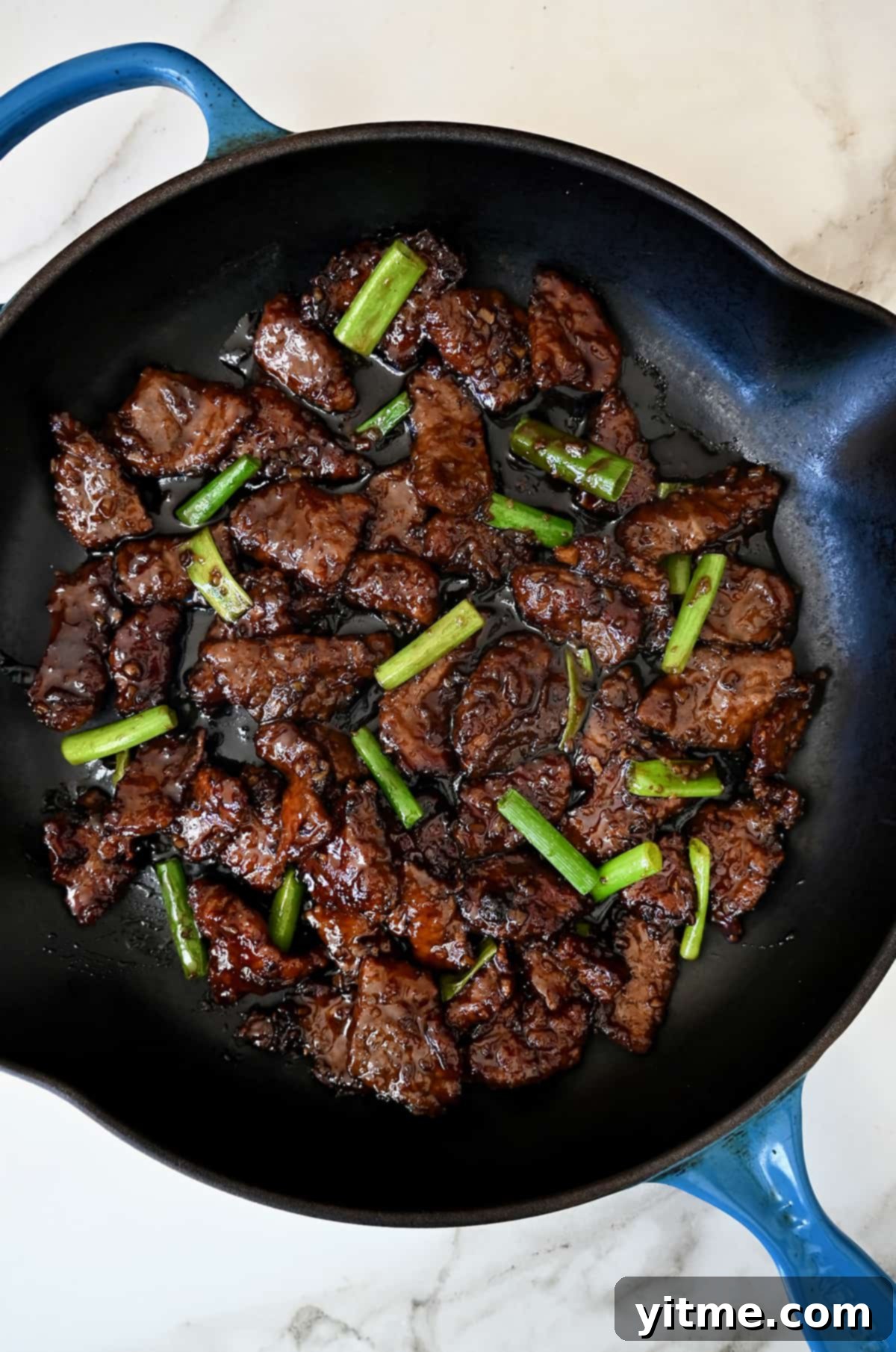
Homemade Mongolian Beef: A 30-Minute Recipe for Tender, Sticky, and Irresistible Takeout Flavor
Embark on a culinary journey to create an effortless and incredibly delicious **Mongolian Beef** at home. This recipe offers a healthier, quicker take on a beloved restaurant classic, delivering tender slices of beef enveloped in a sweet, tangy, and utterly addictive sticky sauce. Forget the long wait for takeout; with just 30 minutes, you can serve this incredible dish over fluffy rice alongside a vibrant side of garlic bok choy for a truly satisfying and memorable meal.
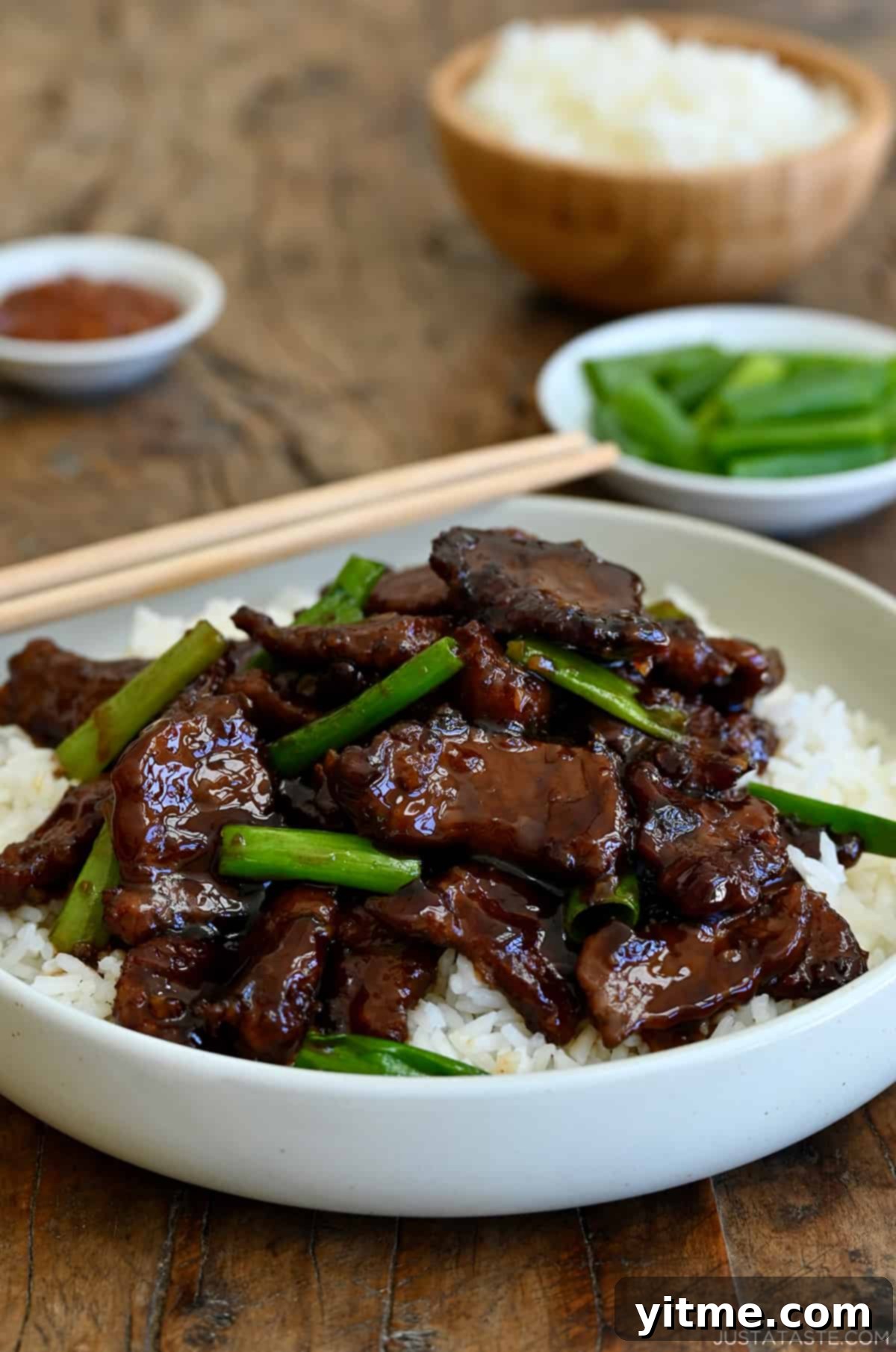
Table of Contents
- What is Mongolian Beef?
- The Secret to Tender Beef: Velveting
- Key Ingredients
- How to Make Mongolian Beef
- Tips for Recipe Success
- Common Questions
- More Asian-Inspired Recipes You’ll Love
- 30-Minute Mongolian Beef Recipe
What is Mongolian Beef?
Despite its name, Mongolian Beef is not actually from Mongolia, but rather a popular stir-fry dish commonly found in Chinese-American restaurants. It’s a testament to the creativity of fusion cuisine, combining Asian flavors with American culinary preferences. At its heart, this simple stir-fry features thinly sliced flank steak, which becomes incredibly tender when cooked properly. The beef is then coated in a rich, glossy sauce made primarily from fresh garlic, pungent ginger, robust dark brown sugar, and savory soy sauce. The result is a perfect balance of sweet and savory notes, with a slight tang that makes it utterly irresistible. This homemade version captures all the authentic flavors you love from your favorite takeout spot, but with the added satisfaction of cooking it yourself in under 30 minutes!
The Secret to Tender Beef: Velveting
One of the hallmarks of truly excellent Chinese beef dishes is the remarkable tenderness of the meat. This is often achieved through a traditional technique known as “velveting.” Velveting typically involves marinating meat in a mixture of egg white, cornstarch, and sometimes a splash of sherry or rice wine. This process creates a protective coating around the meat, locking in moisture and ensuring it remains incredibly succulent during high-heat cooking like stir-frying.
While traditional velveting can be a multi-step process, this recipe utilizes an abridged, simplified version focusing on the power of cornstarch. By tossing thinly sliced steak with cornstarch, you still achieve a tender texture that mimics the restaurant-style mouthfeel, without the extra fuss. The cornstarch not only helps to tenderize the meat but also plays a crucial role in thickening the sauce, creating that signature rich, sticky glaze that clings perfectly to every piece of beef.
And for a complete homemade takeout experience, don’t forget the homemade fortune cookies for dessert!
Key Ingredients
Creating an outstanding Mongolian Beef starts with quality ingredients. Here’s a closer look at what makes this dish truly special:
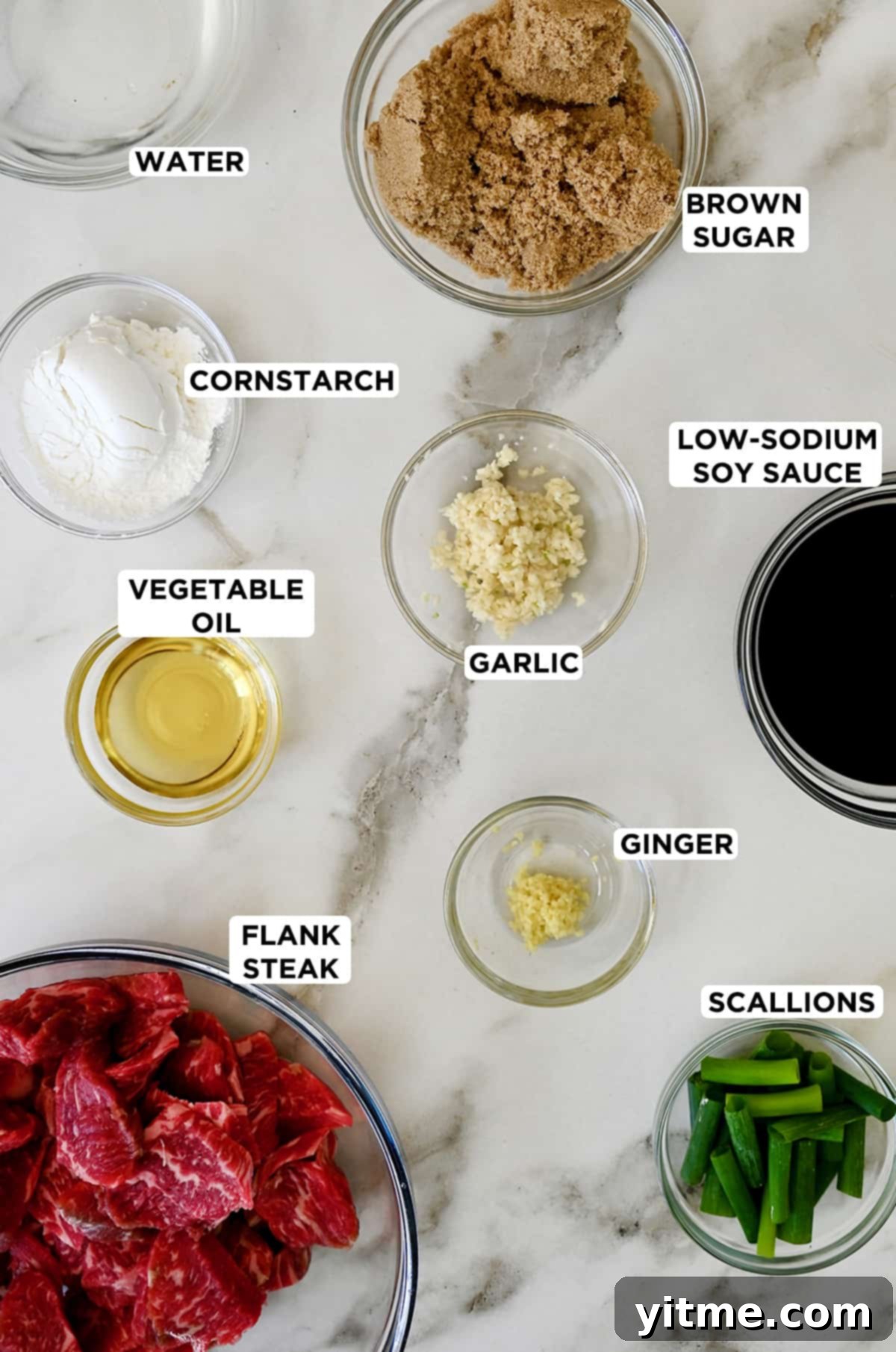
- Garlic: A cornerstone of many Asian cuisines, garlic infuses the sauce with a pungent, robust, and aromatic foundation. Freshly minced garlic is always recommended for the best flavor, adding depth and a zesty kick.
- Ginger: For unparalleled warmth and a distinct spicy-sweet note, always opt for fresh ginger. Its bright, zesty profile elevates the sauce. While ground ginger can be used in a pinch, remember it’s more concentrated, so use it sparingly to avoid overpowering the dish. Peel and mince it finely to release its full aromatic potential.
- Low Sodium Soy Sauce: This is the liquid backbone of our Mongolian Beef sauce, providing essential saltiness and a rich umami flavor. Similar to my recipe for beef and broccoli, selecting low-sodium soy sauce is absolutely critical. Regular soy sauce has a much higher salt content and will result in a final dish that is overpoweringly salty. Low-sodium allows you to control the seasoning precisely.
- Dark Brown Sugar: This ingredient is key to achieving the signature sweet and slightly caramelized flavor of Mongolian Beef. The molasses content in dark brown sugar not only provides a deeper, richer sweetness compared to light brown or white sugar, but it also contributes significantly to the beautiful, dark, sticky glaze of the sauce.
- Flank Steak: The star of the show, flank steak is an excellent choice for stir-fries due to its robust flavor and lean texture. The secret to its tenderness lies in slicing it thinly and *against the grain*. This technique shortens the muscle fibers, making each bite incredibly tender. If flank steak isn’t available, sirloin or skirt steak are fantastic, tender substitutes that will also cook quickly and absorb the flavors beautifully.
- Cornstarch: A dual-purpose ingredient! Cornstarch works wonders as a tenderizer for the beef, especially when performing the “abridged velveting” technique. More importantly, it acts as the primary thickening agent for the sauce, transforming it into that luscious, syrupy glaze that coats every piece of beef perfectly.
- Scallions: Also known as green onions, scallions add a fresh, mild onion flavor and a delightful textural contrast to the finished dish. They also provide a vibrant pop of color. While I generally prefer using only the bright green parts for a milder taste, if you enjoy a more pronounced onion flavor, feel free to incorporate the white parts as well. They are typically added at the very end to retain their freshness and slight crunch.
Pro Tip for Cooking Oil: When stir-frying, selecting the right oil is paramount. Opt for a neutral-flavored oil with a high smoke point, such as vegetable oil, canola oil, grapeseed oil, or even peanut oil (if no allergies). These oils can withstand the high heat necessary for quick searing and stir-frying without burning, ensuring your beef gets a crisp, golden-brown exterior and your flavors remain clean and unadulterated.
How to Make Mongolian Beef
Achieving restaurant-quality Mongolian Beef at home is simpler than you might think. With this easy-to-follow recipe, you can recreate the magic of your favorite Chinese restaurant right in your own kitchen.
- Prepare the Sauce: Begin by building the flavor foundation. In a small saucepan, heat 2 tablespoons of vegetable oil over medium-low heat. Add the minced garlic and ginger, and gently sauté them for approximately 2 minutes until they become fragrant and lightly golden. Be careful not to burn them, as this can turn their flavor bitter. Next, pour in the low-sodium soy sauce and water, stirring well to combine all the aromatic components. Finally, stir in the dark brown sugar until it completely dissolves. Increase the heat to medium and bring the sauce mixture to a gentle boil for 3 minutes, allowing the flavors to meld and the sauce to slightly reduce. Once boiled, remove the sauce from the heat and set it aside; it will be ready to transform your beef later.
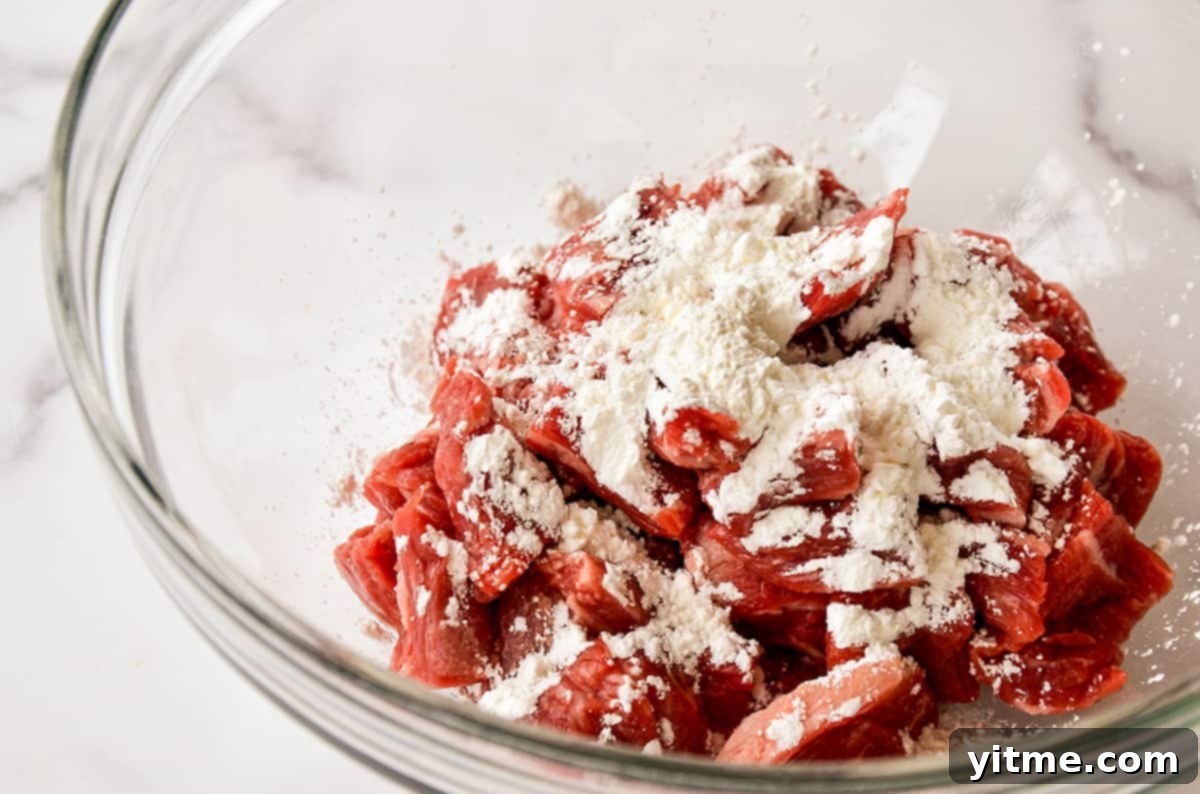
- Prepare the Flank Steak for Tenderness: The secret to melt-in-your-mouth Mongolian Beef is in the preparation of the meat. Slice the flank steak against the grain into thin, 1/4-inch pieces. Slicing against the grain is crucial as it shortens the tough muscle fibers, ensuring maximum tenderness. Once sliced, toss the beef thoroughly with the cornstarch, making sure each piece is lightly coated. Transfer the coated steak pieces to a sieve and gently shake off any excess cornstarch. This prevents the cornstarch from clumping in the pan and helps create a better sear. Allow the steak to sit for 10 minutes; this resting period further aids in tenderizing the meat and allows the cornstarch to adhere properly.
- Cook the Steak to Perfection: Line a clean plate with paper towels to absorb any excess oil from the cooked beef. Now, heat ⅓ cup of vegetable oil in a large skillet or a wok over medium-high heat until it is hot but not smoking (a slight shimmer is ideal). Carefully add the prepared beef to the hot pan in a single layer, ensuring not to overcrowd it. Cook the beef for about 2 minutes, sautéing until it is beautifully seared and browned on all sides but still slightly pink or barely cooked in the center. Overcooking at this stage will make the beef tough. Using a slotted spoon, swiftly remove the seared steak from the skillet and transfer it onto the paper towel-lined plate. Carefully pour out any excess oil from the skillet, leaving just a thin film for the sauce.
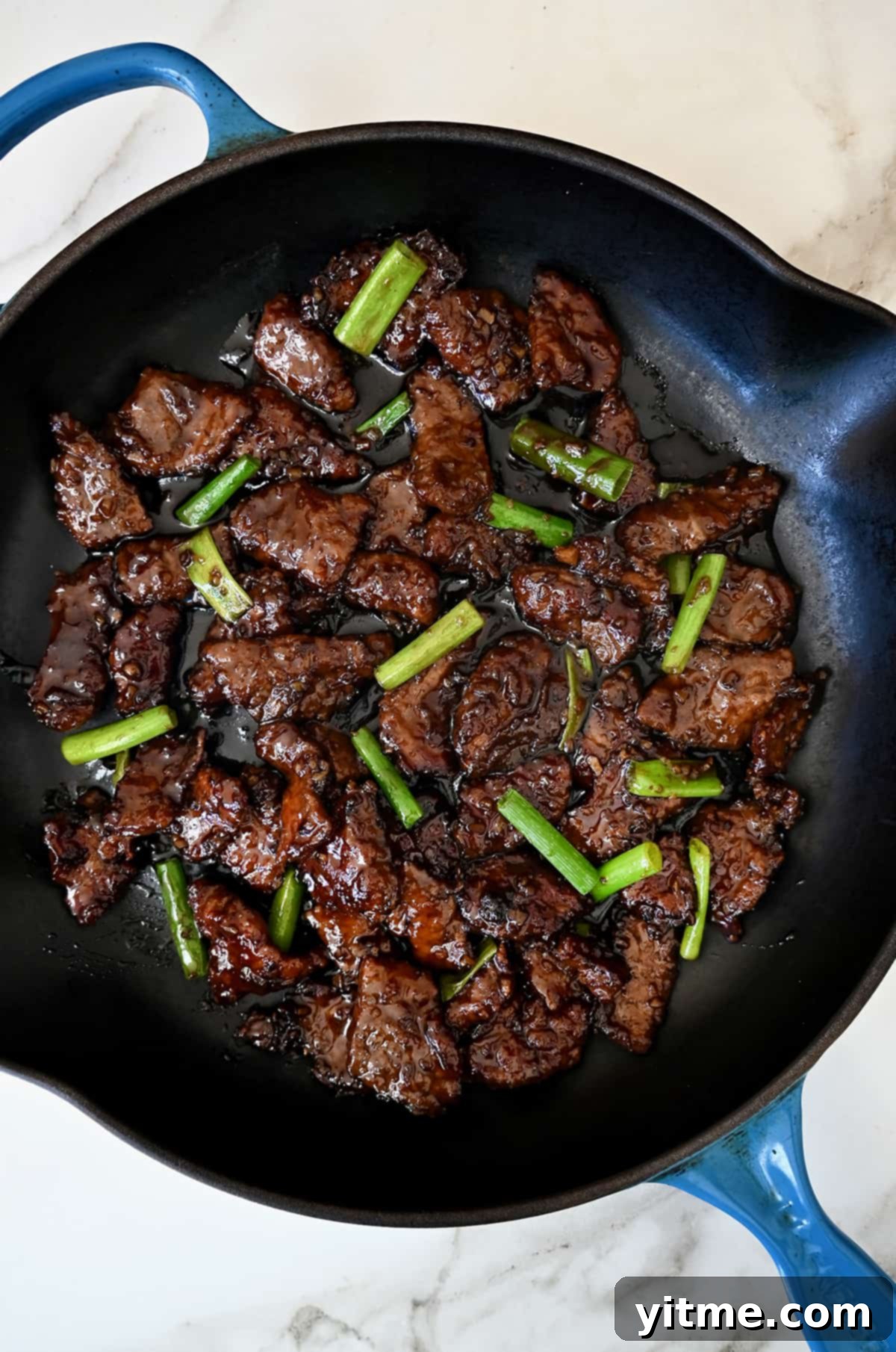
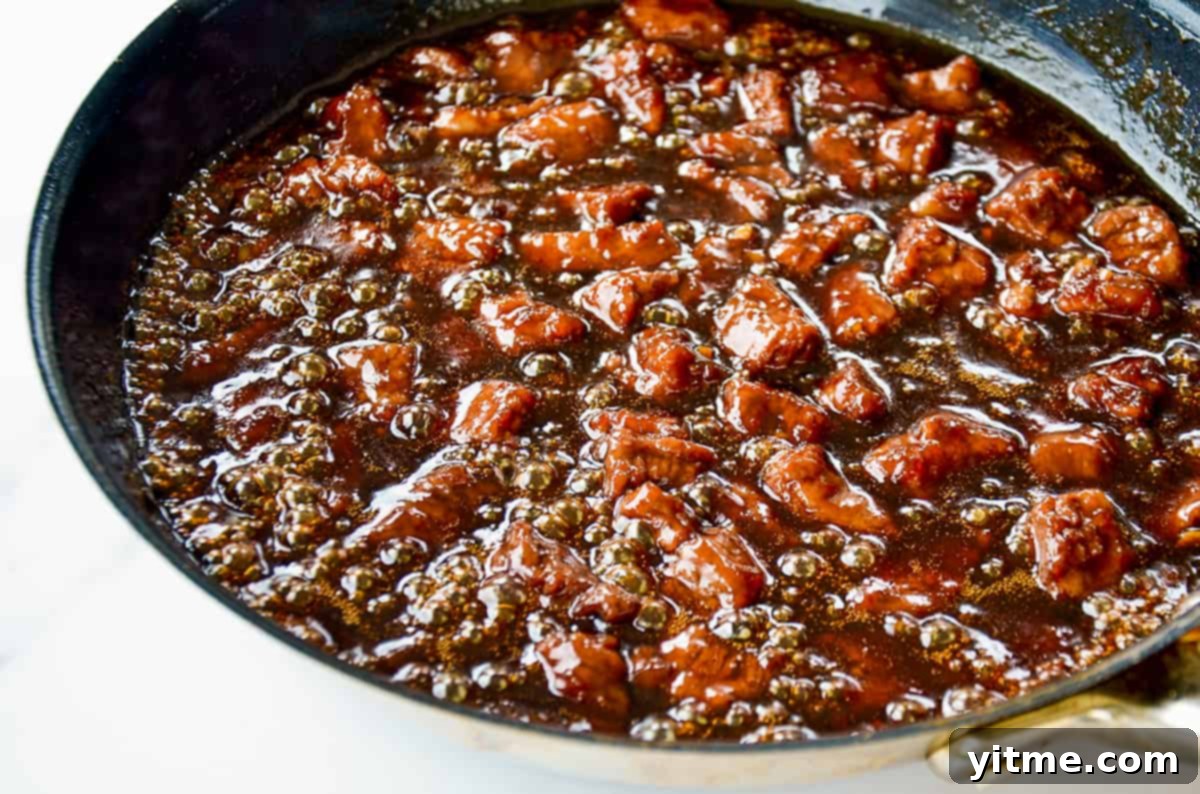
- Finish the Dish with the Sticky Sauce: Return the skillet to medium heat. Immediately pour the reserved, prepared sauce into the hot pan. It should come to a boil almost instantly. Add the seared steak back into the pan with the bubbling sauce. Continue to cook at a boil, stirring constantly, for 3 to 5 minutes. During this time, the cornstarch in the sauce will activate and thicken, transforming it into a rich, glossy, syrupy consistency that perfectly coats the beef. The constant stirring ensures even thickening and prevents sticking.
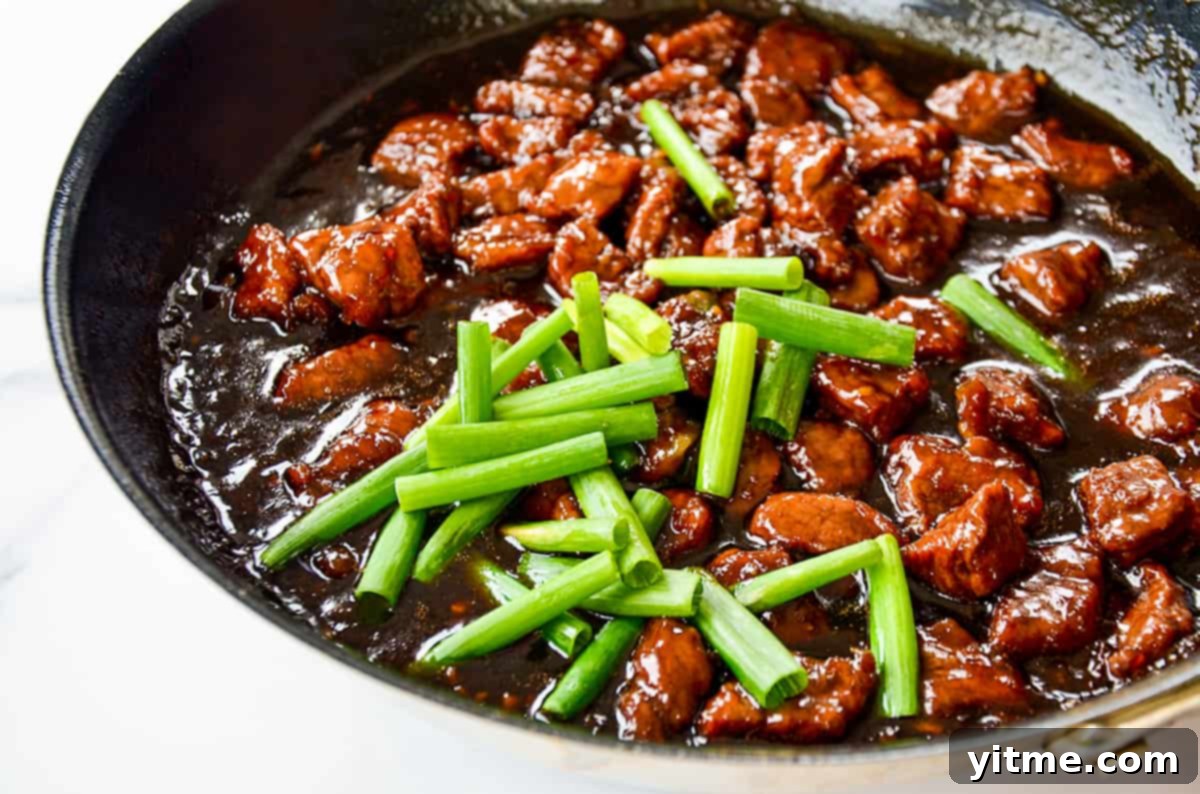
- Add Fresh Scallions and Serve: Once the sauce has reached its desired syrupy thickness and beautifully coats the beef, add the freshly sliced scallions. Stir them gently to combine, allowing their mild onion flavor and vibrant color to integrate into the dish.
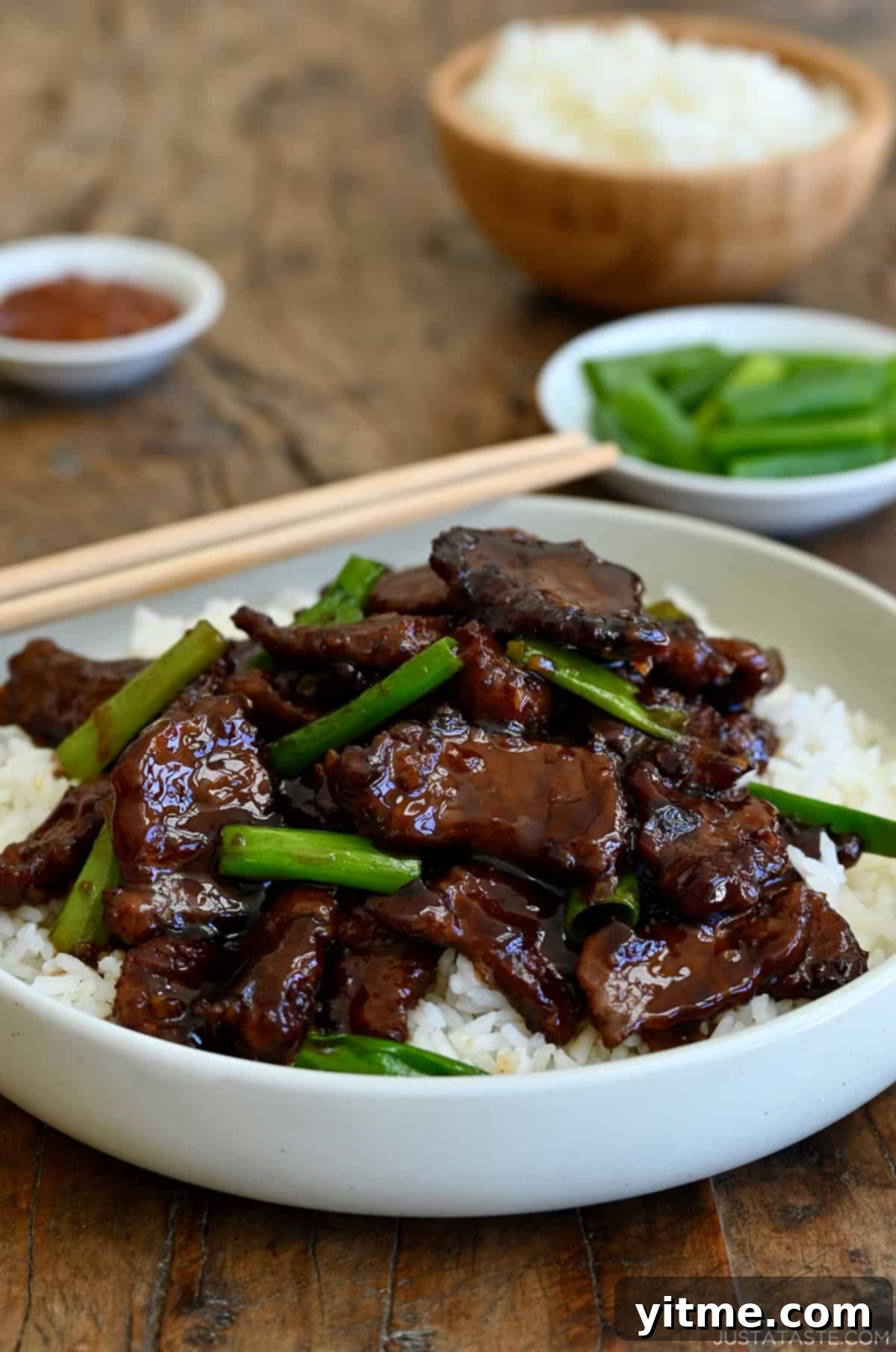
- Serving Suggestions: Your delicious homemade Mongolian Beef is now ready to be enjoyed! For the ultimate experience, serve it immediately over a generous bed of warm steamed white rice or brown rice, or even with noodles like lo mein. To complete the meal and add extra nutrients, pair it with a side of crisp vegetables, such as Chinese garlic green beans or tender garlic bok choy. With minimal prep time and swift cooking, you’ll have a restaurant-quality Asian-inspired dinner on your table in under 30 minutes!
Tips for Recipe Success
- Slice Against the Grain for Maximum Tenderness: This is arguably the most crucial step for tender beef. Flank steak has long muscle fibers. By slicing thinly *against* these fibers, you effectively shorten them, resulting in meat that is far easier to chew and more enjoyable. Always look at the direction of the lines in the meat and cut perpendicular to them.
- High Heat for Quick Cooking and Searing: Stir-frying relies on intense heat. Use high heat when cooking the steak for a rapid sear. This quick cooking locks in the meat’s natural juices, preserving tenderness, and creates a beautiful caramelization on the exterior of the beef, adding depth of flavor and appealing texture. Don’t be afraid to let your wok or skillet get hot!
- Avoid Overcrowding the Pan: This is a common mistake in stir-frying. If you add too much beef to the pan at once, the temperature of the oil will drop significantly. Instead of searing, the beef will steam, resulting in a gray, tough, and unappetizing texture. To ensure each slice gets golden brown and crispy, cook the beef in batches if necessary, allowing ample space around each piece for optimal browning.
- Bring the Sauce to a Full Boil: The cornstarch in the sauce mixture is essential for thickening, but it only activates and achieves its full potential once it reaches a rolling boil. If your sauce isn’t thickening, it likely hasn’t boiled long enough or at a high enough temperature. Continue to boil and stir until it reaches that perfect syrupy consistency.
- Experiment with Additional Heat: If you enjoy a bit of a kick, personalize your Mongolian Beef with some spice! Introduce a touch of heat by adding dried Thai chilies (for a more authentic touch), crushed red pepper flakes (easily adjustable), or a dollop of chili sauce like sriracha or sambal oelek during the final stages of cooking the sauce.
- Swap Beef for Chicken or Pork: For a delicious variation, you can easily substitute the flank steak with thinly sliced chicken breast or thigh, or even pork tenderloin. Adjust cooking times accordingly; chicken and pork often cook slightly faster than beef. Ensure they are cooked through before combining with the sauce.
- Mise en Place is Your Best Friend: “Mise en place” means “everything in its place” in French, and it’s vital for stir-fries. Have all your ingredients prepped, measured, and ready before you start cooking. Stir-fries cook very quickly, so there’s no time to chop vegetables or measure sauces once the pan is hot.
- Don’t Skimp on Fresh Aromatics: Freshly minced garlic and ginger make an enormous difference in the final flavor. While powdered versions can be used in a pinch, they won’t provide the same vibrant, pungent aroma and taste.

Common Questions About Mongolian Beef
Absolutely! While flank steak is traditional and highly recommended for its flavor and texture, other quick-cooking cuts of beef work wonderfully. Sirloin steak, skirt steak, or even beef tenderloin, when sliced thinly against the grain, can be excellent substitutes. The key is thin slicing and quick cooking to ensure tenderness.
Certainly! The beauty of homemade dishes is customization. You can easily adjust the quantity of dark brown sugar to perfectly tailor the sweetness to your personal preference. Start with half the amount and add more gradually, tasting as you go, until you reach your desired balance of sweet and savory.
Yes, preparing the sauce ahead of time is a great time-saving trick for busy weeknights! You can whisk together all the sauce ingredients (vegetable oil, garlic, ginger, soy sauce, water, brown sugar) and store it in an airtight container in the refrigerator for up to 3-4 days. When ready to use, simply reheat it gently, stirring well, and proceed with the recipe as directed. If it appears too thick after refrigeration, you can thin it with a tablespoon of water or broth.
While Mongolian Beef is traditionally meat-focused, adding vegetables is a fantastic way to boost nutrition, color, and texture. Popular additions include thinly sliced bell peppers (any color), broccoli florets, snap peas, or even mushrooms. You can stir-fry these vegetables separately until crisp-tender before adding them to the pan with the beef and sauce, or incorporate them during the final minutes of cooking the beef.
Yes, you absolutely can! The main ingredient to watch out for is soy sauce. Simply substitute regular soy sauce with a high-quality gluten-free tamari or coconut aminos. Ensure all other ingredients, especially your chosen oil, are naturally gluten-free.
Mongolian Beef can be frozen, though the texture of the beef might change slightly upon reheating (it can become a little tougher). To freeze, allow the cooked dish to cool completely. Transfer it to an airtight, freezer-safe container. It can be frozen for up to 2-3 months. Thaw overnight in the refrigerator and reheat gently on the stovetop or in the microwave, adding a splash of water if the sauce is too thick.
More Asian-Inspired Recipes You’ll Love
If you enjoyed this quick and flavorful Mongolian Beef, you’re in for a treat! Explore more of our favorite Asian-inspired dishes that bring restaurant-quality taste right to your kitchen with minimal effort. From noodles to bowls, these recipes are perfect for expanding your culinary repertoire.
Easy Chicken Lo Mein
Quick Korean Beef Bowls
30-Minute Chicken and Broccoli Stir-Fry
Quick Caramelized Pork and Broccoli
Easy Beef Bulgogi Bowls
Quick Chicken Chow Mein
Craving more delicious and easy meal ideas? Subscribe to Just a Taste to get new recipes, meal plans, and a curated newsletter delivered straight to your inbox! And be sure to stay in touch on Facebook, TikTok, Pinterest, and Instagram for all the latest updates and culinary inspiration.
30-Minute Mongolian Beef
Ingredients
- 1/3 cup plus 2 Tablespoons vegetable oil
- 1 Tablespoon minced garlic
- 1/2 teaspoon minced fresh ginger
- 1/2 cup low sodium soy sauce
- 1/2 cup water
- 2/3 cup packed dark brown sugar
- 1 lbs flank steak
- 1/4 cup cornstarch
- 3 scallions sliced into 1-inch pieces (green parts only)
Instructions
- Heat 2 tablespoons vegetable oil in a small saucepan over medium-low heat. Add the garlic and ginger and sauté until golden, about 2 minutes. Add the soy sauce and water, stirring to combine.
- Stir in the brown sugar and increase the heat to medium. Bring the sauce to a boil for 3 minutes. Remove the sauce from the heat and set it aside.
- Slice the flank steak against the grain into 1/4-inch pieces, then toss it with the cornstarch. Place the coated pieces of steak in a sieve and shake off any excess cornstarch. Allow the steak to sit 10 for minutes.
- Line a plate with paper towels.
- Place a large skillet or wok over medium-high heat and add ⅓ cup vegetable oil. Once the oil is hot (but not smoking), add the beef to the pan and sauté until it is seared on all sides but barely cooked in the center, about 2 minutes. Remove the steak from the skillet with a slotted spoon and transfer it onto a paper towel-lined plate. Pour any excess oil out of the skillet.
- Place the skillet back over medium heat. Add the prepared sauce to the hot pan (it should come to a boil almost immediately), then add the reserved steak and cook at a boil, stirring constantly, until the sauce has thickened to the consistency of syrup, 3 to 5 minutes. Add the sliced scallions and stir to combine. Serve.
Kelly’s Notes
- This recipe will serve two to four people, depending on your preferred serving size. It can also be easily doubled.
- For maximum tenderness, slice the flank steak thinly against the grain. This technique shortens the muscle fibers, resulting in a more tender bite.
- The key to cooking with cornstarch is that it must come to a boil in order to work as a thickener and give the sauce the perfect syrupy consistency.
- For a tasty variation, swap out the beef with thinly sliced chicken.
- ★ Did you make this recipe? Don’t forget to give it a star rating below!
Nutrition
Did you try this recipe?
Leave a comment below with your star rating!