Effortless No-Knead Parmesan Black Pepper Focaccia: A Beginner’s Guide to Irresistible Bread
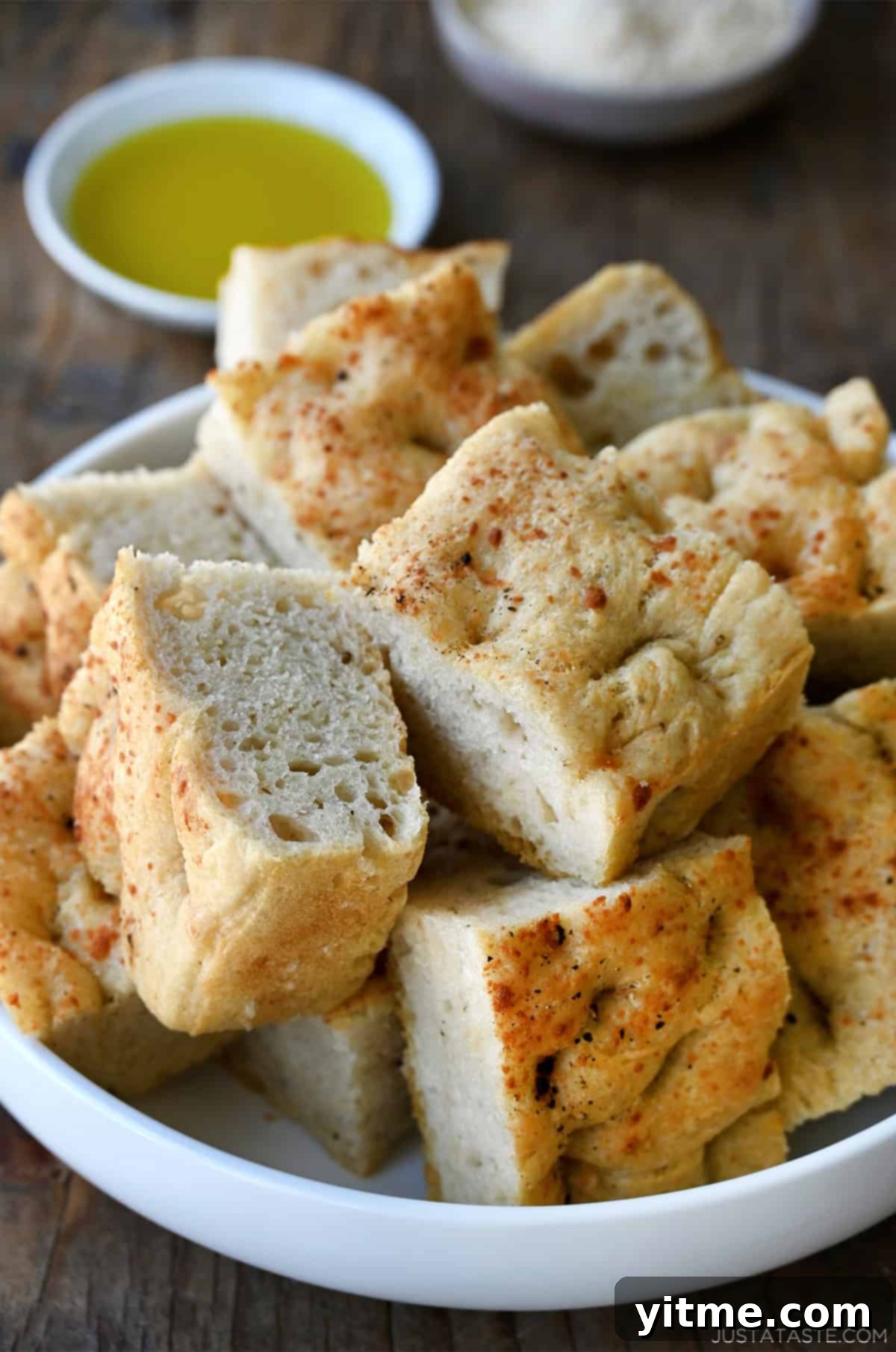
Unlock the secrets to baking truly exceptional bread with this incredibly easy no-knead focaccia recipe. Requiring absolutely zero advanced baking skills, this method guarantees maximum flavor and a delightful texture. Imagine pulling a golden-brown slab of focaccia from your oven, its edges perfectly crispy, yielding to a miraculously soft, airy, and pillowy center. This Parmesan Black Pepper Focaccia isn’t just a recipe; it’s an experience designed for beginners, promising impressive results that will have everyone reaching for another slice.
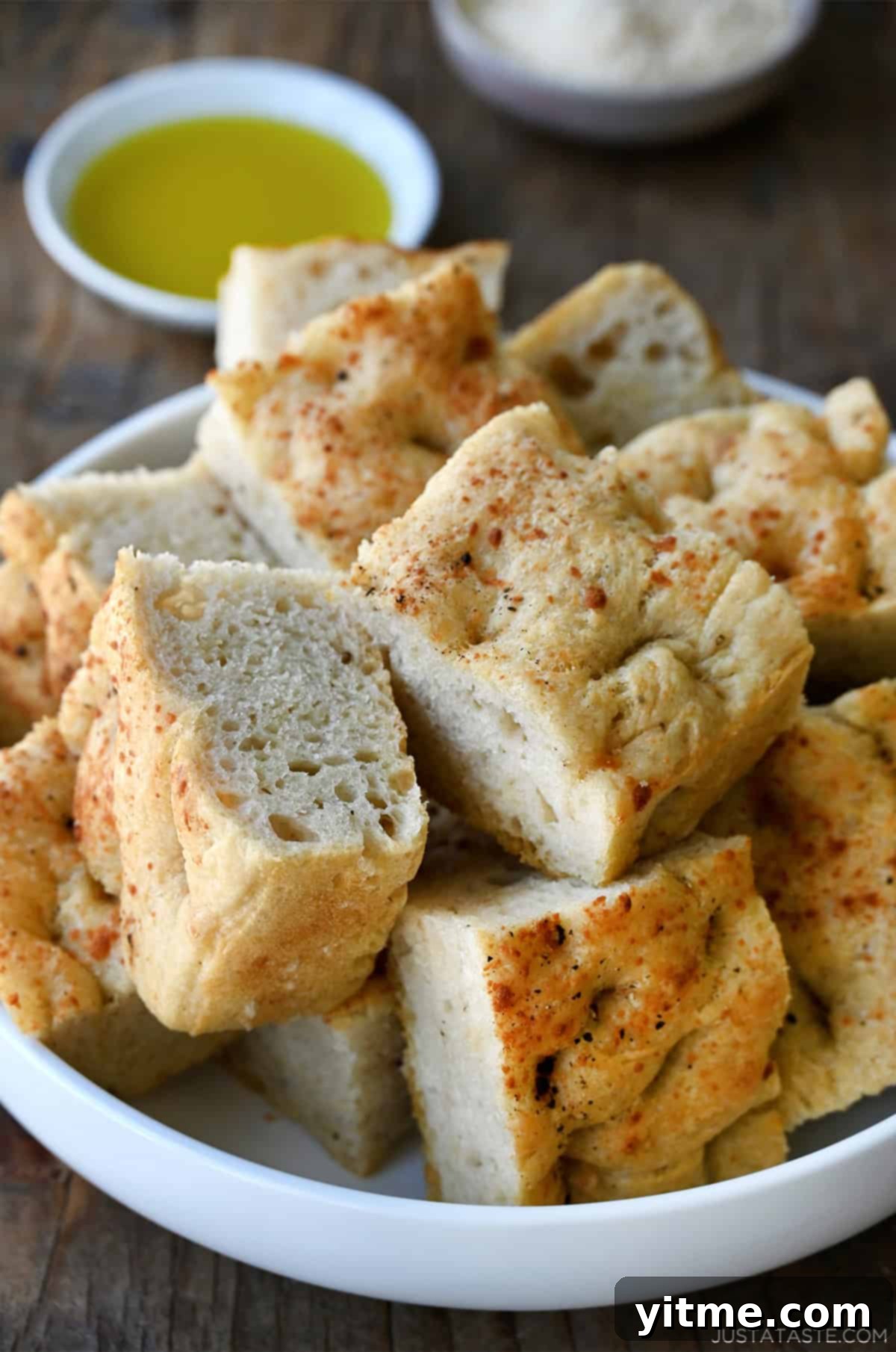
Table of Contents
- The Joy of No-Knead Baking
- Gather Your Focaccia Ingredients
- How to Make Focaccia Bread Step-by-Step
- Tips for Perfect Focaccia Every Time
- Exciting Focaccia Recipe Variations
- Storing & Reheating Leftover Focaccia
- More Delicious Bread Recipes You’ll Love
- Parmesan Black Pepper Focaccia Recipe
I’ve always had a special place in my heart for carbohydrates, and bread, in particular, has captivated me. Crafting the perfect thick, classic Italian focaccia bread became my latest culinary quest. After countless test batches and meticulous adjustments, I finally achieved what I consider to be focaccia perfection. My journey involved learning from initial attempts:
- Batch 1: Overly generous with flour, resulting in a dense, heavy loaf that lacked the characteristic lightness.
- Batch 2: Too much olive oil led to a frustratingly wet, unmanageable dough.
- Batch 3: The golden ticket! A beautiful focaccia with impeccably crispy, golden edges and that famously soft, airy, and irresistible center.
The truly revolutionary aspect of this recipe? There’s absolutely no need for a stand mixer or strenuous kneading. You’ll simply mix all the ingredients by hand, then let time and the magic of yeast do all the hard work. This makes it an ideal introduction to bread baking for anyone, regardless of their experience level. I’ve taken all the guesswork out of it, meticulously testing every detail so you can simply follow along and enjoy the delicious rewards.
I’ll be your guide, leading you step-by-step through the straightforward process of creating this wonderfully cheesy, peppery focaccia from scratch. Don’t let the seemingly long proofing time intimidate you! It’s a hands-off process, and the incredible flavor and texture you achieve are undeniably worth the wait. Once you’ve mastered this incredibly forgiving technique, you’ll find yourself wanting to bake this sensational Parmesan Black Pepper Focaccia for every possible occasion, from casual weeknight dinners to impressive gatherings.
Gather Your Focaccia Ingredients
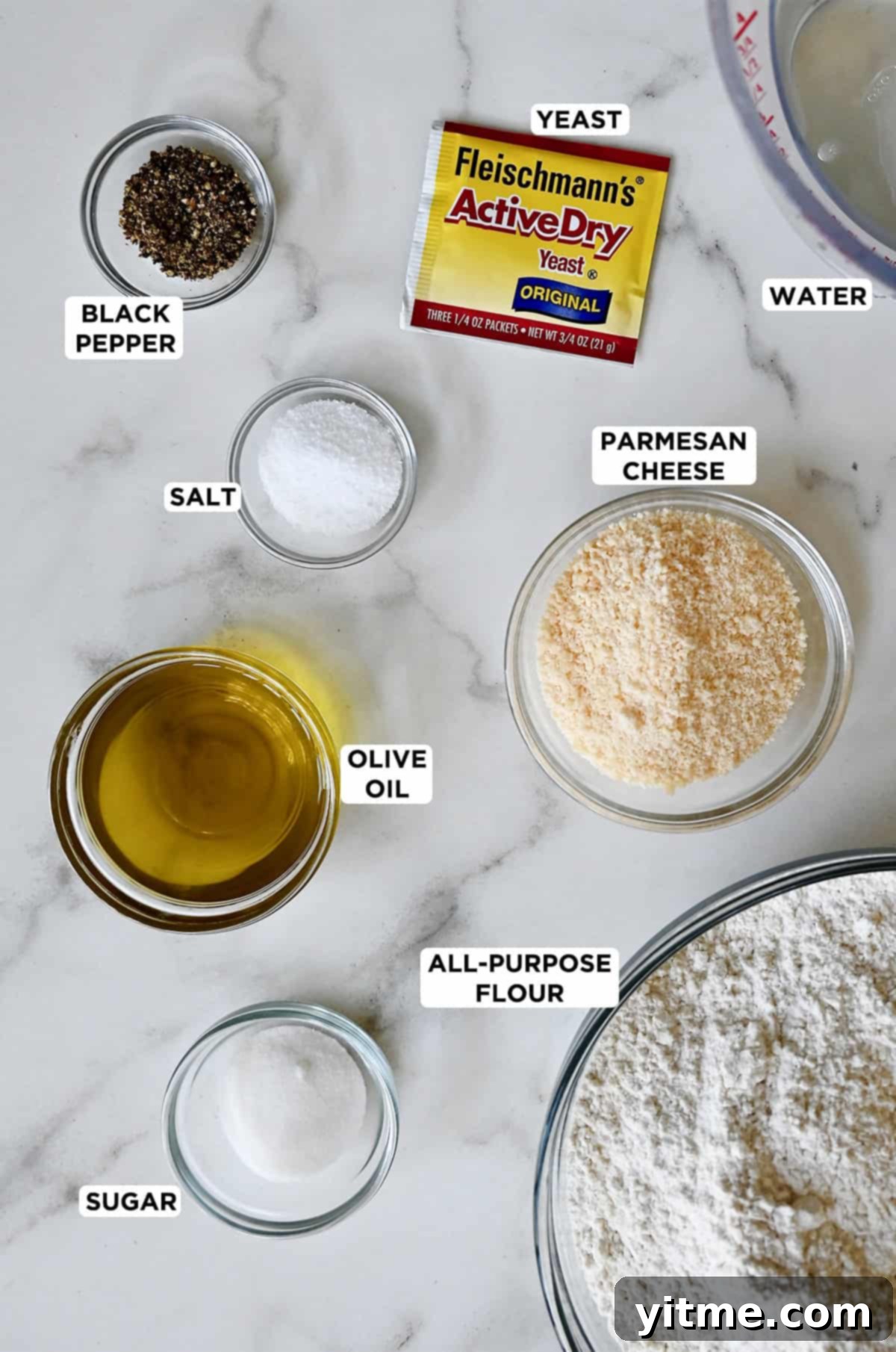
Crafting this flavorful focaccia starts with a few simple, high-quality ingredients. Each plays a crucial role in achieving the perfect texture and taste:
- Active Dry Yeast: This is the leavening agent that gives our focaccia its signature airy, bubbly structure. It’s essential to proof it in warm water with a touch of sugar to ensure it’s active and ready to work its magic. If you happen to be using instant yeast, you can skip the proofing step and mix it directly into the flour, saving a few minutes in your prep.
- Warm Water: The foundation for hydrating our dough. You’ll notice this focaccia dough is remarkably wet – resist the urge to add more flour! This high water content, known as high hydration, is precisely what contributes to focaccia’s famously chewy, tender, and utterly delicious texture. Aim for water between 105-115°F (40-46°C) for optimal yeast activation.
- All-Purpose Flour: For a light, airy crumb, all-purpose flour is my go-to choice. Remember the golden rule of measuring flour: spoon and level the flour into your measuring cup rather than scooping directly, which can lead to overpacking and a dense loaf. If you prefer a slightly chewier texture, bread flour can also be used, making this recipe flexible to what you have on hand.
- Kosher Salt: A truly flavorful loaf is a well-seasoned loaf. I incorporate kosher salt directly into the dough to enhance its overall taste. For an extra pop of flavor and satisfying crunch, a sprinkle of flaky sea salt just before baking is highly recommended.
- Black Pepper: Freshly cracked black pepper is non-negotiable here. Its robust, aromatic spice elevates the focaccia, adding a wonderful warmth and subtle bite that pairs perfectly with the Parmesan. Pre-ground pepper simply won’t deliver the same vibrant flavor.
- Grated Parmesan Cheese: This ingredient brings a delightful salty, umami depth and a cheesy richness to every bite. A generous half-cup is mixed directly into the dough, and an additional sprinkle on top before baking creates a beautiful golden crust and intensified flavor. Choose freshly grated Parmesan for the best results.
- Extra-Virgin Olive Oil: Olive oil is the lifeblood of focaccia! You’ll use it liberally to coat the dough, prevent sticking, grease the pan, and, most importantly, to drizzle generously on top. This abundance of olive oil is what contributes to the bread’s irresistible golden-brown crust, moist interior, and authentic Mediterranean flavor. Don’t skimp on quality here; a good extra-virgin olive oil makes a noticeable difference.
Refer to the comprehensive recipe card below for precise measurements and quantities.
Kelly’s Pro Tip: This recipe mandates a total of 3 hours of proofing time. It’s a passive process, but it’s crucial! Do not rush these rises; the dough requires this dedicated time to properly develop its characteristic airy bubbles, complex flavor, and signature focaccia texture.
How to Make Focaccia Bread Step-by-Step
Baking this incredible focaccia is a straightforward process, broken down into simple, manageable steps:
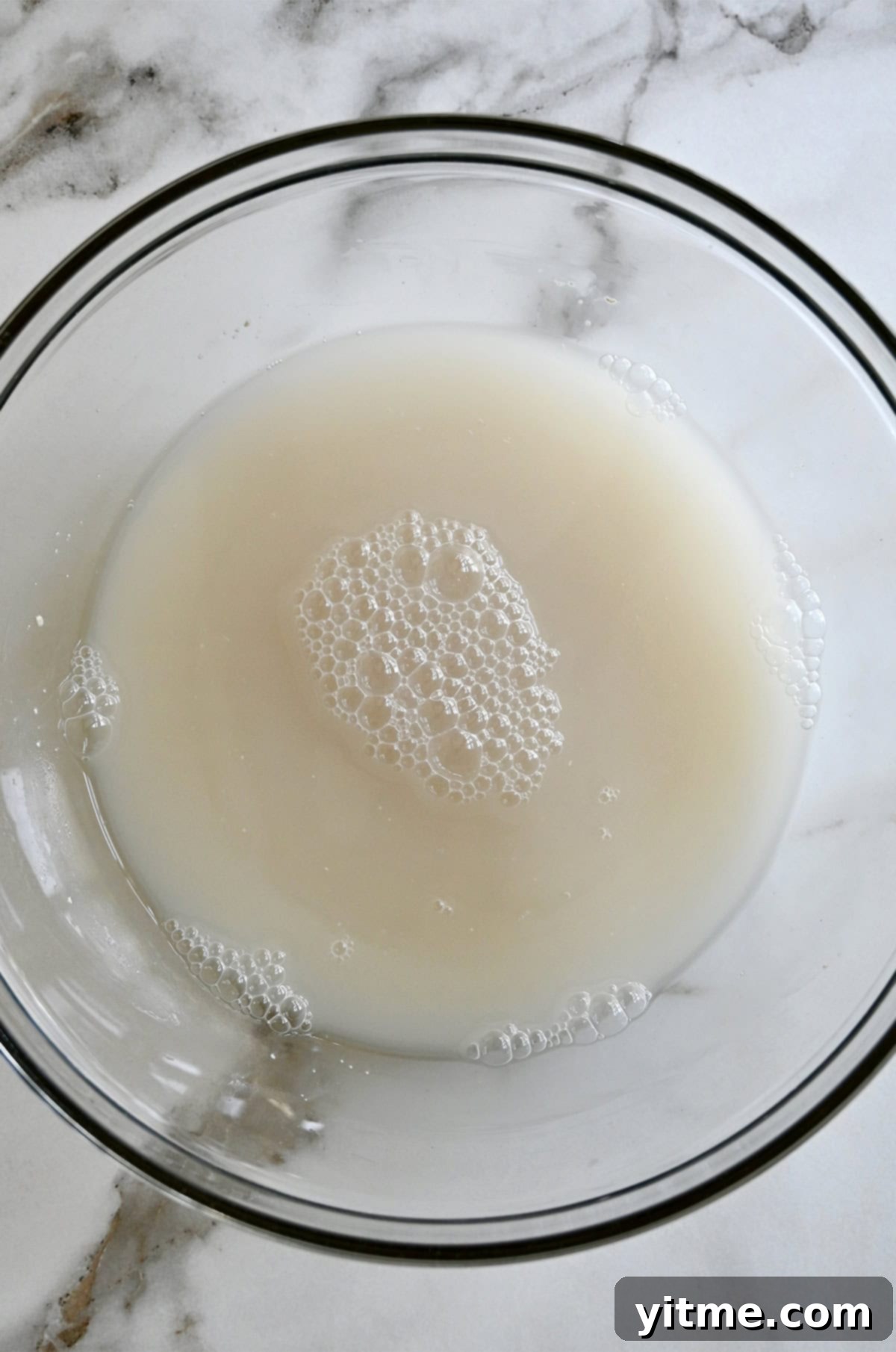
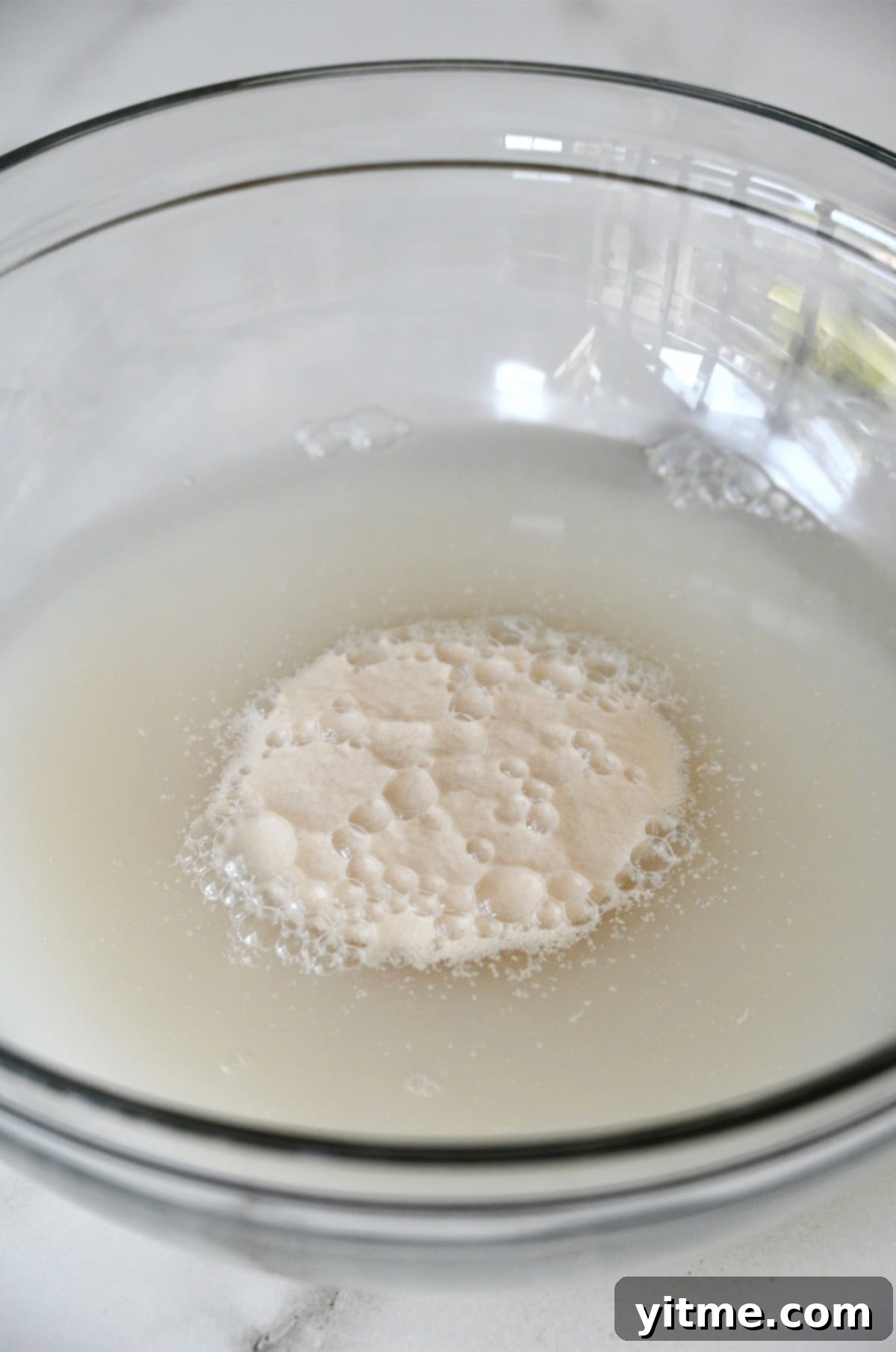
- Activate the Yeast: In a generously sized bowl, gently whisk together 2 ½ cups of warm water (ideally between 105-115°F or 40-46°C) with the active dry yeast and a tablespoon of sugar. The sugar acts as food for the yeast, encouraging its activation. Let this mixture rest undisturbed for about 5 to 10 minutes. You’ll know the yeast is alive and ready when the surface becomes visibly foamy and bubbly, indicating it’s actively fermenting. If it doesn’t foam, your yeast might be expired or the water temperature was off, and it’s best to start again.
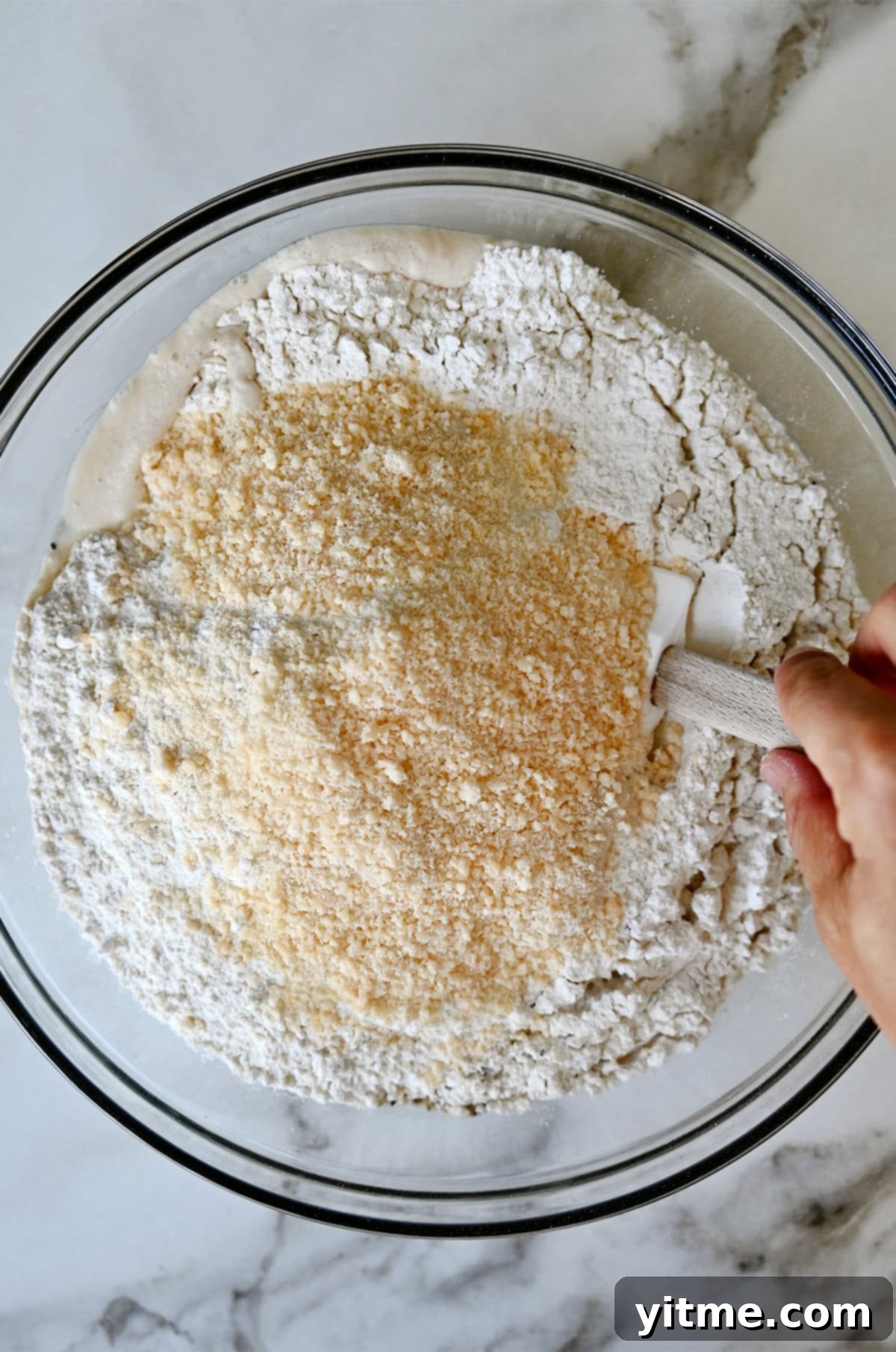
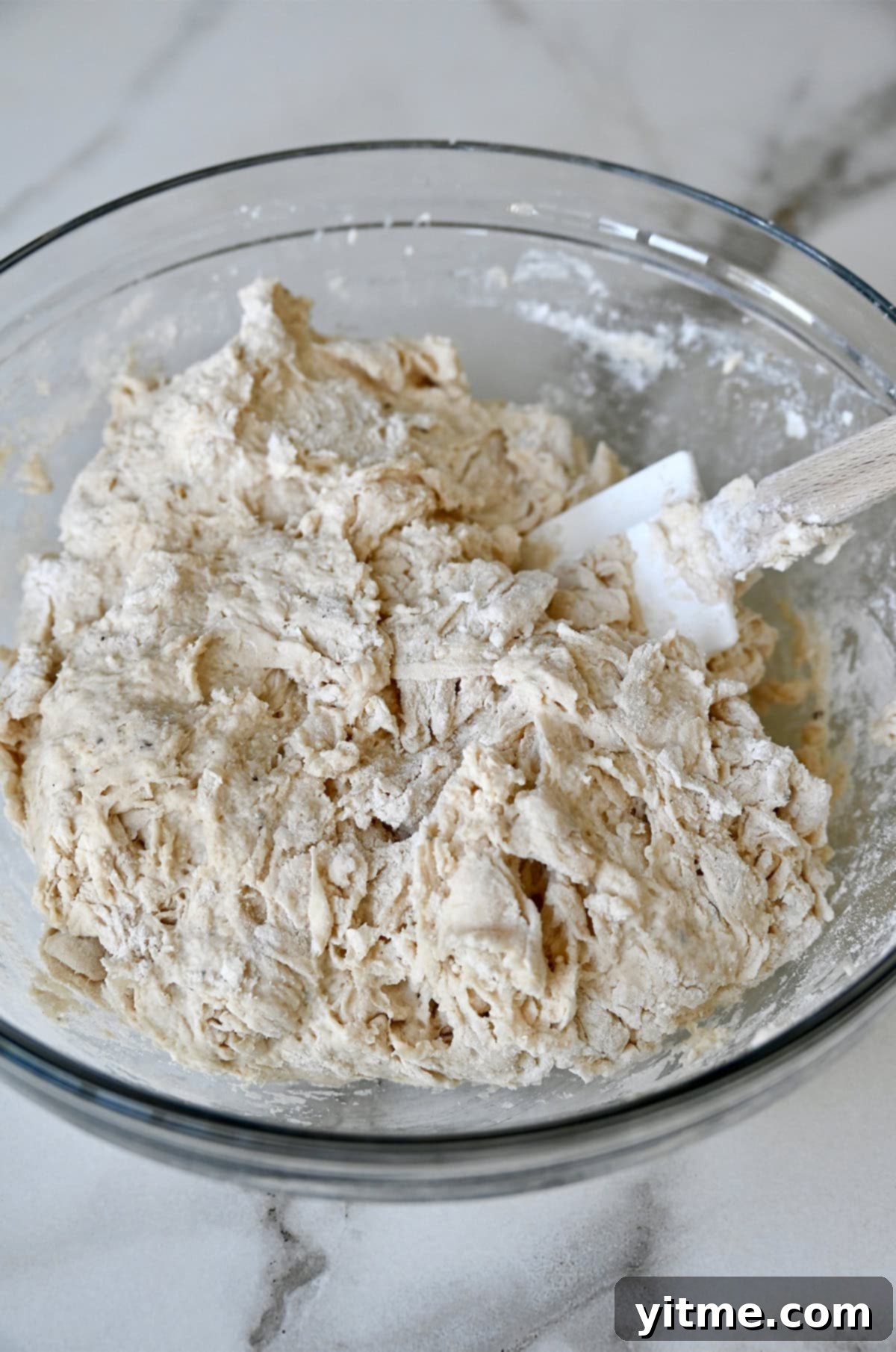
- Mix the Dough: Once your yeast is active, it’s time to combine the remaining ingredients. Using a sturdy rubber spatula, stir in the all-purpose flour, kosher salt, 1 teaspoon of freshly grated black pepper, and ½ cup of grated Parmesan cheese. Continue stirring until all the dry ingredients are fully incorporated and the dough comes together. Don’t worry if it looks sticky, shaggy, and incredibly wet – this is precisely the desired consistency for focaccia, contributing to its airy, open crumb. Avoid overmixing; just enough to combine everything.
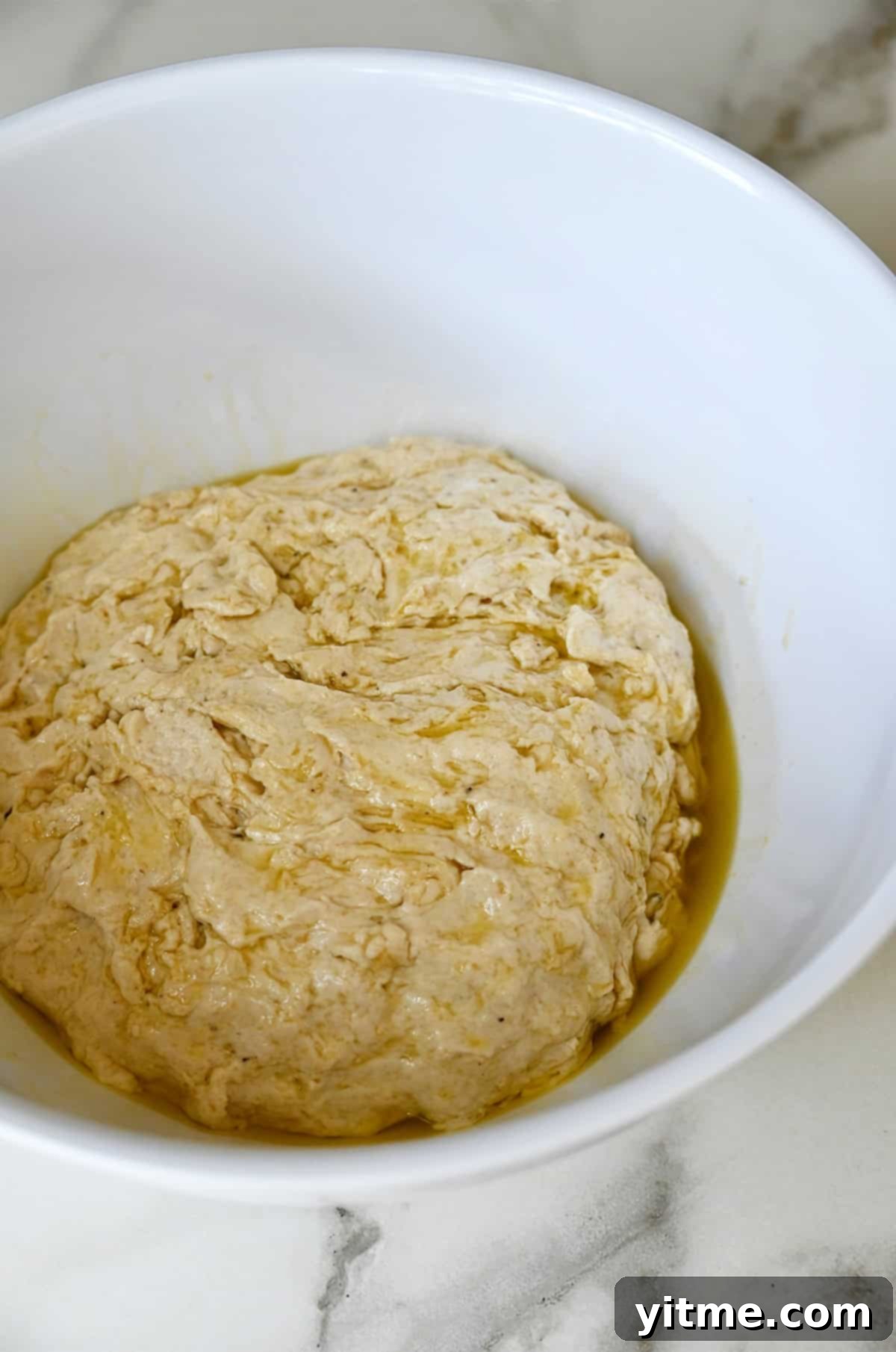
- First Rise (Bulk Fermentation): Pour 4 tablespoons of extra-virgin olive oil into another large, clean bowl. Carefully transfer your sticky focaccia dough into this oiled bowl. Turn the dough over a few times to ensure it’s thoroughly coated in the olive oil. This coating prevents the dough from drying out and sticking. Cover the bowl tightly with plastic wrap to create a warm, humid environment, and let the dough rise at room temperature for approximately 2 hours. It should visibly double in size and become very bubbly. This long, slow rise is essential for developing complex flavors.
Kelly’s Note: While room temperature works, I find my dough proofs most efficiently and consistently in a slightly warmer environment, such as a sunny windowsill or a slightly warm (but not hot) oven with the light on. Just be patient – if your kitchen is cool, the rise might simply take a bit longer.
- Prepare Your Pan: While the dough is finishing its first rise, prepare your baking pan. Add 2 tablespoons of olive oil to a 13×9-inch baking pan. Use a pastry brush or your fingers to generously coat the entire bottom and sides of the pan with the olive oil. This not only prevents sticking but also contributes to the focaccia’s signature crispy bottom crust.
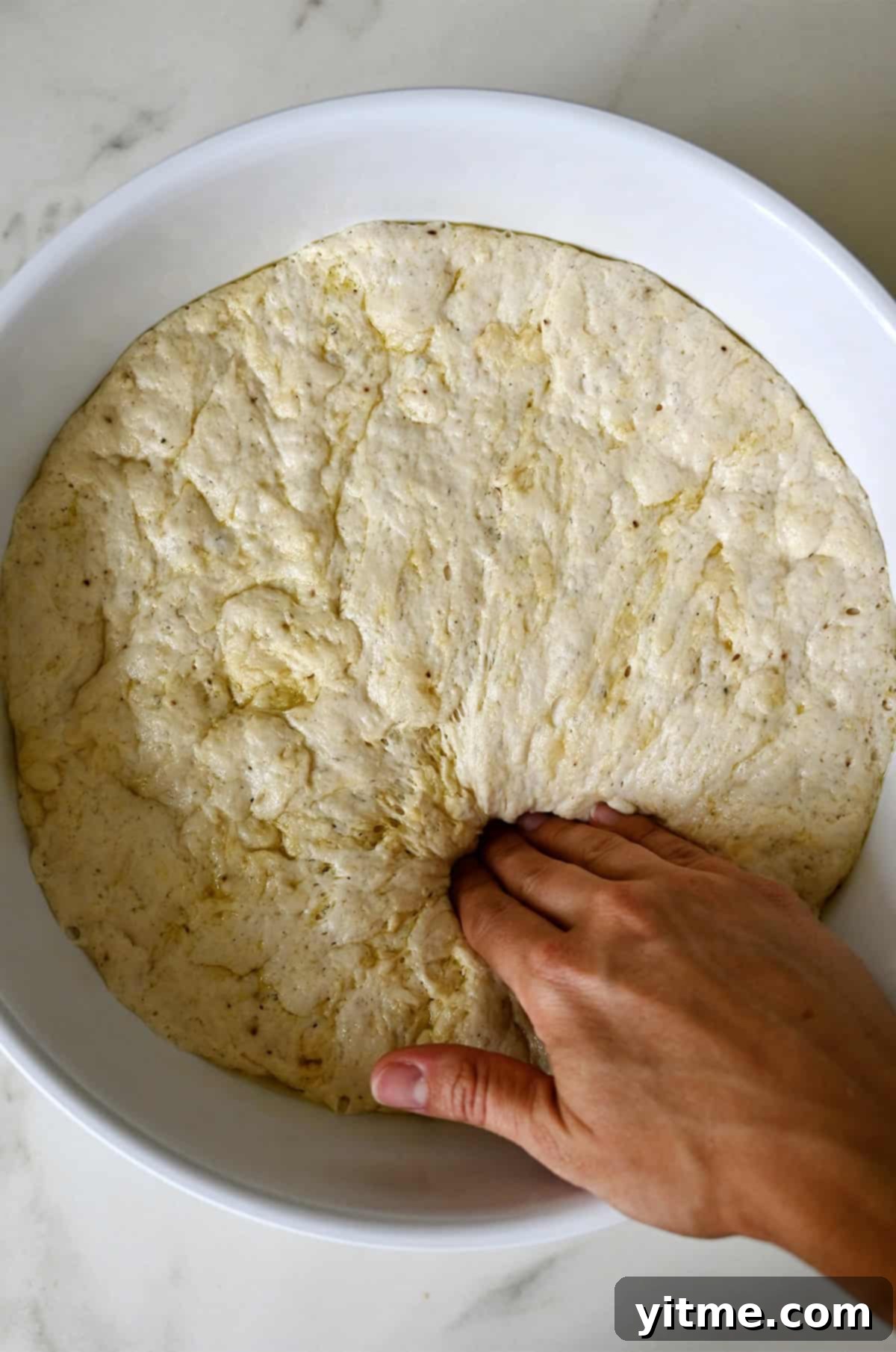
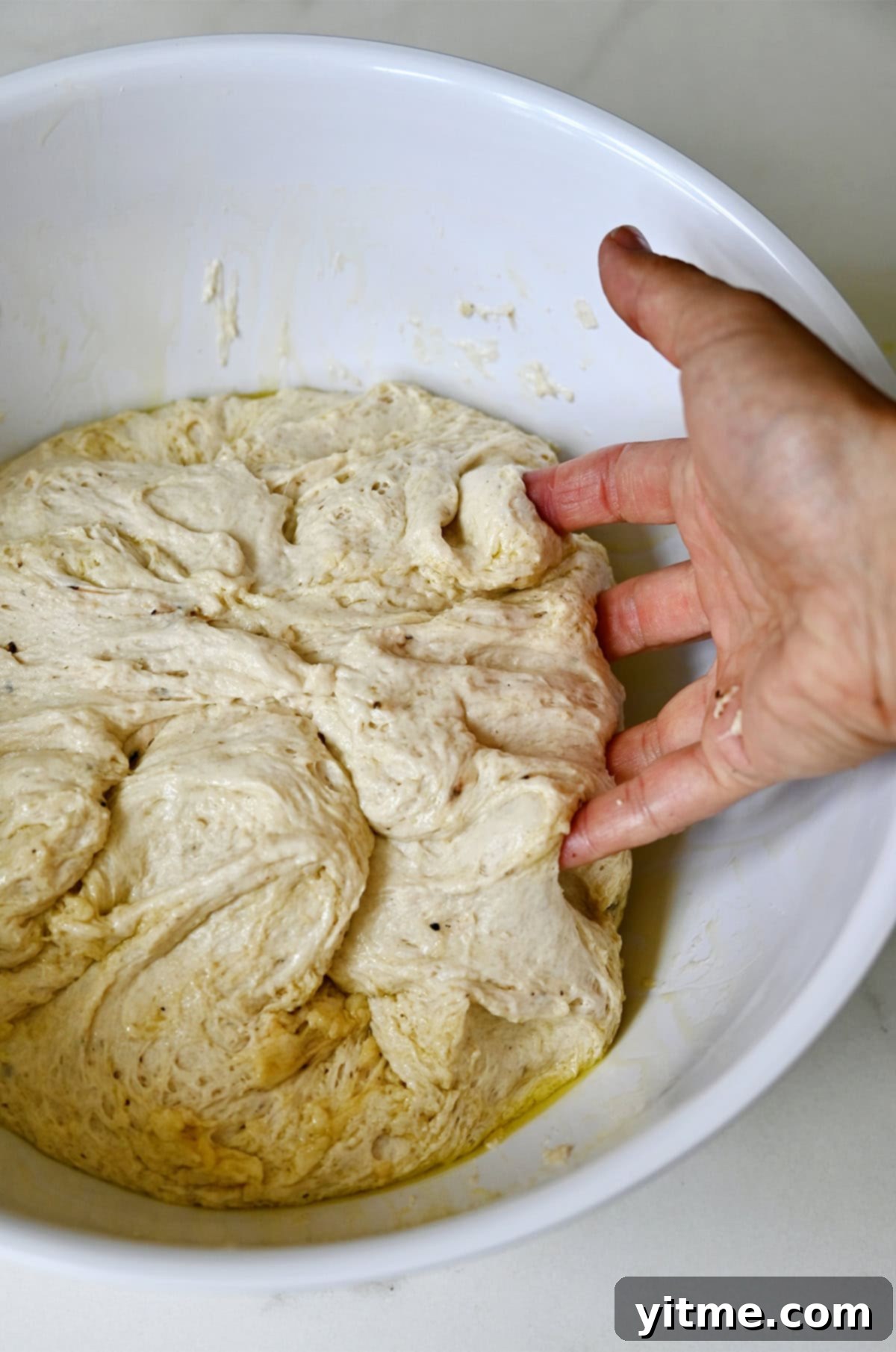
- Gently Deflate and Shape: Once the first rise is complete, the dough will be wonderfully puffy and filled with air. To handle it, lightly oil your hands to prevent sticking. Gently gather the edges of the dough from two opposite sides and lift them towards the center of the bowl, folding them over themselves. Give the bowl a quarter turn and repeat this gentle folding process once or twice more. This action lightly deflates the dough and helps to shape it into a rough ball, preparing it for the pan without knocking out all the precious air. Remember, the goal is gentle handling, not aggressive kneading.
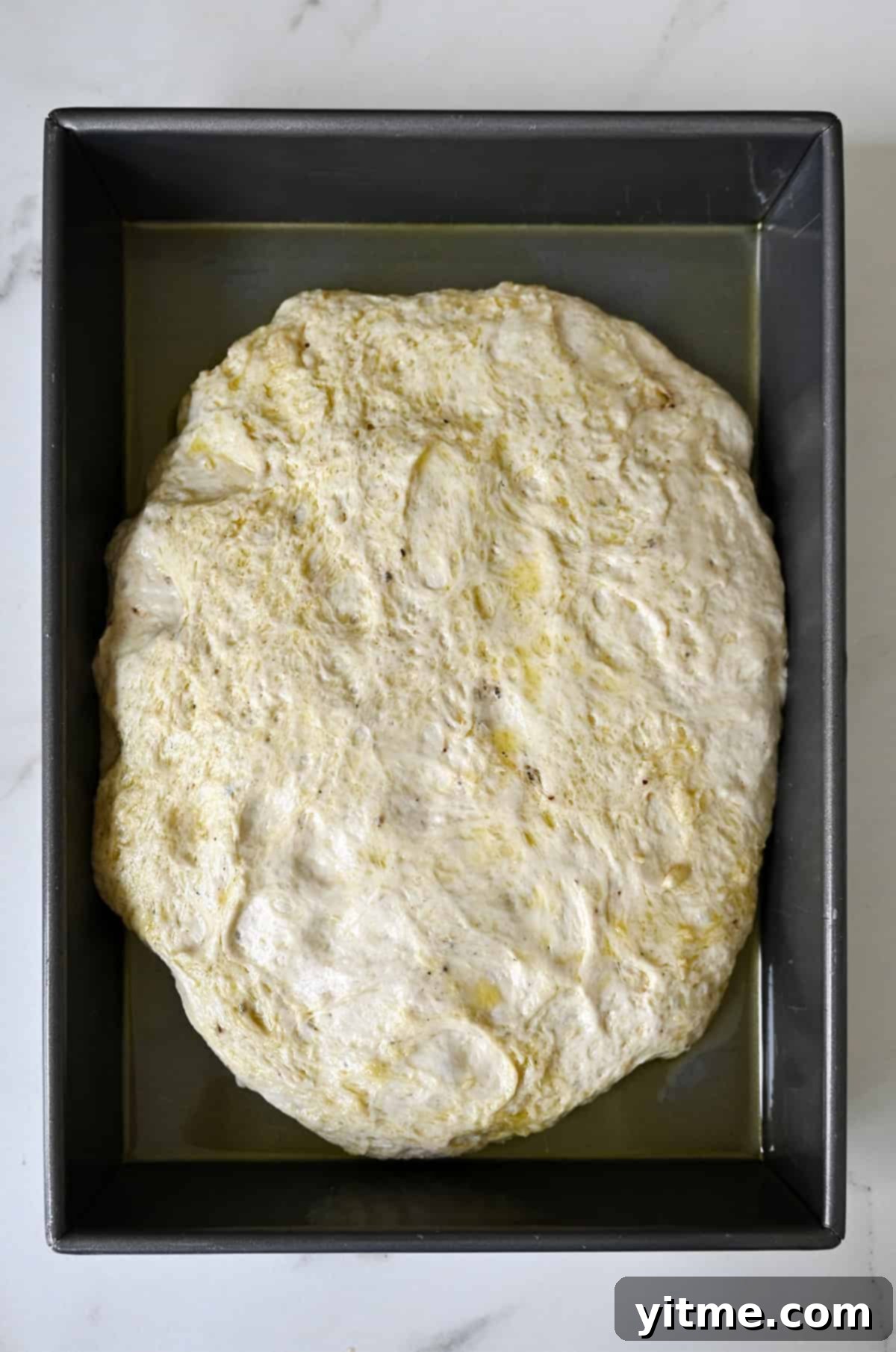
- Second Rise (Proofing in Pan): Carefully transfer the roughly shaped dough into your prepared baking pan. Pour any remaining olive oil from the mixing bowl directly over the dough in the pan. This ensures maximum flavor and moisture. Allow the dough to rise again, uncovered, in a warm spot for about 1 hour. During this time, it should puff up significantly and double in size once more, filling out the pan. It should resemble the photo on the left in the gallery below – light, airy, and full of potential.
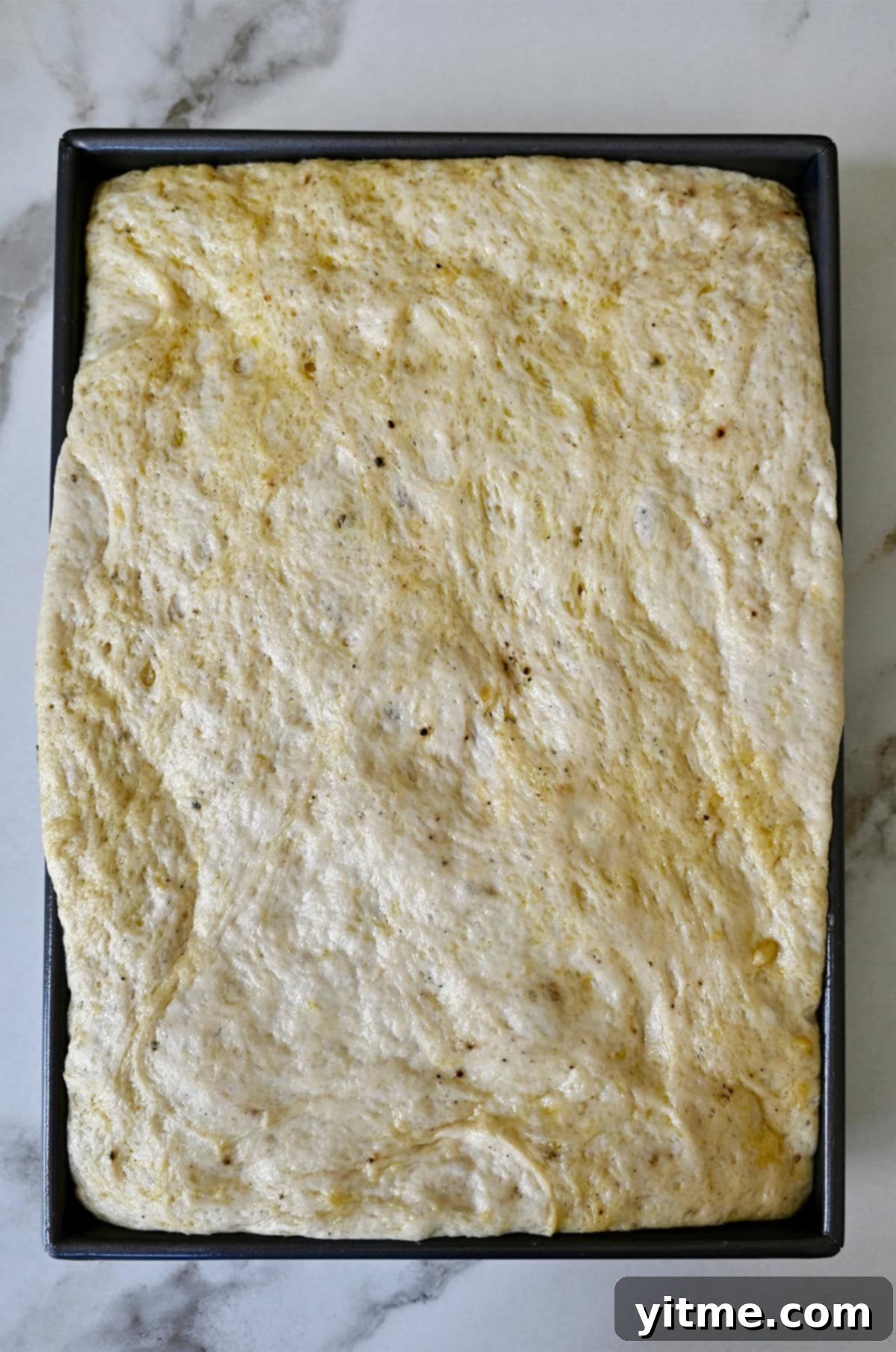
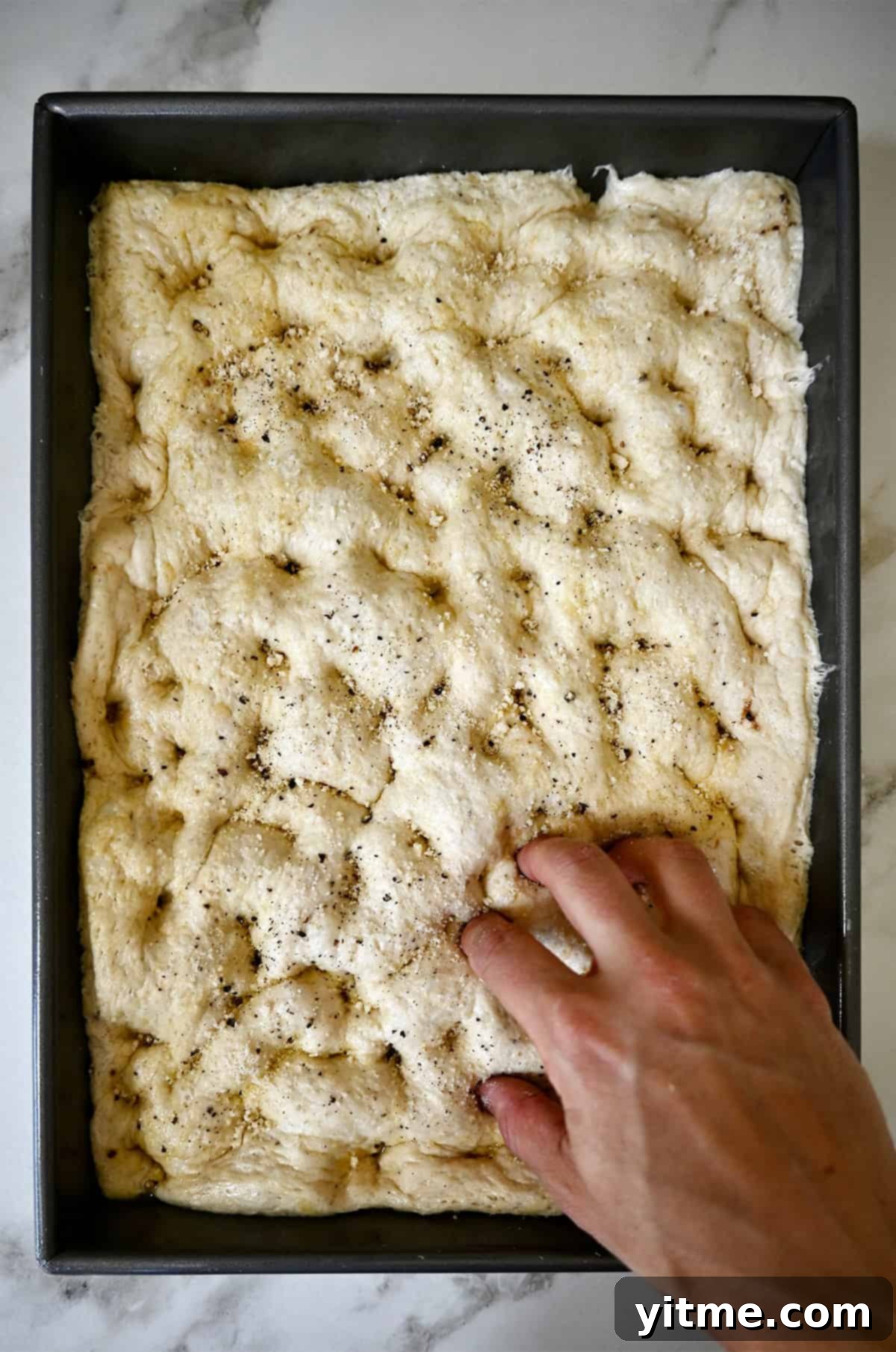
- Dimple and Season: As the second rise nears completion, preheat your oven to a hot 450°F (232°C). This high temperature is key to achieving that perfectly crispy crust. Once the dough has proofed, lightly coat your hands with a little extra olive oil. Then, using your fingertips, gently but firmly press into the dough, creating those iconic dimples all across its surface (just like the image on the right, above). These dimples collect the olive oil and toppings, creating pockets of flavor and preventing the bread from puffing up like a regular loaf. Drizzle the top generously with an additional 1 tablespoon of olive oil, then sprinkle on the remaining ¼ cup of Parmesan cheese and ¼ teaspoon of freshly ground black pepper.
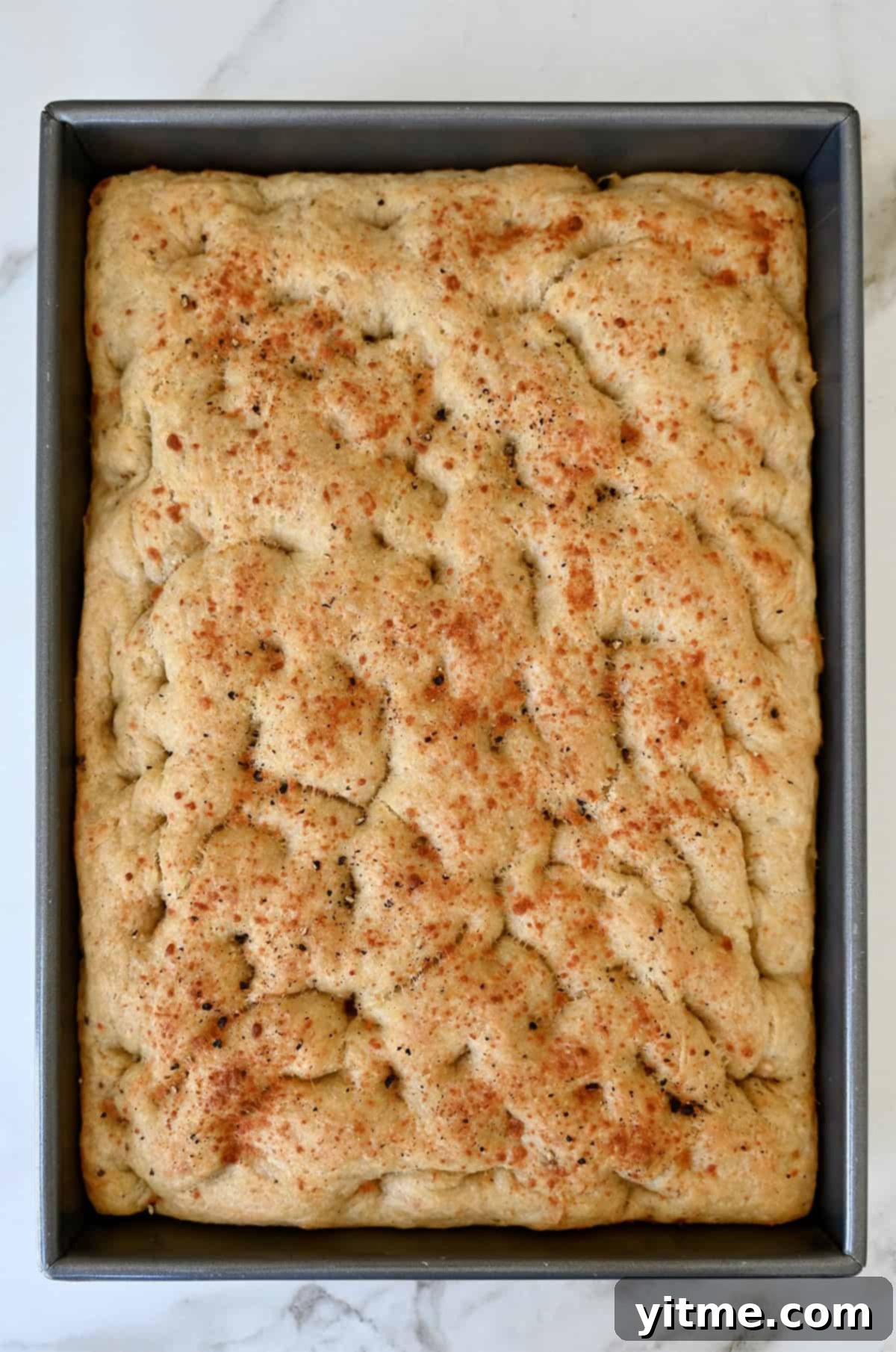
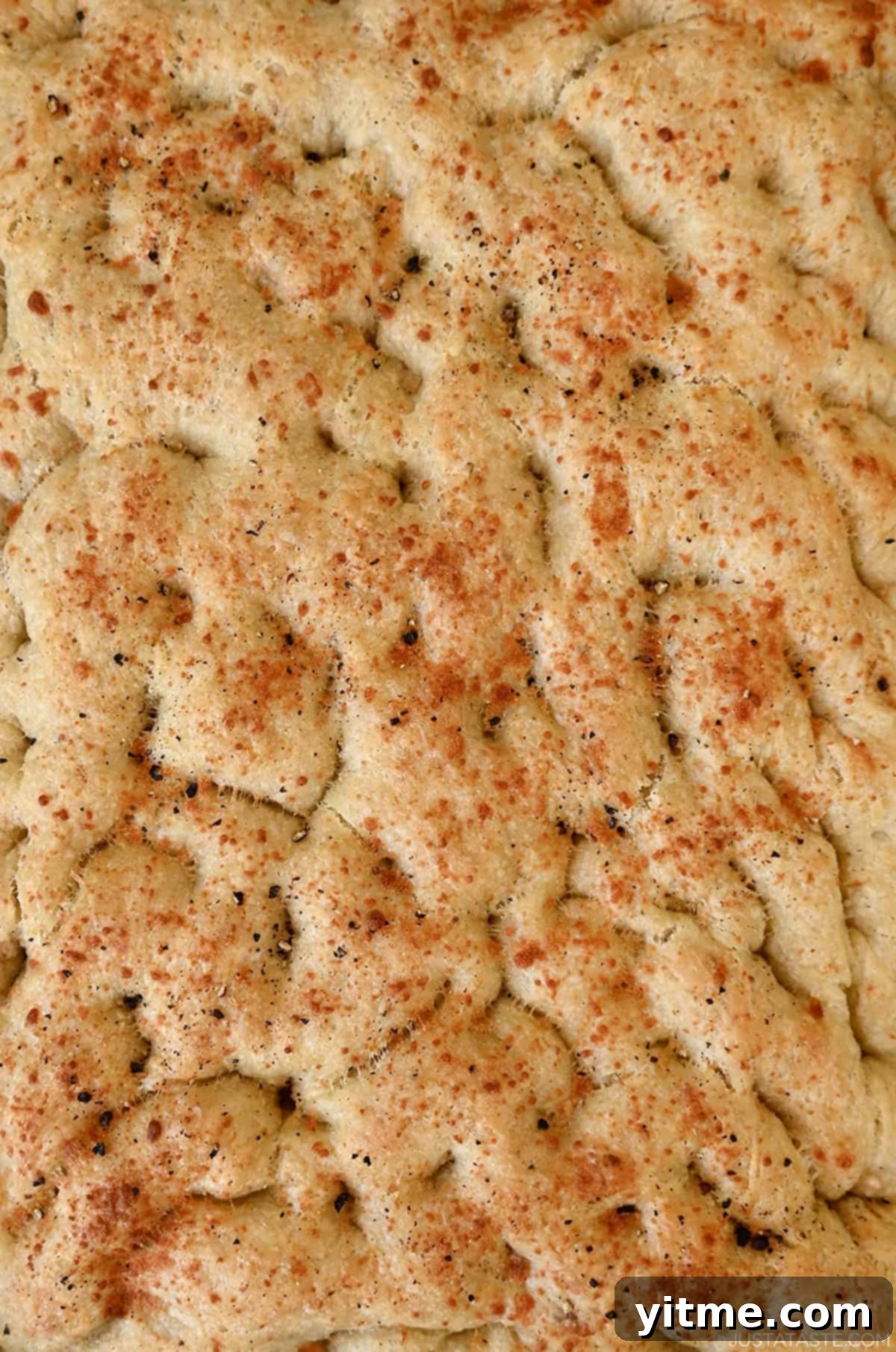
- Bake: Carefully transfer the prepared focaccia to your preheated oven. Bake for 20 to 30 minutes, or until the top is a beautiful golden brown, the edges are wonderfully crisp, and the kitchen is filled with an irresistible aroma. Keep an eye on it, as oven temperatures can vary.
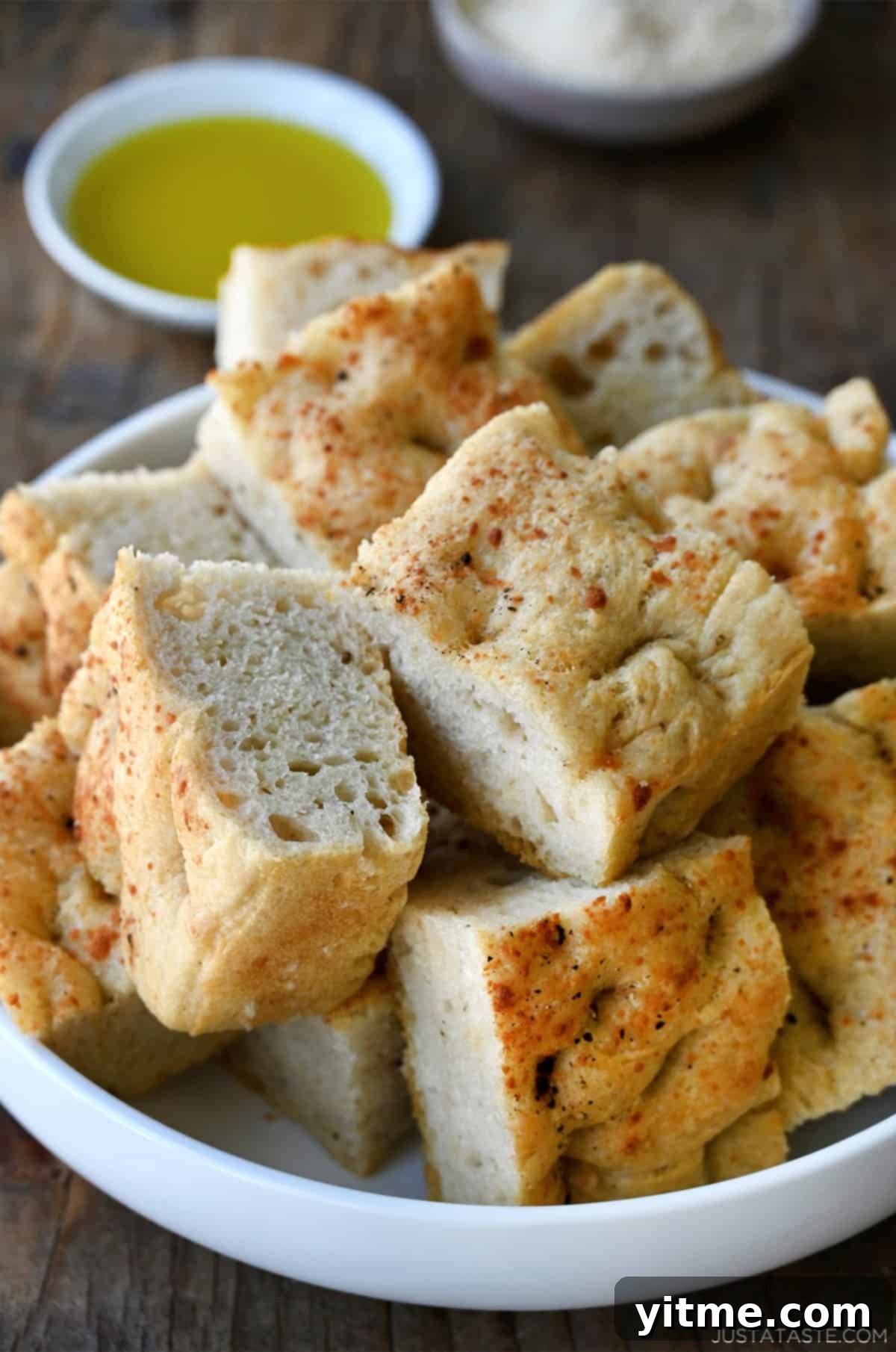
Once baked, remove the focaccia from the oven and allow it to cool slightly in the pan before carefully transferring it to a wire rack. This brief cooling period helps the crust set and makes it easier to slice. Then, slice into generous pieces and enjoy your homemade masterpiece! There’s nothing quite like warm focaccia bread, especially when it’s dipped into my all-time favorite bread dipping oil. It’s truly a match made in culinary heaven.
Tips for Perfect Focaccia Every Time
Even with a no-knead recipe, a few key practices can elevate your focaccia from good to absolutely outstanding:
- Use Quality Ingredients: Especially for olive oil and Parmesan. A good quality extra virgin olive oil makes a huge difference in flavor and crust. Freshly grated Parmesan and freshly cracked black pepper are also essential for that vibrant taste.
- Don’t Rush the Rise: The long proofing times aren’t just for volume; they develop the complex flavors and airy structure unique to focaccia. Patience is truly a virtue in bread baking.
- Embrace the Wet Dough: Focaccia dough is meant to be very wet and sticky. Resist the urge to add more flour than specified, as this will result in a dense, tough bread. Trust the process!
- Generous Olive Oil: Don’t be shy with olive oil. It not only prevents sticking but also creates that desired crispy bottom and rich flavor. The dimples are designed to capture it!
- Hot Oven is Key: A high oven temperature helps the focaccia spring up quickly and creates a beautiful, golden-brown, crispy crust. Ensure your oven is fully preheated.
- Listen to Your Dough: While times are given, always pay attention to how your dough looks and feels. Is it truly doubled in size? Does it feel airy? Adjust proofing times as needed based on your kitchen environment.
- Enjoy Warm: While delicious at any temperature, focaccia is truly at its peak when enjoyed warm from the oven, especially with a good dipping oil.
Exciting Focaccia Recipe Variations
Once you experience firsthand how incredibly simple and rewarding it is to make homemade focaccia bread, I have absolute confidence that you’ll be inspired to explore a world of creative variations. While this peppery, cheesy version holds a special place as my personal favorite, the beauty of focaccia lies in its versatility. You absolutely can (and should!) experiment with an array of other delicious toppings and mix-ins to customize your loaf:
- Sliced Olives: Briny Kalamata or green olives add a wonderful Mediterranean saltiness.
- Roasted Cherry Tomatoes or Sun-Dried Tomatoes: Bursting with sweet, tangy flavor, these soften beautifully during baking and create juicy pockets.
- Fresh Rosemary: The classic focaccia herb! Its fragrant, piney notes are a perfect complement to the olive oil and dough.
- Caramelized Onions: Sweet, tender, and deeply savory, caramelized onions add a gourmet touch.
- Roasted Garlic: Whole cloves of roasted garlic, mashed and spread or left whole, infuse the bread with a mellow, sweet garlic flavor.
- Sweet Peppers: Thinly sliced red, yellow, or orange bell peppers provide a mild sweetness and vibrant color.
- Herbs de Provence or Thyme: Beyond rosemary, explore other fragrant herbs for different aromatic profiles.
- Flaky Sea Salt: A final flourish of flaky sea salt on top provides a delightful textural crunch and bursts of savory flavor.
- Gourmet Cheeses: Beyond Parmesan, consider dollops of fresh mozzarella, crumbled feta, or a sharp provolone for different cheesy dimensions.
A crucial tip for adding toppings: lightly coat whatever you’re incorporating with a touch of olive oil. This simple step helps prevent them from drying out or burning during the baking process, ensuring they remain tender and flavorful.
If you’re aiming for a more consistent distribution of flavor throughout your bread, consider folding ingredients like finely chopped fresh herbs, sun-dried tomatoes, or small cheese cubes directly into the dough. Simply add them during the final stages of mixing, just before the first rise, to ensure they are evenly dispersed.
Storing & Reheating Leftover Focaccia
While freshly baked focaccia is undeniably divine, managing leftovers is easy, allowing you to enjoy its deliciousness for days to come. Here’s how to store and reheat your Parmesan Black Pepper Focaccia:
- Room Temperature Storage: For immediate enjoyment, keep any leftover focaccia in an airtight container or a tightly sealed plastic bag at room temperature for up to two days. This helps maintain its softness and prevents it from drying out.
- Freezer Storage for Longer: If you’re looking to store your focaccia for a longer period, it freezes exceptionally well. Once completely cooled, wrap individual slices or the entire loaf tightly in plastic wrap, then an additional layer of aluminum foil. Store it in a freezer-safe bag or container for up to a month. Freezing is perfect for meal prep or ensuring you always have a delicious side on hand.
- Reheating for Crispiness: To revive the focaccia’s delightful crispiness and warmth, pop it into a preheated 350°F (175°C) oven for 5 to 10 minutes. This gently warms it through and brings back that lovely crust. Avoid microwaving, as it can make the focaccia chewy rather than crispy.
- Enjoying as Is: Don’t feel obligated to reheat! Leftover focaccia is still wonderfully tasty at room temperature. It makes a fantastic base for sandwiches, alongside salads, or simply enjoyed as a snack.
Whether fresh from the oven or carefully reheated, your homemade focaccia promises a delicious treat.
More Delicious Bread Recipes You’ll Love
If you enjoyed making this no-knead focaccia, you’ll love exploring other homemade bread recipes. Here are some favorites:
- Easy Homemade Pizza Dough Without Yeast
- Easy Homemade Burger Buns
- Easy Homemade Dinner Rolls
- The Complete Guide to Easy Homemade Bagels
- The Best Basil Pesto (Perfect for dipping!)
Parmesan Black Pepper Focaccia
Ingredients
- 1 (1/4-oz.) packet active dry yeast
- 1 Tablespoon sugar
- 5 cups all-purpose flour
- 1 Tablespoon kosher salt
- 1 ¼ teaspoons freshly grated black pepper, divided
- 3/4 cup grated Parmesan cheese, divided
- 6 Tablespoons extra-virgin olive oil, divided, plus more for greasing hands
Instructions
- In a large bowl, combine 2 ½ cups warm water (105-115°F), the active dry yeast, and sugar. Whisk thoroughly and let the mixture sit for 5 to 10 minutes until it becomes foamy and bubbly, indicating the yeast is activated.
- Using a rubber spatula, stir in the all-purpose flour, kosher salt, 1 teaspoon of freshly cracked black pepper, and ½ cup of grated Parmesan cheese. Mix until the ingredients are just combined and the dough is cohesive but sticky and shaggy. Do not overmix.
- Pour 4 tablespoons of extra-virgin olive oil into another large bowl. Transfer the dough to this bowl and turn it to ensure it’s fully coated in the oil. Cover the bowl tightly with plastic wrap and let the dough rise at room temperature (or a warm spot) for about 2 hours, or until it has visibly doubled in size and is bubbly. (See Kelly’s Note for proofing tips.)
- Add 2 tablespoons of extra-virgin olive oil to a 13×9-inch baking pan. Using a pastry brush or your fingers, generously coat the bottom and sides of the pan with the olive oil.
- Lightly oil your hands. Gently gather the edges of the risen dough from two sides and lift them towards the center of the bowl. Give the bowl a quarter turn and repeat this gentle folding process to lightly deflate the dough and shape it into a rough ball.
- Carefully transfer the dough into the prepared baking pan, gently stretching it to fill the corners if needed. Pour any remaining oil from the mixing bowl over the dough. Let the dough rise a second time, uncovered, in a warm spot for about 1 hour, or until it has puffed up and doubled in size within the pan.
- Preheat your oven to 450°F (232°C).
- Lightly coat your hands with olive oil again. Press your fingers gently but firmly into the risen dough, creating distinct dimples across the entire surface. Drizzle the dough with an additional 1 tablespoon of olive oil, then sprinkle evenly with the remaining ¼ cup Parmesan cheese and ¼ teaspoon black pepper.
- Bake the focaccia for 20 to 30 minutes, or until the top is deeply golden brown, and the edges are beautifully crisp. Remove from the oven, let cool slightly, then slice and serve warm.
Kelly’s Notes
- For optimal proofing, I find a warm environment (such as a sunny windowsill or an oven with the light on) works best. However, room temperature conditions are perfectly fine; just be aware that the dough may take a bit longer to rise. Patience is key for the best texture and flavor.
- ★ Did you make this recipe? Don’t forget to give it a star rating below!
Nutrition
Did you try this recipe?
Leave a comment below with your star rating!