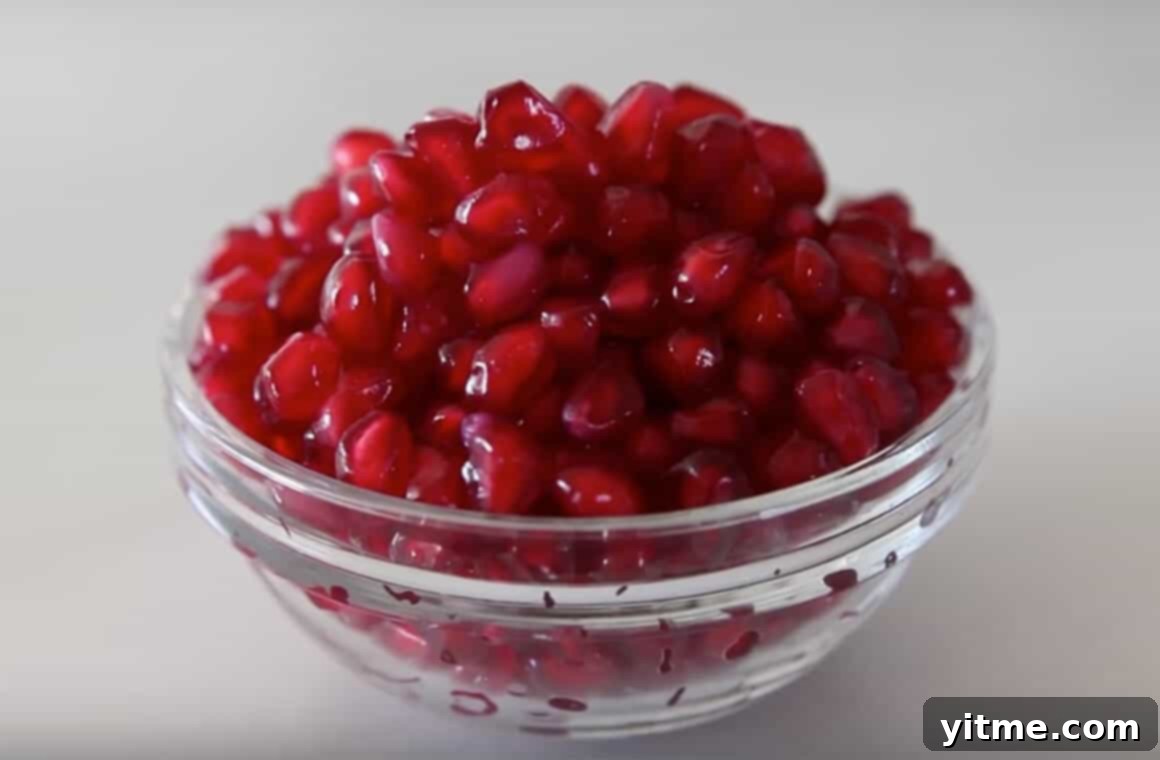
Pomegranates: The Jewel of Winter – Benefits, Selection, and Delicious Recipes

As winter’s chill sets in, adding a burst of color and flavor to your dishes becomes even more appealing. This is where the vibrant pomegranate shines, making the slight effort required to
extract its seeds
truly worthwhile. Pomegranates, one of the oldest cultivated fruits, hold a cherished place in Mediterranean cuisine. This
In Season Now
favorite boasts over 600 juicy, ruby-red seeds, known as arils, nestled within its firm, protective skin.
Pomegranates are typically in season from late September through January, thriving in warm, somewhat dry climates. These delightful seeds are most often enjoyed raw, adding a refreshing touch to salads and desserts. They make an excellent
garnish, offering a sweet and tangy contrast. We also love incorporating them into unexpected creations like
cheesecake or even
guacamole! Beyond their culinary versatility, pomegranates are pressed into a delicious and healthful juice.
Perhaps the most compelling reason to include pomegranates in your diet is their impressive nutritional profile. They are packed with antioxidants and serve as a valuable source of vitamins C and K. This article provides a comprehensive guide on how to choose, store, and prepare pomegranates, along with a selection of delectable recipes from across the internet.
Selecting the Perfect Pomegranate: A Buyer’s Guide
Choosing the right pomegranate is crucial to enjoying its optimal flavor and juiciness. Here’s what to look for when purchasing pomegranates:
- Size and Weight: Opt for large pomegranates that feel heavy for their size. A heavier fruit generally indicates a higher juice content.
- Exterior Appearance: The skin should be hard and smooth. While the color varies depending on the variety, it doesn’t necessarily indicate ripeness. Avoid pomegranates with any signs of damage, bruises, or cuts on the skin.
- Shape: A slightly angular shape can suggest that the arils inside are plump and juicy.
Remember that the best pomegranates are those that appear firm and substantial, promising a treasure trove of flavorful arils within. Taking a little extra time to select high-quality pomegranates will ensure a delightful eating experience.
Maximizing Freshness: Storing Pomegranates Like a Pro
Proper storage is essential for preserving the quality and extending the shelf life of your pomegranates. Here are some helpful tips:
- Whole Pomegranates: At room temperature, whole pomegranates can last for up to one week. For longer storage, place them in the refrigerator, where they can remain fresh for up to three weeks.
- Pomegranate Seeds (Arils): Once extracted, pomegranate seeds should be stored in an airtight container in the refrigerator. They will typically stay fresh for up to five days.
- Freezing Pomegranate Seeds: For extended storage, pomegranate seeds can be frozen. Spread the seeds in a single layer on a baking sheet lined with parchment paper. Freeze for a couple of hours, then transfer the frozen seeds to an airtight freezer bag or container. Frozen pomegranate seeds can last for several months. They are best used in smoothies, juices, or as a topping for yogurt or oatmeal, as their texture may change slightly after freezing.
By following these storage guidelines, you can enjoy the vibrant flavor and nutritional benefits of pomegranates for weeks or even months.
Unlocking the Arils: A Simple Guide to Preparing Pomegranates
Many people find extracting pomegranate seeds intimidating, but with the right technique, it can be a straightforward process. Here’s a simple method to efficiently remove the arils:
- Score the Pomegranate: Using a sharp knife, score the pomegranate around the circumference, being careful not to cut too deeply into the seeds.
- Soak in Water: Fill a large bowl with water. Submerge the scored pomegranate in the water and gently break it apart into sections.
- Remove the Arils: While submerged, use your fingers to gently separate the arils from the membrane. The arils will sink to the bottom, while the membrane will float to the top.
- Strain and Enjoy: Skim off the membrane and drain the arils. They are now ready to be enjoyed in your favorite recipes!
This method helps prevent the juice from splattering and makes separating the arils much easier. You can also find helpful visual demonstrations online. Here’s a video tutorial to guide you:
Delightful Pomegranate Recipes to Brighten Your Winter
Pomegranates are incredibly versatile and can be incorporated into a wide range of dishes. Here are a few recipe ideas to inspire your culinary creativity:
Pomegranate Salad with Feta and Walnuts
This simple salad combines the sweetness of pomegranate arils with the salty tang of feta cheese and the crunch of walnuts. Toss with a light vinaigrette for a refreshing and flavorful side dish.
Pomegranate Guacamole
Add a unique twist to classic guacamole by incorporating pomegranate seeds. Their sweet-tart flavor complements the creamy avocado and spices, creating a delightful appetizer.
Pomegranate Glazed Salmon
Create a vibrant glaze for salmon by combining pomegranate juice, honey, soy sauce, and ginger. The glaze adds a beautiful color and a sweet and savory flavor to the fish.
Pomegranate and Pistachio Rice Pilaf
Elevate your rice pilaf with the addition of pomegranate seeds and chopped pistachios. These ingredients add color, texture, and a burst of flavor to the dish.
Pomegranate Cheesecake Bars
Top creamy cheesecake bars with a layer of pomegranate seeds for a festive and flavorful dessert. The bright red arils add a touch of elegance to this classic treat.
Pomegranate Juice
Enjoy the pure, unadulterated flavor of pomegranates by juicing them. Pomegranate juice is packed with antioxidants and vitamins, making it a healthy and delicious beverage. Use a juicer or blender and strain the juice to remove any seeds or pulp.
Pomegranate Smoothie
Blend pomegranate seeds with your favorite fruits and vegetables for a nutritious and refreshing smoothie. Combine them with berries, spinach, banana, and yogurt for a quick and easy breakfast or snack.
The Health Benefits of Pomegranates: A Nutritional Powerhouse
Beyond their delightful flavor and culinary versatility, pomegranates offer a wealth of health benefits. Here are some key reasons to include pomegranates in your diet:
- Rich in Antioxidants: Pomegranates are packed with antioxidants, which help protect your cells from damage caused by free radicals. These antioxidants can contribute to overall health and well-being.
- Good Source of Vitamin C: Pomegranates are a good source of vitamin C, an essential nutrient that supports immune function and helps protect against infections.
- Source of Vitamin K: Pomegranates also contain vitamin K, which is important for blood clotting and bone health.
- May Help Lower Blood Pressure: Some studies suggest that pomegranate juice may help lower blood pressure, which is beneficial for heart health.
- Anti-Inflammatory Properties: Pomegranates possess anti-inflammatory properties, which may help reduce inflammation throughout the body.
Incorporating pomegranates into your diet can contribute to a healthier lifestyle. Their unique combination of nutrients and antioxidants makes them a valuable addition to any balanced eating plan.
What’s your favorite recipe starring pomegranates? Share your culinary creations and tips in the comments below! We’d love to hear how you enjoy this jewel-toned fruit.