How to Zest a Lemon: Easy Techniques and Tools for Bright Citrus Flavor
Lemon zest is the unsung hero of countless recipes, adding a burst of bright, citrusy flavor to everything from delectable baked goods to vibrant salad dressings. You might think zesting a lemon requires professional culinary skills or fancy kitchen gadgets. However, I’m here to show you how to zest a lemon like a pro, using simple techniques and readily available tools. Plus, you’ll learn the best ways to store lemon zest and incorporate it into your cooking for maximum flavor.
Unlock the zesty truth: this simple technique can elevate your home cooking with a vibrant citrus punch. Whether you’re preparing easy lemon cheesecake bars, crafting a sophisticated lemon drop martini, or simply enhancing your homemade lemon vinaigrette, lemon zest is the key to a delightful, flavorful experience.
Understanding Lemon Zest: What It Is and Why It Matters
So, what exactly is lemon zest, and why should you bother with it? Lemon zest is the colorful outer layer of the lemon peel, also known as the rind. This vibrant layer is where the lemon’s fragrant oils reside, packed with intense citrus flavor. It’s important to distinguish zest from the white layer beneath, called the pith. The pith is bitter and can impart an unpleasant taste to your culinary creations. When a recipe specifically calls for lemon zest, it’s not just being fussy; it’s highlighting the concentrated lemon flavor that bottled juice simply cannot replicate.
Lemon zest is a versatile ingredient that enhances a wide range of dishes, from sweet to savory. I frequently incorporate it into recipes like my glazed lemon loaf, quick Greek lemon chicken soup, and even garlic herb cream cheese. Even dishes that don’t prominently feature lemon can benefit from the subtle zest boost, adding a layer of complexity and aroma that elevates the overall flavor profile.
And the best part? Mastering the art of zesting a lemon opens the door to zesting other citrus fruits as well, such as oranges, limes, and grapefruits. Imagine the possibilities: the bright aroma of orange zest in your morning bran muffins, or a swirl of citrus zest stirred into softened honey butter for a decadent buttermilk biscuit topping. So, let’s embark on our zesting adventure and discover the magic of citrus zest!
Essential Tools for Zesting a Lemon
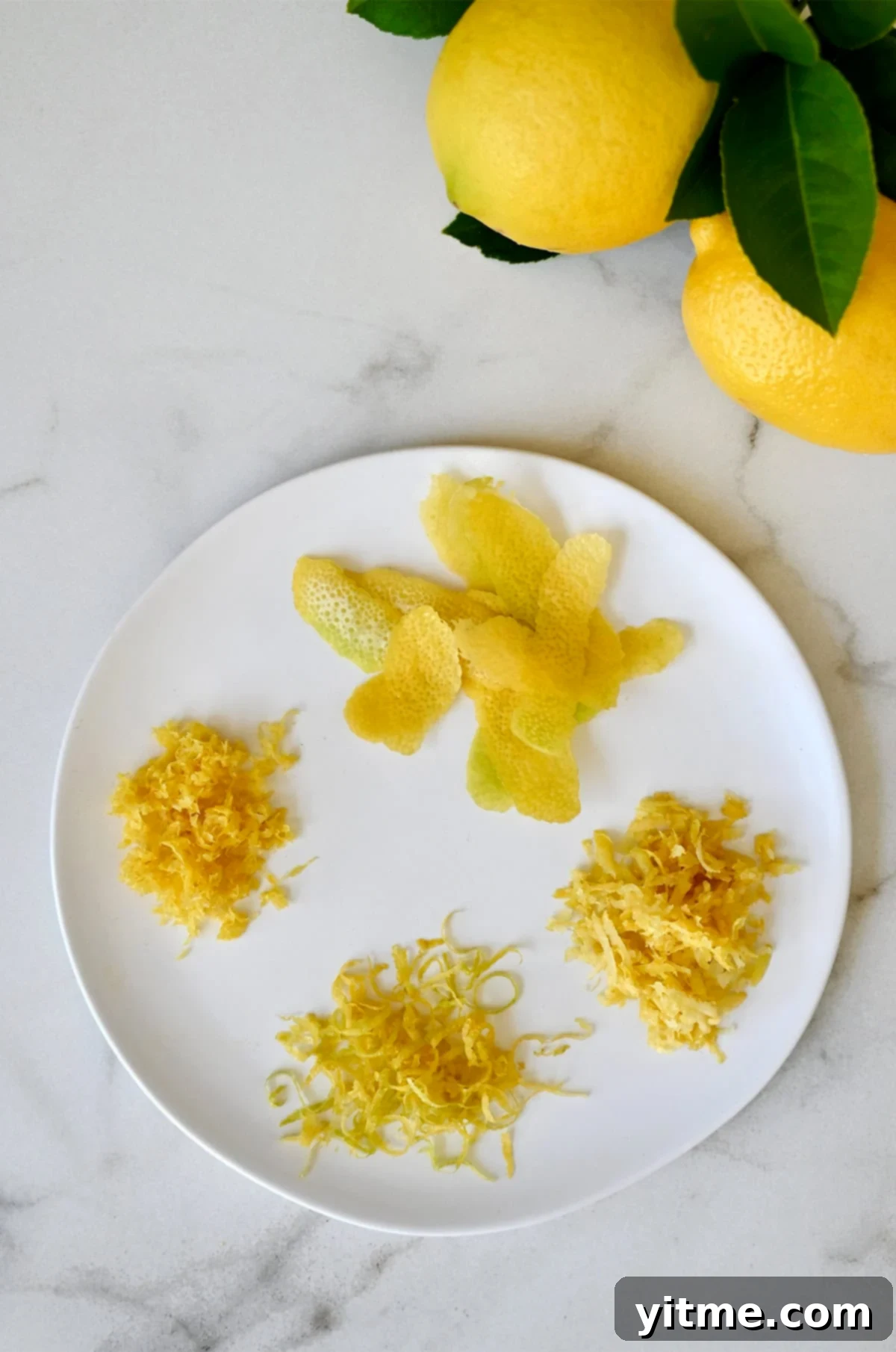
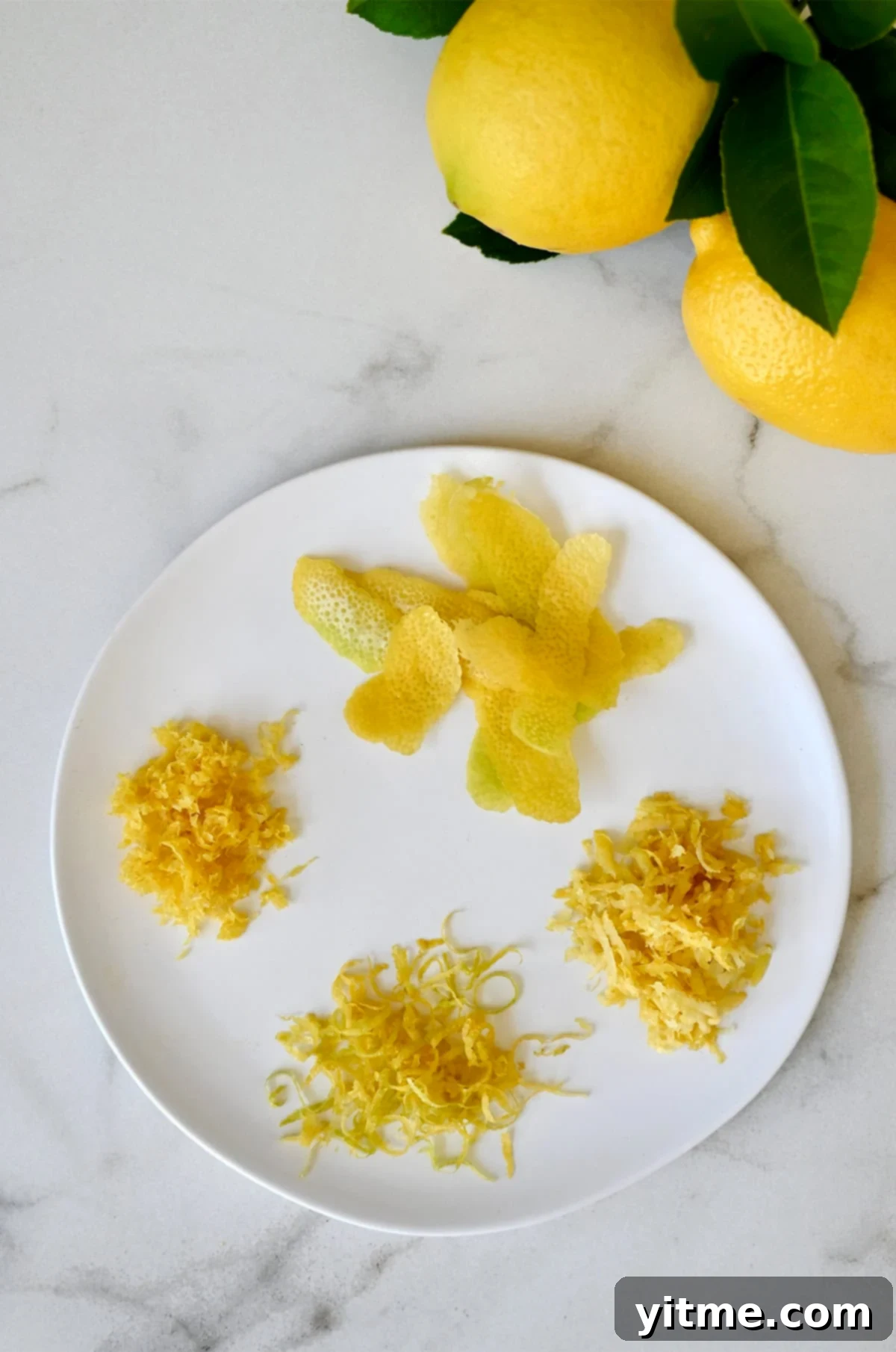
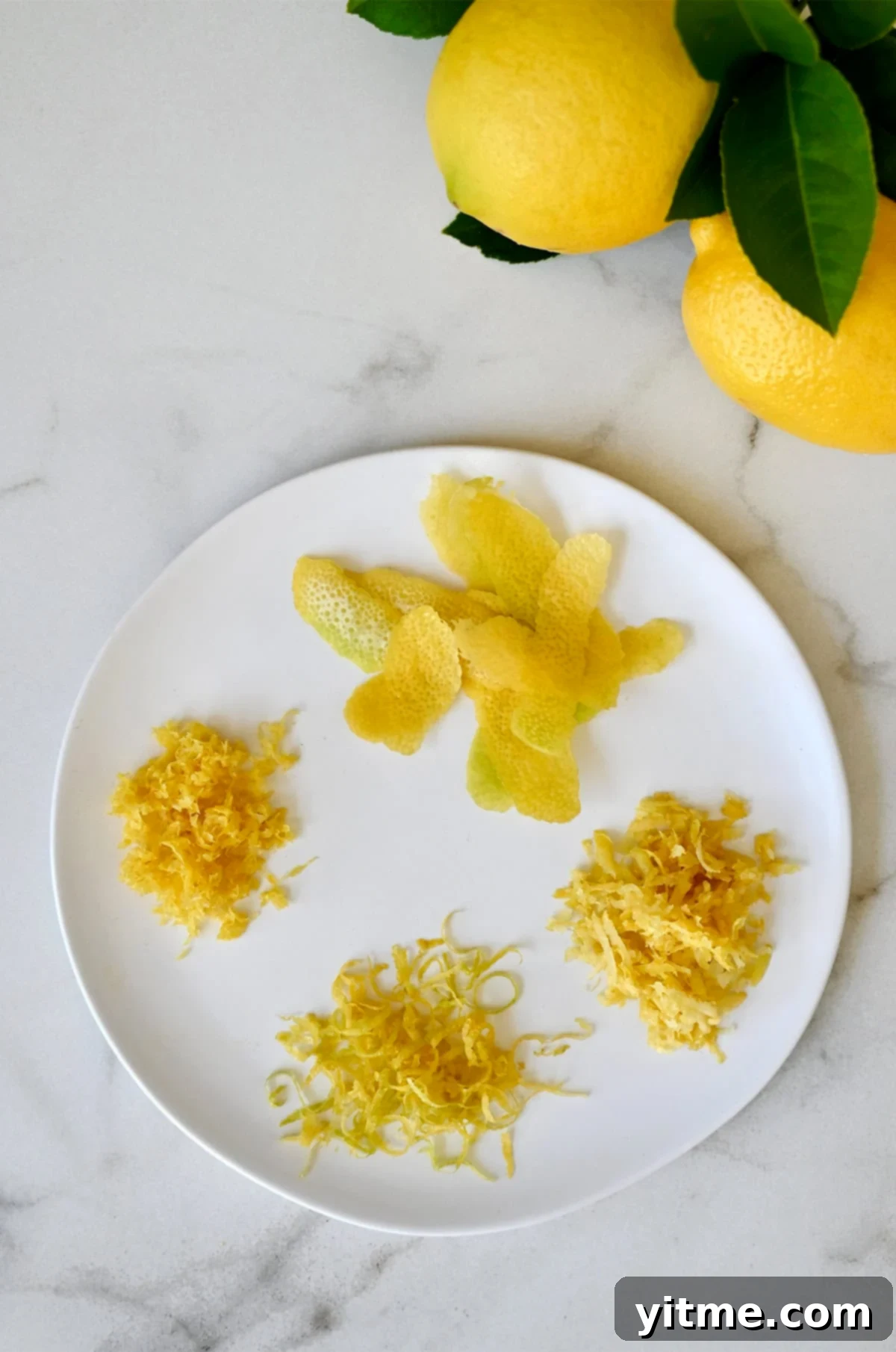
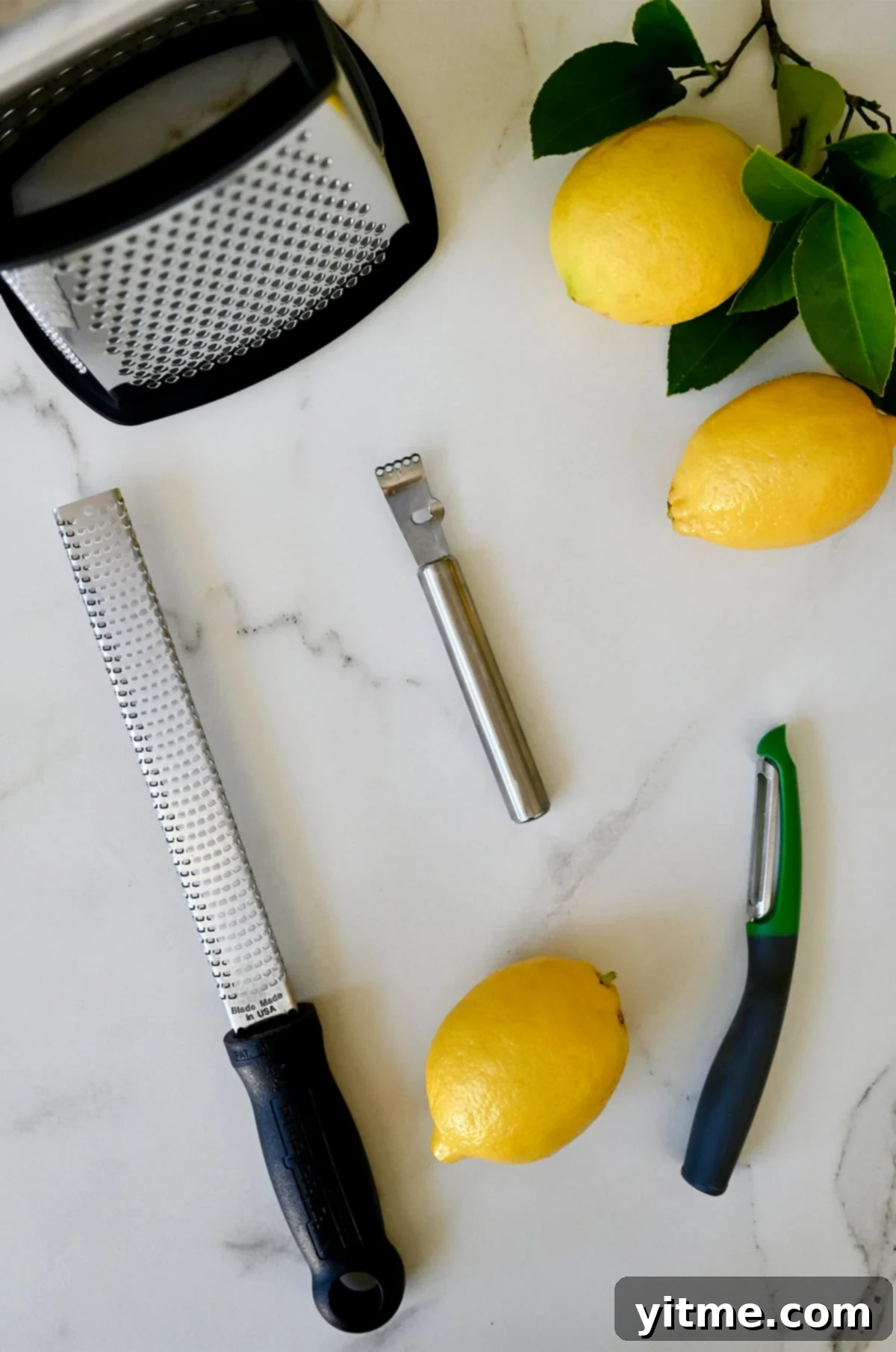
Fortunately, you don’t need a kitchen full of specialized gadgets to zest a lemon. There are several methods you can use, each producing slightly different results. Before you begin, be sure to thoroughly wash and dry your lemon to remove any wax or grime that could contaminate your culinary creations. Here are four effective tools you can use to zest a lemon:
1. The Microplane Zester
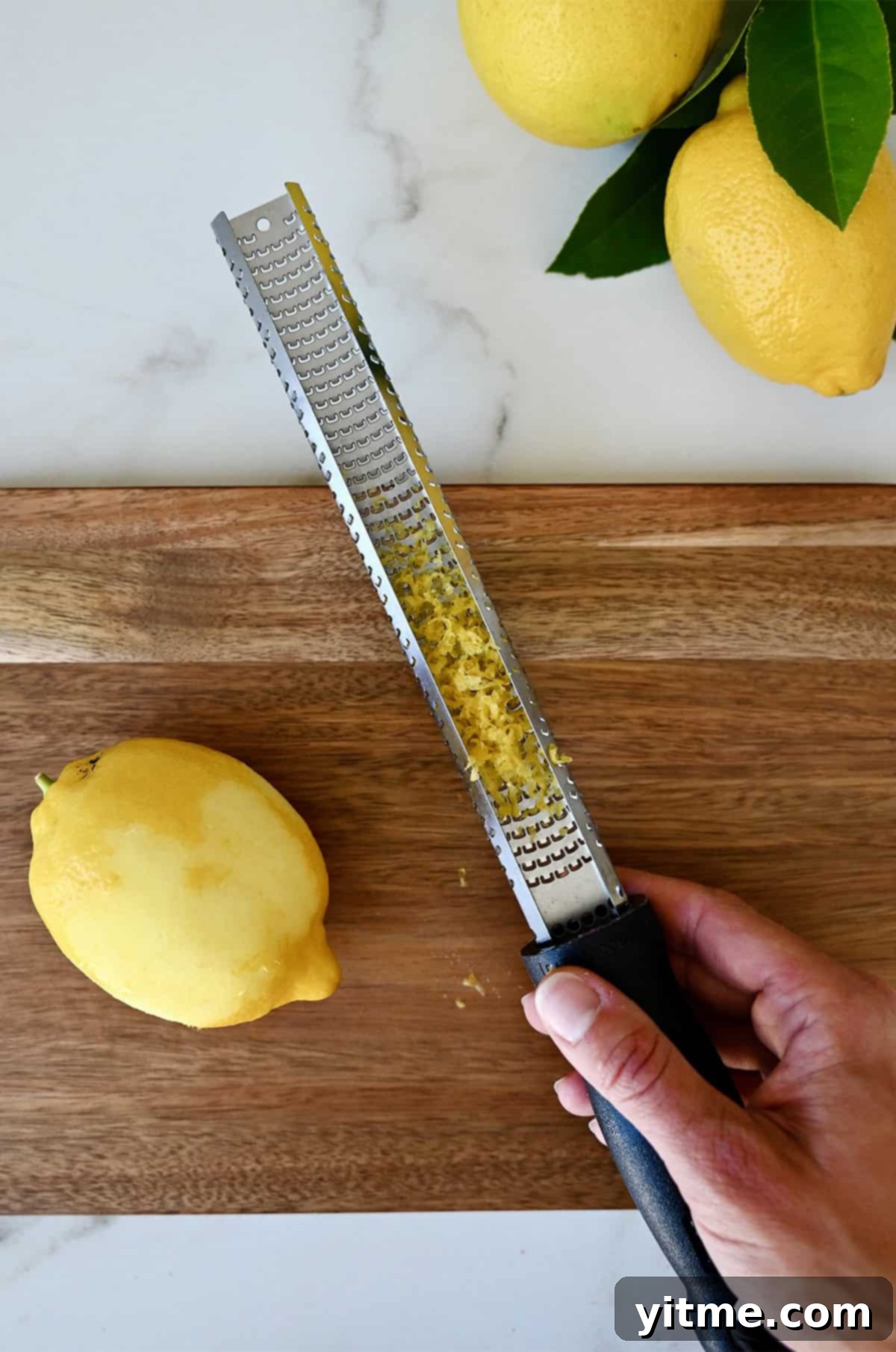
If you’re investing in just one citrus tool, make it a microplane zester. This tool, resembling a fine-toothed grater, transforms lemon zest into delicate, fluffy shreds that seamlessly blend into batters, doughs, and dressings. The microplane is arguably the easiest and most efficient tool for zesting citrus fruits.
- Hold the microplane at a slight angle over a bowl or cutting board.
- Using light pressure, gently grate the lemon across the blades.
- As you zest, rotate the lemon to ensure you’re only removing the yellow outer layer.
- Finally, tap the microplane to release any zest clinging to the underside.
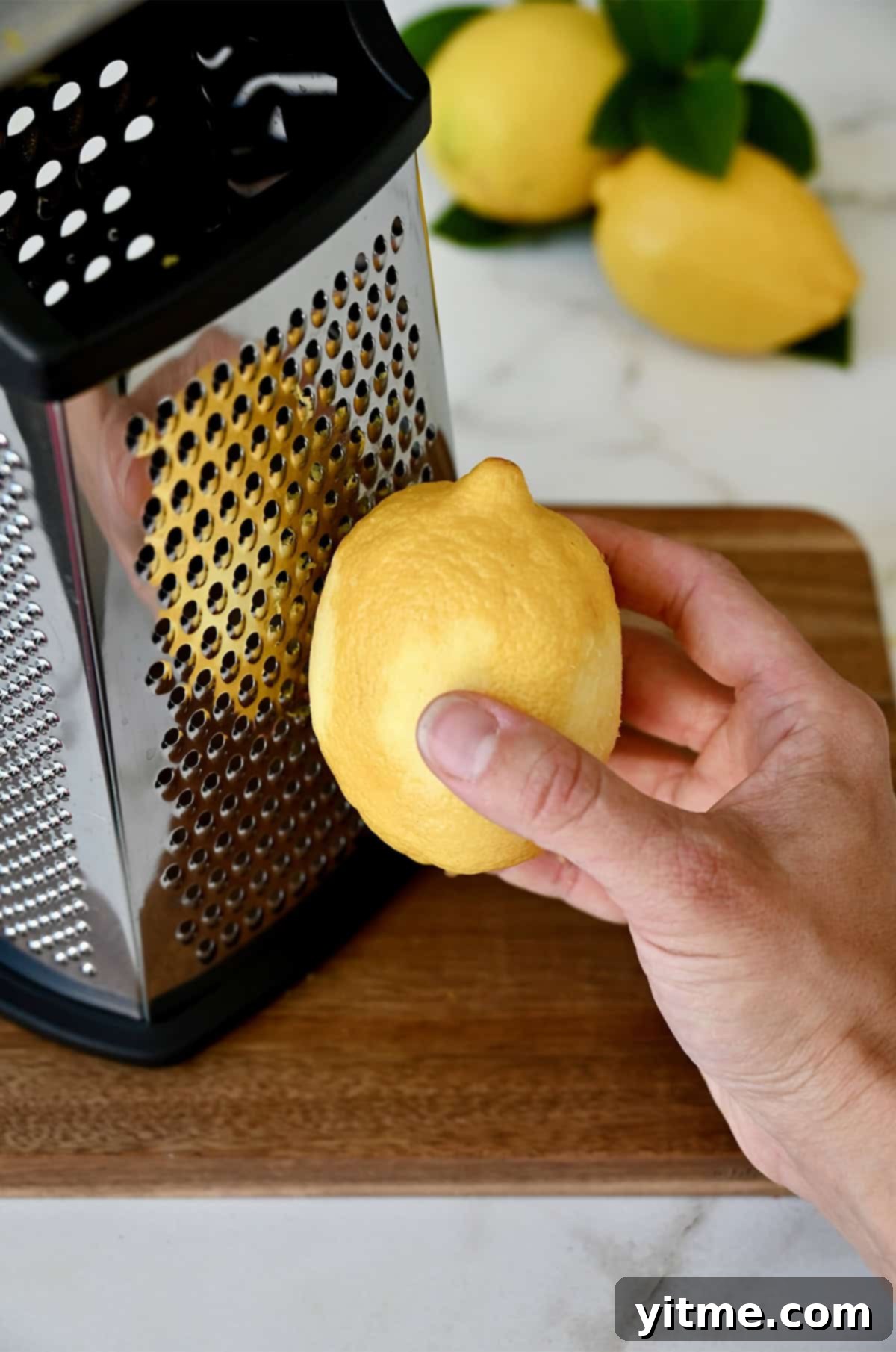
2. The Versatile Box Grater
Don’t have a microplane? No problem! Your trusty box grater can also do the trick. Simply use the side with the smallest holes. While the zest won’t be quite as fine as with a microplane, it will still deliver a powerful burst of flavor. As an added bonus, most box graters are dishwasher-safe and likely already reside in your kitchen, making this a convenient and accessible option.
- Position the grater securely on a cutting board to prevent it from slipping.
- Gently rub the lemon against the fine holes, rotating it frequently to avoid grating into the pith.
- Exercise caution to avoid grating too deeply and including the bitter white pith.
- Use your fingers or a spoon to carefully collect the zest from the surface of the grater.
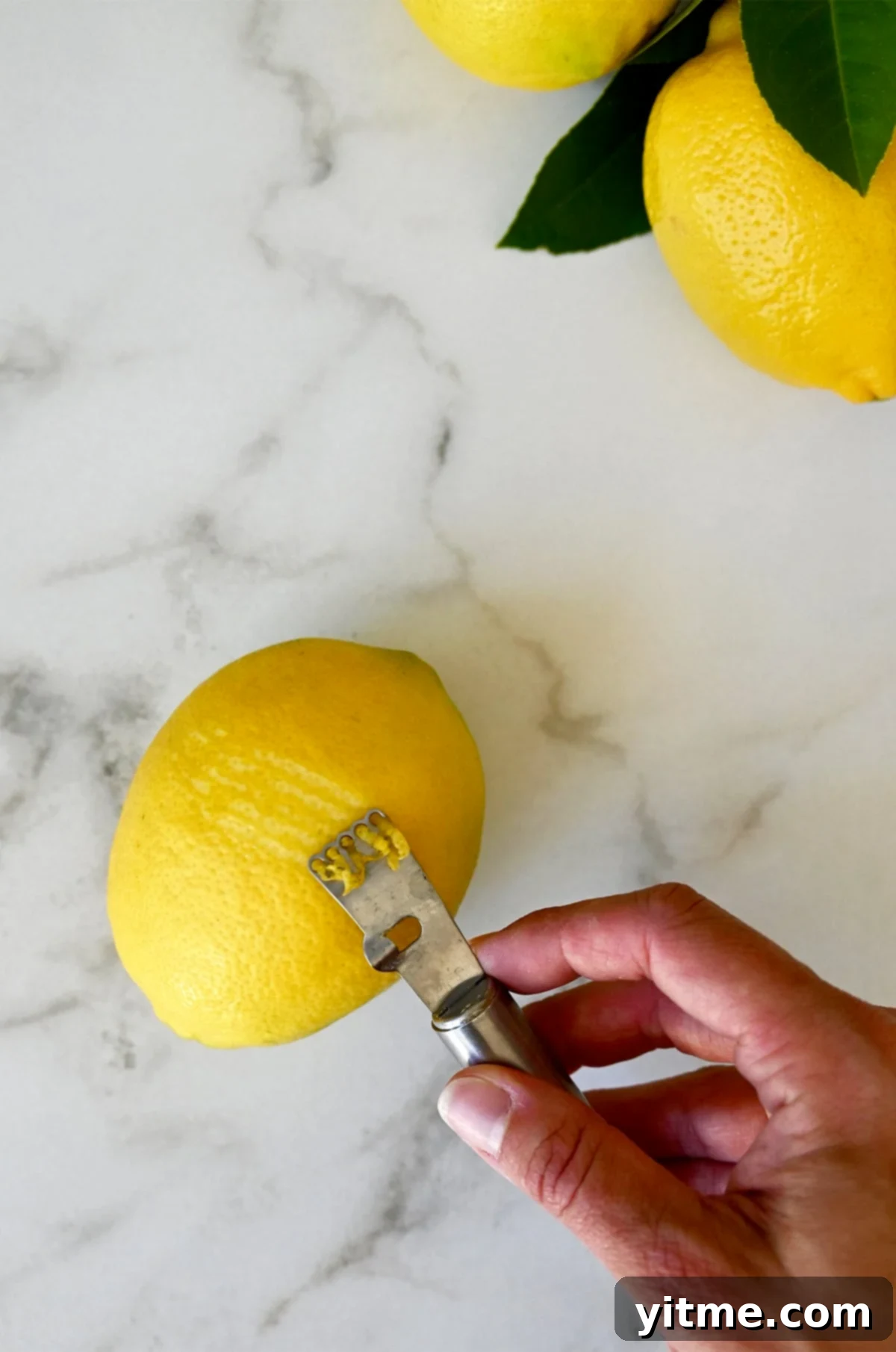
3. The Classic Citrus Zester
This time-honored tool features tiny circular blades designed to scrape off long, thin strips of zest. These strips are ideal for cocktail garnishes or adding elegant, curly lemon accents to cupcakes. While a citrus zester isn’t the best choice for baking due to the larger zest pieces, it’s perfect when you want your lemon peel to be both flavorful and visually appealing.
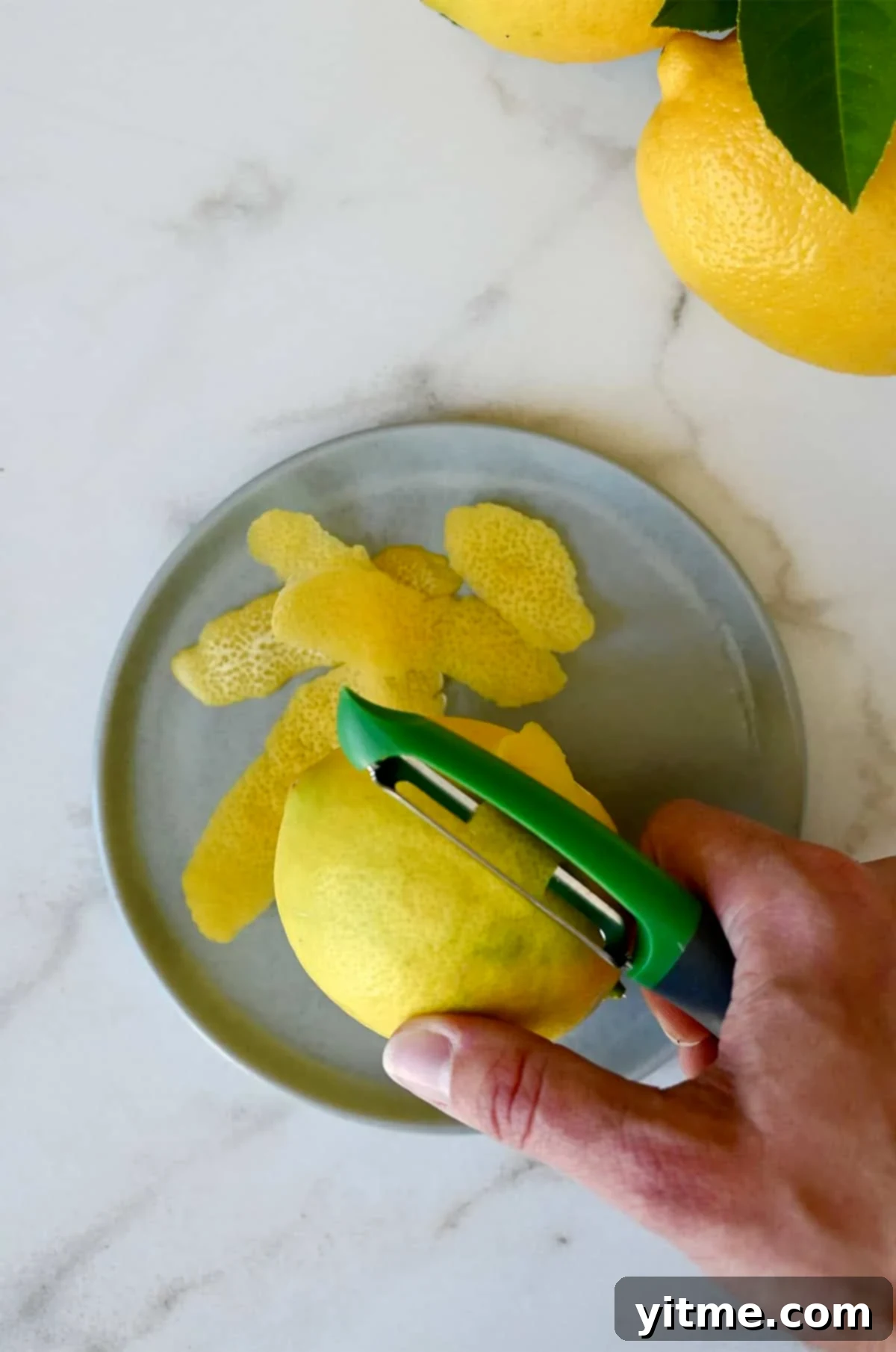
4. The Humble Vegetable Peeler
A vegetable peeler provides a simple solution for zesting a lemon when you don’t have a zester or grater on hand. Carefully slice off strips of the peel using the peeler. Then, using a sharp paring knife, finely mince the strips into small pieces. This method is particularly useful when you need zest for infusing marinades or adding a vibrant touch to drinks.
Pro Tip: Always zest your citrus before juicing it. Zesting a firm, un-squeezed lemon is much easier than zesting a squishy one.
How Much Zest Can You Get from One Lemon?
As a general rule, you can expect to get approximately 1 tablespoon of zest from a medium-sized lemon. If a recipe calls for “the zest of one lemon,” this is a good benchmark to keep in mind.
Essential Storage Tips for Lemon Zest
Did you know that you can store lemon zest for future use? Don’t let that precious citrusy goodness go to waste! Here are some effective methods for preserving the bright flavor of your lemon zest:
- Refrigerator: Store lemon zest in an airtight container in the refrigerator for up to 3 days. A small glass jar or a tightly sealed zip-top bag works well.
- Freezer: For longer storage, freeze lemon zest in a zip-top bag (be sure to squeeze out any excess air) or in an ice cube tray filled with a small amount of water or lemon juice. Frozen lemon zest can last for up to 3 months.
Creative Ways to Use Lemon Zest
Now that you’ve become a lemon zesting expert, here are some of my favorite recipes that showcase the vibrant, citrusy flavor of lemon zest:
- Glazed Lemon Pound Cake
- Easy Fruit Crumble
- No-Bake Cheesecake Parfaits
- Cowboy Butter
- Garlicky Pasta Primavera
- Quick Shrimp Scampi
Craving more delicious recipes? Subscribe to Just a Taste to receive new recipes, meal plans, and exclusive content directly in your inbox. Stay connected on Facebook, TikTok, Pinterest, and Instagram for the latest updates and culinary inspiration.
How to Zest a Lemon (4 Easy Ways!)
Kelly Senyei