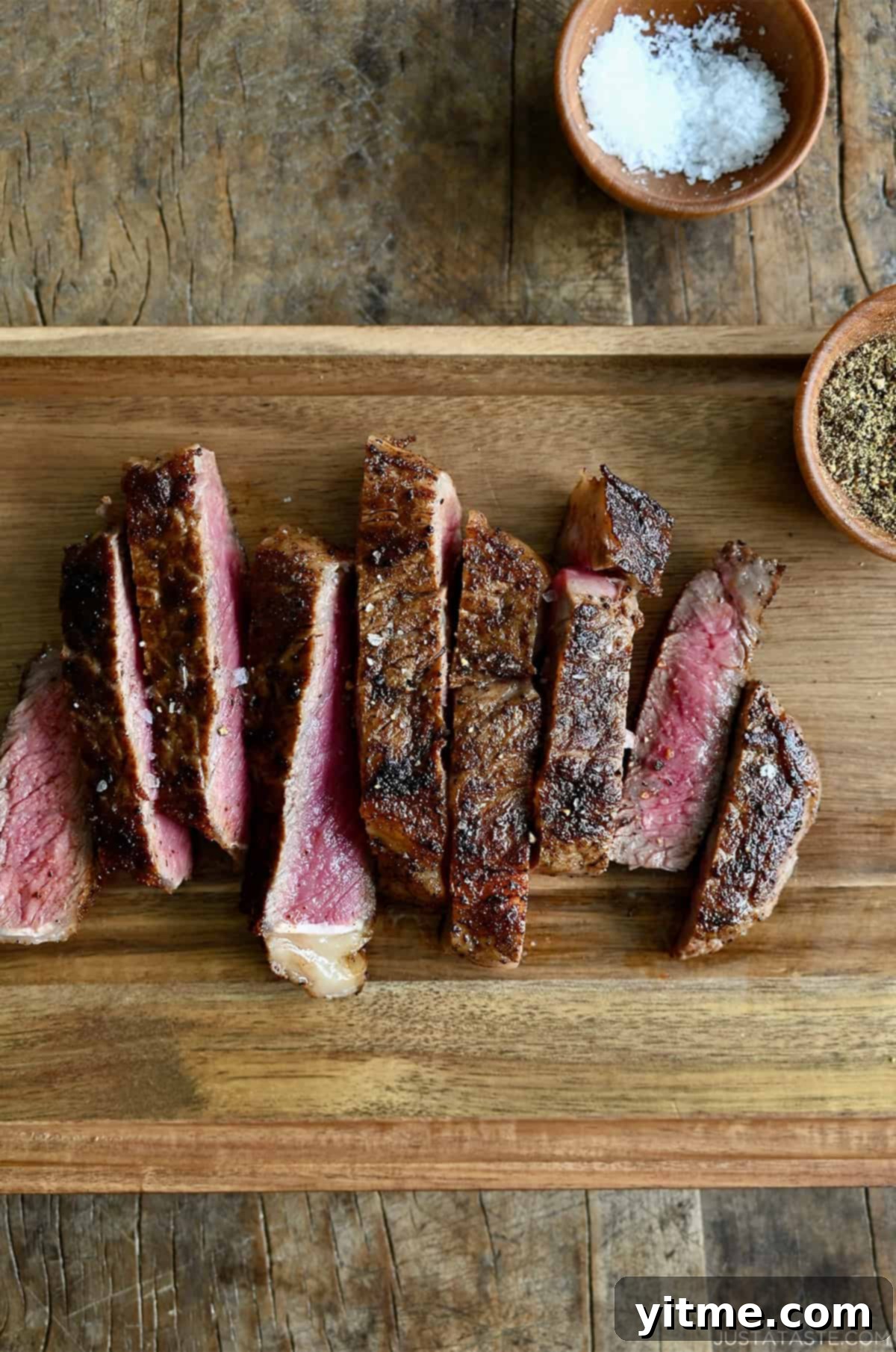
Pan Seared Steak Recipe: Achieve Restaurant-Quality Results at Home
Pan-searing is the most straightforward method to cook a delicious steak right in your kitchen. This guide provides a detailed walkthrough of each step, starting from selecting the right cut of meat and proper seasoning, to choosing the appropriate pan for that coveted perfect sear, and ultimately, how to accurately test for doneness. Say goodbye to expensive steakhouse dinners and prepare for golden-brown crusts, irresistibly juicy centers, and that sought-after restaurant flavor, all within the comfort of your own home.

Table of Contents
- How to Cook the Perfect Steak
- Best Steak Cuts for Pan-Searing
- Our Favorite Cuts for Pan-Searing
- Considerations for Bone-In Steaks
- Steak Seasoning: Simplicity is Key
- Preheating Your Pan for the Ideal Crust
- Choosing the Right Cooking Oil
- Cooking Your Steak Hot and Fast
- How to Tell When Your Steak Is Done
- Resting and Slicing Your Steak
- What to Serve with Steak
- Pan-Seared Steak Recipe
How Do You Cook the Perfect Steak?

This is a frequently asked question, and the answer can vary depending on the cut of beef in question. Should you bake it, broil it, sear it, or grill it? The possibilities seem endless. However, when it comes to consistently cooking the perfect steak, we consistently rely on a restaurant-proven method: high heat and a swift sear.
This stovetop method transforms what might be perceived as a special-occasion indulgence into a quick and easy meal suitable for any weeknight. The best part? No need for a grill or any complicated equipment – just a reliable cast-iron or stainless steel skillet (more information below!), high heat, and a few professional tips honed from years of culinary training and extensive kitchen experimentation.
Ready to discover the secrets of cooking steak on the stovetop? Let’s get started!
Best Steaks for Pan-Searing
Selecting the best steak for stovetop cooking relies on two primary factors: thickness and marbling.
- Opt for boneless steaks between 1 and 1.5 inches thick. Thinner steaks (like flank or flat-iron) are suitable for pan-searing, but require quick cooking (perfect for recipes like beef stir-fry). Steaks thicker than 2 inches (such as a large filet mignon or porterhouse) benefit from a sear-then-oven cooking process, ensuring the inside is cooked to perfection without over-browning the exterior. Boneless steaks also promote more even cooking in a pan, as bones act as insulators, which can interfere with doneness near the bone.
- Marbling is synonymous with flavor. The intricate network of white intramuscular fat that permeates the muscle tissue of a quality cut of beef is known as “marbling.” This is your inherent flavor enhancer. As the steak cooks, this intramuscular fat melts, creating a self-basting effect that yields a juicier, more tender, and flavorful steak. Leaner cuts with less marbling will have proportionally less flavor.
Our Favorite Cuts for Pan-Searing
- New York Strip: An excellent balance of flavor and tenderness, making it ideally suited for stovetop cooking.
- Ribeye: Known for its exceptional juiciness and robust, beefy flavor, thanks to its relatively high fat content.
- Filet Mignon: A lean and supremely tender option, perfect for special occasions.
- Top Sirloin: A more budget-friendly option that still boasts ample flavor and is well-suited for a high-heat sear.
- Bavette: (A current personal favorite!) A flavorful butcher’s cut with a looser grain, offering a satisfying texture when sliced against the grain.
What About Bone-In Steaks?
Can you effectively pan-sear a bone-in ribeye or T-bone steak? Absolutely—however, the bone tends to slow down the cooking process and can contribute to uneven doneness. For the most consistent stovetop results, we recommend choosing boneless cuts. Save bone-in cuts like tomahawks and porterhouses for the grill or oven, where the heat can circulate more evenly.
Seasoning: Keep It Simple
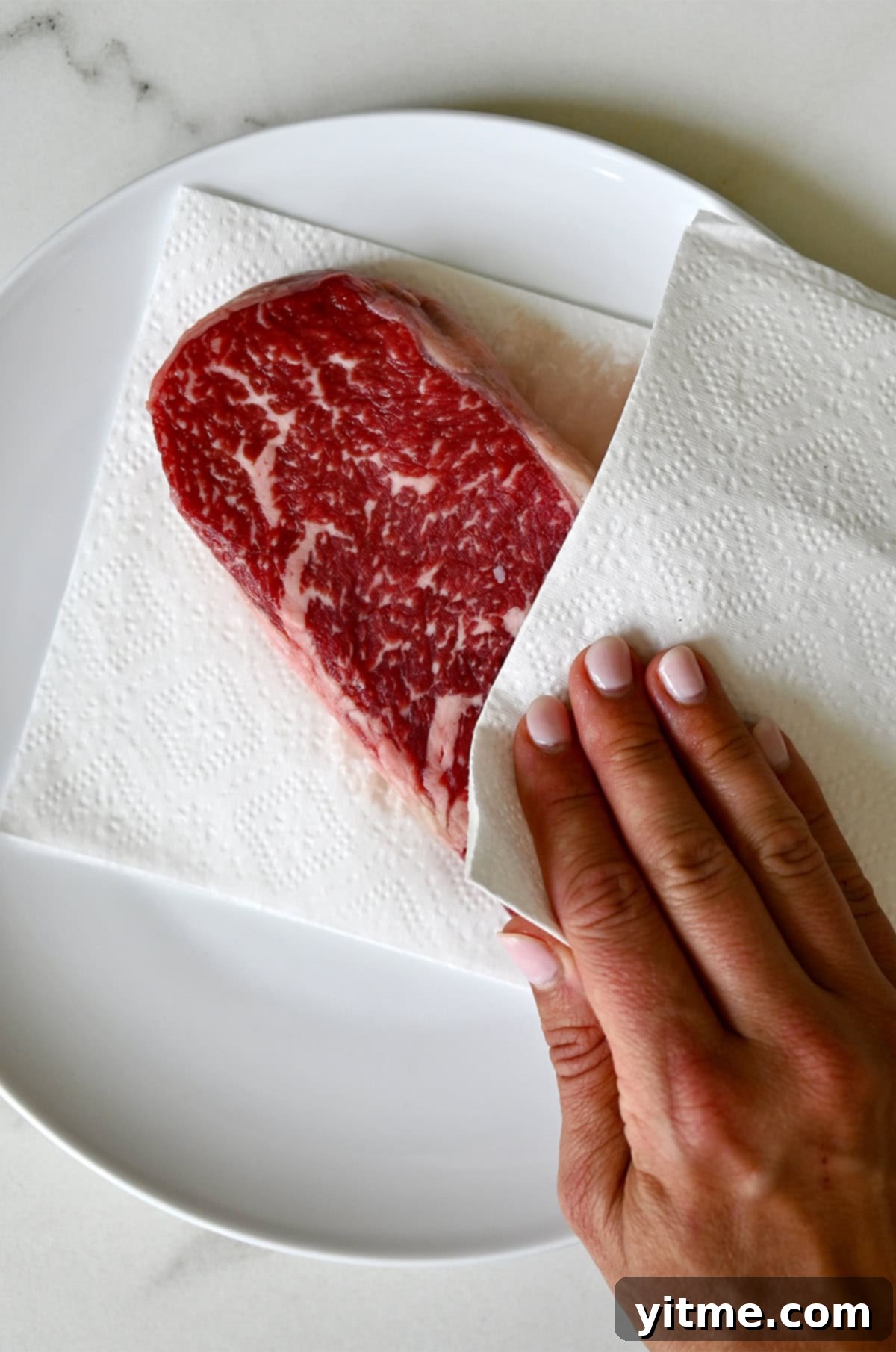
After selecting your preferred cut of steak, allow it to sit at room temperature for at least 30 minutes before cooking. Thoroughly pat it dry on all sides with paper towels (moisture hinders the formation of a good crust). Season generously with kosher salt, and if desired, add freshly ground black pepper. A great cut of beef requires minimal seasoning to truly shine—but you are certainly welcome to experiment with your preferred rubs and spices.
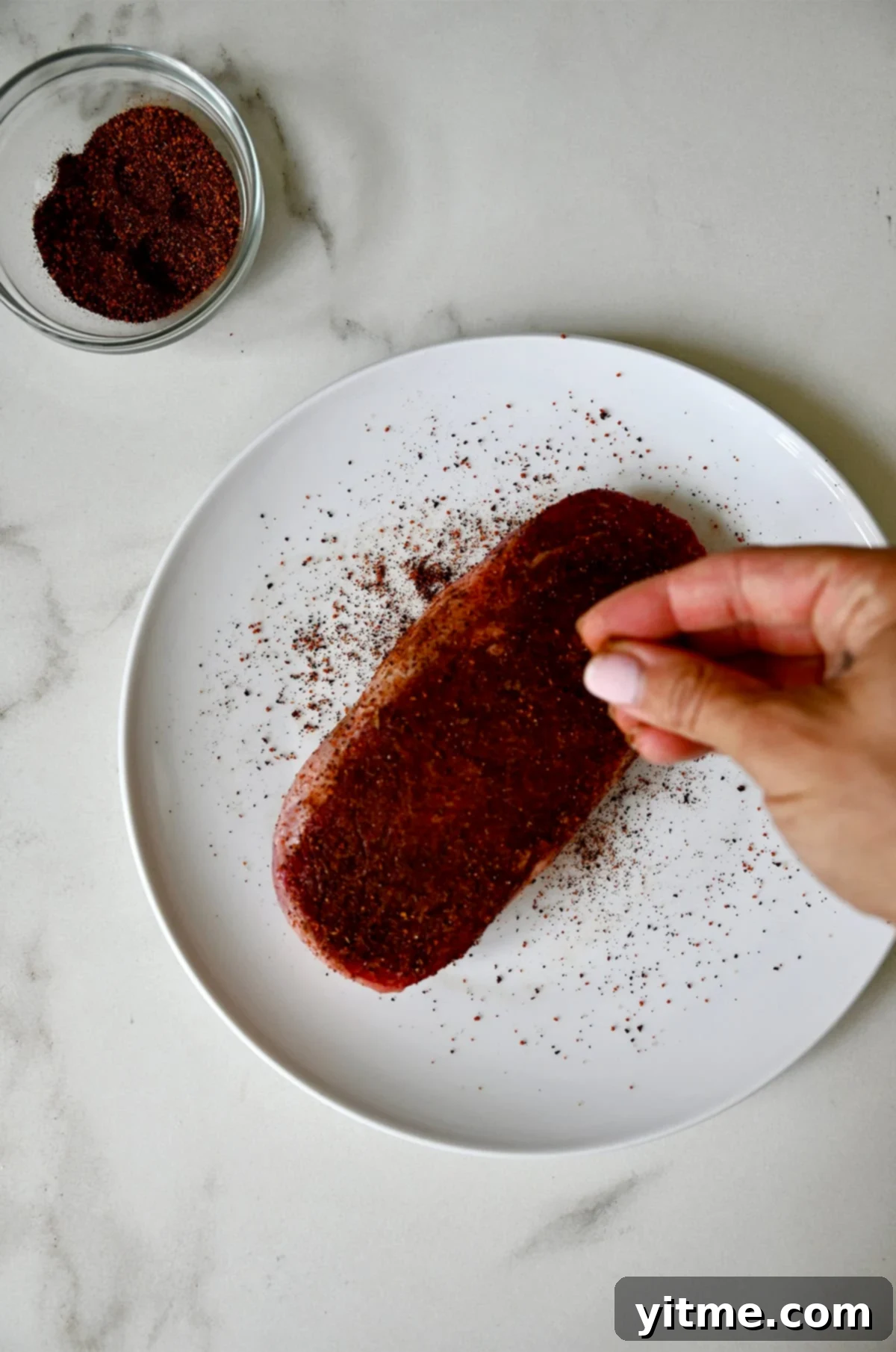
In terms of dry rubs, a smoky mix of spices with coffee can add a depth and steakhouse-worthy crust to repeat with other meals.
Preheated Pan = Perfect Crust
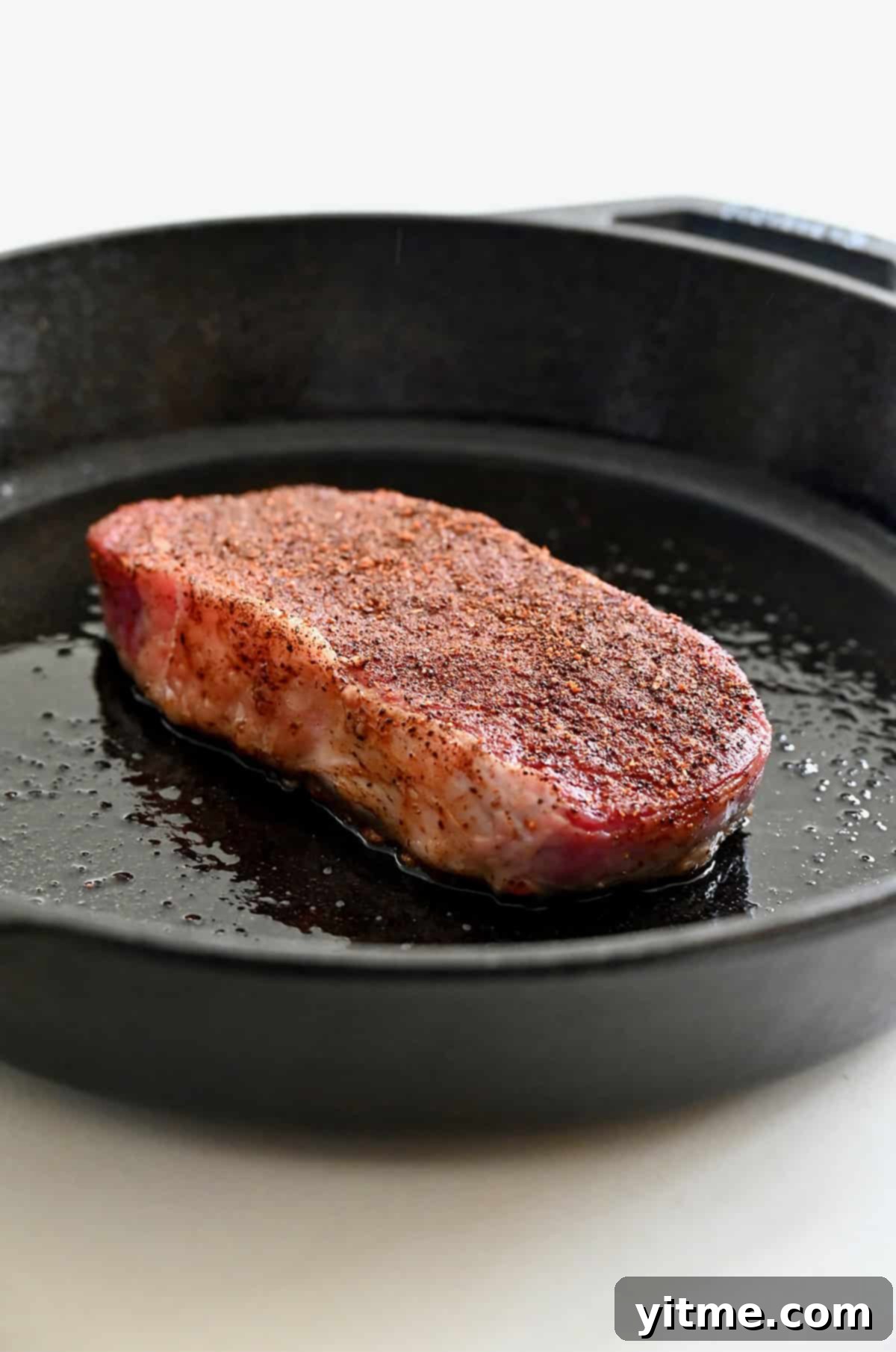
The key to producing a steak comparable to those served in high-end steakhouses lies in one word: preheating. A thoroughly heated pan guarantees that irresistible outer crust with a tender, juicy interior.
This is where science meets the art of steak preparation: the coveted golden-brown crust and savory flavor originate from the Maillard reaction – a complex browning process that occurs when amino acids and sugars in the meat react at high temperatures. In simpler terms, heat equals flavor.
A cast iron pan is the perfect choice, but stainless steel will also suffice. In contrast to nonstick surfaces, cast iron and stainless steel allow the meat to “stick” just long enough to allow the crust to form before naturally releasing.
Pro Tip: Preheat your pan over medium-high heat for at least 2 minutes before adding the steak. If you believe the pan is hot enough, give it just one more minute for good measure.
Choosing the Right Fat
Prior to placing the steak in the pan, add just enough oil to lightly coat the bottom surface. It’s essential to choose an oil with a high smoke point to prevent it from burning before the steak finishes searing. Vegetable and avocado oil are both excellent choices, but avoid extra virgin olive oil, as it tends to smoke and burn too quickly.
What about butter? Save the butter for the final stages. While it contributes rich flavor, it will scorch if used for the initial sear. Instead, add it after flipping the steak for a luxurious, steakhouse-style butter baste.
Cook Your Steak Hot and Fast
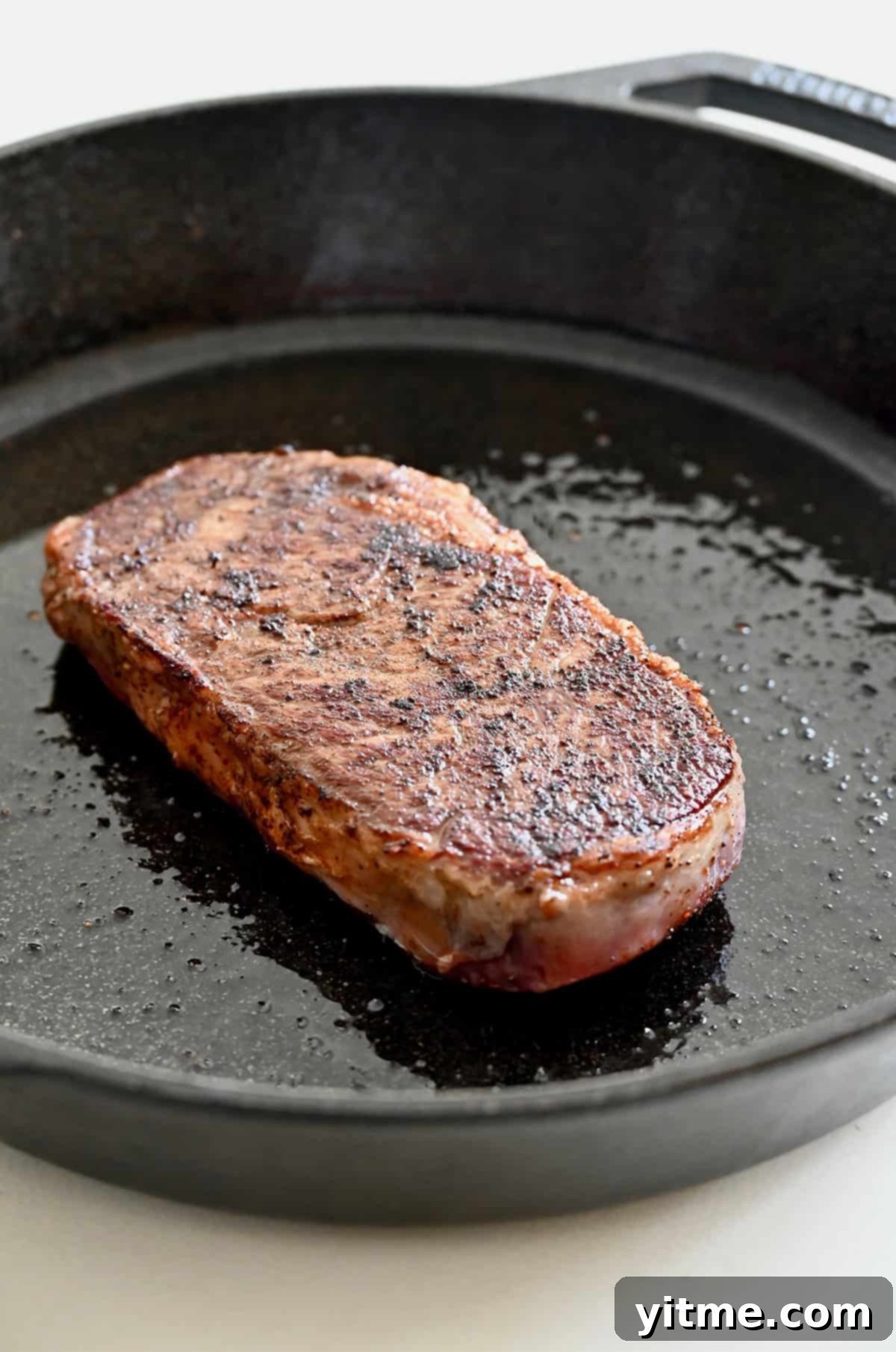
Once the oil appears shimmering, gently place the steak in the pan. As soon as it touches the hot surface, resist the urge to move it. By allowing the steak to remain undisturbed, it establishes a strong bond with the hot pan, triggering the Maillard reaction and initiating the development of the golden crust. The steak will naturally release from the pan when it is ready to be flipped, generally after 3 to 5 minutes, depending on its thickness. If it sticks, then it’s not ready to be flipped. Do not attempt to rush the initial searing process.
Once the steak releases easily from the pan, flip it to sear the opposite side.
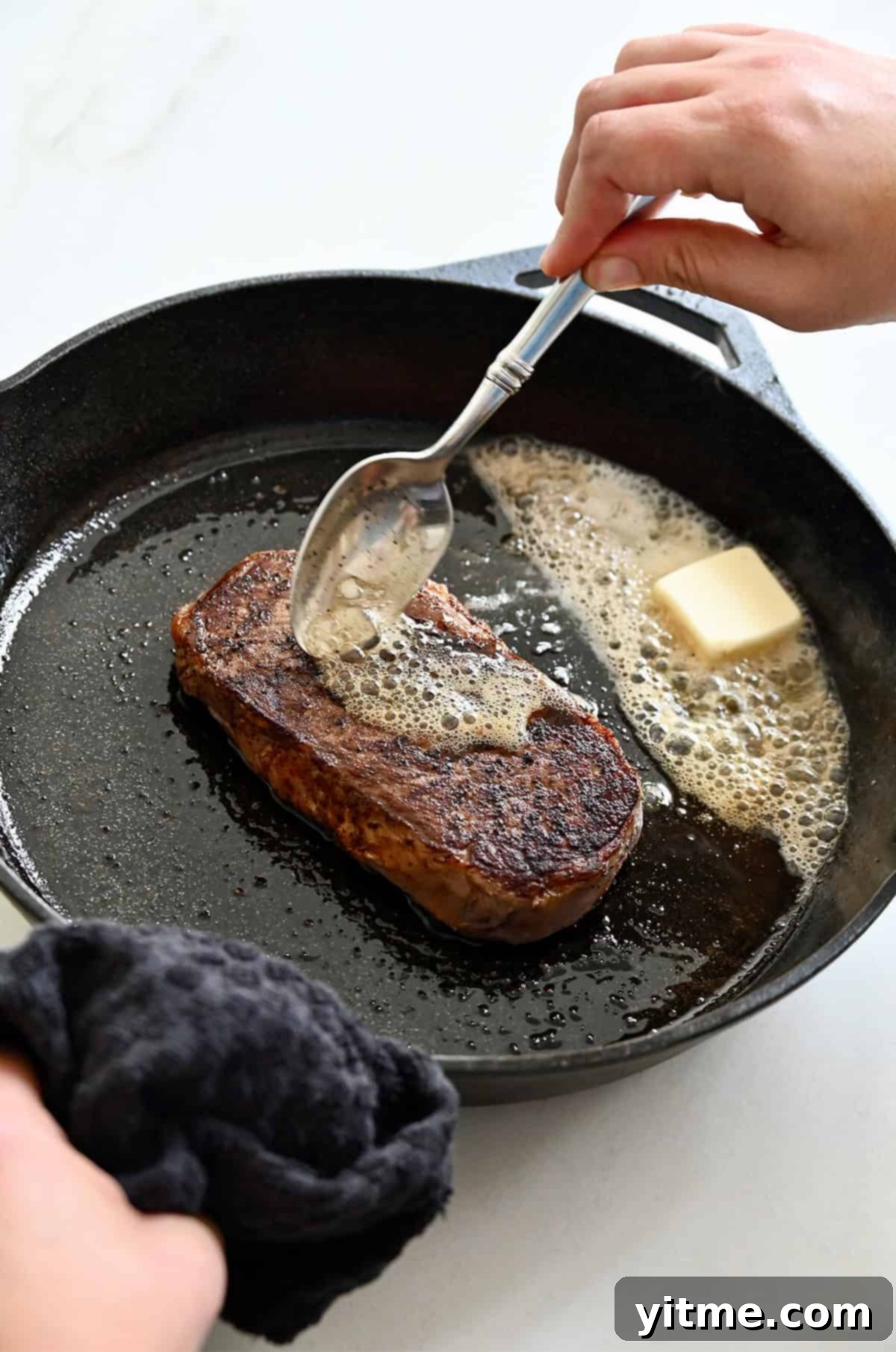
Now, here’s a technique favored by professional chefs: the butter baste. Approximately halfway through the cooking process, add a knob of butter (along with a couple of smashed garlic cloves and sprigs of thyme or rosemary, optional but certainly adds a great touch!). Tilt the pan slightly and repeatedly spoon the hot butter over the steak. Butter basting not only enhances flavor but also keeps the surface moist while the crust fully develops.
How to Tell When Your Steak Is Done
The most reliable method for determining when your steak has reached perfect doneness is by using a digital meat thermometer. Start checking the internal temperature around halfway through the cooking time—typically around the 4-minute mark for most steaks—to gauge how much longer the steak requires. Factors such as thickness, heat intensity, and the specific cut all play a role, and a thermometer eliminates any guesswork.
Pro Tip: Remove the steak from the pan when it is 5 to 10°F below your desired doneness level, as the temperature will continue to rise as it rests (a process known as carryover cooking).
Here’s a concise guide to internal temperatures:
- Rare = 125ºF (cool red center): Remove from heat at 120–125°F for a final temperature of 125–130°F
- Medium Rare = 130 – 135ºF (warm red center): Remove from heat at 125–130°F for a final temperature of 130–135°F
- Medium = 135 – 140ºF (some pink inside): Remove from heat at 135°F for a final temperature of 140°F
- Medium Well = 140 – 150ºF (slightly pink center): Remove from heat at 145°F for a final temperature of 150°F
- Well Done = 150ºF (fully cooked, little to no pink): Remove from heat at 155°F for a final temperature of 160°F+
The USDA recommends cooking steak to an internal temperature of at least 145°F for food safety, although many chefs (including myself) prefer to cook to lower temperatures for enhanced flavor and texture.
Rest, Then Slice
Once your steak reaches its target temperature, transfer it to a cutting board, tent loosely with aluminum foil, and allow it to rest for a minimum of 5 minutes before slicing. This resting period allows the juices to redistribute evenly throughout the meat, ensuring that each bite is just as juicy and flavorful as the one before.
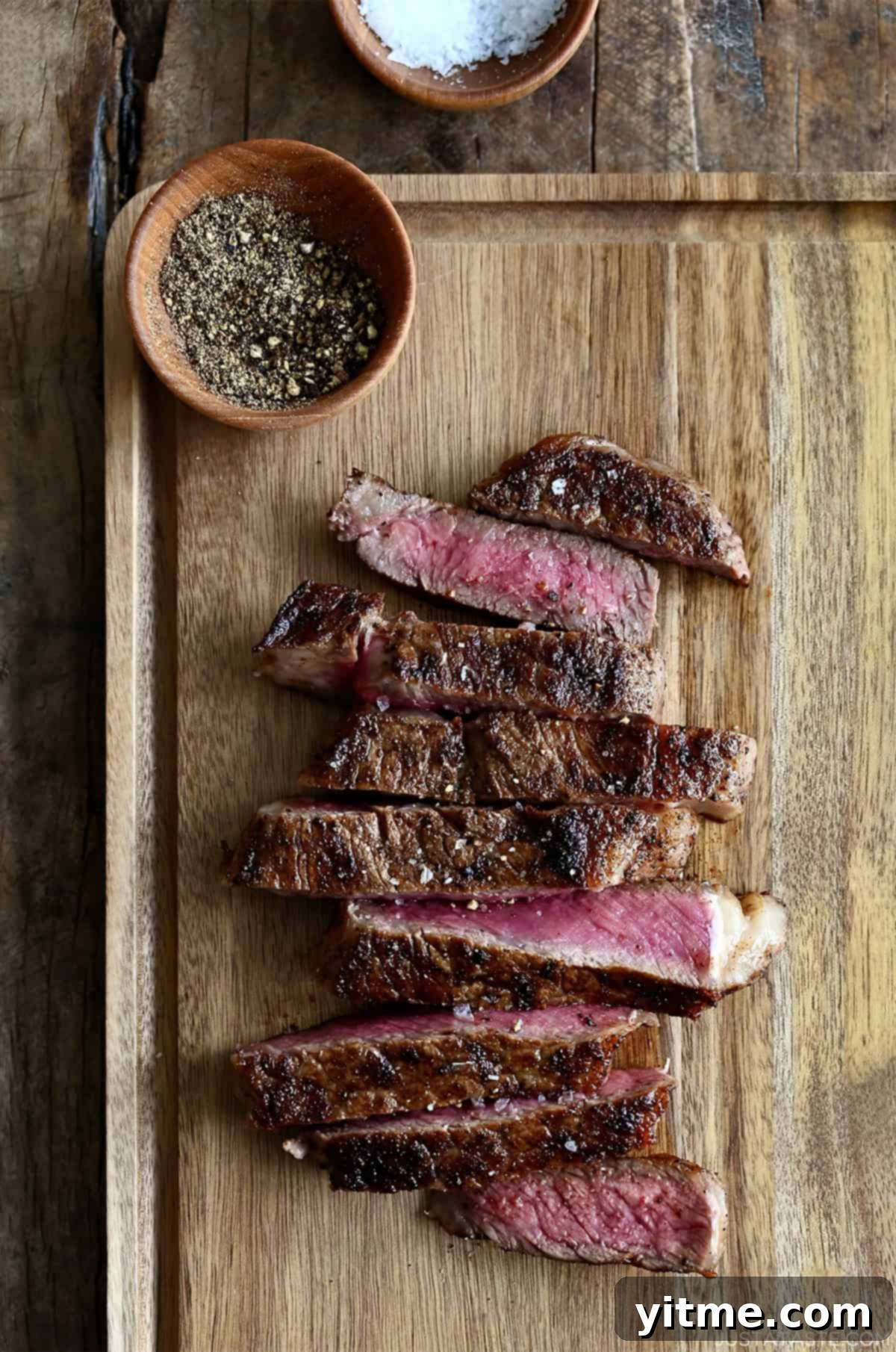
When slicing, always cut against the grain. The “grain” refers to the natural alignment of muscle fibers within the steak. You will notice them as faint lines running in a consistent direction across the surface. Position your knife perpendicular to these lines (cutting across them rather than parallel). This effectively shortens the muscle fibers, resulting in a more tender and easier-to-chew bite. If you are unsure of the grain direction, carefully examine the surface of the cooked steak – the grain usually runs lengthwise. Rotate your cutting board to ensure your knife slices across these lines, not along them.
What to Serve with Steak
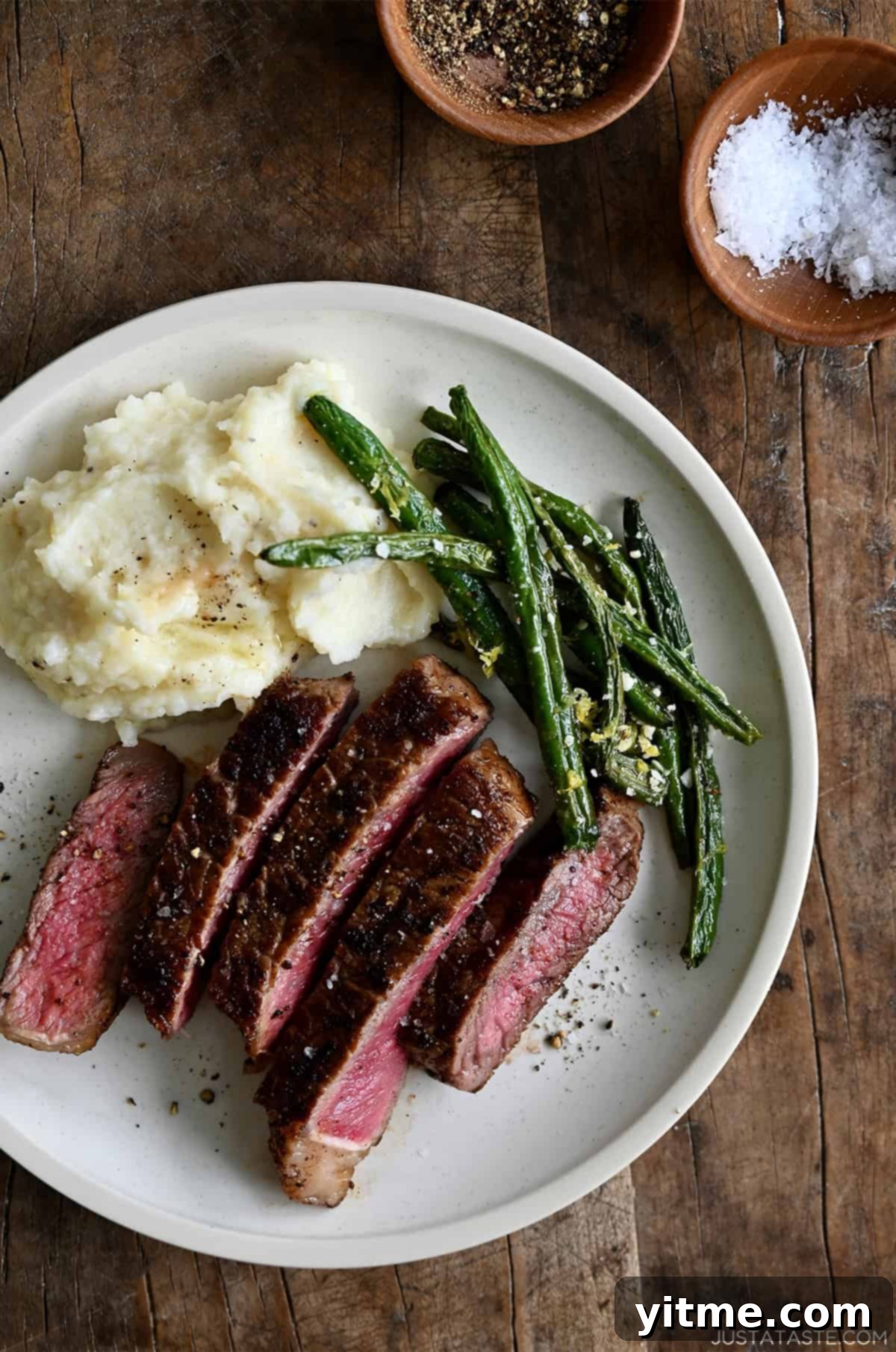
One of the greatest aspects of stovetop steak is its remarkable versatility. You can maintain a classic approach with traditional steakhouse side dishes, opt for a lighter option with a fresh salad, or explore more creative pairings with rice bowls and various sauces. Here are a few of our preferred pairings:
- Classic appetizers: Wedge Salad with Buttermilk Dressing or Steakhouse Tomato Salad with Blue Cheese
- Vegetable sides: Roasted Green Beans, Roasted Brussels Sprouts with Pancetta or Bacon-Wrapped Asparagus
- Comfort food favorites: Drop Biscuits, Creamy Green Bean Casserole or Stovetop Mac & Cheese
- Starch pairings: Mashed Potatoes or crispy homemade French Fries
- Sauces and butters: Chimichurri Sauce or Cowboy Butter
- Homemade Dinner Rolls
- Steak + salad combo: Sliced steak atop Kale Caesar Salad
- Teriyaki Bowls, served over Creamy Coconut Rice with a side of veggies.
Craving more delicious recipes? Subscribe to receive new recipes, meal plans, and our newsletter directly to your inbox! Stay connected with us on Facebook, TikTok, Pinterest and Instagram.
Pan-Seared Steak Recipe
Pan-Seared Steak Recipe
Pan-seared steak is fast, foolproof and packed with flavor. With a hot skillet and a simple butter baste, you’ll get a golden crust outside and a juicy, tender center inside.
Author: Kelly Senyei
Rating: 5/5
Serves: 4
Prep Time: 5 mins
Cook Time: 15 mins
Total Time: 20 mins
Ingredients
- 4 steaks (New York strip, ribeye, filet mignon or bavette), 6 to 8 ounces each and about 1 to 1½ inches thick
- Kosher salt and freshly ground black pepper, to taste
- 2 Tablespoons vegetable or avocado oil
- 3 Tablespoons unsalted butter
- 3 garlic cloves, smashed (optional)
- 3 to 4 sprigs fresh thyme or rosemary (optional)
Instructions
- Pat the steaks dry and season generously with salt and pepper.
- Place a cast-iron or stainless steel skillet over medium-high heat. Add the oil and heat until shimmering.
- Add the steaks and sear, undisturbed, until a crust forms and they naturally release from the pan, 3 to 5 minutes. Using tongs, flip the steaks once, and add the butter. If you’re using garlic and/or herbs, add them now, too. As the butter melts, tilt the skillet and baste the steaks repeatedly with the butter until they reach your desired doneness.
- Transfer the steaks to a cutting board, then tent them with foil and let them rest for 5 to 10 minutes. Slice against the grain and serve.
Kelly’s Notes
- Cook in batches: Unless you have an oversized skillet, sear 2 steaks at a time so the pan stays hot and your steaks sear instead of steam. Transfer the cooked steaks to a cutting board and tent loosely with foil to keep them warm while you finish the rest.
- Slicing steak: Always slice against the grain. Look for the natural lines of muscle fibers running across the steak and cut perpendicular to those lines for the most tender bites.
- Internal temperatures (pull from the pan 5–10°F before final temp):
- Rare: 120–125°F → final 125–130°F
- Medium-rare: 125–130°F → final 130–135°F
- Medium: 135–140°F → final 140–145°F
- Medium-well: 145–150°F → final 150–155°F
- Well-done: 155–160°F → final 160°F
- The USDA recommends cooking steaks to at least 145°F.
Nutrition
Calories: 491kcal | Carbohydrates: 0.01g | Protein: 34g | Fat: 40g | Saturated Fat: 17g | Polyunsaturated Fat: 2g | Monounsaturated Fat: 19g | Trans Fat: 0.3g | Cholesterol: 126mg | Sodium: 156mg | Potassium: 458mg | Sugar: 0.01g | Vitamin A: 288IU | Calcium: 14mg | Iron: 3mg