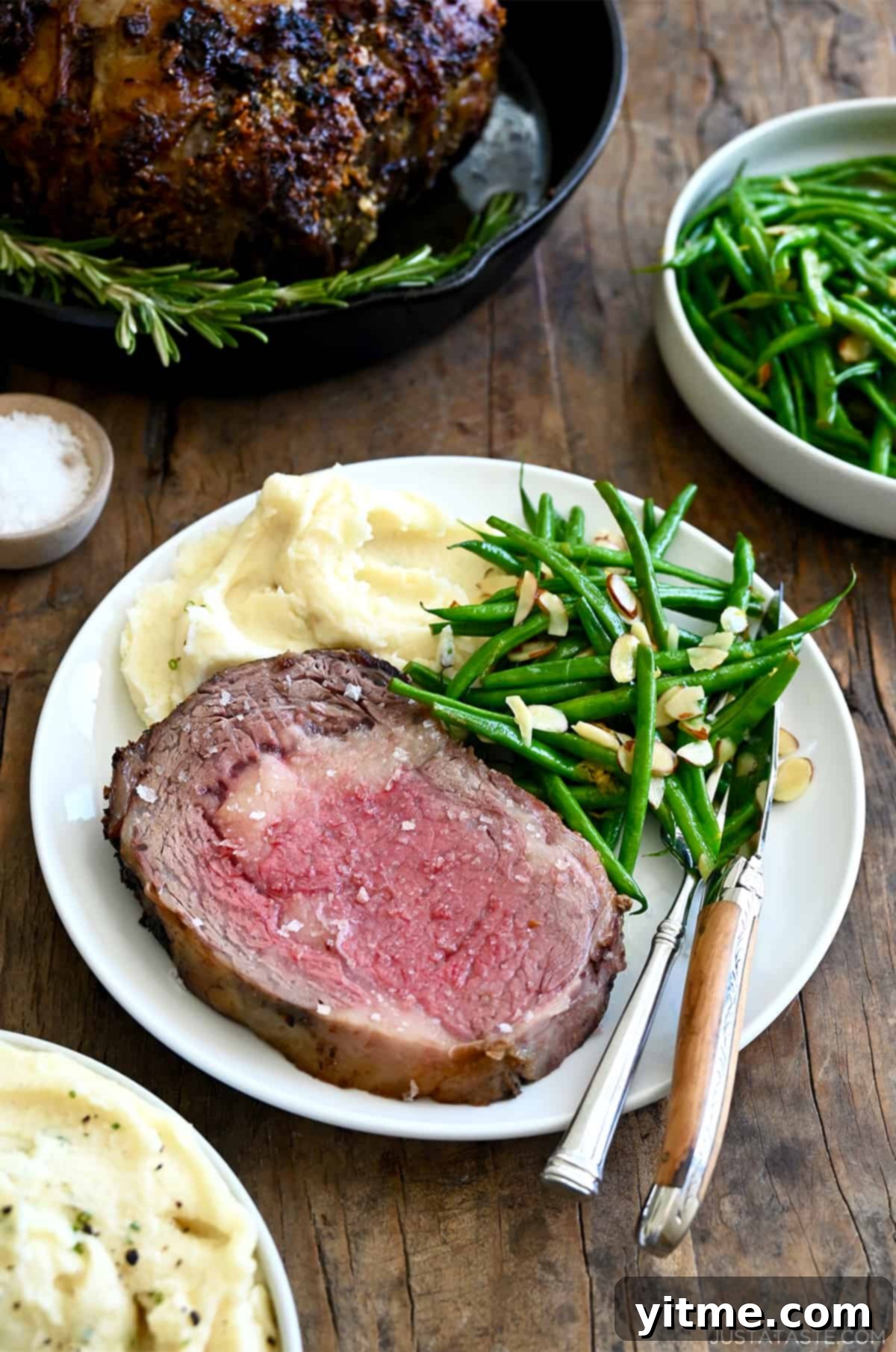
The Ultimate Guide to Easy Prime Rib: Garlic Herb Butter Recipe
Craving a restaurant-quality prime rib without the restaurant price tag? Look no further! This guide provides a simple, foolproof recipe for a delicious prime rib roast, complete with a flavorful garlic-herb butter crust that will elevate your next special occasion. Whether you prefer a bone-in or boneless roast, this recipe will guide you through the process, ensuring a juicy, tender, and unforgettable centerpiece for your meal.
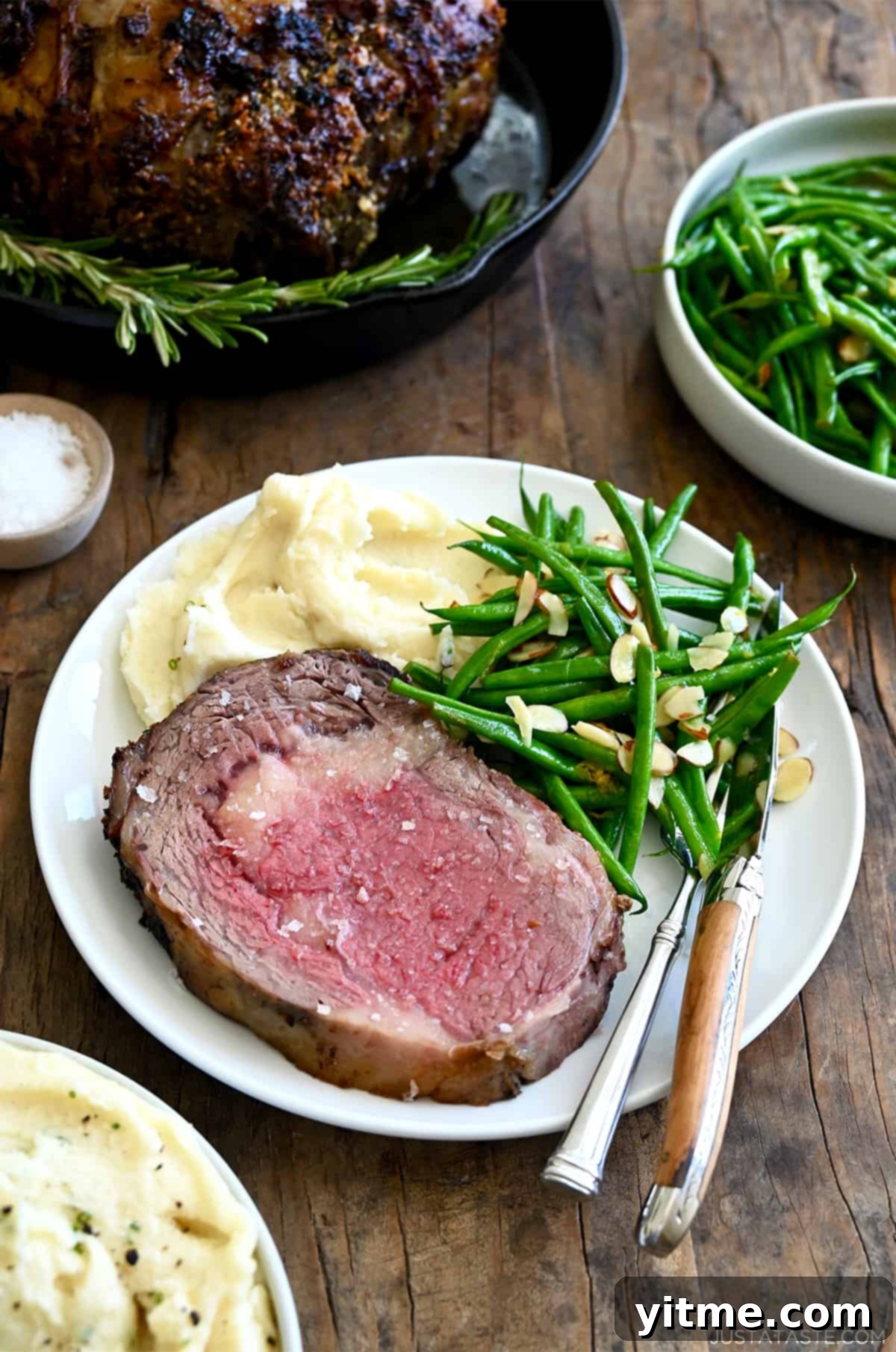
Table of Contents
- Why This Prime Rib Recipe is a Winner
- Bone-In vs. Boneless Prime Rib: Which Should You Choose?
- Selecting the Perfect Prime Rib Roast
- Prime Rib Portions: How Much Per Person?
- Ingredients for Garlic Herb Prime Rib
- Step-by-Step: Cooking Your Prime Rib Roast
- Prime Rib Cook Time and Temperature Chart
- Essential Tips for Prime Rib Success
- The Best Side Dishes to Serve with Prime Rib
- Frequently Asked Questions About Prime Rib
- Printable Recipe: Garlic Herb Butter Prime Rib
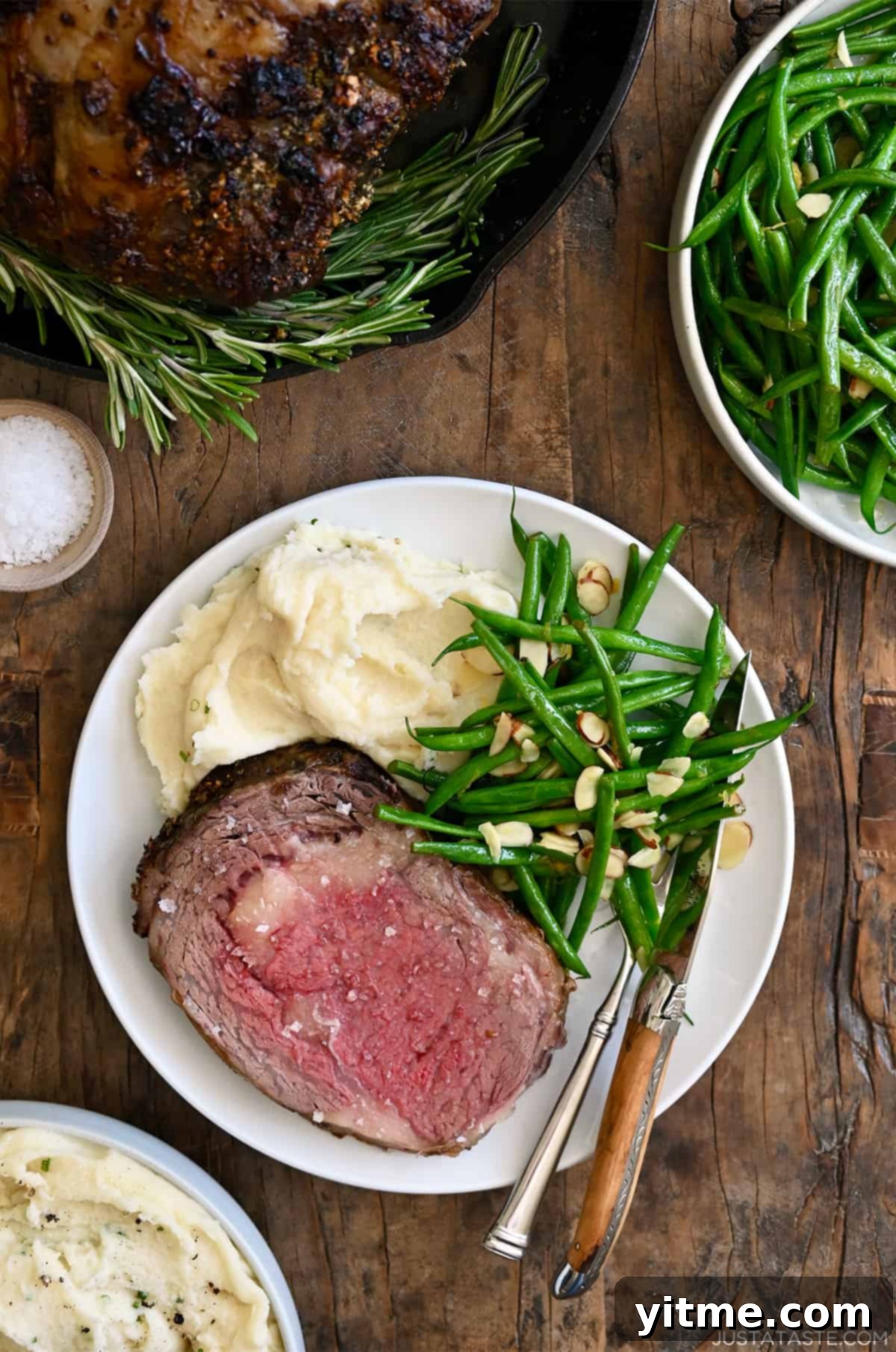
Imagine sinking your fork into a slice of perfectly cooked prime rib, accompanied by blistered green beans and creamy mashed potatoes. This isn’t just any prime rib; it’s a garlic herb-crusted masterpiece that will tantalize your taste buds and leave you wanting more.
This recipe is your comprehensive guide to achieving a restaurant-quality prime rib in the comfort of your own kitchen. Whether you’re celebrating a special occasion, hosting a holiday gathering, or simply craving a gourmet meal, this recipe guarantees a juicy, flavorful, and expertly cooked prime rib that will impress your guests and elevate your dining experience.
Why This Prime Rib Recipe is a Winner
- Effortless Preparation: This recipe has been meticulously tested and refined to ensure ease of preparation and foolproof results, even for novice cooks.
- Versatile Cut Options: Whether you prefer the rich flavor of a bone-in roast or the ease of carving a boneless cut, this recipe works beautifully with both.
- Explosion of Flavor: The garlic herb butter crust infuses the prime rib with layers of savory, aromatic goodness, creating a truly unforgettable flavor profile.
- Restaurant-Quality at Home: Impress your guests with a prime rib that rivals the finest steakhouses, all without leaving your kitchen.
- Juicy, Tender, and Flavorful: This recipe guarantees a prime rib that is incredibly juicy, melt-in-your-mouth tender, and bursting with rich, savory flavor.
- Delicious Leftovers: Transform leftover prime rib into delectable sandwiches, salads, or other creative dishes for days of culinary enjoyment.
Bone-In vs. Boneless Prime Rib: Which Should You Choose?
The age-old question: bone-in or boneless? The choice ultimately comes down to personal preference and your desired presentation. A bone-in roast is known to enhance the meat’s flavor during cooking, imparting a richer, more nuanced taste. The bones also help to insulate the meat, resulting in a more evenly cooked roast.
On the other hand, a boneless cut offers unparalleled ease of carving, making it a convenient option for serving. Boneless prime rib roasts are also often more uniform in shape, which can lead to more consistent cooking. If you’re prioritizing ease of preparation and serving, a boneless roast is an excellent choice.
For those seeking an elegant presentation and an extra layer of flavor, the bone-in option is highly recommended. However, both bone-in and boneless roasts can be transformed into culinary masterpieces with this recipe.
Selecting the Perfect Prime Rib Roast
The key to a truly exceptional prime rib lies in selecting a high-quality roast with generous marbling. Marbling refers to the intramuscular fat that is distributed throughout the meat. This fat renders during cooking, basting the roast from within and contributing to its tenderness and flavor.
When choosing your prime rib roast, look for a cut with well-distributed, fine streaks of fat throughout the muscle. Avoid roasts with large pockets of fat or a lack of marbling, as these will result in a less flavorful and less tender final product. A roast with good marbling will have a vibrant, reddish-pink color and a firm, slightly moist texture.
Freshness is another critical factor. Opt for a roast with a bright, cherry-red color and creamy white fat. Steer clear of roasts with a dull, brownish hue or yellowish fat, as these may indicate that the meat is past its prime. Don’t hesitate to ask your butcher for assistance; they can provide valuable insights into the best cuts available and may even custom trim the roast to your specifications.
Prime Rib Portions: How Much Per Person?
Determining the right amount of prime rib to purchase is crucial for ensuring that everyone at your table is satisfied. As a general guideline, plan on approximately 1 pound of prime rib per person. This generous portion will account for both the meat itself and any bone that may be present.
However, the ideal portion size can vary depending on several factors, including your guests’ appetites and the overall menu. If the prime rib is part of a larger holiday spread with multiple side dishes and appetizers, you can likely reduce the portion size to around half a pound per person.
For a sit-down meal where the prime rib is the main attraction, stick to the 1-pound-per-person rule. Alternatively, you can plan on one rib for every two diners. For example, a four-bone roast will comfortably feed eight guests.
When in doubt, it’s always better to err on the side of caution and purchase a little extra. Leftover prime rib is a culinary treasure that can be enjoyed in countless ways, from sandwiches and salads to hearty stews and flavorful appetizers.
Ingredients for Garlic Herb Prime Rib
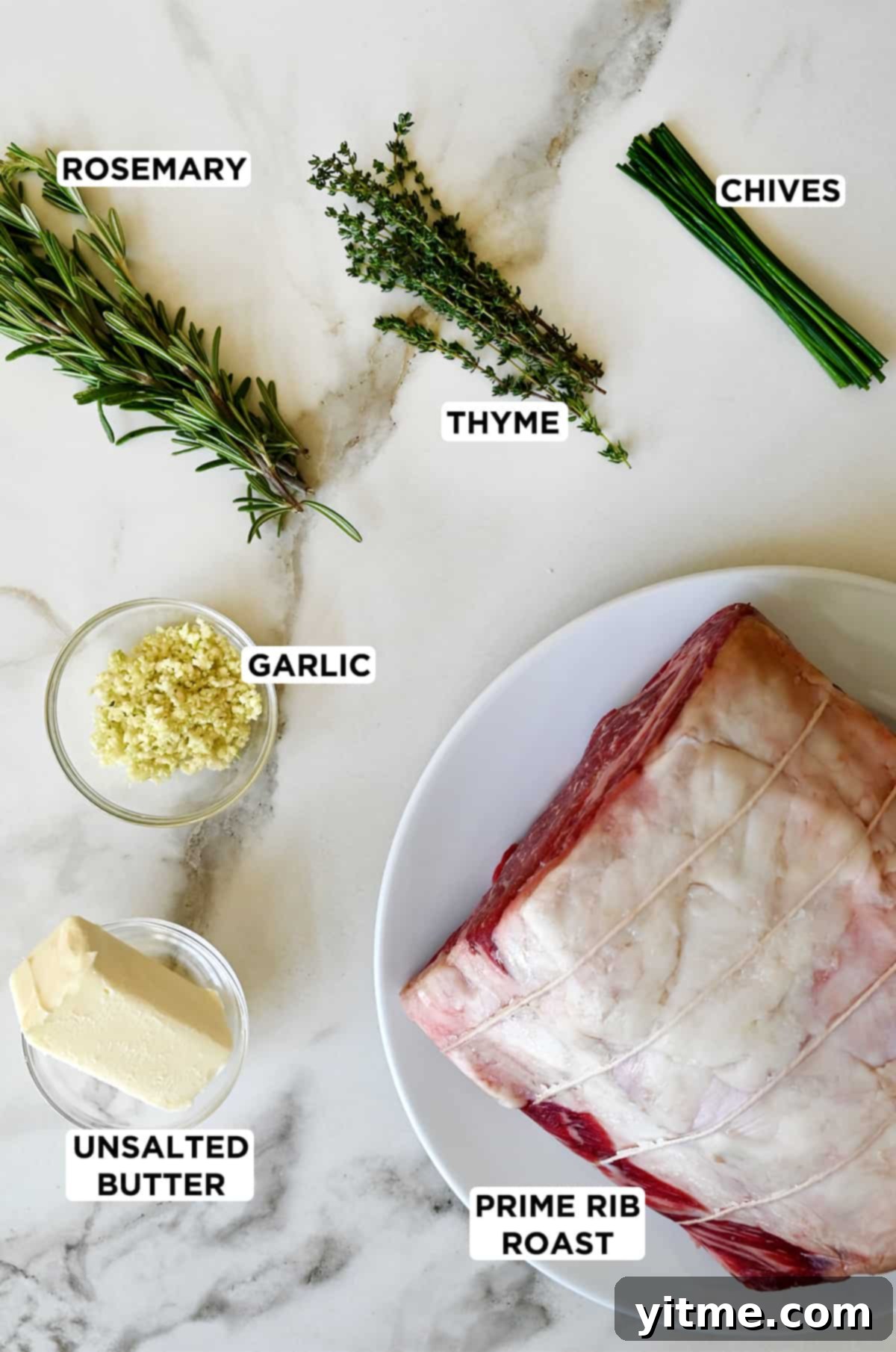
- Prime Rib Roast (Bone-In or Boneless): The star of the show! Select a high-quality roast with generous marbling for optimal flavor and tenderness. The choice between bone-in and boneless is a matter of personal preference.
- Unsalted Butter: Using unsalted butter allows you to control the overall saltiness of the dish. Ensure the butter is at room temperature for easy mixing.
- Fresh Garlic: Minced fresh garlic adds a pungent and savory flavor to the herb butter, creating a delightful aroma and enhancing the overall taste.
- Fresh Herbs (Chives, Rosemary, Thyme): A blend of fresh herbs infuses the butter with aromatic complexity and adds a touch of freshness to the prime rib. While fresh herbs are preferred, dried herbs can be substituted in a pinch. Remember to adjust the quantities accordingly, using about one-third of the amount of dried herbs compared to fresh.
- Kosher Salt and Black Pepper: Essential seasonings to enhance the natural flavors of the beef and the herb butter.
For precise ingredient quantities, please refer to the recipe card located at the end of this guide.
Step-by-Step: Cooking Your Prime Rib Roast
- Bring to Room Temperature: Allow the prime rib roast to sit at room temperature for at least 2 hours before cooking. This crucial step promotes even cooking throughout the roast.
- Preheat the Oven: Preheat your oven to a high temperature of 450°F (232°C). This initial blast of heat is essential for creating a beautiful, flavorful crust on the outside of the roast.
- Pat Dry: Thoroughly pat the prime rib roast dry with paper towels. Removing excess moisture ensures that the herb butter adheres properly and that the roast develops a crisp, golden-brown crust.
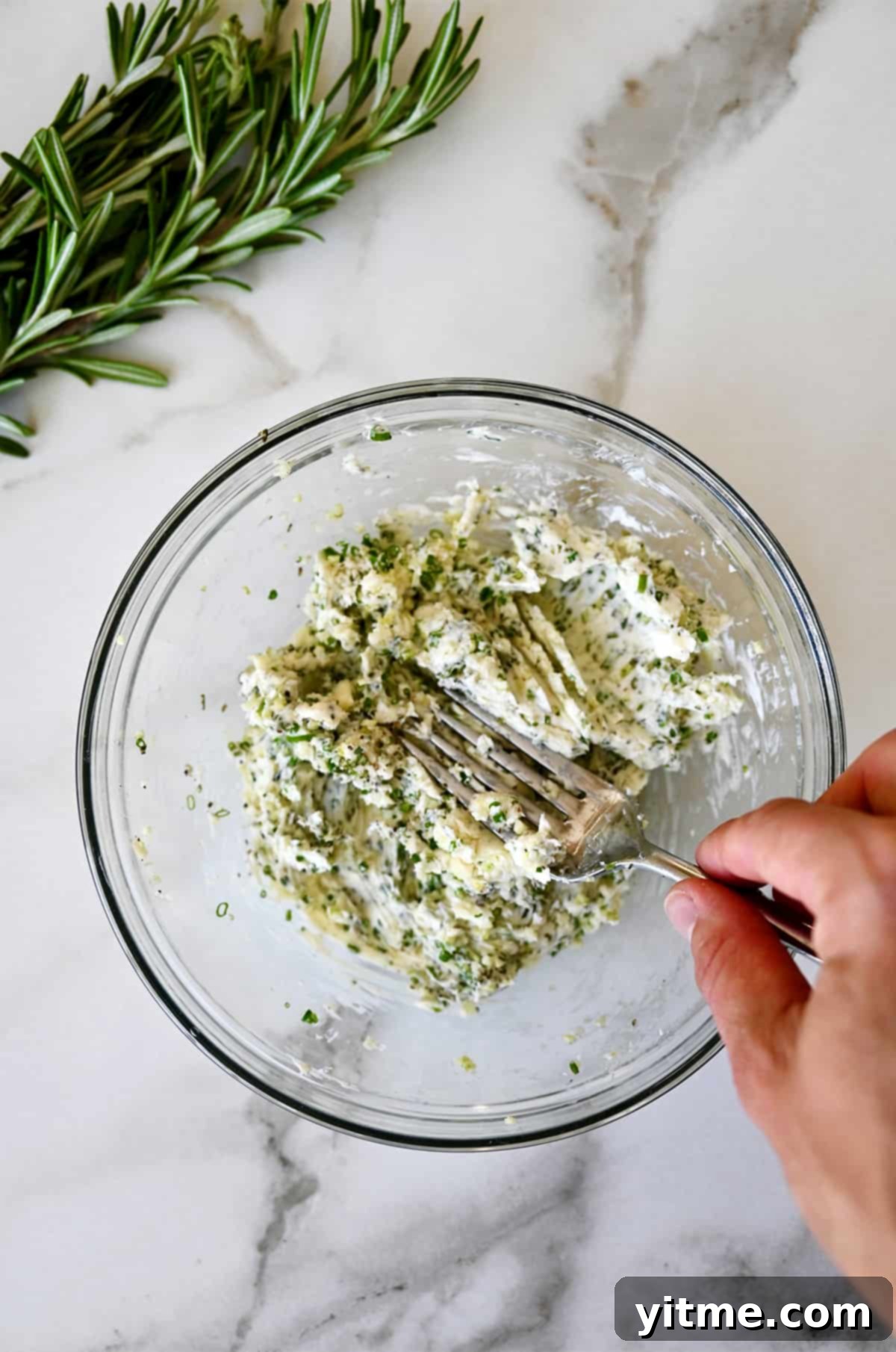
- Prepare the Herb Butter: In a medium-sized bowl, combine the softened butter, minced garlic, chopped chives, minced rosemary, and thyme leaves. Add kosher salt and black pepper to taste. Mix all ingredients together until well combined, creating a fragrant and flavorful herb butter.
- Coat the Prime Rib: Place the prime rib roast bone-side down (if using a bone-in roast) in a cast-iron skillet or roasting pan. Generously slather the garlic herb butter all over the top and sides of the roast, ensuring an even coating.
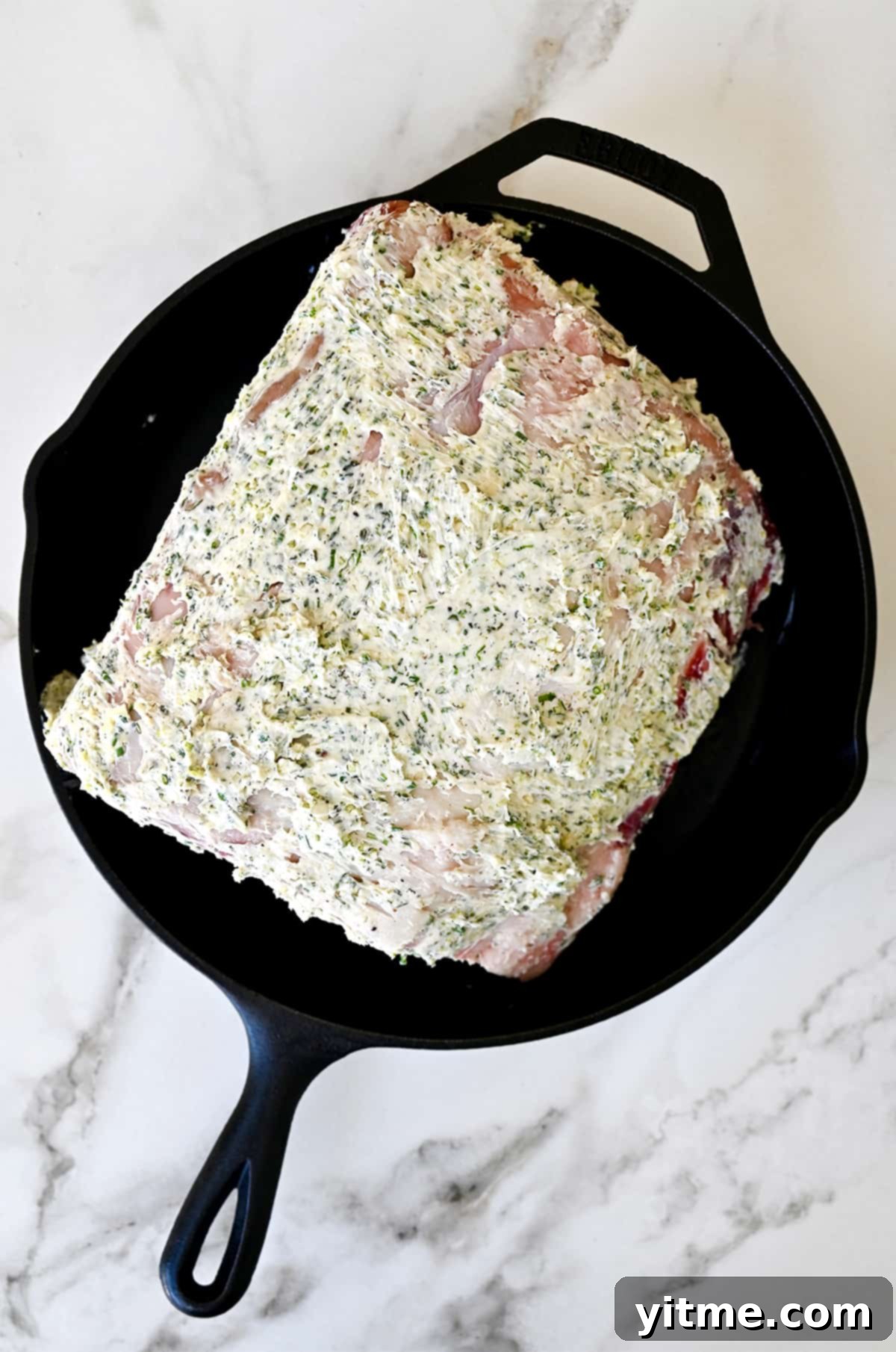
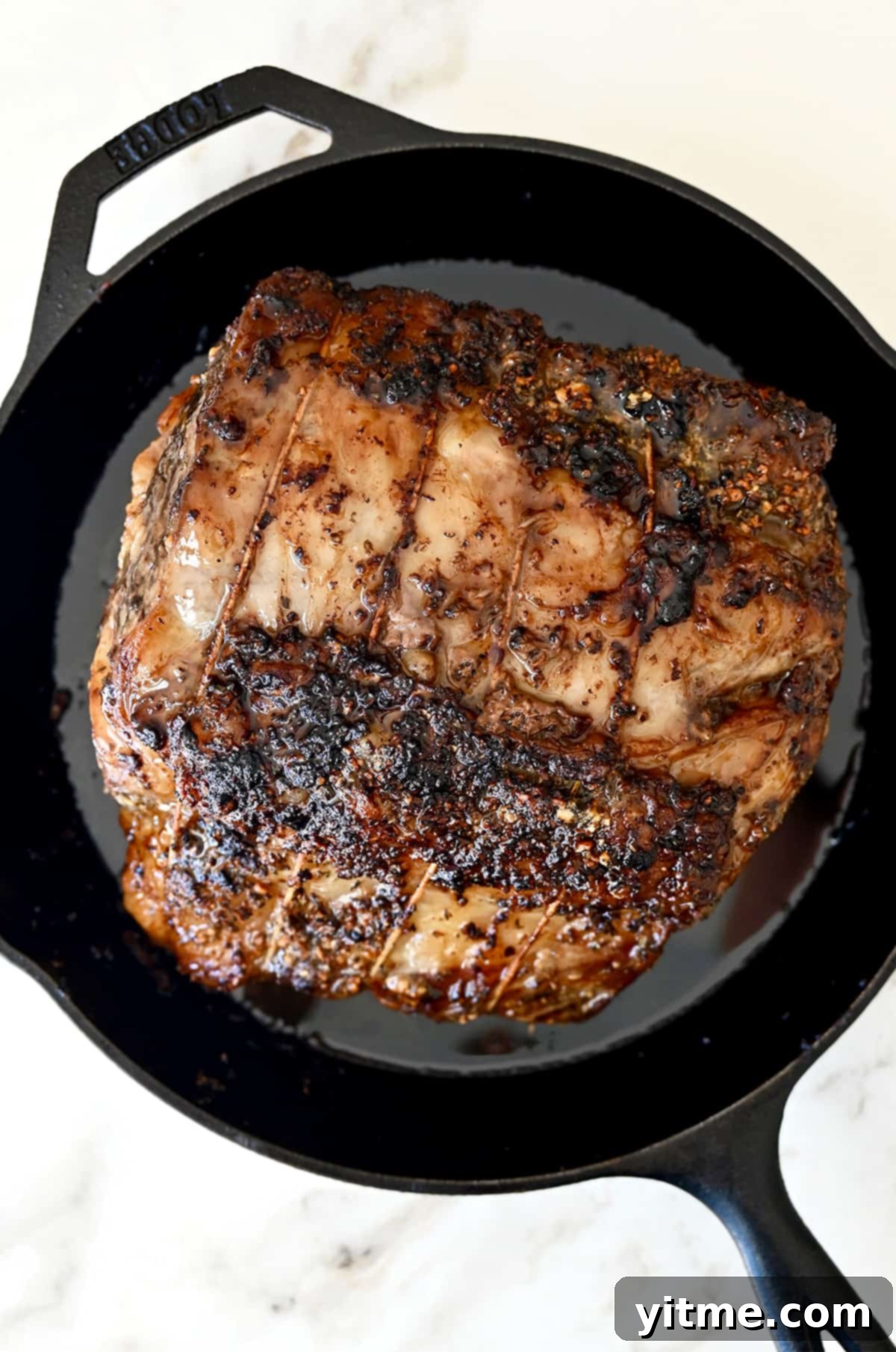
- Roast to Create the Crust: Place the skillet or roasting pan with the prime rib in the preheated oven. Cook for 20 to 25 minutes, or until a rich, dark brown crust forms on the outside of the roast. This high-heat searing process is key to developing the signature flavor and texture of prime rib.
- Lower the Oven Temperature: After the initial searing, reduce the oven temperature to 325°F (163°C). This lower temperature allows the prime rib to cook evenly and slowly, preventing the exterior from overcooking while ensuring that the interior reaches your desired level of doneness.
- Continue Cooking: Continue cooking the prime rib roast until it reaches your desired internal temperature. Consult the cook time and temperature chart below for guidance on timing and temperature ranges for different levels of doneness.
- Rest Before Carving: Once the prime rib has reached your desired internal temperature, remove it from the oven and let it rest for at least 20 minutes before slicing and serving. This resting period is crucial for allowing the juices to redistribute throughout the roast, resulting in a more moist and tender final product.
Prime Rib Cook Time and Temperature Chart
Achieving prime rib perfection requires careful attention to temperature and timing. This chart provides a handy reference for cooking times and internal temperatures based on your desired level of doneness. Remember that these are guidelines, and using a meat thermometer is essential for accurate results.
You’ll begin by roasting the prime rib at 450°F (232°C) for 20-25 minutes to create a beautiful garlic-herb crust. Then, reduce the temperature to 325°F (163°C) and continue cooking until the desired internal temperature is reached.
- Rare: 10-12 minutes per pound
- Medium Rare: 13-14 minutes per pound
- Medium: 14-15 minutes per pound
- Well Done: Not Recommended
The exact cooking time may vary depending on factors such as the thickness of the roast, the accuracy of your oven, and the starting temperature of the meat. Therefore, monitoring the internal temperature with a meat thermometer is paramount.
- Rare: 120°F (49°C) – Remove from the oven at 110°F (43°C)
- Medium Rare: 130°F (54°C) – Remove from the oven at 120°F (49°C)
- Medium: 140°F (60°C) – Remove from the oven at 130°F (54°C)
- Well Done: 160°F (71°C) – Remove from the oven at 150°F (66°C)
Keep in mind that the internal temperature will continue to rise by 5-10 degrees as the prime rib rests outside the oven. Therefore, remove the roast *before* it reaches your desired final temperature to prevent overcooking.
Essential Tips for Prime Rib Success
- Room Temperature is Key: Allowing the prime rib to come to room temperature before roasting promotes even cooking and prevents a cold center.
- Invest in a Meat Thermometer: A reliable meat thermometer is your best friend when cooking prime rib. It ensures accuracy and allows you to monitor the internal temperature closely.
- Rest, Rest, Rest: Resist the urge to slice into the prime rib immediately after removing it from the oven. Letting it rest for at least 20 minutes allows the juices to redistribute, resulting in a more tender and flavorful roast.
- High and Low Temperature Combination: The initial high temperature is crucial for creating that flavorful crust, but don’t skip the essential step of reducing the oven temperature for the remainder of the cooking time. This slow roasting allows the meat to cook evenly and retain its juiciness without overcooking the exterior.
- Carve Against the Grain: When carving the prime rib, slice against the grain to maximize tenderness. This technique shortens the muscle fibers, making each bite easier to chew.
The Best Side Dishes to Serve with Prime Rib
A perfectly cooked prime rib deserves equally delicious side dishes. Here are some classic and complementary options to create a truly memorable meal:
- Creamy Mashed Potatoes or Mashed Sweet Potatoes
- Cheesy Hasselback Potatoes
- Crispy Bacon-Wrapped Asparagus Bundles
- Honey Roasted Carrots
- Muffin Pan Popovers or Homemade Dinner Rolls
- Yorkshire Puddings
- Creamed Spinach
- Horseradish Sauce
- Au Jus Sauce
Frequently Asked Questions About Prime Rib
Both are excellent choices. Bone-in adds flavor and insulation, while boneless is easier to carve.
I highly recommend cooking your prime rib uncovered. This method allows for that perfect sear on the outside, creating a mouthwatering crust that locks in the flavorful juices. Slow roasting uncovered ensures even cooking throughout.
Store leftover prime rib in an airtight container in the refrigerator for up to 3-4 days. Reheat gently in a low-temperature oven (around 250°F/121°C) covered loosely with foil to prevent drying. Avoid microwaving, as it can lead to uneven heating and dryness.
Insert the thermometer into the thickest part of the roast, avoiding bone. Ensure the tip is in the center of the meat for an accurate reading.
Craving more delicious recipes? Subscribe to Just a Taste to get new recipes, meal plans, and a newsletter delivered straight to your inbox! And stay in touch on Facebook, TikTok, Pinterest, and Instagram for all the latest updates.