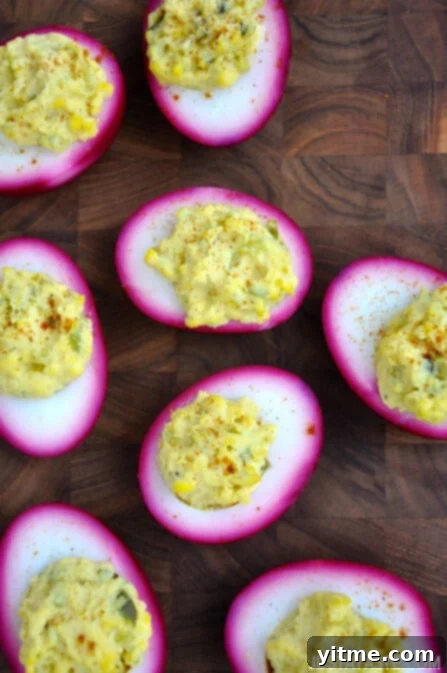
Pickled Deviled Eggs Recipe: Naturally Dyed & Delicious!
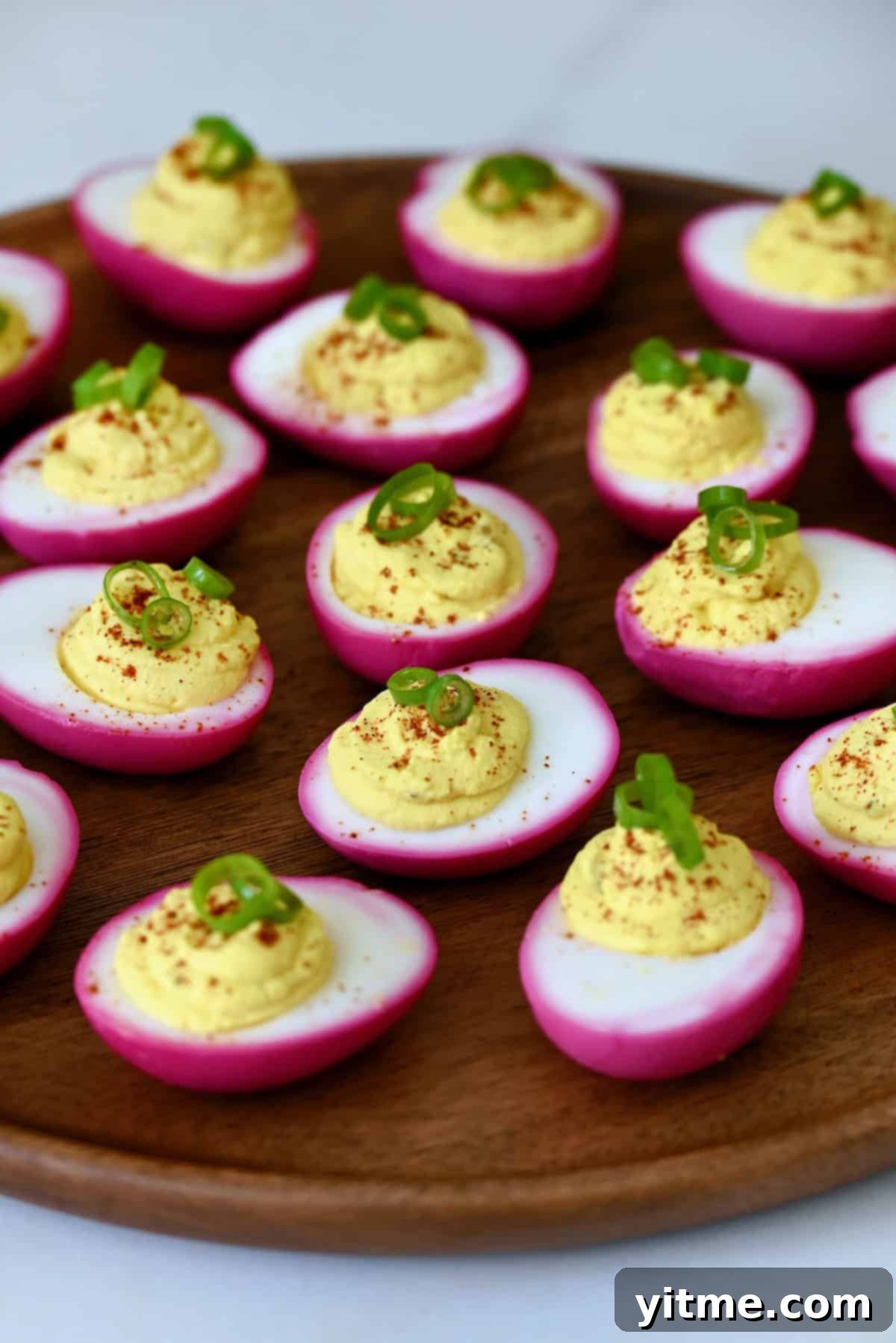
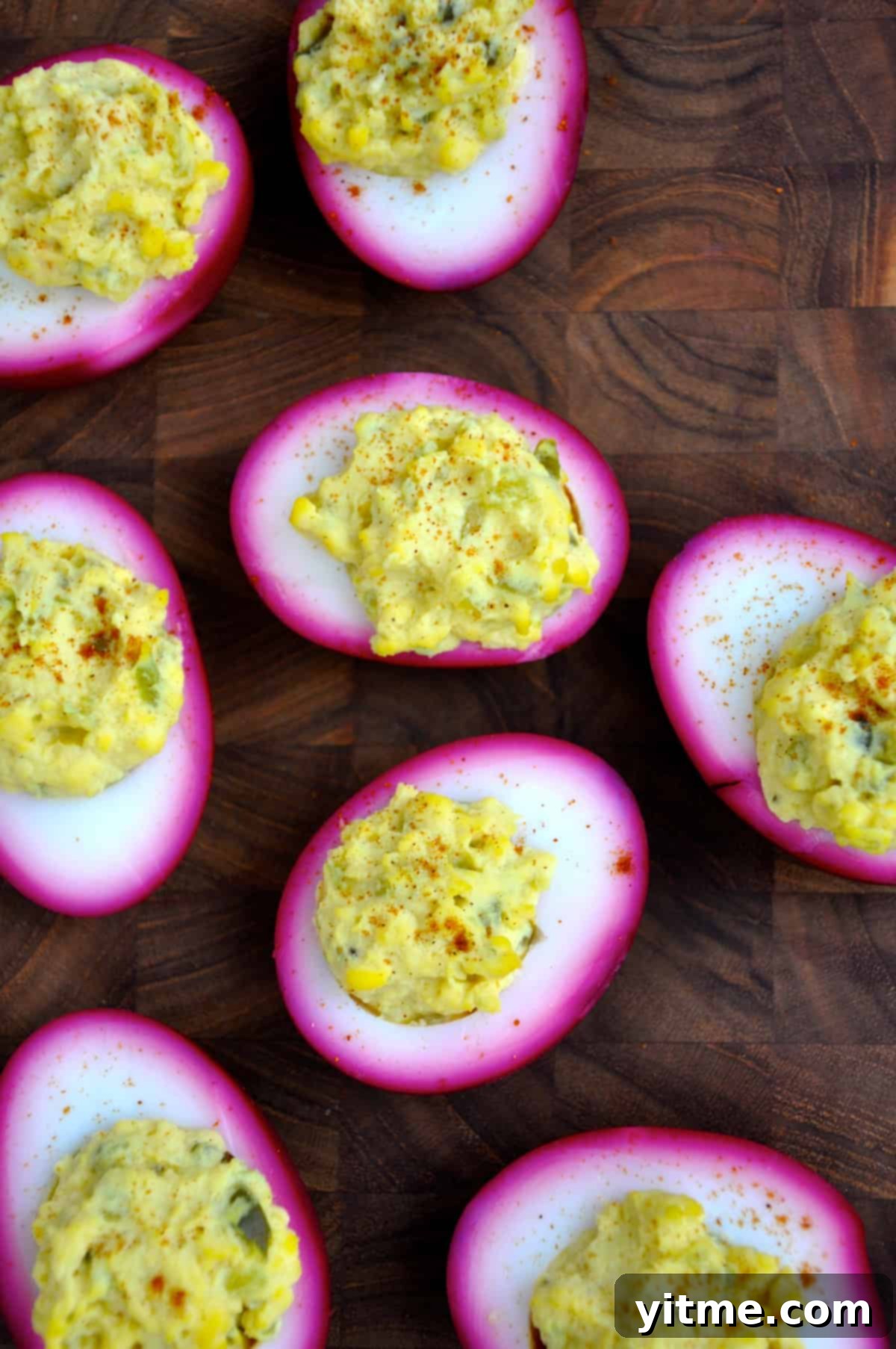
Elevate your Easter celebration with these stunning Pickled Deviled Eggs! A simple, all-natural technique delivers a beautiful, bright pink hue without the need for artificial food coloring. These eye-catching appetizers are sure to impress your guests and add a touch of elegance to any gathering.
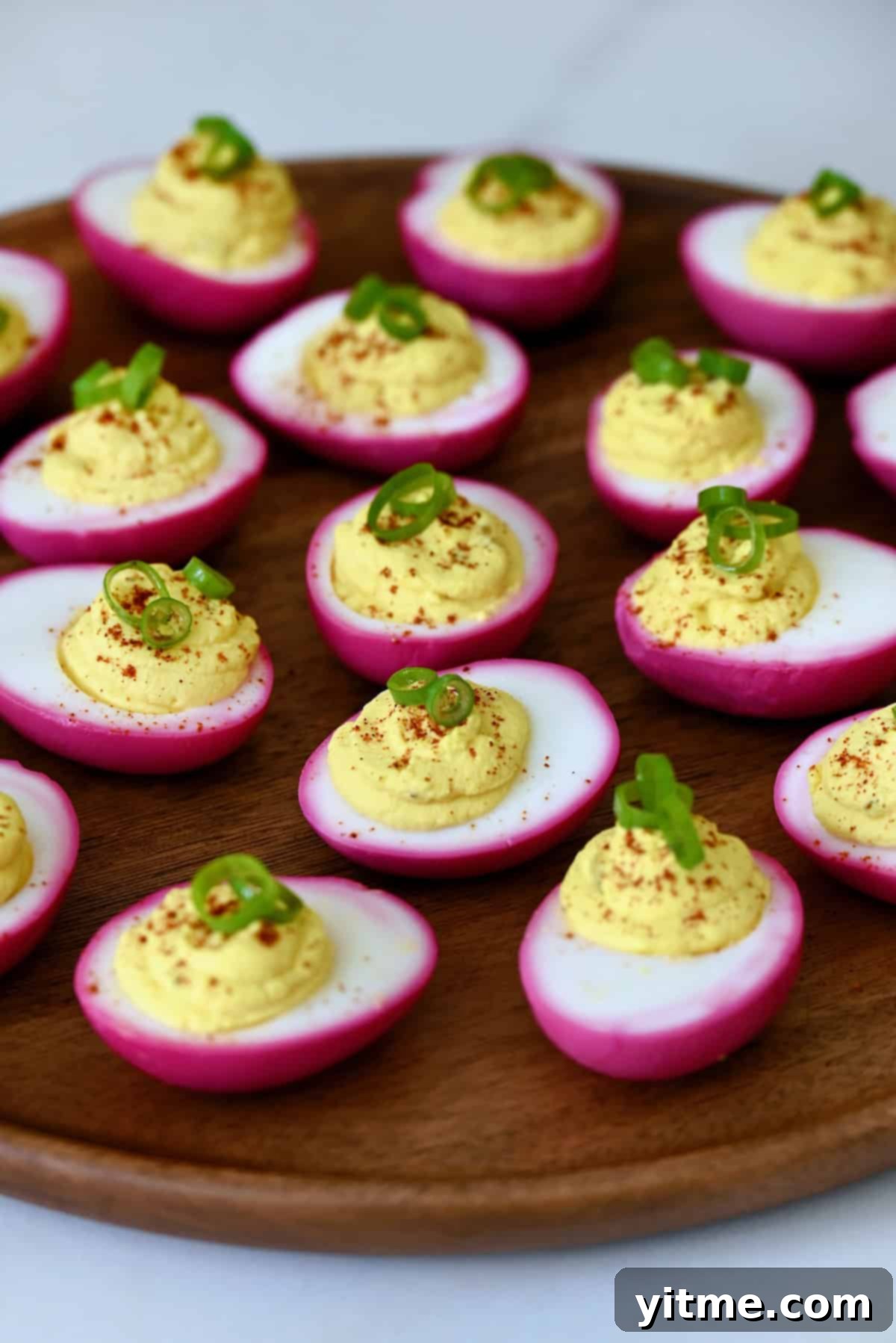
Dyeing eggs is a beloved Easter tradition. But why stop there? Transform ordinary deviled eggs into a culinary masterpiece by pickling them with beets! This method not only imparts a gorgeous color but also infuses the eggs with a subtle, earthy sweetness that complements the creamy yolk filling perfectly.
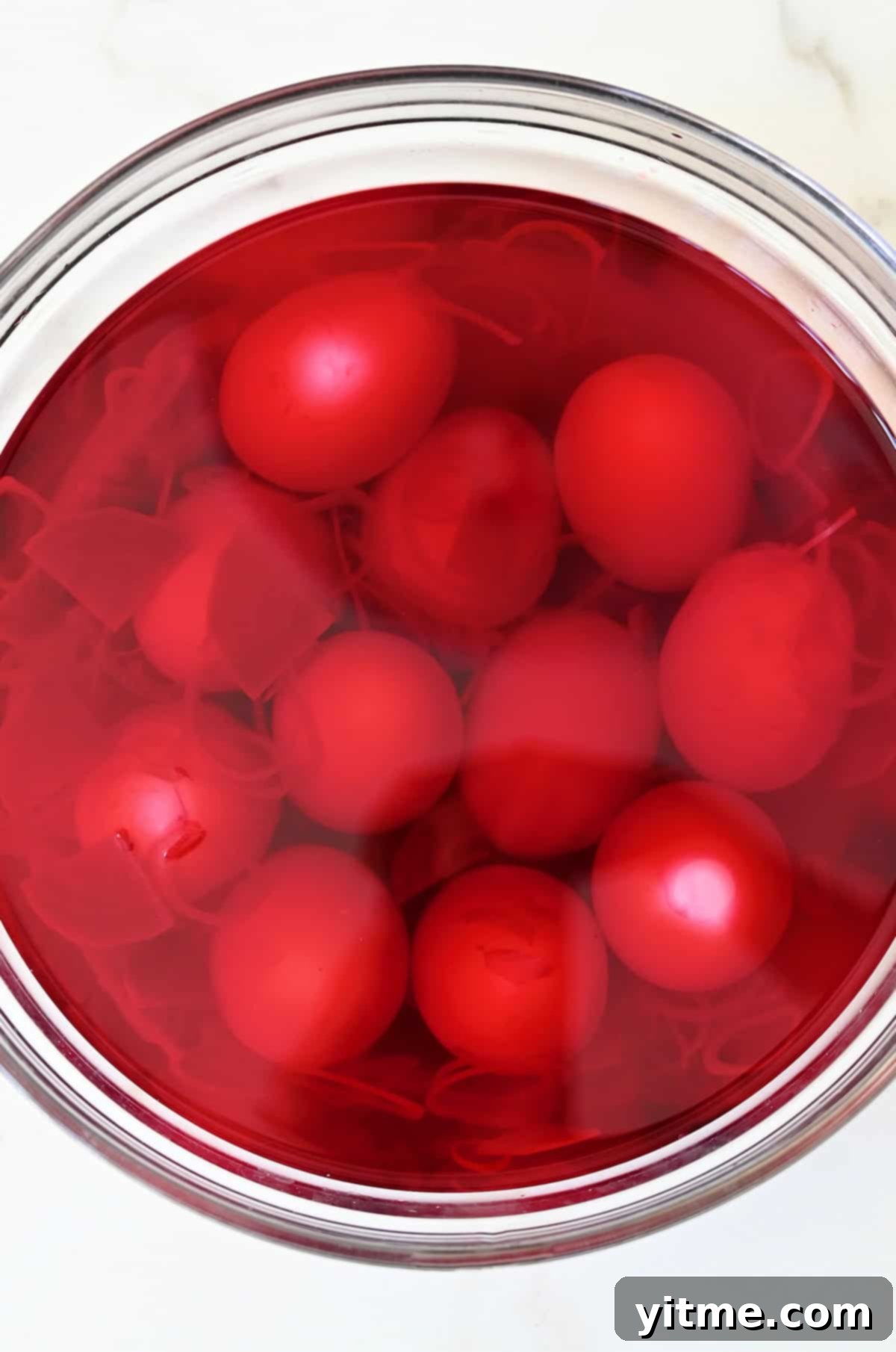
The secret to achieving that vibrant fuchsia rim lies in a simple pickling brine made with beets, shallots, vinegar, and a touch of sugar. This mixture extracts the beautiful purple pigment from the beets, creating a natural dye that gently colors the eggs as they soak. After a few hours, you’ll be rewarded with eggs that are as stunning on the inside as they are on the outside, ready to be transformed into a classic deviled egg salad. The vibrant color and delicate flavor of these pickled deviled eggs will undoubtedly elevate your holiday table.
Ingredients for Naturally Dyed Pickled Deviled Eggs
Here’s everything you’ll need to create these delicious and visually appealing appetizers:
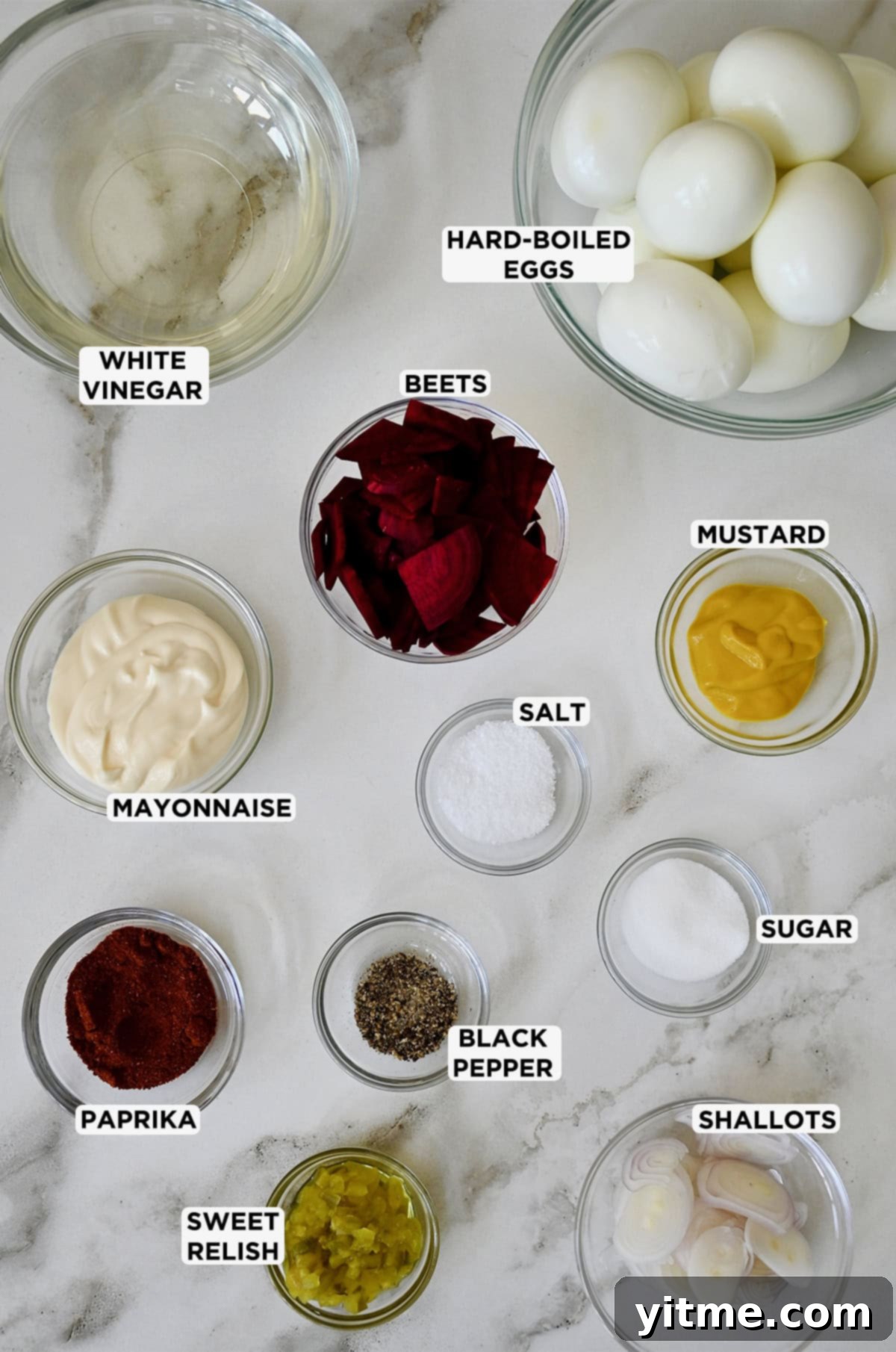
- Vinegar: Distilled white vinegar is the ideal choice due to its high acidity, which effectively pickles the eggs. Its clear color also ensures that it won’t interfere with the beet’s natural dye.
- Beet: A fresh beet is essential for creating the vibrant pink color. A vegetable peeler is the easiest way to remove the skin.
- Shallot: Sweeter and milder than an onion, shallots add a subtle bite to the pickling liquid without overpowering the other flavors.
- Sugar: A small amount of granulated sugar balances the acidity of the vinegar and enhances the overall flavor of the brine.
- Eggs: For perfectly cooked hard-boiled eggs, follow the instructions in the recipe for Guacamole Deviled Eggs. This method ensures that the yolks are creamy and the whites are tender.
- Mayonnaise: Adds the signature creaminess and tang to the deviled egg filling. Low-fat mayonnaise can be used without compromising the flavor.
- Mustard: Choose either classic yellow mustard or Dijon mustard to add a spicy kick to the filling.
- Relish: Sweet relish provides a touch of sweetness and texture to the deviled egg mixture. If you don’t have relish on hand, finely diced pickle works well as a substitute.
- Paprika: A classic garnish for deviled eggs, paprika adds a subtle warmth and a pop of color. It’s also a delicious addition to cowboy butter and Hungarian cucumber salad.
Refer to the recipe card below for precise measurements and detailed ingredient information.
How to Make Beet Pickled Deviled Eggs: A Step-by-Step Guide
These naturally dyed deviled eggs are the perfect addition to your Easter menu!
- Prepare the Brine: Combine the beet, shallot, vinegar, water, sugar, and a pinch of salt in a saucepan. Simmer the mixture to allow the flavors to meld and the beet to release its vibrant color.
- Soak the Eggs: Once the brine has cooled, gently submerge the hard-boiled eggs in the liquid. The longer the eggs soak, the more intense the pink hue will become. Just like with naturally dyed Easter eggs, patience is key to achieving the desired color. The longer they soak the deeper the color will be.
- Create the Filling: Carefully remove the yolks from the pickled eggs and transfer them to a mixing bowl. Add mayonnaise, mustard, relish, salt, and pepper. Mix until smooth and creamy using a handheld mixer or a rubber spatula.
- Fill the Eggs: Use a small cookie scoop or spoon to fill the pickled egg whites with the prepared deviled egg mixture. For a more elegant presentation, transfer the filling to a pastry bag fitted with a decorative piping tip or a zip-top bag with a corner snipped off.
Pro Tip: Beet juice can stain surfaces, including cutting boards, utensils, and even your hands. To avoid staining, wear disposable gloves while peeling and slicing the beet. Using a glass container for pickling the eggs is also recommended, as plastic can absorb the color.
How to Store Pickled Deviled Eggs
For the best flavor and texture, deviled eggs are best enjoyed on the day they are made. However, leftovers can be stored for a day or two if necessary. Store the deviled eggs in a single layer in an airtight container in the refrigerator.
To save time, you can pickle the eggs and prepare the filling a day in advance. Store the filling in a plastic zip-top bag in the refrigerator. If you’re transporting the eggs to a party, wait to fill the eggs until you arrive at your destination. Simply snip off the corner of the plastic bag and pipe the filling into the whites, then garnish with paprika.
More Delicious Deviled Eggs Recipes to Try
Looking for more deviled egg inspiration? Here are some other flavorful variations:
- The Best Deviled Eggs with Bacon
- Guacamole Deviled Eggs
- Christmas Deviled Eggs
Craving more recipes and culinary inspiration? Subscribe to Just a Taste to receive new recipes, meal plans, and a newsletter delivered directly to your inbox! Stay connected on Facebook, TikTok, Pinterest, and Instagram for all the latest updates and delicious content.
Pickled Deviled Eggs