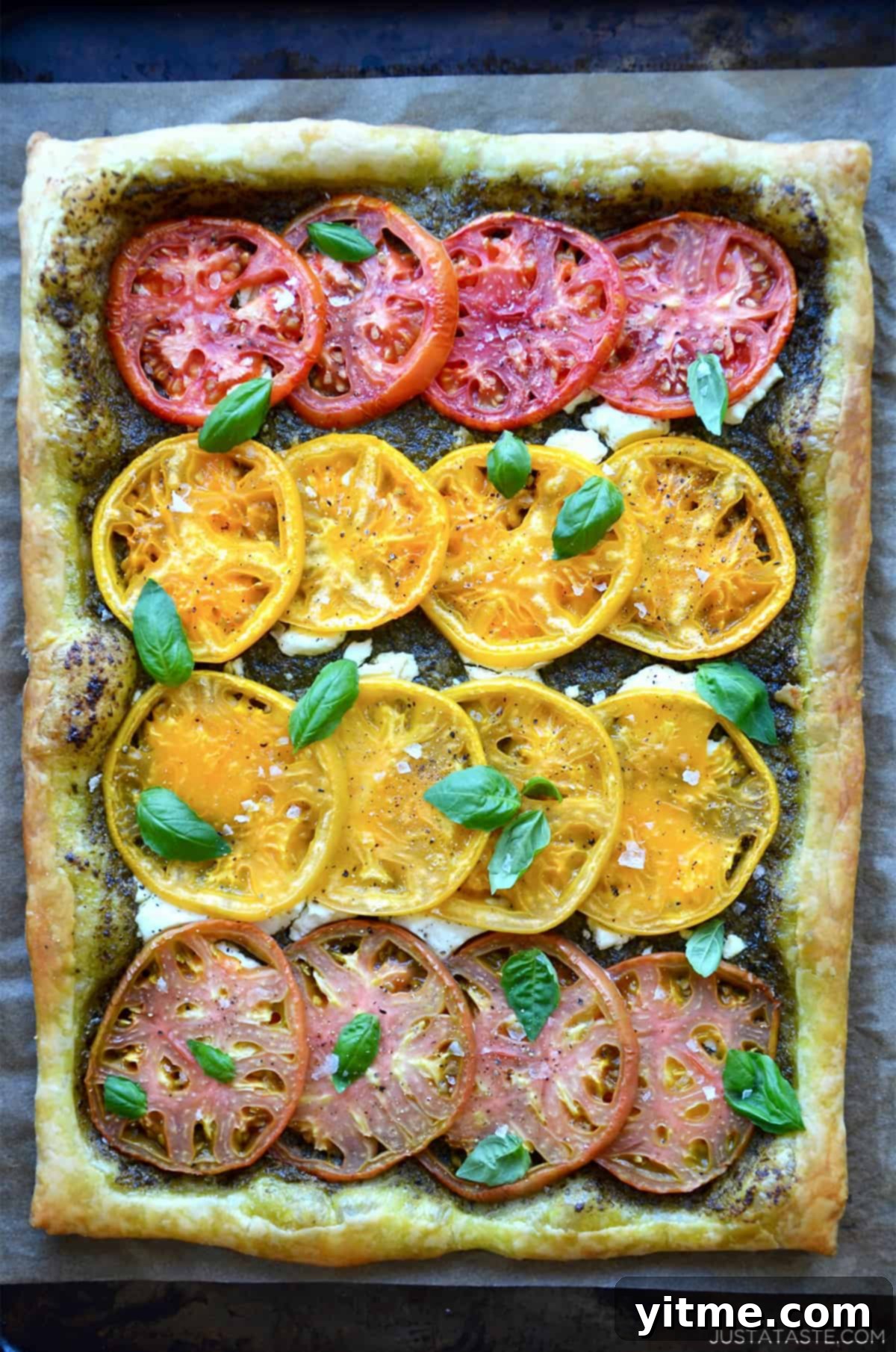
Heirloom Tomato and Goat Cheese Tart: A Simple Summer Delight
Elevate your summer gatherings with this stunning Heirloom Tomato and Goat Cheese Tart. This savory puff pastry recipe requires just a handful of ingredients and is ready in under an hour. Featuring juicy, colorful heirloom tomatoes, creamy goat cheese, and a vibrant burst of fresh basil pesto, this tart is a feast for the eyes and the taste buds. It’s a visually impressive and effortlessly simple dish that’s perfect for brunch, lunch, or as an elegant appetizer.
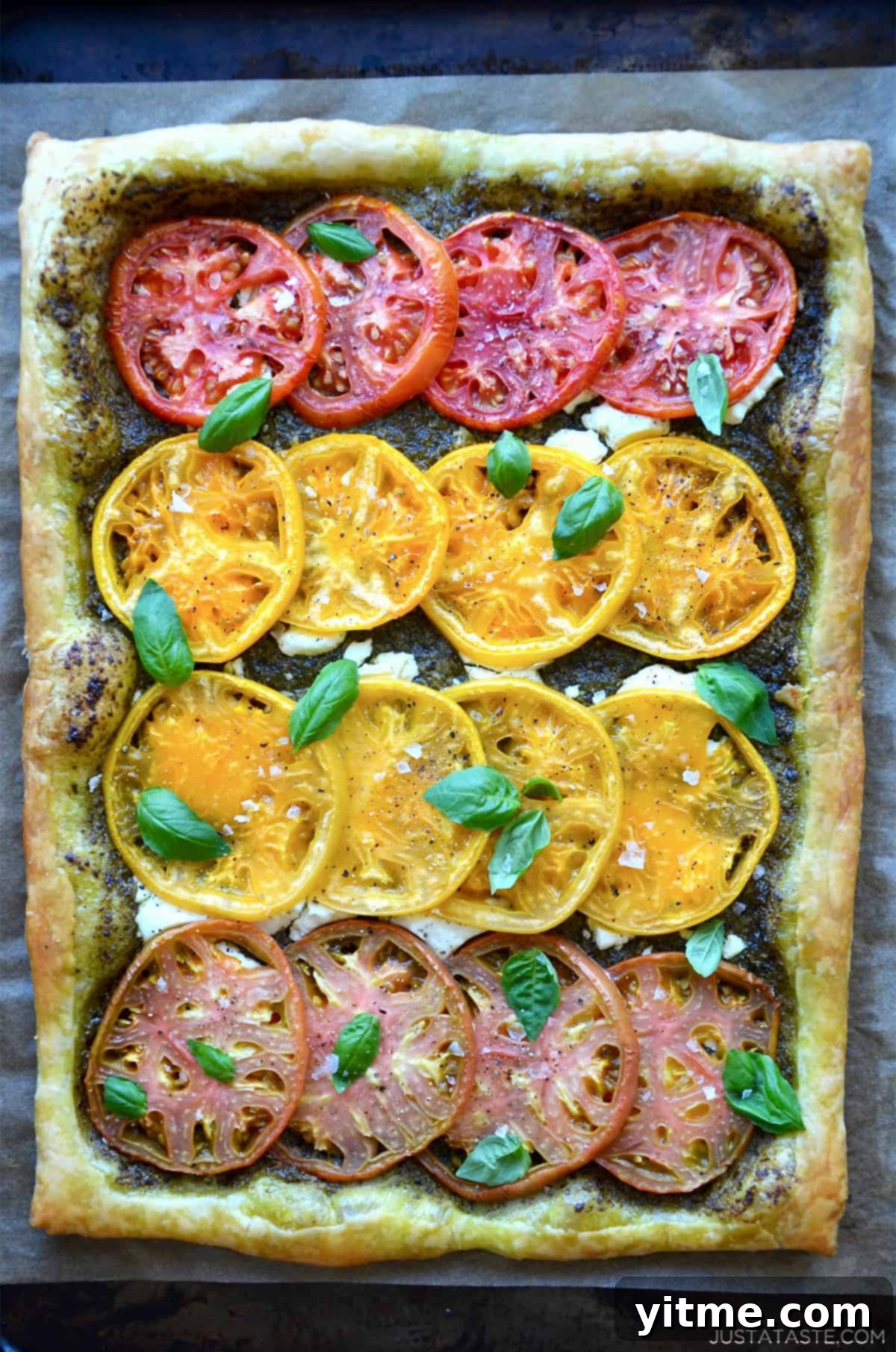
I’m passionate about creating dishes that are not only incredibly flavorful but also visually appealing. This Heirloom Tomato and Goat Cheese Tart perfectly embodies the spirit of summer, showcasing the season’s bounty in a simple yet sophisticated way.
This recipe features a layer of fragrant pesto spread onto a store-bought puff pastry base, ensuring a delicious combination of herby, tomato-y, and cheesy flavors in every bite. While using your favorite store-bought pesto is perfectly acceptable, I strongly encourage you to try making your own easy basil pesto recipe. Homemade pesto boasts unparalleled freshness, nuttiness, and a vibrant flavor profile that truly elevates the tart.
Because this tomato puff pastry tart relies on just a few key ingredients, selecting the best, ripest tomatoes available is crucial. Heirloom tomatoes, with their diverse colors and unique flavors, are an excellent choice. However, don’t hesitate to use other ripe, juicy varieties if heirloom tomatoes are unavailable. Using a mix of different colored tomatoes adds a visually stunning element to the finished tart, making the produce the undisputed star of the show.
If you’re looking for more ways to enjoy summer’s fresh tomatoes, be sure to check out my Quick Cherry Tomato Pasta Sauce and Greek Cucumber Tomato Salad recipes. Both are easy to prepare and bursting with seasonal flavors.
Ingredients for Heirloom Tomato and Goat Cheese Tart
- Puff pastry: Look for an all-butter puff pastry for the best flavor and texture. It puffs up beautifully when baked, creating light, flaky layers. Keep it chilled until ready to use for optimal results.
- Heirloom tomatoes: Choose a variety of colors and sizes for visual appeal and diverse flavors. They should be ripe, but firm enough to slice without becoming mushy. Consider yellow, red, green, and purple heirloom varieties.
- Basil pesto: Homemade pesto is highly recommended for its fresh, vibrant flavor. However, a high-quality store-bought pesto can be a convenient alternative.
- Goat cheese: Select a creamy, tangy goat cheese to complement the sweetness of the tomatoes and the richness of the pesto. Soft, spreadable goat cheese is ideal.
- Fresh basil: Garnish the baked tart with fresh basil leaves for a final burst of flavor and visual appeal.
- Sea Salt: A sprinkle of sea salt after baking enhances all the flavors.
See the recipe card below for full information on ingredients and quantities.
Preparing the Tomatoes for Your Tart
The success of this tomato and goat cheese tart hinges on preventing a soggy crust. Tomatoes, being naturally juicy, can release moisture during baking, leading to a less-than-crisp pastry. Follow these steps to minimize moisture and ensure a perfectly baked tart:
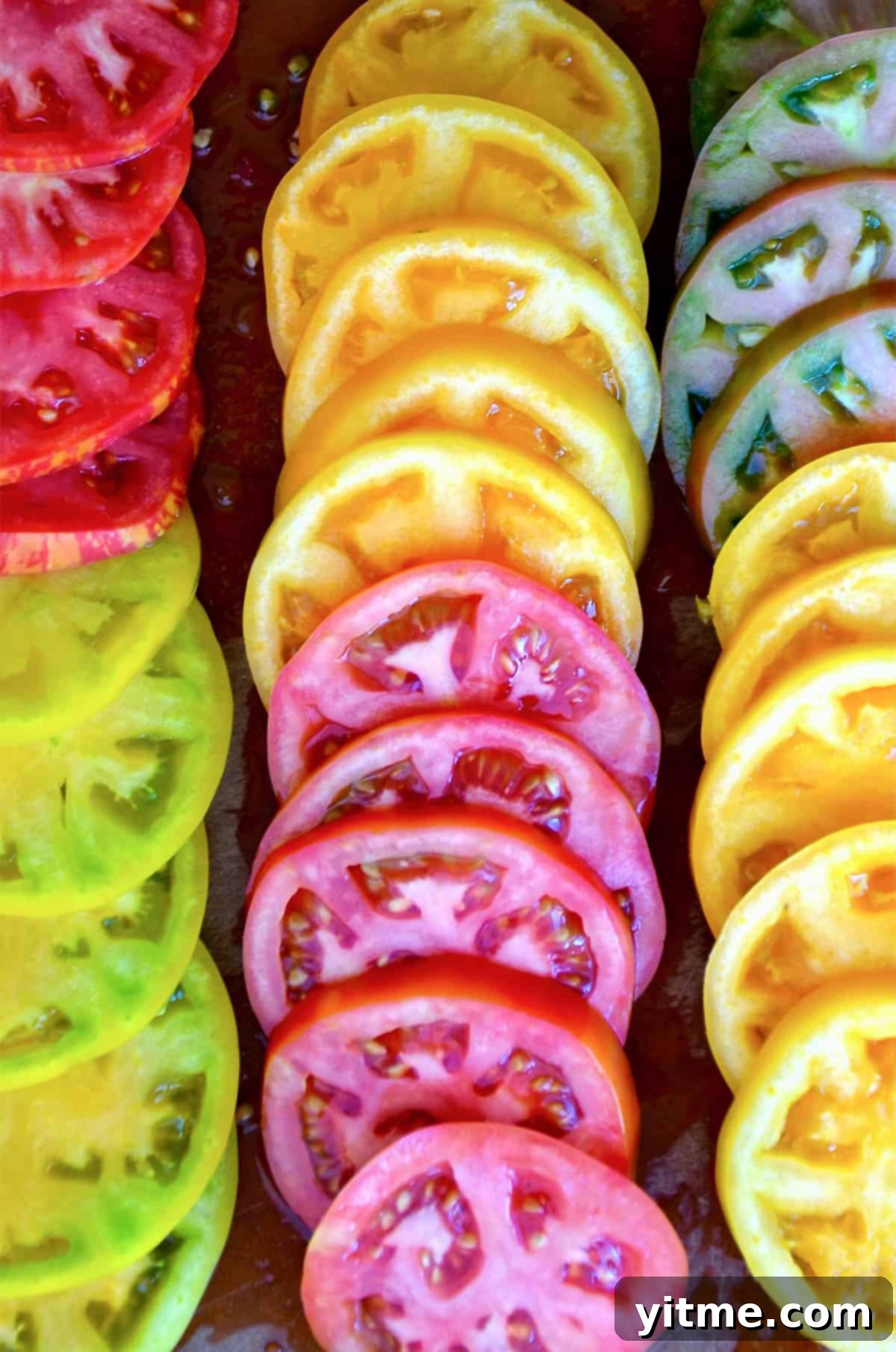
- Slice the Tomatoes: Use a sharp knife to slice the tomatoes into even, ¼-inch thick rounds. Consistency in thickness ensures even baking and prevents some slices from becoming overcooked while others remain undercooked.
- Salt the Tomatoes: Lightly salt the tomato slices. This process, known as osmosis, draws out excess moisture from the tomatoes. Place the salted tomato slices in a single layer on a wire rack set over a baking sheet or a plate lined with paper towels.
- Let the Tomatoes Rest: Allow the salted tomato slices to sit for at least 15-20 minutes, or even up to 30 minutes. You’ll notice moisture accumulating on the surface of the tomatoes.
- Blot the Tomatoes Dry: Gently pat the tomato slices dry with paper towels to remove the excess moisture. This step is crucial in preventing a soggy tart crust.
By taking these extra steps to prepare the tomatoes, you’ll ensure a crisp, flaky crust that perfectly complements the juicy tomatoes, creamy goat cheese, and flavorful pesto.
Tips for Working with Puff Pastry
Puff pastry is the foundation of this delicious tart, and working with it correctly is key to achieving a light, flaky crust. Here are some essential tips to keep in mind:
- Thawing Puff Pastry: Puff pastry is typically sold frozen, so proper thawing is essential. Transfer the frozen puff pastry from the freezer to the refrigerator and allow it to thaw overnight, or for at least 6-8 hours. This slow thawing process prevents the pastry from becoming gummy and difficult to work with. Avoid thawing at room temperature, as this can cause the butter layers to melt, resulting in a less flaky crust.
- Working Surface: Lightly flour your work surface to prevent the puff pastry from sticking. A small, fine-mesh strainer is ideal for dusting a thin, even layer of flour.
- Rolling Puff Pastry: Gently roll the puff pastry into the desired shape and size. Avoid overworking the dough, as this can toughen it and prevent it from puffing up properly. Roll the pastry in one direction, lifting and turning it occasionally to ensure even thickness. For this recipe, a rectangle that’s approximately 10 inches wide and 14 inches long works well.
- Transferring Puff Pastry: Once the puff pastry is rolled out, carefully transfer it to a baking sheet lined with parchment paper. Parchment paper prevents the pastry from sticking to the baking sheet and makes for easy cleanup.
- Scoring the Border: To create a defined border and encourage the pastry to puff up beautifully, lightly score a ½-inch border around the edges of the pastry using a sharp knife. Be careful not to cut all the way through the pastry.
- Keeping it Cold: If at any point the puff pastry becomes too soft or sticky, return it to the refrigerator for a few minutes to chill before continuing. Cold puff pastry is easier to work with and will result in a flakier crust.
How to Make a Tomato and Goat Cheese Tart: A Step-by-Step Guide
What makes this tomato tart truly special is its simplicity. With just a handful of fresh, high-quality ingredients and a few easy steps, you can create a gourmet masterpiece that rivals those found in upscale French bakeries. Whether you’re a seasoned chef or a novice cook, this tomato and goat cheese tart is sure to become a cherished recipe in your collection!
- Preheat the oven: Preheat your oven to 400°F (200°C). Line a baking sheet with parchment paper to prevent sticking.
- Prepare the tomatoes: Slice the tomatoes into ¼-inch thick rounds. Place the slices on paper towels and lightly salt to draw out excess moisture. Let them sit for 10-15 minutes, then gently pat dry with paper towels.
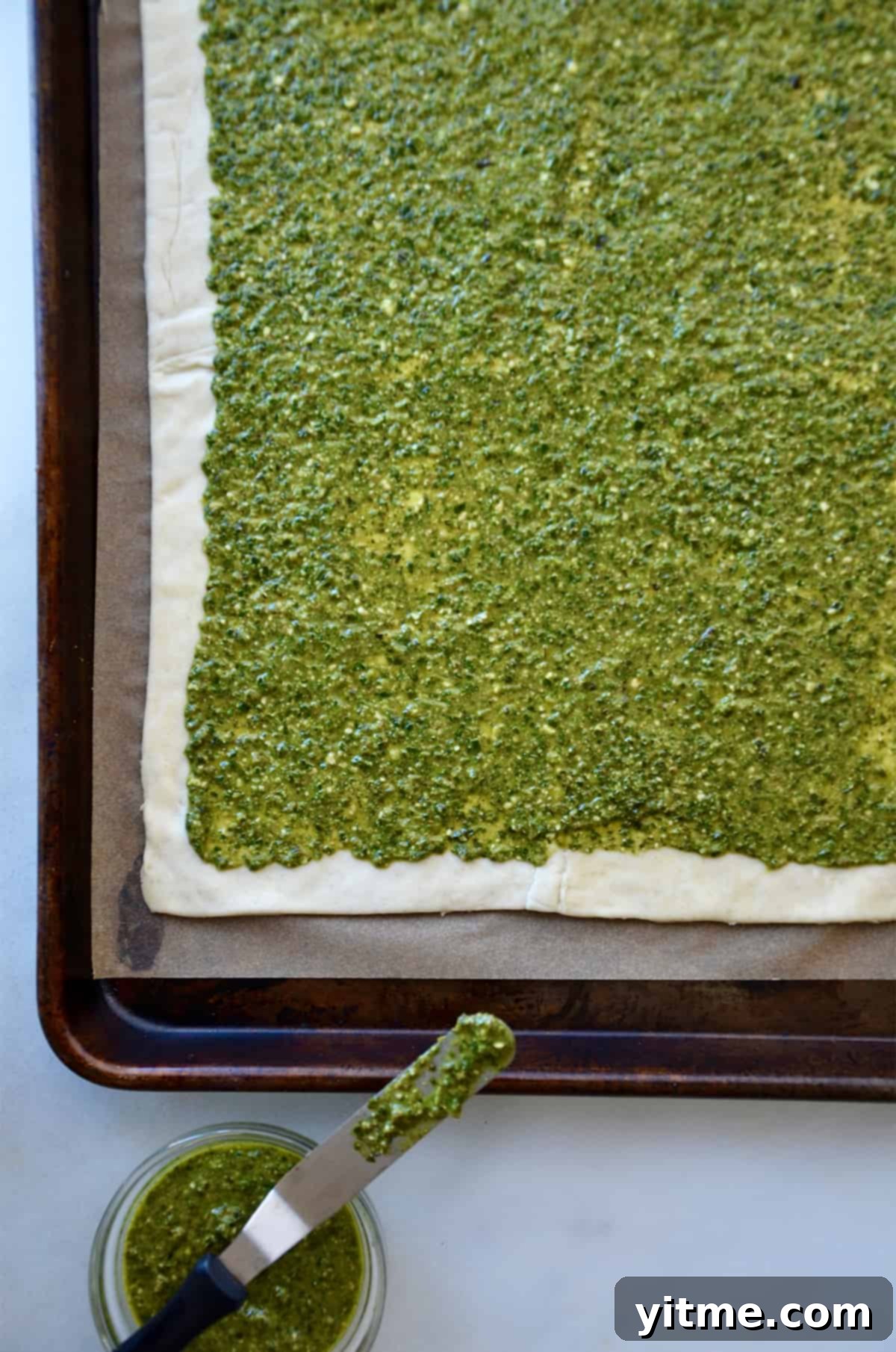
- Roll the puff pastry: Lightly flour a work surface. Roll the puff pastry into a rectangle approximately 10 inches wide and 14 inches long. Transfer the puff pastry to the prepared baking sheet.
- Assemble the tart: Spread the pesto evenly onto the base of the puff pastry, leaving a ½-inch border around the edges. An offset spatula works well for this task.
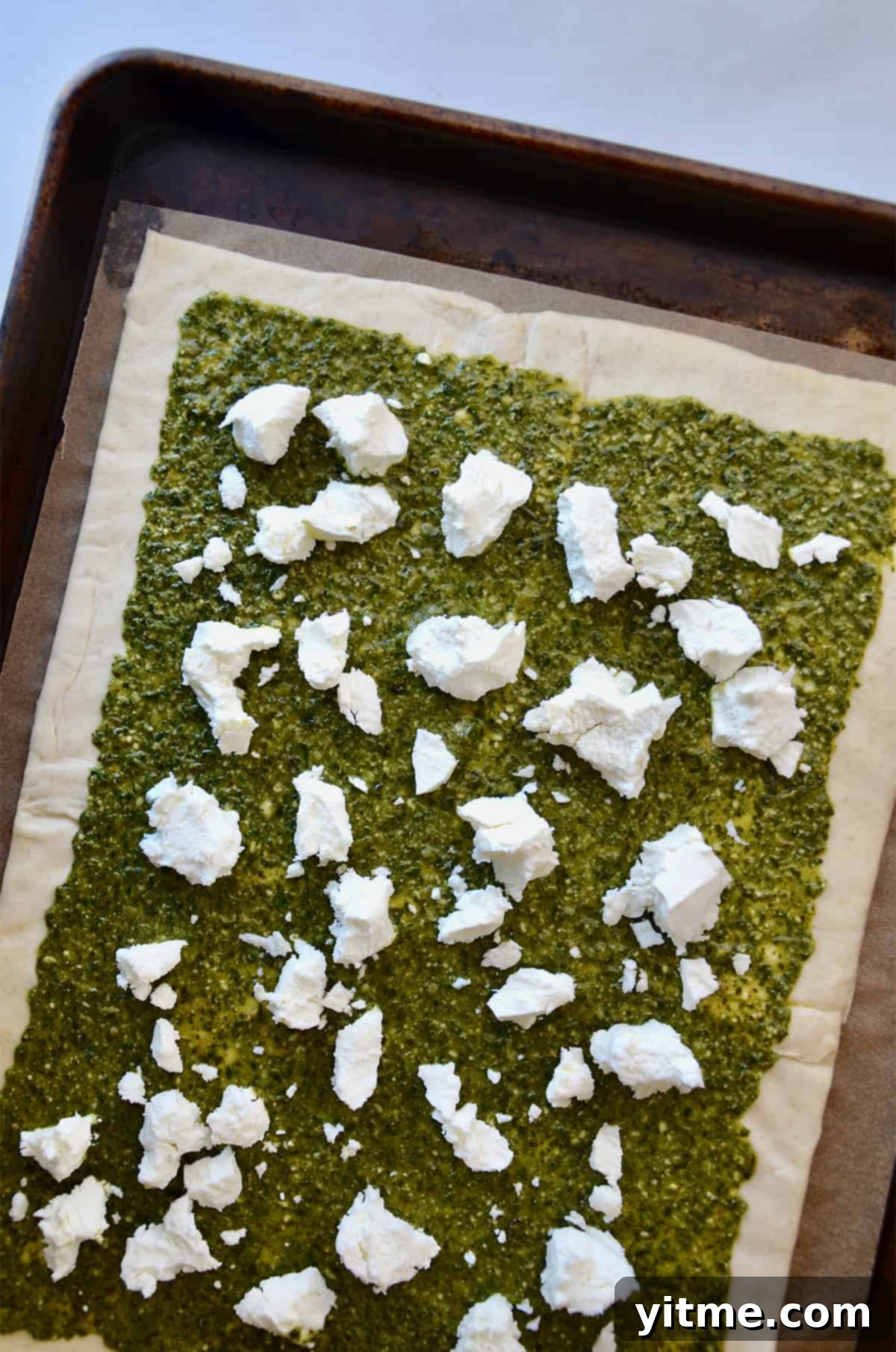
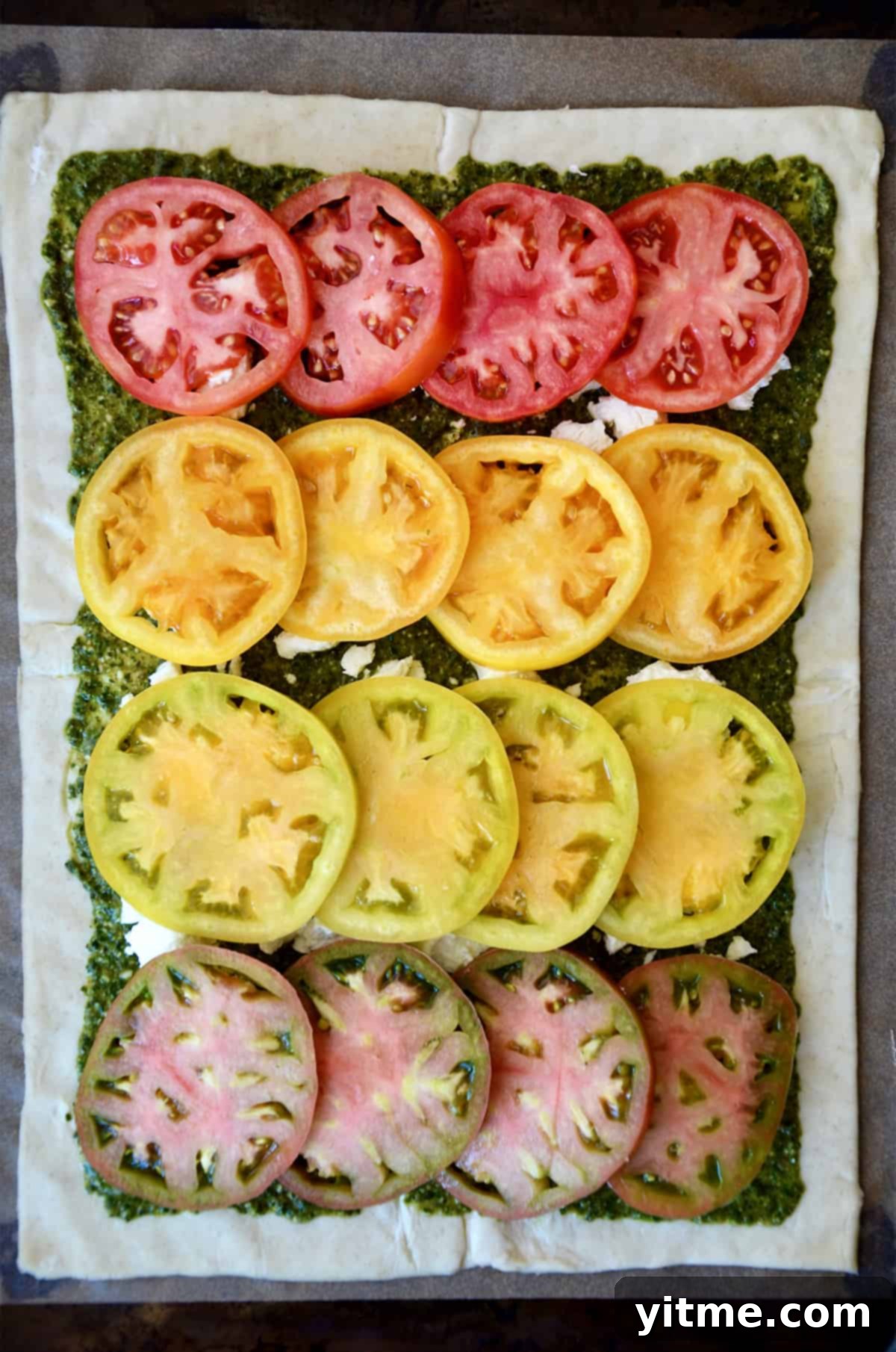
- Add the cheese: Dollop the goat cheese evenly on top of the pesto-covered pastry.
- Add the tomatoes: Arrange the sliced tomatoes artfully on top of the goat cheese.
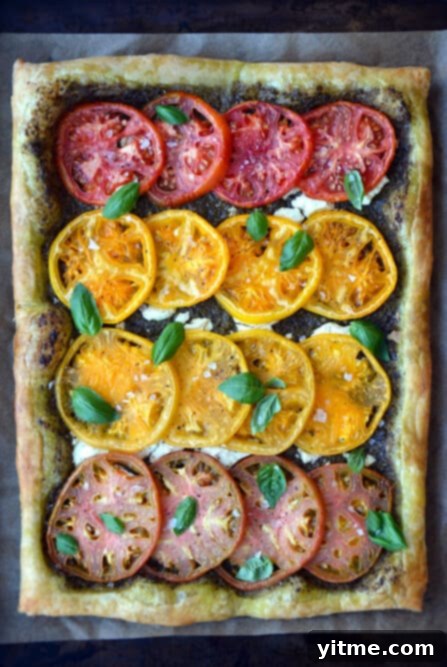
- Bake: Bake the tart for 12-15 minutes, or until the puff pastry is golden brown and puffed up around the edges. Let cool on the baking sheet for 10 minutes. Sprinkle with sea salt, top with fresh basil leaves, and serve.
Serving Suggestions for Your Tomato Tart
This versatile tart can be enjoyed in numerous ways. Here are a few serving suggestions:
- Brunch: Serve slices of the tart alongside a frittata or quiche for a delightful brunch spread.
- Lunch: Pair the tart with a light salad for a satisfying and flavorful lunch.
- Appetizer: Cut the tart into small squares and serve as an elegant appetizer at your next gathering.
- Snack: Enjoy a slice of the tart as a delicious and savory snack any time of day.
Recipe Variations to Personalize Your Tart
Feel free to customize this recipe to suit your preferences and dietary needs. Here are a few variations to try:
- Vegetarian: The original recipe is already vegetarian!
- Vegan: Use vegan puff pastry, vegan pesto, and a vegan goat cheese alternative to make this tart vegan-friendly.
- Gluten-Free: Substitute the puff pastry with a gluten-free puff pastry option or make your own gluten-free crust.
- Additions: Consider adding caramelized onions, roasted garlic, or sun-dried tomatoes for extra flavor.
Tips and Tricks for the Perfect Tomato Tart
Follow these additional tips and tricks to ensure your Heirloom Tomato and Goat Cheese Tart is a success every time:
- Use High-Quality Ingredients: The quality of the ingredients significantly impacts the flavor of the tart. Choose ripe, flavorful tomatoes, creamy goat cheese, and fresh pesto for the best results.
- Don’t Overcrowd the Tart: Avoid overloading the puff pastry with too many toppings, as this can prevent it from puffing up properly.
- Bake Until Golden Brown: Bake the tart until the puff pastry is golden brown and puffed up around the edges. This indicates that the crust is fully cooked and flaky.
- Let Cool Slightly Before Serving: Allow the tart to cool for a few minutes before slicing and serving. This allows the flavors to meld and the crust to set slightly.
Storage and Reheating Instructions
This tomato tart is best enjoyed fresh to preserve its crispness and flavors. However, if you have leftovers, store them in an airtight container in the refrigerator for up to 24 hours. To reheat, warm the tart in a preheated oven at 250°F (120°C) for a few minutes, or until heated through. Reheating in the microwave is not recommended, as it can make the crust soggy.
Goat Cheese Alternatives
While goat cheese is a classic pairing with tomatoes and pesto, it’s not the only cheese that works well in this tart. If you’re not a fan of goat cheese, or if you’re looking for a different flavor profile, consider these alternatives:
- Feta Cheese: Feta offers a similar tangy, salty flavor to goat cheese, but with a slightly firmer texture. Crumble feta evenly over the pesto base before adding the tomatoes.
- Ricotta Cheese: Ricotta is a mild, creamy cheese that provides a subtle richness to the tart. Dollop spoonfuls of ricotta over the pesto base and gently spread it out before topping with tomatoes.
- Brie Cheese: Brie is a soft, creamy cheese with a buttery flavor that melts beautifully during baking. Slice thin pieces of brie and arrange them over the pesto base before adding the tomatoes.
- Mascarpone Cheese: Mascarpone is an Italian cream cheese that’s incredibly rich and smooth. It adds a touch of luxury to the tart. Dollop mascarpone over the pesto base and gently spread it out before topping with tomatoes.
- Cream Cheese: For a milder flavor, cream cheese can be used as a substitute. It adds a creamy texture and helps to bind the other ingredients together. Spread a thin layer of cream cheese over the pesto base before adding the tomatoes.
Pesto Options: Homemade vs. Store-Bought
The pesto is a key component of this tomato tart, adding a vibrant burst of flavor that complements the sweetness of the tomatoes and the tanginess of the cheese. While store-bought pesto is a convenient option, homemade pesto is undeniably superior in terms of freshness and flavor. Here’s a breakdown of the pros and cons of each option:
Homemade Pesto:
Pros:
- Unmatched Freshness: Homemade pesto is made with fresh basil, garlic, pine nuts, Parmesan cheese, and olive oil, resulting in a vibrant, aromatic flavor that’s far superior to store-bought varieties.
- Customizable Flavor: You have complete control over the ingredients and their proportions, allowing you to tailor the pesto to your exact preferences. You can adjust the amount of garlic, cheese, or nuts to create a flavor profile that suits your taste.
- No Additives or Preservatives: Homemade pesto is free of the artificial additives and preservatives that are often found in store-bought versions.
Cons:
- Time-Consuming: Making pesto from scratch requires more time and effort than simply opening a jar of store-bought pesto.
- Ingredient Availability: Fresh basil and pine nuts can sometimes be difficult to find, depending on your location and the season.
Store-Bought Pesto:
Pros:
- Convenience: Store-bought pesto is readily available at most grocery stores, making it a convenient option for busy cooks.
- Long Shelf Life: Store-bought pesto typically has a longer shelf life than homemade pesto, allowing you to keep it on hand for whenever you need it.
Cons:
- Less Fresh Flavor: Store-bought pesto often lacks the vibrant flavor of homemade pesto, due to the use of lower-quality ingredients and the presence of additives and preservatives.
- Limited Customization: You have no control over the ingredients or their proportions, meaning you’re stuck with the flavor profile that the manufacturer has chosen.
- Potential Additives and Preservatives: Store-bought pesto often contains artificial additives and preservatives, which can detract from the overall flavor and nutritional value.
The Verdict: If you have the time and access to fresh ingredients, homemade pesto is the clear winner. However, if you’re short on time or resources, a high-quality store-bought pesto can be a decent substitute. Just be sure to choose a brand that uses real basil, garlic, pine nuts, Parmesan cheese, and olive oil, and avoid those that contain artificial additives or preservatives.
Frequently Asked Questions About Tomato Tart
- Can I use frozen tomatoes?
- Fresh tomatoes are highly recommended for the best flavor and texture. Frozen tomatoes tend to be watery and may result in a soggy tart.
- Can I make this tart ahead of time?
- The components of the tart can be prepared in advance, but it is best to assemble and bake it shortly before serving to maintain the crispness of the puff pastry.
- How do I prevent the puff pastry from sticking to the baking sheet?
- Lining the baking sheet with parchment paper will prevent the puff pastry from sticking.
- Can I use a different type of cheese?
- Yes, feel free to experiment with other cheeses such as feta, ricotta, or mozzarella.
- Can I add herbs other than basil?
- Absolutely! Fresh thyme, oregano, or rosemary would also complement the flavors of this tart.
- What wine pairs well with this tart?
- A crisp white wine such as Sauvignon Blanc or Pinot Grigio would be a great choice.
More Delicious Tart Recipes to Try
If you enjoyed this Heirloom Tomato and Goat Cheese Tart, be sure to check out these other delectable tart recipes:
- Cheesy Asparagus Tart
- Cheesy Tomato Tart with Caramelized Onions
- 5-Ingredient Peach Tart
- Mango Tart with Vanilla Bean Pastry Cream
Craving more delicious recipes? Subscribe to Just a Taste to receive new recipes, meal plans, and exclusive content directly in your inbox! Stay connected on Facebook, TikTok, Pinterest, and Instagram for all the latest updates and culinary inspiration.
Heirloom Tomato and Goat Cheese Tart Recipe
Kelly Senyei
15 mins
12 mins
27 mins
8
servings
Ingredients
-
1/2
(17.3-oz.) package puff pastry (1 sheet), thawed -
4
medium heirloom tomatoes -
1/3
cup
store-bought or homemade basil pesto -
4
ounces
goat cheese -
Fresh basil, for garnish -
Sea salt, for garnish
Instructions
- Preheat the oven to 400ºF. Line a baking sheet with parchment paper.
- Slice the heirloom tomatoes into 1/4-inch-thick rounds and place them on paper towels to drain.
- Lightly flour your work surface then roll the thawed puff pastry into about a 10-by-14-inch rectangle. Transfer the puff pastry to the prepared baking sheet.
- Spread the pesto onto the puff pastry, leaving a 1/2-inch border on all sides. Divide the goat cheese into dollops and scatter it on top of the pesto. Arrange the sliced tomatoes on top of the goat cheese.
- Bake the tart for about 12 minutes or until golden brown. Remove it and let it cool for 10 minutes.
- Slice or tear the basil and scatter it atop the tart, then sprinkle the tart with sea salt and serve.
Kelly’s Notes
- Puff pastry comes frozen and will need to thaw before you can roll it. Thaw the puff pastry in the refrigerator overnight before using. Don’t try to do so at room temperature. While it may be faster, it’ll ensure your puff pastry is gummy and very tough to work with and roll out.
- Goat cheese is easiest to divide and crumble when it’s chilled (not at room temperature), so stash it in the fridge until you’re ready to use it.
- Instead of one big tart you slice into pieces, you can make individual tomato and goat cheese tarts. To do so, slice the puff pastry into 8 or 9 pieces. Then, follow the same topping instructions, dividing the pesto, cheese and tomatoes among the tarts. Your baking time will vary, so keep an eye on the tartlets and pull them out when they’re golden brown.
- You can top the tart with cooked, crumbled bacon or slices of prosciutto after it comes out of the oven.
- Did you make this recipe? Don’t forget to give it a star rating below!