Accurately Measure Flour for Baking Success: A Step-by-Step Guide
Welcome to our comprehensive guide on how to accurately measure flour, a skill that can significantly impact your baking results. In the video tutorial below, I’ll share a simple yet effective technique for measuring flour without relying on a scale. Mastering this method will elevate your baking game, ensuring consistent and delicious outcomes every time. After watching the video, put your newfound skills to the test with some of my favorite tried-and-true baked goods recipes!
The way you measure flour can be the deciding factor between a baking triumph and a disappointing flop, particularly in the intricate world of baking. Flour is a fundamental ingredient in countless recipes, and the accuracy of its measurement holds immense importance in determining the final product. Even minor discrepancies in the amount of flour used can significantly alter the texture, flavor profile, and overall success of your baked creations. Understanding the nuances of flour measurement is essential for achieving consistent and professional-quality results in your home baking endeavors.
Why Accurate Flour Measurement Matters in Baking
1. Achieving Consistency in Texture
The quantity of flour directly influences the texture of your baked goods. An excess of flour can lead to dry, crumbly, and dense results, whereas an insufficient amount can produce items that are overly moist, flat, and lacking structure. The right balance is key to achieving the perfect texture in your baked creations.
Consider cookies as a prime example. If you incorporate too much flour into your cookie dough, the resulting cookies may exhibit a crumbly texture, lacking the desired chewiness. Conversely, using too little flour can cause the cookies to spread excessively during baking, resulting in thin, crisp cookies that may not hold their shape. Achieving the right flour-to-other-ingredients ratio is crucial for attaining the ideal cookie texture: soft, chewy, and perfectly formed.
Similarly, when baking bread, the amount of flour used plays a critical role in the final outcome. Too much flour in the dough can render it stiff and tough, leading to a dense and heavy loaf that lacks the airy, light texture characteristic of well-made bread. On the other hand, if the dough contains too little flour, it can become excessively sticky and difficult to handle, resulting in a loaf that fails to rise properly and exhibits a gummy, unpleasant texture. Finding the sweet spot in flour measurement is essential for achieving a bread loaf that is both structurally sound and delightfully textured.
2. Ensuring Correct Ingredient Ratios
Baking is a precise art that relies on strict adherence to specific ingredient ratios. Accurate flour measurement is crucial for maintaining the correct balance between wet and dry ingredients, which is essential for achieving the desired rise, structure, and overall quality of your baked goods. Disrupting this balance can lead to unpredictable and often undesirable results.
When crafting a delectable chocolate cake, for instance, precise flour measurement is paramount. Using the exact amount of flour specified in the recipe ensures that the cake rises evenly during baking, resulting in a light, airy texture. Moreover, accurate flour measurement contributes to the cake’s overall structure, preventing it from collapsing or becoming overly dense. The result is a chocolate cake that is not only visually appealing but also boasts a soft, tender crumb and a melt-in-your-mouth quality.
3. Impact on Leavening Agents
Flour measurement directly affects the performance of leavening agents such as baking powder and baking soda. These agents play a crucial role in creating the rise and airy texture characteristic of many baked goods. Using too much flour can dilute the effectiveness of these leavening agents, hindering their ability to produce sufficient gas and resulting in a dense, flat product. Conversely, using too little flour can lead to an excessive rise during baking, potentially causing the baked good to collapse or develop an undesirable texture. Achieving the right balance of flour to leavening agent is essential for optimal results.
4. The Chemistry of Baking
Baking is a science, and the chemical interactions between ingredients are delicate and intricate. Accurate flour measurement is essential for maintaining the correct balance of ingredients and preventing chemical imbalances that can ruin a recipe. Deviations from the specified flour quantity can disrupt these chemical reactions, leading to undesirable outcomes in terms of texture, flavor, and overall quality.
For example, when preparing pie crusts, the precise amount of flour used is critical for achieving the perfect flakiness and structural integrity. Too much flour can result in a tough, dense crust, while too little flour can lead to a fragile crust that crumbles easily. The right amount of flour ensures that the pie crust attains a delicate balance between tenderness and sturdiness, allowing it to hold its shape while offering a satisfyingly flaky texture.
Mastering the Art: How to Measure Flour Accurately
While using a kitchen scale offers the most precise method for measuring flour, it may not always be convenient or accessible. Fortunately, there are alternative techniques that can provide accurate results without requiring specialized equipment. My preferred method, which I’ve found to be reliable and effective, is the “fluff, spoon, and level” technique. This simple yet powerful method ensures that you’re using the right amount of flour in your recipes. Let’s explore a few different methods you can employ to measure your flour with confidence:
The Fluff and Spoon Method: A Reliable Technique
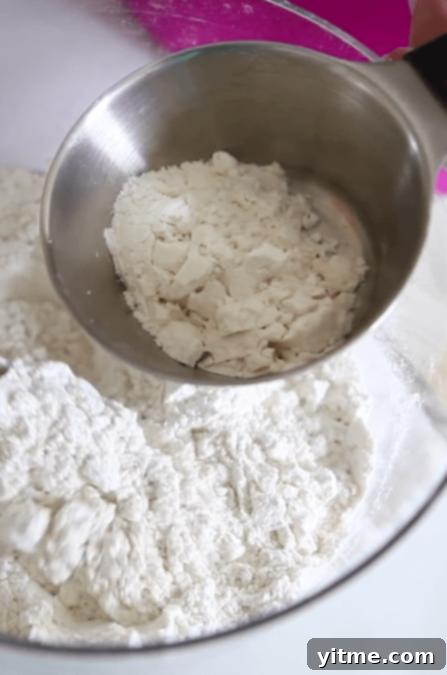
- Fluff the Flour: Begin by using a spoon to gently fluff the flour within its container or bag. This crucial step helps to aerate the flour, loosening it and preventing it from becoming compacted. Compacted flour can lead to inaccurate measurements, as it occupies less volume than aerated flour.
- Spoon into Measuring Cup: Using a spoon, carefully transfer the fluffed flour into your dry measuring cup until it is slightly overfilled. Avoid the temptation to scoop the flour directly from the container with the measuring cup, as this can compress the flour and result in an overestimation of the quantity.
- Level Off: Employ a straight-edged utensil, such as the back of a knife or a leveling tool, to gently level off the excess flour from the top of the measuring cup. This ensures that you obtain a precise measurement, eliminating any excess flour that could affect the outcome of your recipe.
The Sifting Technique: Incorporating Air for Lighter Results
- Sift First: If your recipe specifically calls for sifted flour, it’s essential to sift the flour before measuring it. Sifting helps to incorporate air into the flour, breaking up any lumps and creating a lighter, more airy texture. This can be particularly important for recipes that require a delicate crumb, such as cakes and pastries.
- Measure or Sift: After sifting, you have two options: either use the fluff and spoon method to measure the sifted flour, or measure the flour first and then sift it, depending on the instructions provided in the recipe. Whichever approach you choose, the goal is to ensure that you are using the correct amount of flour in its sifted form, which can affect the overall texture and consistency of your baked goods.
Kelly’s Note: A common pitfall in flour measurement is packing the flour into the measuring cup. This seemingly innocent mistake can lead to a significant overestimation of the flour quantity, resulting in dense, heavy baked goods that lack the desired lightness and airiness. To avoid this issue, always spoon the flour lightly into the measuring cup and level it off carefully, ensuring accurate measurement every time.
The Precision of Using a Scale: Weighing for Accuracy
- Weigh for Accuracy: If you have access to a kitchen scale, weighing flour is undoubtedly the most accurate method for ensuring precise measurements. A kitchen scale eliminates any potential discrepancies caused by variations in flour density or measuring cup technique. Simply place the flour in a bowl on the scale and measure it by weight according to the specifications outlined in the recipe.
- Typical Weight: As a general guideline, 1 cup of all-purpose flour typically weighs approximately 120 grams (4.2 ounces). However, it’s important to note that this weight can vary depending on the type of flour being used. For instance, whole wheat flour may weigh slightly more than all-purpose flour due to its higher fiber content. Always refer to the recipe’s instructions for the specific weight of flour required.
Avoiding Common Mistakes in Flour Measurement
- Dipping the Measuring Cup: Avoid the temptation to dip the measuring cup directly into the flour container. This practice can compress the flour, leading to inaccurate measurements. Solution: Always fluff the flour and spoon it gently into the measuring cup.
- Neglecting to Level: Failing to level off the flour in the measuring cup can result in using an excessive amount. Solution: Use a straight-edged utensil to level the flour, ensuring accurate measurements every time.
- Using the Wrong Cup: Using a measuring cup that was previously used for liquid measurements can affect the accuracy of your flour measurement. Solution: Designate specific dry measuring cups for flour and other dry ingredients to avoid any discrepancies.
So, the next time you embark on a baking adventure, take a moment to measure your flour with care and precision. The effort you invest in accurate flour measurement will be richly rewarded with delectable results that will delight your taste buds and impress your friends and family!
Ready to put your flour-measuring skills to the test? Try these delicious recipes:
- Homemade Samoas Girl Scout Cookies
- Salted Dark Chocolate Chunk Cookies
- The Best Cutout Sugar Cookies
- Secret Ingredient Chocolate Chip Cookies
- Sour Cream Chocolate Cupcakes
- Salted Caramel Apple Hand Pies
- Easy Blueberry Galette with Thyme
- Banana Cupcakes with Cream Cheese Frosting
Featured Kitchen Equipment:
- Glass Stacking Bowl Set
- Digital Kitchen Scale
Craving more delicious recipes and baking tips? Subscribe to Just a Taste to receive new recipes, meal plans, and our exclusive newsletter directly in your inbox! Stay connected with us on Facebook, TikTok, Pinterest, and Instagram for the latest updates, culinary inspiration, and behind-the-scenes glimpses into our kitchen!
Disclosure: This post contains Amazon affiliate links.