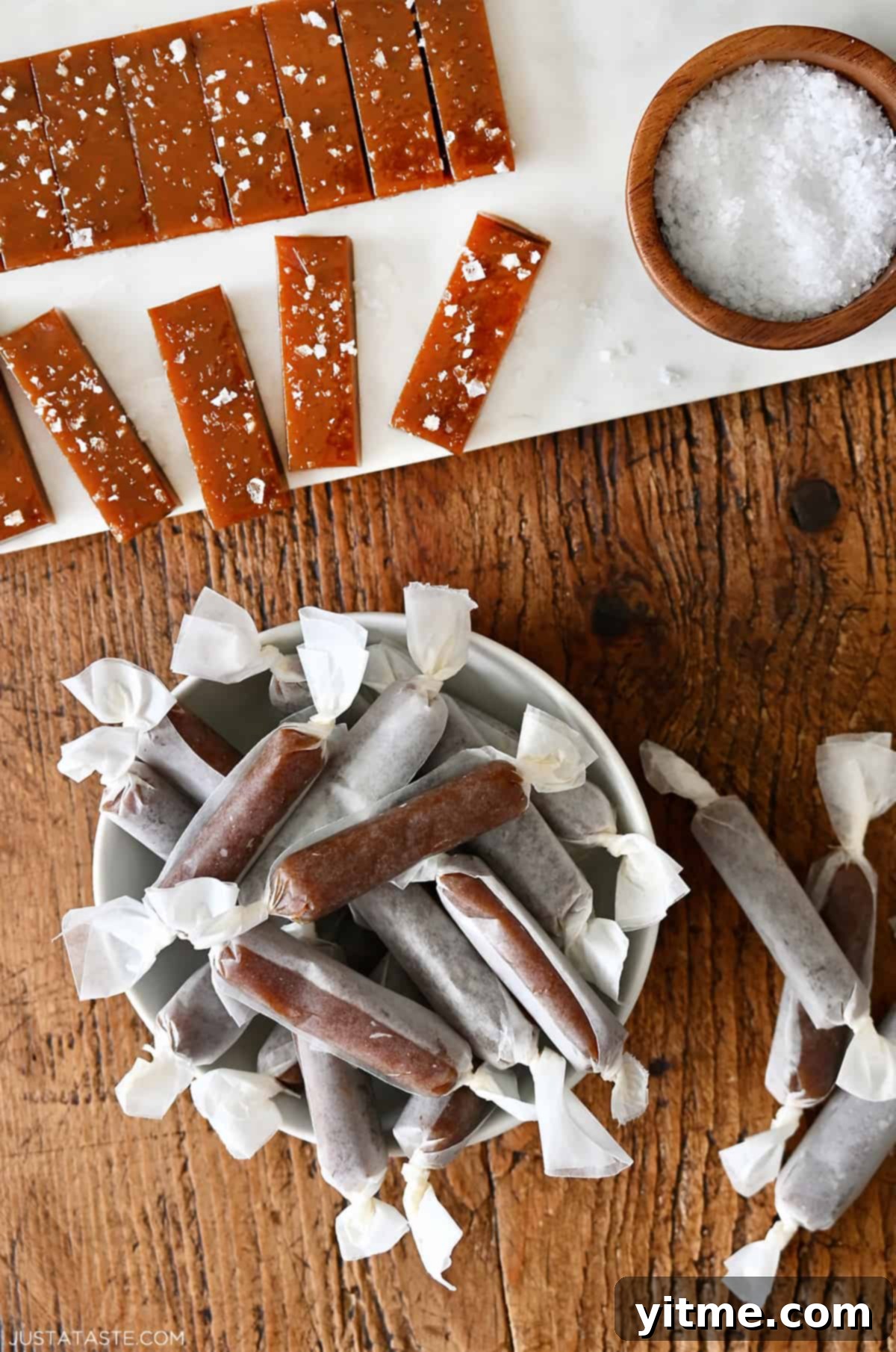
Easy Homemade Salted Caramels Recipe: The Perfect Sweet and Salty Treat
Indulge in the delightful world of homemade candy with these irresistible Homemade Salted Caramels. These buttery, melt-in-your-mouth candies are surprisingly easy to create in your own kitchen, offering a symphony of sweet and salty flavors that will tantalize your taste buds.
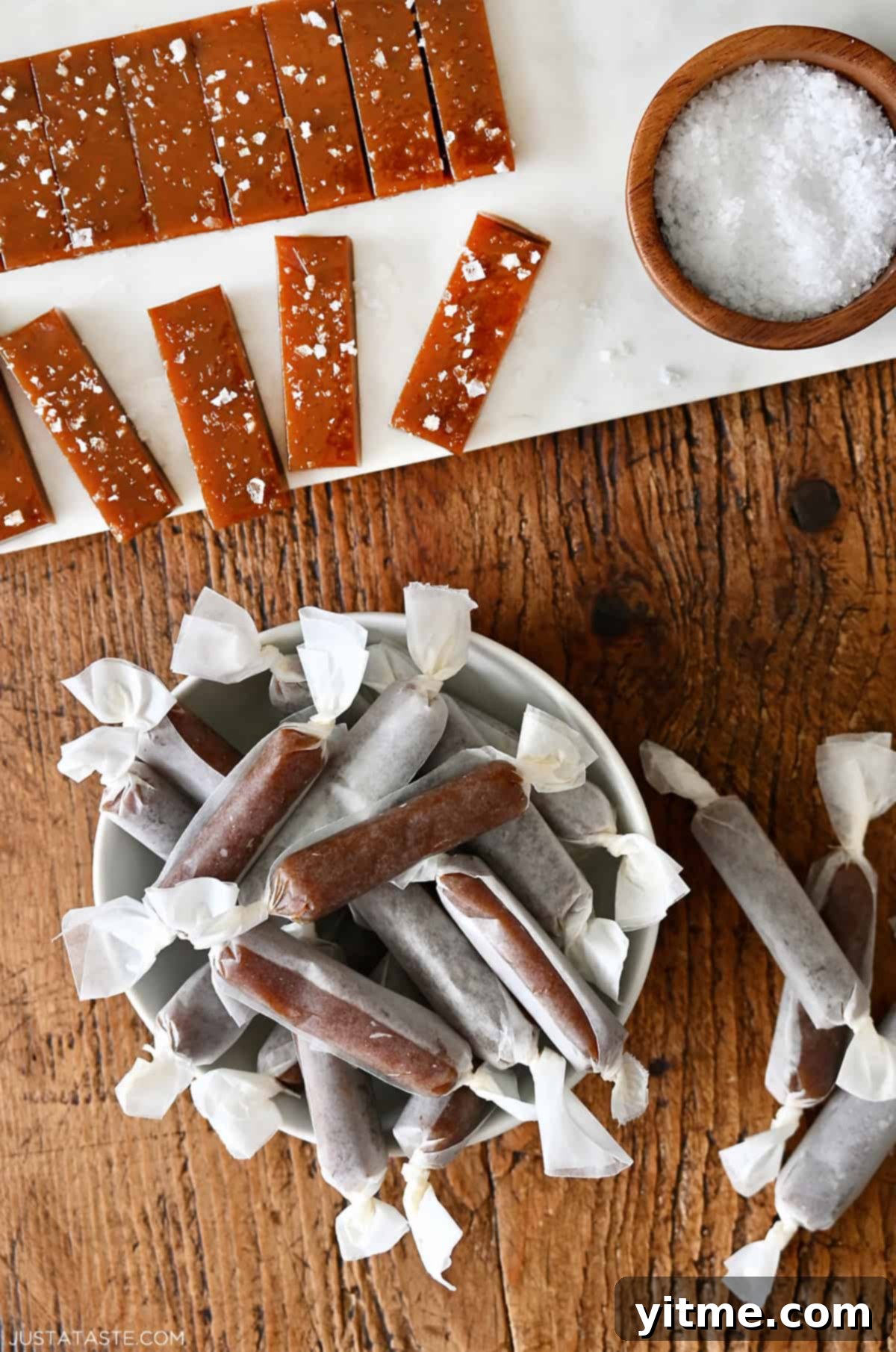
Table of Contents
- Why You’ll Love This Recipe
- Ingredients
- Mix-Ins and Variations
- How to Make Homemade Caramels
- Kelly’s Recipe Tips
- Recommended Tools for This Recipe
- Storage Tips
- Frequently Asked Questions
- More Candy Recipes
- Homemade Salted Caramels Recipe
The allure of salted caramel is undeniable, and it has captivated dessert enthusiasts for years. From decadent salted caramel snickerdoodles to comforting salted caramel apple hand pies, the combination of rich, buttery caramel and flaky sea salt creates an explosion of flavor that’s simply irresistible.
This homemade salted caramels recipe was born out of a late-night craving for something sweet and satisfying. During the writing process of Food Blogging for Dummies, these soft caramel candies became a source of motivation. Each finished section was rewarded with a delectable salted caramel, making the writing process even sweeter.
Whether you’re seeking a delightful treat for yourself or a unique homemade gift, this salted caramels recipe is the perfect place to start. By following the step-by-step instructions and helpful tips, you’ll create perfectly chewy, buttery candies that are elevated by the sophisticated crunch of sea salt. Get ready to impress your friends and family with your newfound candy-making skills!
Why You’ll Love This Recipe
What makes this homemade salted caramels recipe so special? Here are just a few reasons to fall in love with these delightful treats:
- Quick and Easy: These caramels are ready in just 30 minutes, making them a perfect treat for any occasion.
- Minimal Ingredients: With only five simple ingredients, you likely already have everything you need in your pantry.
- Perfectly Chewy Texture: The texture is reminiscent of your favorite candy shop caramels, offering a satisfyingly chewy experience.
- Ideal for Gifting: Beautifully wrapped in wax paper and presented in a jar, basket, or gift box, these caramels make a thoughtful and delicious gift for party hosts, teachers, wedding favors, or holiday celebrations. Share the sweet joy with your loved ones!
- Impressive Flavor: The balance of sweet caramel and savory salt is simply divine, creating a truly addictive candy.
Ingredients
The secret to these exceptional homemade salted caramels lies in the quality of the ingredients. You only need a handful of essentials to create this sweet masterpiece:
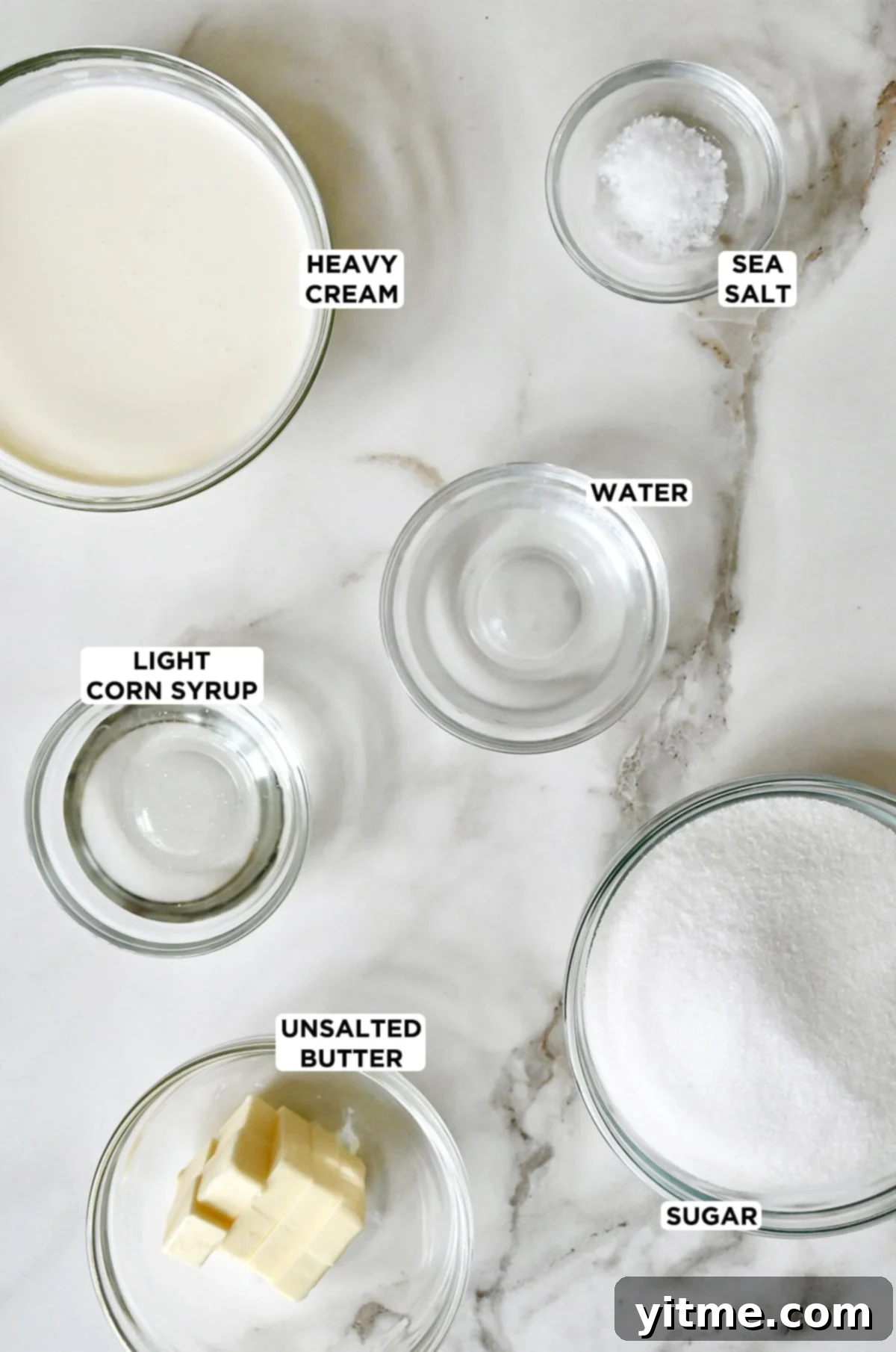
- Heavy Cream: Opt for heavy cream containing at least 36% butterfat. This high-fat content is crucial for achieving the desired texture and richness of the caramels. Avoid using lighter creams or half-and-half, as they won’t deliver the same results.
- Unsalted Butter: Using unsalted butter allows you to control the overall saltiness of the caramels. Choose fresh, high-quality butter since its flavor will be prominent in the final product. The better the butter, the better the caramel!
- Large Flake Sea Salt: Invest in a good quality large flake sea salt like Maldon. The salt crystals provide a delicate, satisfying crunch and enhance the caramel’s sweetness.
- Granulated Sugar: As the sugar cooks, it caramelizes, imparting a signature nutty, rich flavor to the candy.
- Light Corn Syrup: Corn syrup, derived from corn, is a pure form of glucose. Its unique property of not crystallizing like sugar ensures the caramels remain soft and chewy. It’s a crucial ingredient for achieving the perfect texture.
- Water: Water helps to dissolve the sugar and corn syrup, allowing for even cooking and caramelization.
For detailed ingredient quantities, refer to the recipe card below.
Mix-Ins and Variations
Want to customize your homemade salted caramels? There are countless ways to add your personal touch and create unique flavor combinations:
- Toppings: Enhance the visual appeal and flavor profile by sprinkling the caramels with additional flaky sea salt, toasted coconut flakes, or finely chopped nuts immediately after pouring the hot caramel mixture into the pan. The toppings will adhere as the caramel cools.
- Chocolate Dip: After the caramels have cooled and been cut, dip them entirely in melted dark or milk chocolate for an extra layer of indulgence. Alternatively, drizzle melted chocolate over the caramels for a more rustic presentation.
- Salvaging Recipe Fails: Don’t despair if your caramel doesn’t set properly or becomes too hard. Too-soft caramel can be warmed up and drizzled over ice cream for a delicious sundae topping. Overcooked caramel transforms into toffee, which can be spread with melted chocolate, sprinkled with nuts, and broken into irresistible chunks. Embrace the unexpected and turn mishaps into culinary triumphs!
How to Make Homemade Caramels
Ready to embark on your candy-making adventure? Follow these simple steps to create the perfect homemade salted caramels:
- Prepare the Pan: Line an 8-inch square baking pan with lightly oiled parchment paper. Use a neutral-tasting oil, such as vegetable oil, and avoid using too much to prevent greasy caramels or an oily aftertaste. The parchment paper will make it easy to remove the caramel block later.
- Heat the Cream and Butter: In a medium saucepan over medium heat, combine the heavy cream, cubed butter, and sea salt. Bring the mixture just to a boil, then remove it from the heat and set it aside. Heating the cream mixture beforehand ensures it mixes smoothly into the hot sugar mixture without causing crystallization.
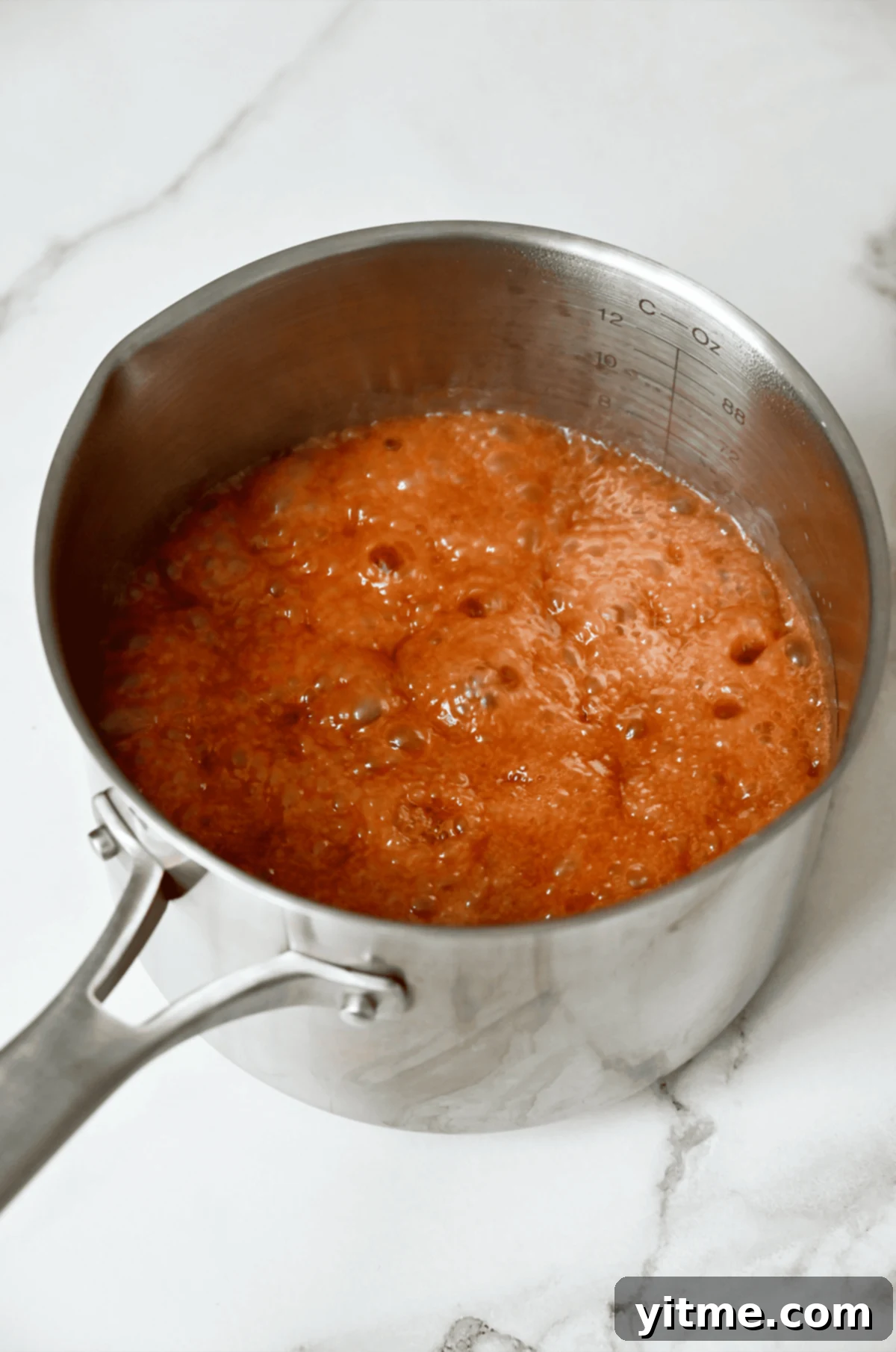
- Cook the Sugar: In a separate medium saucepan over medium heat, combine the sugar, corn syrup, and water. Stir gently just to moisten the sugar with the water and corn syrup. Bring the mixture to a boil. Swirl the pan occasionally to encourage even cooking, but avoid stirring, as this can cause crystallization. Continue cooking until the sugar transforms into a beautiful golden brown color.
- Combine the Cream and Sugar Mixtures: Slowly and carefully pour the heated cream mixture into the caramelized sugar mixture while stirring constantly. Be cautious, as the sugar mixture will bubble up vigorously and may splatter. Continue cooking the combined mixture, stirring occasionally, until the temperature reaches exactly 248°F (120°C) on a candy thermometer. This process typically takes around 12 minutes.
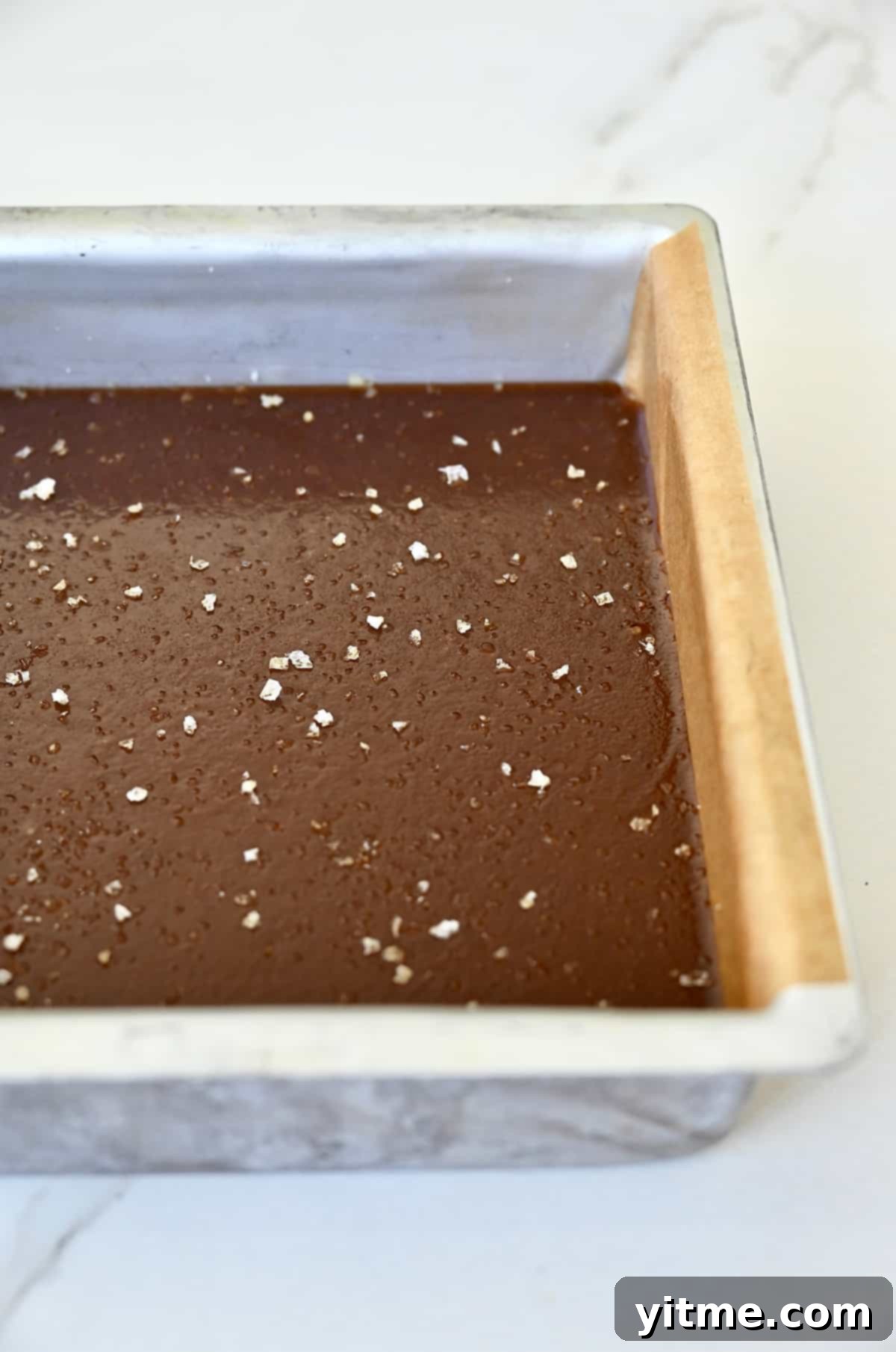
- Pour into the Pan: Once the caramel mixture reaches 248°F, immediately pour it into the prepared pan. Sprinkle the hot caramel with additional flaky sea salt, if desired, for an extra burst of flavor. Let the caramel cool for at least 2 hours, or until it has completely set.
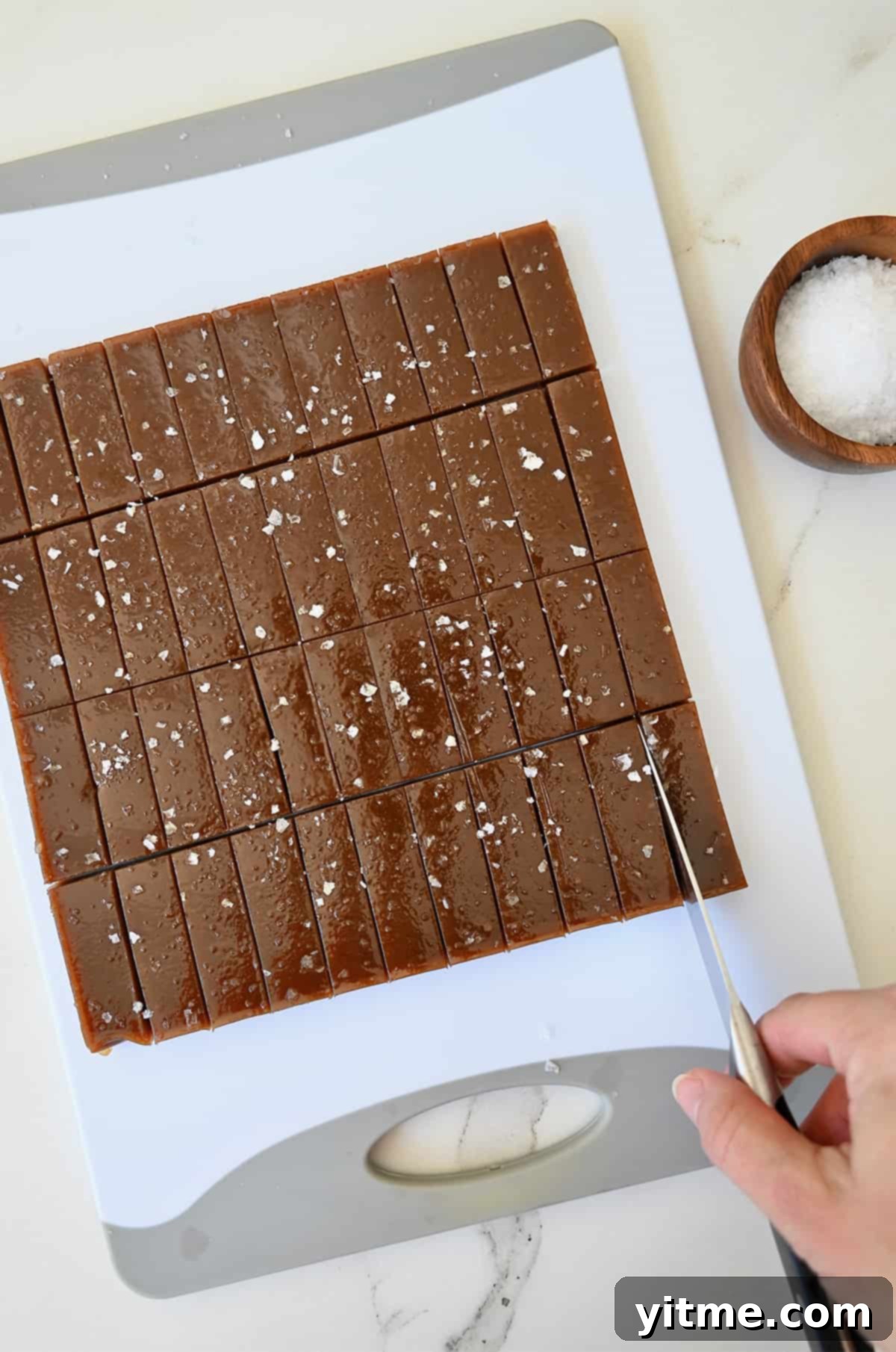
- Cut and Wrap: After the caramel has cooled completely, use a sharp knife to cut it into approximately 40 individual candies. For easy cutting, you can lightly oil the knife blade. Store the caramels in an airtight container to maintain their freshness, or wrap each one individually with wax paper for a classic candy-shop presentation.
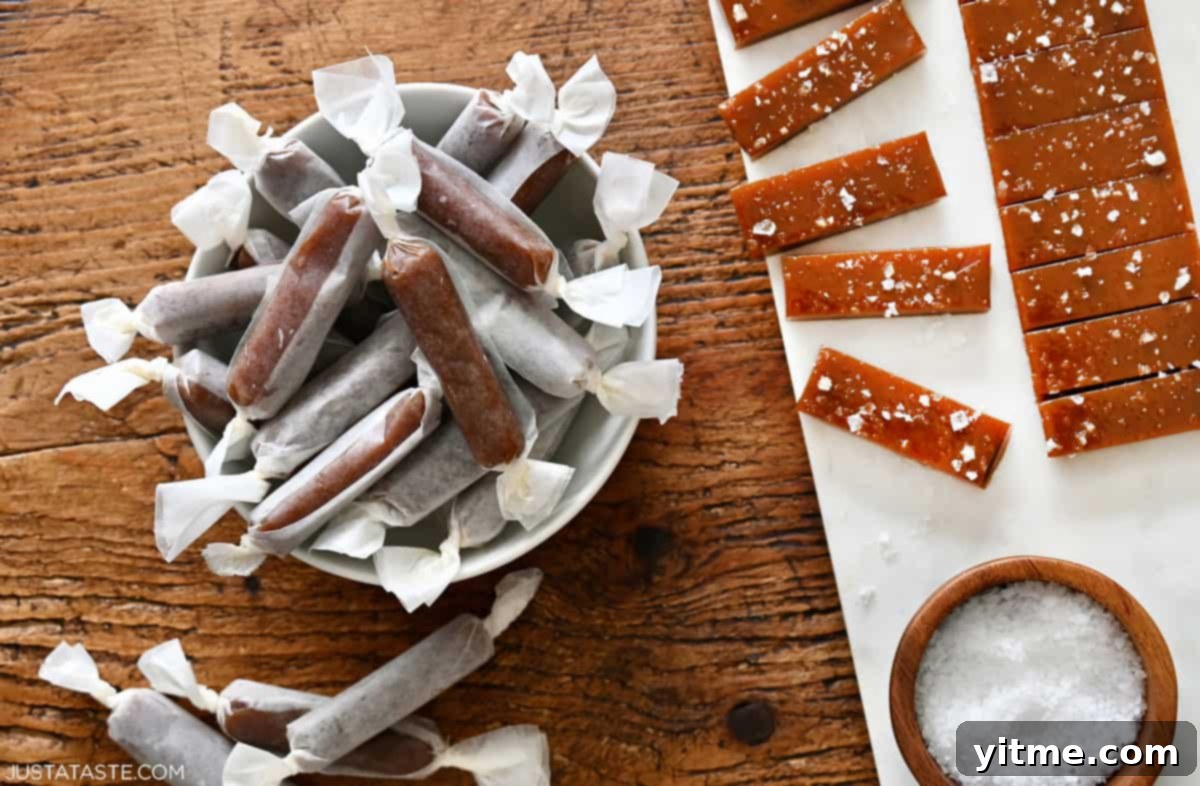
Pro Tip: To wrap the caramels like a professional candy maker, cut small rectangles of wax paper that are about an inch larger than the size of your caramel pieces. Place the caramel in the center of the wax paper rectangle. Fold opposite sides of the paper over the caramel, and then twist the remaining unwrapped sides in opposite directions to secure the wrapping. This creates a classic and elegant candy wrapping.
Kelly’s Recipe Tips
Candy making requires precision. A small mistake can result in caramel that won’t set properly or becomes too hard. Use these tips for caramel-making success:
- Measure Ingredients in Advance: The caramel-making process moves quickly. Measure all your ingredients, prepare the pan, and keep everything within easy reach near the stovetop. It’s also helpful to read through the entire recipe before beginning to understand the steps involved.
- Accurate Temperature Measurement: Precisely heating the caramel mixture to the correct temperature is crucial to ensure proper setting without becoming too hard. Ensure the candy thermometer tip is fully immersed in the mixture but doesn’t touch the bottom of the pan.
- Avoid Over-Stirring: Once the sugar and water are combined, allow them to heat and boil undisturbed, without stirring. This facilitates proper caramelization.
- Ensure Sugar Mixture Darkens: Allow the sugar mixture to cook long enough to achieve a deep golden-brown color. This will result in optimal caramel flavor and prevent the candies from being too pale.
- Easy Clean-Up: Soaking the saucepan and utensils in very hot water will dissolve any sticky sugar residue, making cleanup effortless. For stubborn residue, fill the pan with water, bring it to a boil, and let it sit for a few minutes before washing.
Recommended Tools for This Recipe
Having the right tools can significantly enhance your candy-making experience. Here’s a list of recommended tools for making perfect homemade salted caramels:
- Square Baking Pan: An 8-inch square baking pan is the ideal size for this recipe, yielding approximately 40 candies.
- Parchment Paper: Even if your baking pan is nonstick, lining it with lightly greased parchment paper is highly recommended for easy removal. Leaving excess parchment hanging over two sides of the pan allows you to lift the entire caramel block out effortlessly.
- Medium-Sized Saucepan: You will need two medium-sized saucepans. The saucepan for melting the sugar should have a heavy bottom to maintain even, steady heat. The pan for heating the cream and butter can be lighter weight, if desired.
- Candy Thermometer: An accurate candy thermometer is essential for achieving the proper caramel consistency. Verify its accuracy by placing it in boiling water; it should read 212°F (100°C). If not, calibrate or replace it. Look for a thermometer with a clip to attach it to the side of the pan and a guard to prevent it from touching the bottom.
- Sharp Knife: Use a sharp chef’s knife to cut the cooled caramel. An 8-inch blade or larger will allow you to cut through the entire caramel length in one motion. Lightly rub the blade with vegetable oil or butter to prevent sticking.
- Wax Paper: Small squares of wax paper are perfect for wrapping the individual caramels.
Storage Tips
When stored properly at room temperature, homemade caramels can last for six months or longer.
To preserve freshness, wrap the caramels tightly in wax paper or store them in an airtight container, away from heat and direct sunlight. Freezing is not recommended, as temperature changes can alter the candy’s texture.
Frequently Asked Questions
These caramels should be cooked to exactly 248°F (120°C) and then immediately removed from the heat. Prolonged exposure to high heat will cause the caramel to harden excessively as it sets. However, if this happens, the resulting caramel will resemble toffee and can still be enjoyed. Break it into chunks and drizzle with melted chocolate and sprinkle with nuts, if desired.
If the temperature of the caramel mixture doesn’t reach a high enough point, the caramels won’t cook sufficiently to firm up properly upon cooling. Ensure the mixture reaches exactly 248°F (120°C).
While using a candy thermometer is the most reliable method for achieving perfectly soft and chewy caramel, you can use the “cold water test” if you don’t have one. Drop a small amount of the caramel mixture into a bowl of cold water. At the correct temperature, it will form a firm but pliable ball. The Land O’ Lakes website provides an excellent explanation of the different candy-making stages to watch for.
Yes! I recommend only using dry ingredients, such as finely chopped nuts or dried fruits. Stir them into the caramel mixture just before pouring it into the pan. About ½ cup of mix-in ingredients should be sufficient. Another option is to sprinkle ingredients on top of the hot caramel in the pan, before it begins to firm up.
More Candy Recipes
Explore these other tempting candy recipes for more sweet inspiration:
- Oyster Cracker Toffee Bark
- Easy Homemade Lollipops
- Chocolate Marshmallow Pops
- Quick and Easy Homemade Fudge
- Easy Homemade Candy Apples
- No Bake Chocolate Cookie Pops
Craving more culinary adventures? Subscribe to Just a Taste to receive new recipes, meal plans, and a newsletter directly in your inbox! And, stay connected on Facebook, TikTok, Pinterest, and Instagram for the latest updates and culinary inspiration.
Homemade Salted Caramels
Kelly Senyei