
The Ultimate Guide to Easy Homemade Pizza Dough: Crafting Perfect Crusts at Home
This homemade pizza dough recipe is your ticket to a soft, irresistibly chewy crust that forms the ideal foundation for all your favorite pizza toppings. Crafted with just 5 essential ingredients, this recipe simplifies the art of pizza making. Best of all, it yields enough dough for three glorious pizzas, and any extra can be easily frozen for up to three months, ensuring a gourmet pizza night is always within reach. Whether you’re a seasoned chef or taking your first steps in the kitchen, I guarantee this recipe will make you a homemade pizza convert!
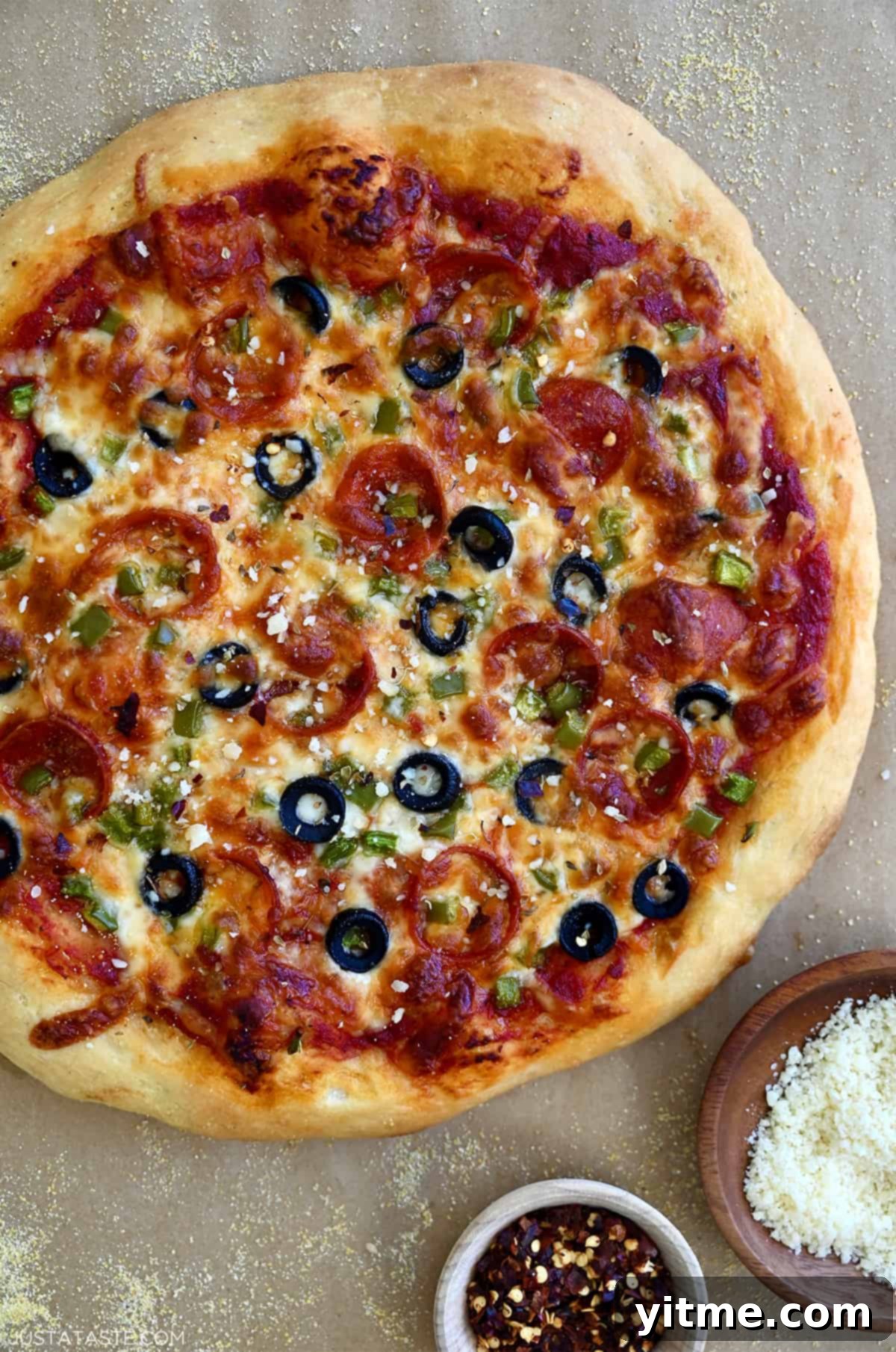
Table of Contents
- Why You’ll Love This Homemade Pizza Dough
- Essential Ingredients You’ll Need
- Step-by-Step Guide: How to Make Homemade Pizza Dough
- Pro Tips and Tricks for Perfect Pizza Dough
- Make-Ahead and Freezing Instructions for Convenience
- Creative Uses for Your Versatile Pizza Dough
- Recommended Equipment for Pizza Making
- Common Questions About Pizza Dough
- Easy Homemade Pizza Dough Recipe
Forget those pricey takeout menus and bring the authentic pizzeria experience right into your own kitchen! As a true pizza enthusiast, I know that the secret to an outstanding pizza truly begins with its crust. This recipe isn’t just a crust; it’s the perfect harmony of chewiness and crispiness, delivering a flavor and texture that rivals your favorite pizza joint.
With this recipe, you’ll produce enough dough for three generous 12-inch pizzas, making it ideal for feeding a hungry crowd or stashing extra portions in your freezer for spontaneous pizza cravings. Plus, I’ve packed this guide with all my tried-and-true tips and clever tricks, ensuring you can confidently make pizza dough like a seasoned professional, even if you’re a complete novice. Dive in and discover everything you need to create a versatile and utterly delicious crust, perfect for layering with your preferred sauce (my personal favorite is this 10-minute homemade marinara!), a blanket of gooey cheese, and an array of fresh, exciting toppings.
Seeking a yeast-free option? Be sure to explore my fantastic recipe for Homemade Pizza Dough Without Yeast for an equally delicious alternative.
Why You’ll Love This Homemade Pizza Dough
Making pizza dough from scratch might seem intimidating, but once you try this recipe, you’ll wonder why you ever bought store-bought crusts! Here’s why this recipe will become your new go-to:
- Foolproof Perfection, Even for Beginners: Don’t let the idea of making dough from scratch scare you. With just a few basic ingredients and straightforward instructions, you’ll be amazed at how quickly you master this recipe. It’s designed to be simple, ensuring a successful outcome every single time, giving you that delightful, chewy crust with minimal effort.
- Infinitely Customizable to Your Taste: Bid farewell to bland, store-bought crusts that offer no room for personal flair. This recipe puts you in complete control. You can adjust the thickness to achieve a thin, crispy base or a thicker, chewier foundation. Experiment with different flour types, add herbs to the dough itself, and tailor every aspect of your pizza to perfectly match your cravings and preferences.
- A Fun & Engaging Family Activity: Transform pizza night into a memorable family tradition! Involving children in the kitchen, from kneading the dough to selecting their favorite toppings, is a wonderful way to create lasting memories and enjoy a delicious meal made with love. It’s a hands-on experience that every family member can enjoy.
- Remarkably Versatile Beyond Just Pizza: This isn’t just a one-trick pony dough! Its balanced flavor and texture make it incredibly adaptable for a variety of culinary creations. Whether you’re craving savory delights like stromboli, calzones, or even surprisingly sweet treats like cinnamon rolls, this dough is your ultimate culinary canvas.
- Wallet-Friendly & Economical: Ditch the expensive delivery fees and the marked-up prices of pre-made crusts. Making your own pizza dough at home is significantly more cost-effective, allowing you to enjoy piping hot, crispy, and delicious pizza whenever the mood strikes, without breaking the bank.
- Convenient Make-Ahead and Freezer-Friendly: Life gets busy, but that shouldn’t stop you from enjoying homemade pizza. This recipe is perfect for meal prepping. Whip up a batch (or two!) of dough and conveniently store extra portions in your freezer. This way, a fresh, homemade pizza is just a thaw and bake away, ready whenever that pizza craving hits.
Essential Ingredients You’ll Need
At its core, pizza dough is classified as a “lean dough,” much like the dough used for baking perfect homemade bagels. This means it relies on only the most fundamental ingredients: flour, water, yeast, and salt. Unlike “rich doughs” – such as those for fluffy dinner rolls or indulgent overnight cinnamon rolls, which incorporate additional elements like eggs, milk, and butter for richness – lean doughs are characterized by their simplicity and ease of handling. This minimalist approach allows the natural flavors of the wheat to shine through, creating that quintessential pizza crust taste.
The key to unlocking the perfect chewy texture in a lean dough is thorough kneading, which develops the gluten network. With just a little practice and attention to detail, you’ll quickly become proficient at creating your own incredible pizza dough from scratch!
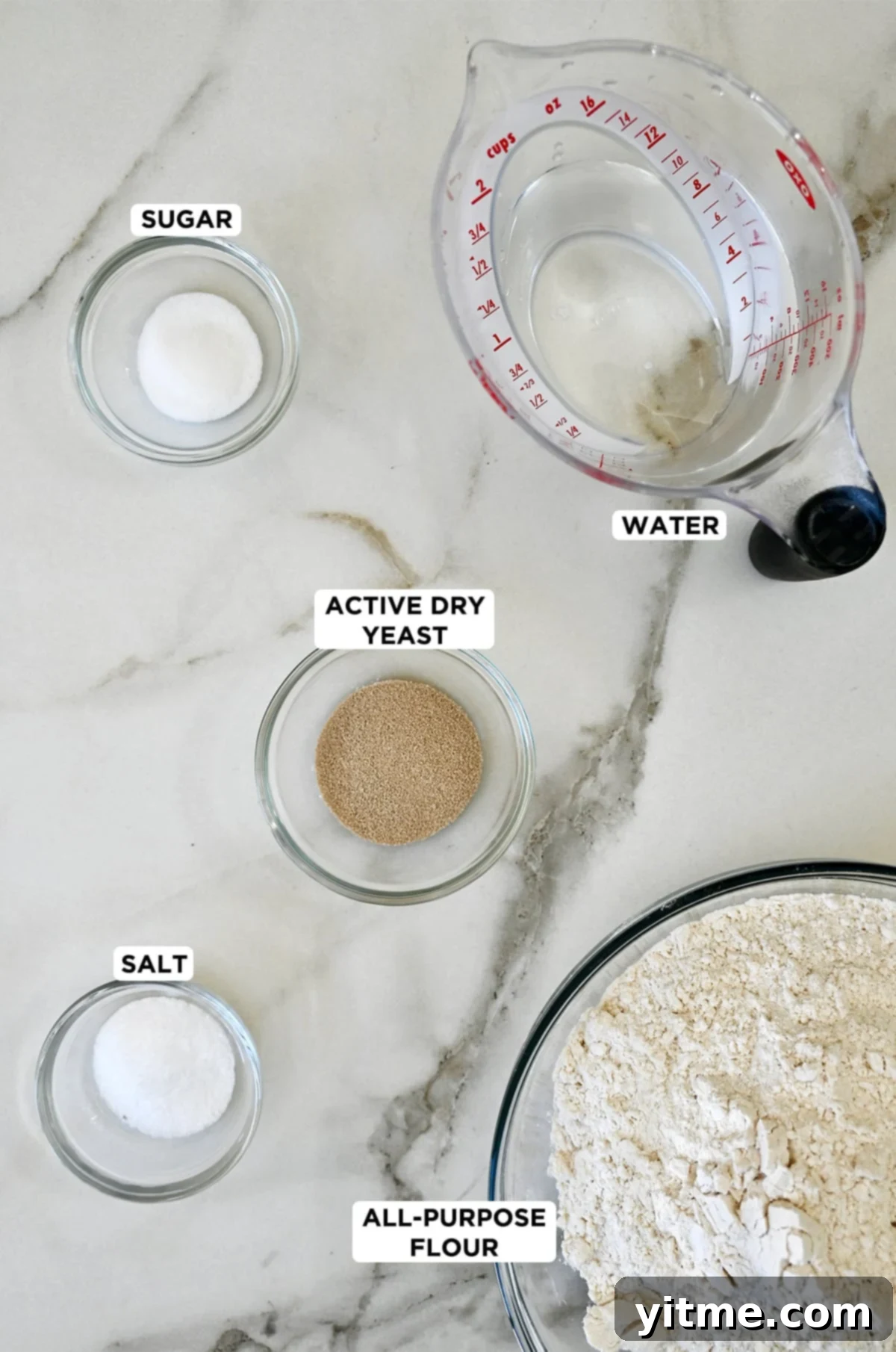
- Warm Water: The temperature of your water is paramount for proper yeast activation and a successful dough rise. Aim for a comfortably warm temperature, ideally around 105-115°F (40-46°C). It should feel like a warm bath on your wrist – never hot! Water over 130°F (54°C) will kill the yeast, preventing your dough from rising, while water that’s too cold won’t activate it effectively. The correct temperature provides the optimal environment for the yeast to thrive, ensuring a light and airy dough.
- Granulated Sugar: A small amount of sugar acts as the initial “food” for your yeast, kick-starting the fermentation process and helping the dough achieve a beautiful rise. Beyond its role in activation, sugar also contributes a subtle hint of sweetness to the crust, enhancing its overall flavor profile and helping it to brown nicely in the oven. This seemingly humble ingredient is a key player in developing that perfect pizza dough texture and color, so don’t omit it!
- Active Dry Yeast: This is the magic behind the rise! When activated in warm water with a touch of sugar, active dry yeast produces carbon dioxide bubbles, which become trapped in the dough’s gluten structure, causing it to expand. This process creates the light, airy, and wonderfully chewy crust we all love. Make sure your yeast is fresh by checking its expiration date, as old yeast won’t be as effective.
- All-Purpose Flour: A versatile and widely available flour, all-purpose provides a good balance of protein for developing gluten, which is essential for a chewy yet pliable crust. For the smoothest possible dough, I highly recommend sifting your flour before adding it to your mixture. This step prevents lumps and ensures even incorporation of ingredients, leading to a consistently smooth and elastic dough.
- Kosher Salt: Salt is crucial for more than just flavor; it plays a vital role in strengthening the dough’s gluten structure, which contributes to its texture and elasticity. It also regulates the yeast’s activity, preventing it from rising too quickly and resulting in a more flavorful, well-developed crust. If you’re using regular table salt instead of kosher salt, remember to reduce the amount by half, as table salt is finer and saltier by volume.
For precise measurements and full nutritional information, please refer to the comprehensive recipe card below.
Step-by-Step Guide: How to Make Homemade Pizza Dough
Creating your own pizza dough is a rewarding process. Follow these detailed steps to achieve a perfect, springy crust:
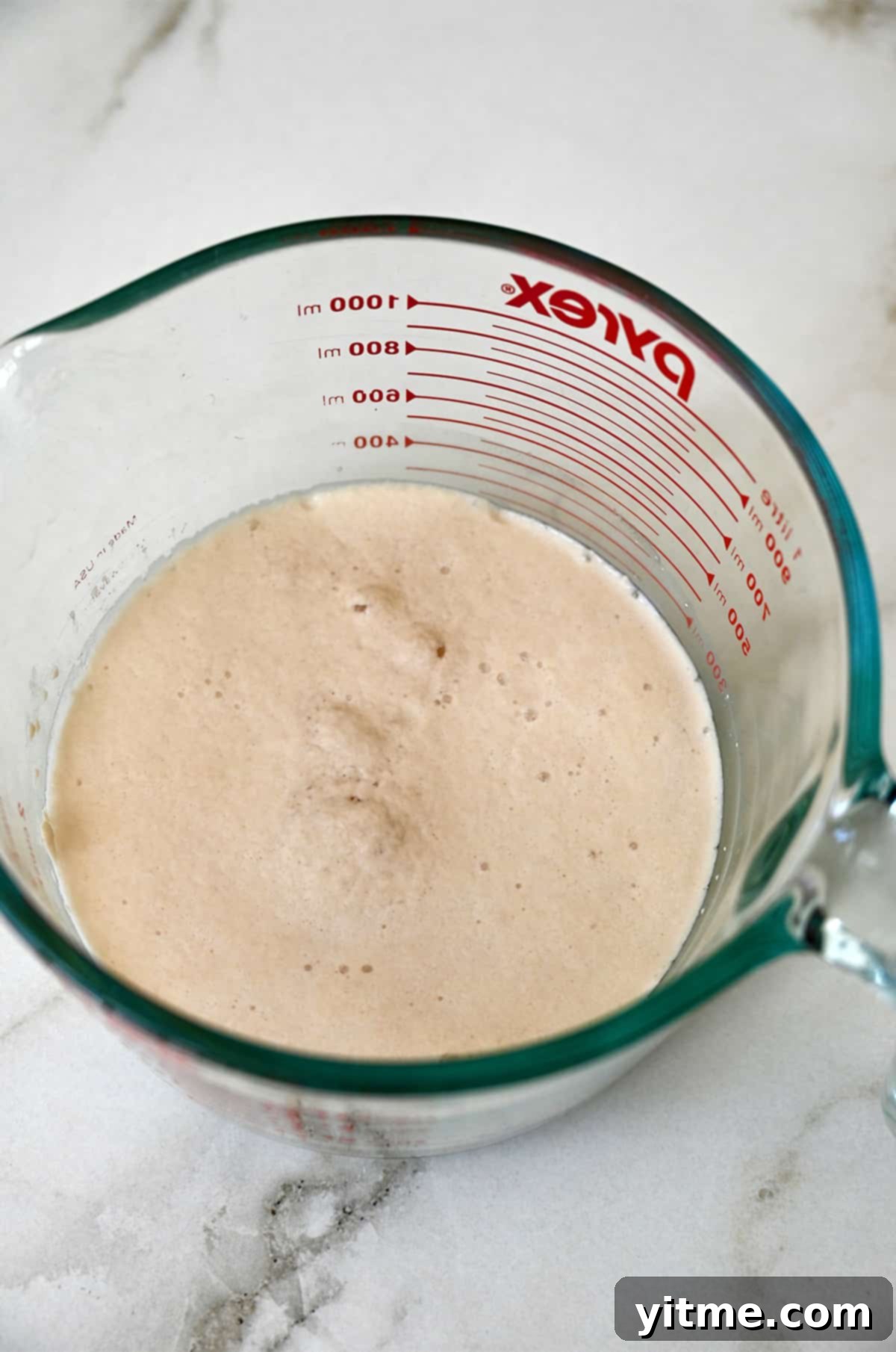
- Activate the Yeast (Proofing): Begin by combining the warm water and sugar in a medium-sized bowl or a liquid measuring cup. Whisk gently until the sugar has completely dissolved. Then, sprinkle the active dry yeast evenly over the surface of the water. Do not stir it in at this stage. Allow the mixture to sit undisturbed for about 10 minutes. During this time, the yeast will “bloom” – it should become frothy and bubbly on the surface, indicating it’s active and ready to work its magic. If your yeast doesn’t become frothy, your water might have been too hot or too cold, or the yeast may be expired, and you’ll need to start again with fresh yeast.
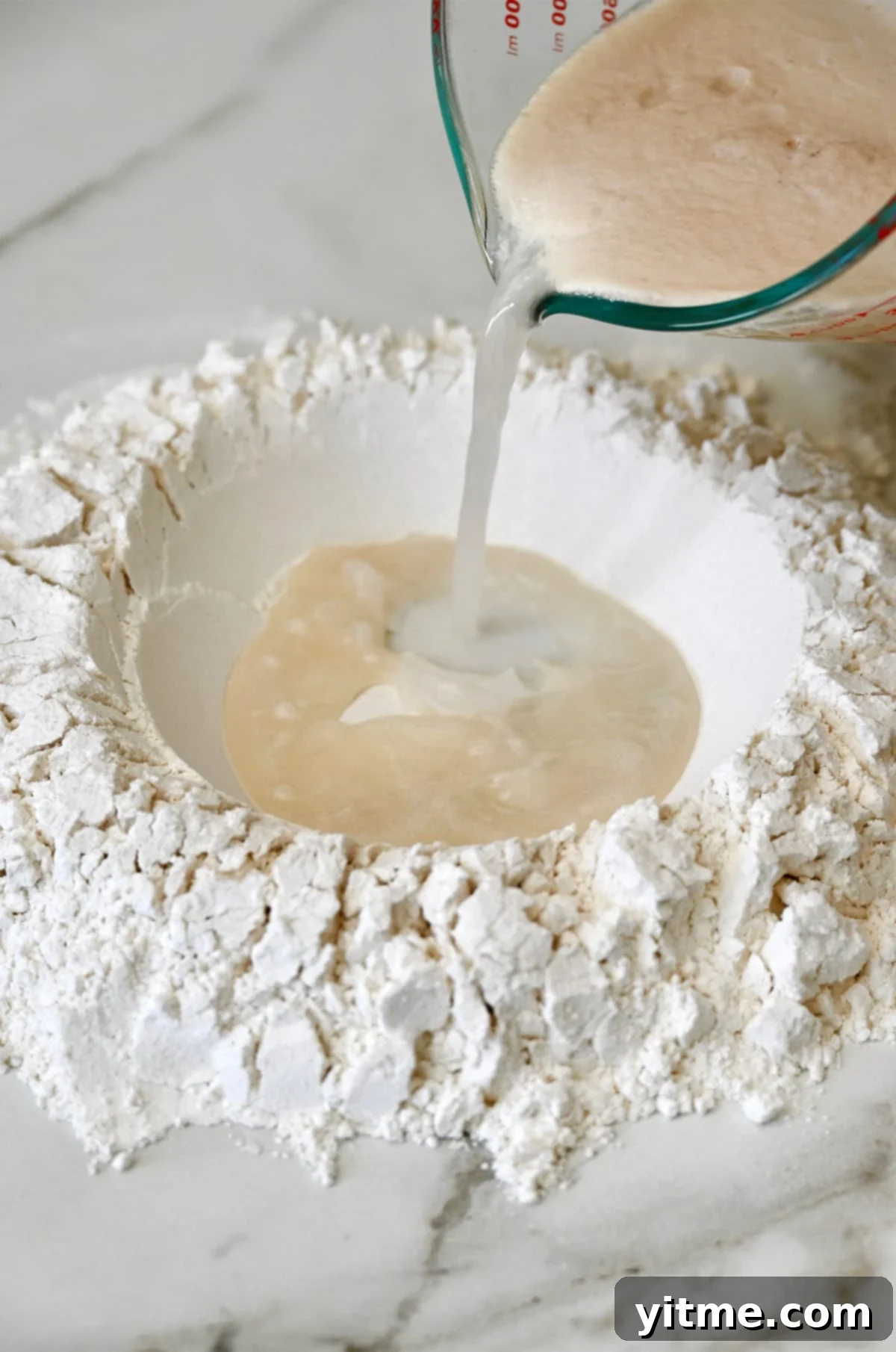
- Prepare the Dry Ingredients: On a clean, spacious work surface (a large cutting board or a clean countertop works well), mound the all-purpose flour. Sprinkle the kosher salt evenly over the flour. Using a fork, gently incorporate the two ingredients, making sure the salt is well distributed. Once mixed, use your hands to form a large “well” in the center of the flour mound, creating a crater-like depression deep enough to hold the liquid.
- Combine and Form the Dough: Carefully pour the frothy, dissolved yeast mixture into the center of the well you’ve created in the flour. Starting from the inner edges of the well, use a fork to gradually pull small amounts of flour from the sides into the liquid center. Continue this process, slowly incorporating more flour, until the mixture begins to thicken and forms a shaggy, cohesive mass. This method helps to evenly hydrate the flour and prevents a sticky mess.
- Knead the Dough to Perfection: Lightly flour your hands to prevent sticking. Now, it’s time to get hands-on! Begin kneading the shaggy dough, bringing it together with a push-and-fold motion. Continue kneading vigorously for about 8-10 minutes. Initially, the dough may be sticky, but as you knead, it will become smoother, more elastic, and less tacky. You’ll know it’s ready when all the flour has been evenly incorporated, and the dough feels smooth, resilient, and springs back when gently poked. Once kneaded, shape the dough into a smooth, tight ball.
- First Rise (Bulk Fermentation): Lightly grease a large bowl with olive oil or cooking spray. Place the dough ball into the greased bowl, turning it once to coat all sides with oil. Cover the bowl tightly with plastic wrap or a clean kitchen towel. Find a warm, draft-free spot in your kitchen (an oven with just the light on, or near a sunny window, works perfectly). Let the dough rise for approximately one hour, or until it has noticeably doubled in size. This crucial step allows the yeast to work and develop flavor.
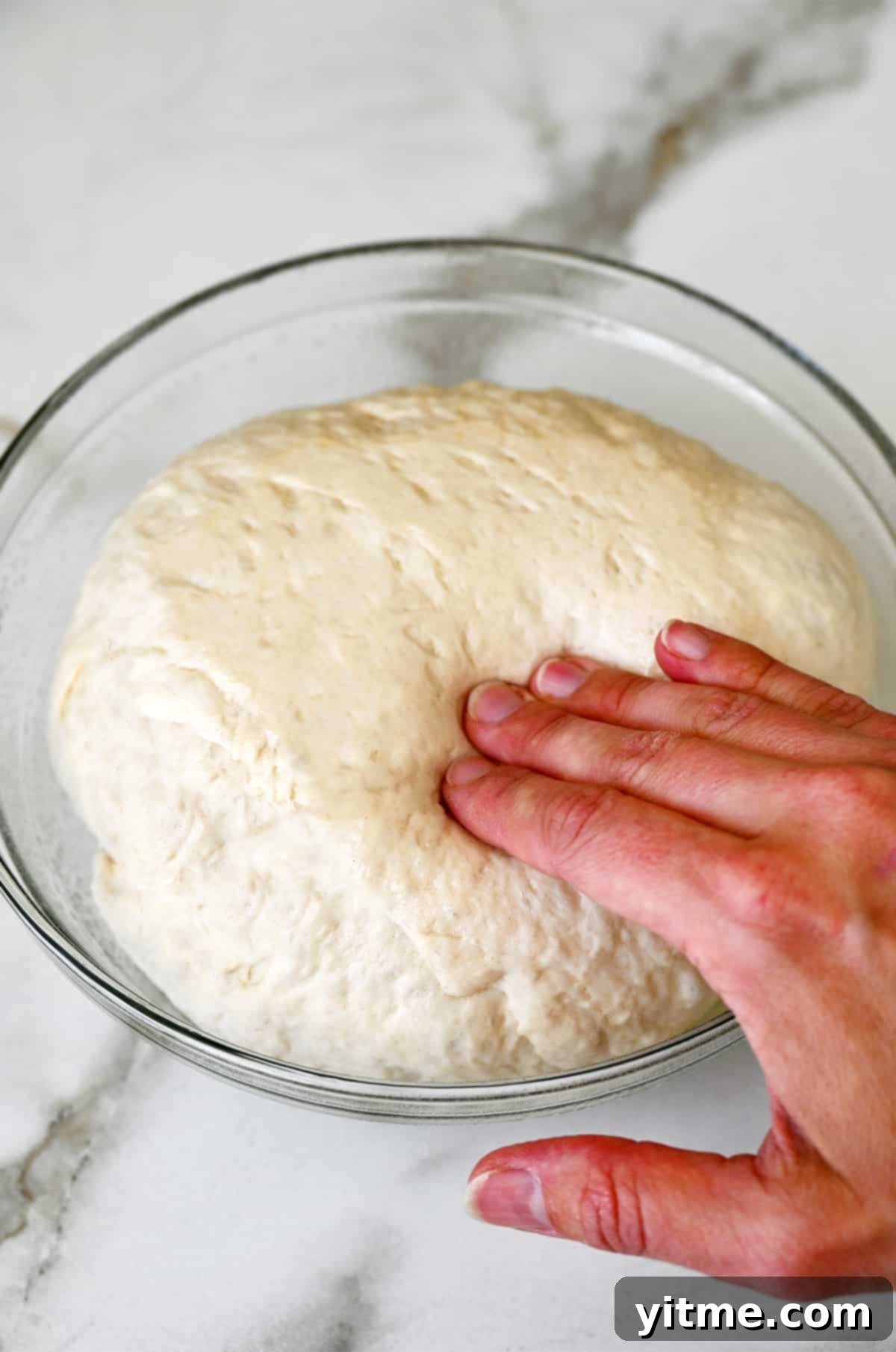
- Deflate and Divide: Gently “knock down” the dough (a gentle punch or firm press) to release the air, then transfer it to a lightly floured work surface. Divide the dough into three equal pieces using a sharp knife or a bench scraper. Each piece will form one 12-inch pizza.
- Second Rise (Proofing for Texture): Shape each piece of dough into a tight ball. Lightly grease a baking sheet or transfer the dough balls to individual greased bowls, ensuring they have room to expand. Cover them loosely with a damp kitchen towel or plastic wrap. Allow the dough balls to rise again for another hour in a warm, dry place. This second rise contributes to a lighter, more tender crust.
- Knock Down and Shape: After the second rise, gently knock down each dough ball a second time to remove large air pockets. Now, on a lightly floured or semolina-dusted surface, roll each dough ball into a 12-inch circle (or your desired shape) using a rolling pin, or gently stretch it by hand. Aim for an even thickness, but don’t worry about perfection – rustic is charming!
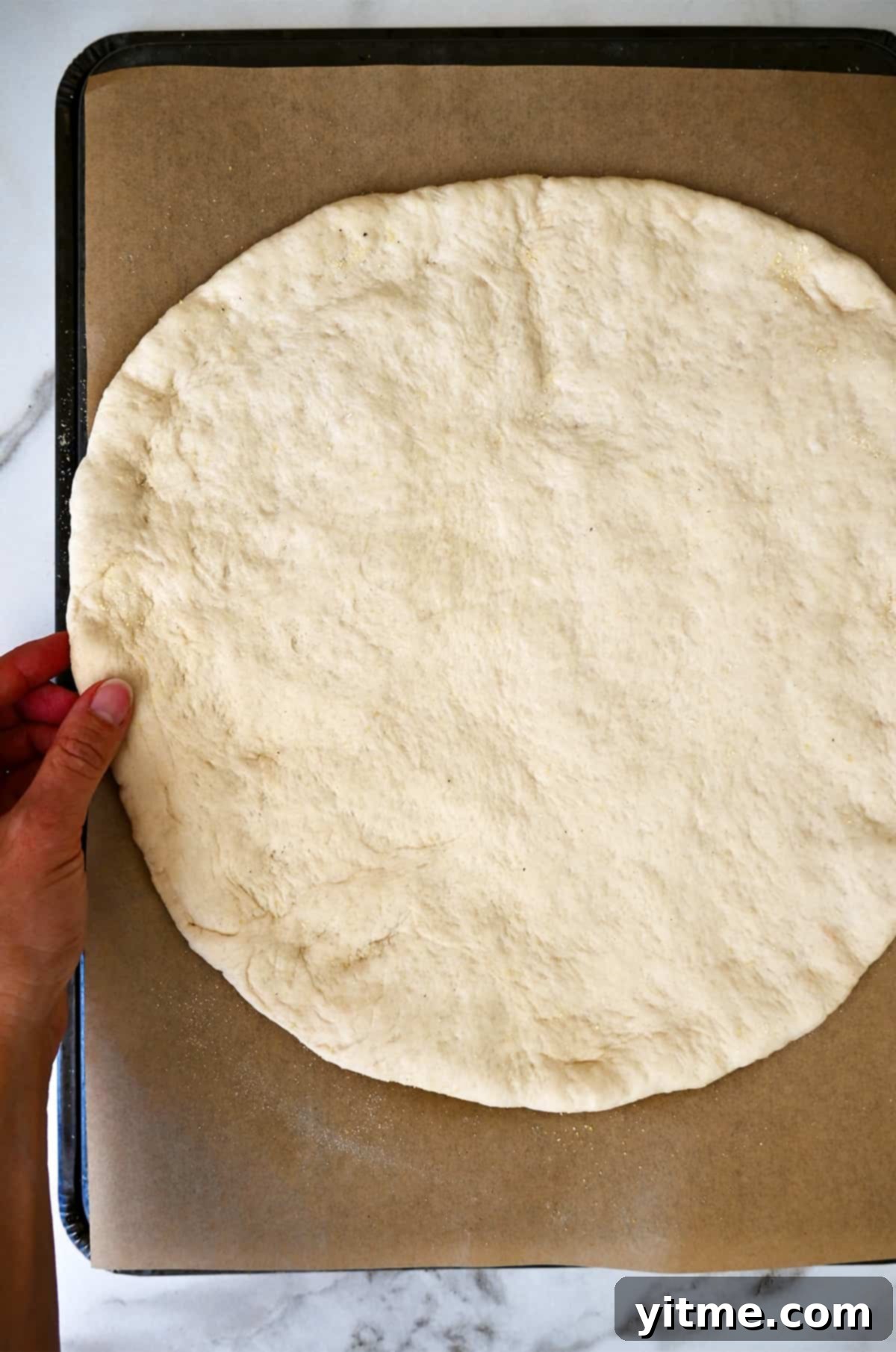
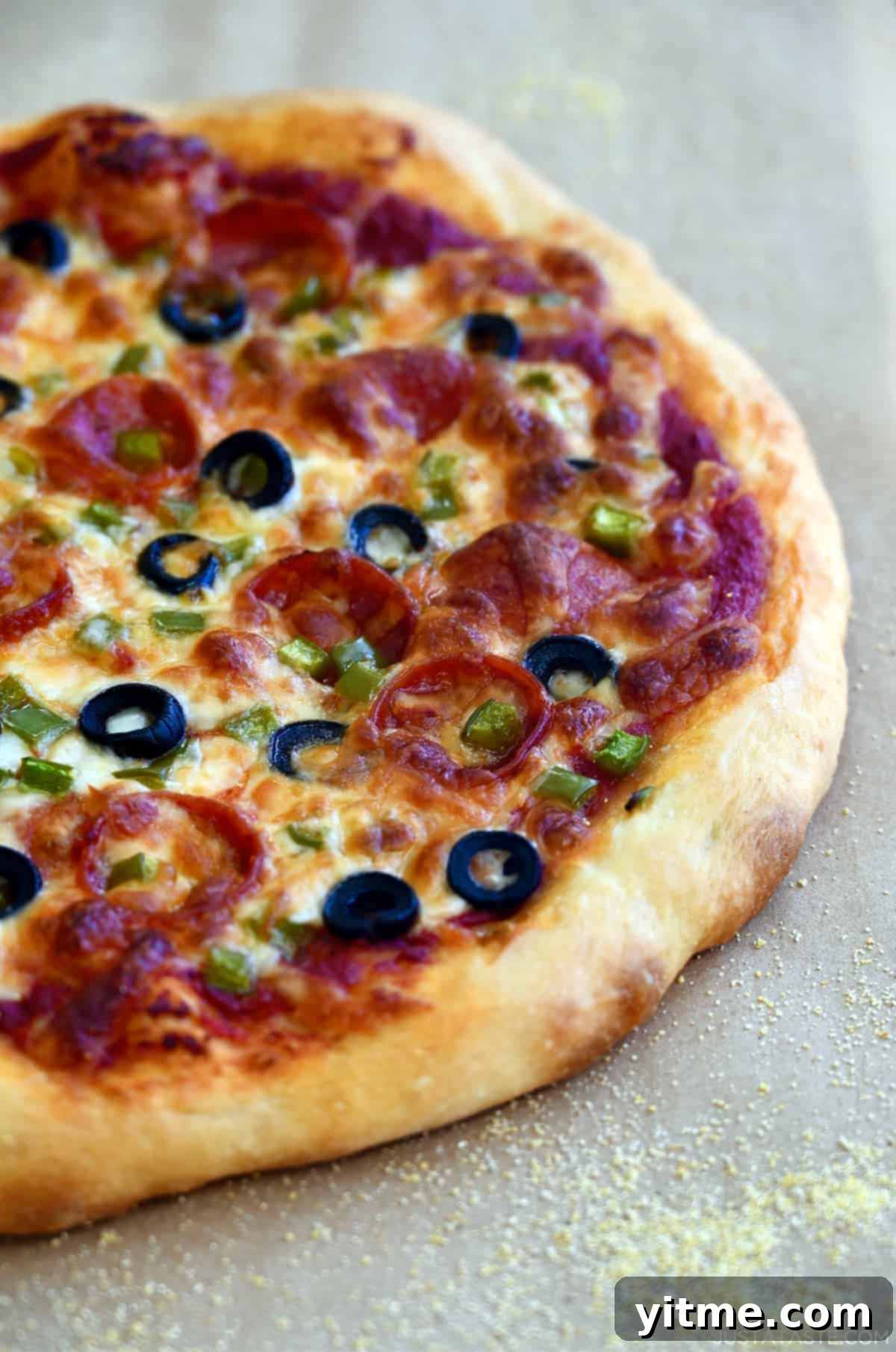
- Top and Bake: Transfer your shaped pizza dough to a hot pizza stone or preheated baking sheet. Quickly add your favorite pizza sauce, a generous layer of cheese, and all your desired toppings. Bake in a preheated 500°F (260°C) oven for about 8-12 minutes, or until the crust is golden brown and the cheese is bubbly and beautifully melted. Enjoy your homemade masterpiece!
Kelly’s Pro Tip: When rolling out your dough, don’t just use flour! Dust your work surface with semolina flour. Semolina not only helps prevent sticking but also imparts a wonderful, subtle crunch and rustic texture to the bottom of your pizza crust, enhancing the overall experience.
Pro Tips and Tricks for Perfect Pizza Dough
Achieving bakery-quality pizza at home is all about these insider secrets:
- “Knocking down” the dough, also known as degassing, is more than just releasing air. It refers to gently but firmly pressing or punching the risen dough to redistribute the yeast and gluten. You can also throw it firmly against your work surface once or twice while holding onto one end, then fold it in half and repeat. This action helps create a finer crumb structure and prevents overly large air pockets, ensuring a more consistent texture.
- Boost Your Yeast Activity: For an even more robust rise and a lighter, airier dough, try adding a tablespoon of the all-purpose flour to the warm water, sugar, and yeast mixture when you’re initially activating the yeast. This extra “food” gives the yeast a head start, leading to a more vigorous fermentation and ultimately, a better-risen dough.
- Knead, Knead, Knead for Chewy Texture: Don’t underestimate the power of thorough kneading! This physical process is essential for developing the gluten strands within the flour. The more you knead (within reason), the stronger and more elastic the gluten network becomes, which is what gives your pizza crust its signature chewy, satisfying texture and structure.
- Choose a Warm Environment for Rising: Yeast thrives in warmth! The warmer the environment (ideally around 75-85°F or 24-30°C), the faster and more efficiently your dough will rise. Avoid cold, drafty areas. My favorite unconventional spot to proof dough? My clothes dryer! Run it for a few minutes to warm it up, then turn it off and let the dough rise inside.
- Patience is a Virtue (Especially with Rising): Resist the urge to rush the rising process. Allowing the dough to rise naturally and fully, even if it takes a bit longer, is crucial for developing both the desired light, airy texture and a rich, complex flavor in your crust. Good things come to those who wait!
- Don’t Overdo It with Toppings: While it’s tempting to pile on every topping imaginable, too many heavy or wet toppings can weigh down the dough, inhibit proper baking, and lead to a soggy center. Practice restraint and aim for a balanced distribution to ensure your crust bakes up perfectly crispy.
- Customize Your Crust Thickness: One of the joys of homemade pizza is tailoring it to your preference. If you prefer a thin, crackly crust, roll the dough out as thin as possible. For a heartier, chewier crust that can stand up to more toppings, leave it a bit thicker.
- For an Extra Crispy Crust, Pre-Bake: If you love a truly crispy crust and want to avoid any hint of sogginess, especially with wetter toppings, consider pre-baking your rolled-out dough. Bake it for 3-5 minutes in your hot oven before adding any sauce or toppings. This gives the crust a head start and locks in that crispness.
- Upgrade Your Pizza Cutting Game: Tired of struggling with a standard pizza wheel? Invest in a Mezzaluna knife! This curved, two-handled knife makes quick, clean cuts through even the thickest crusts and toppings with minimal effort. It’s a game-changer for any pizza lover.
Make-Ahead and Freezing Instructions for Convenience
Making pizza dough from scratch offers incredible flavor and satisfaction, but it can be time-consuming if you’re looking for a quick weeknight meal. Fortunately, this recipe is incredibly flexible, allowing you to prepare the dough in advance or freeze it for future use. These handy tips ensure you can enjoy fresh, homemade pizza whenever the craving strikes, without the last-minute rush!
Make-Ahead for Freshness: For maximum flavor development and convenience, you can prepare the dough a day in advance. After you’ve completed the kneading and divided the dough into individual portions, lightly grease each dough ball, then place them in separate airtight containers or cover a bowl tightly with plastic wrap. Allow the dough to undergo its first rise slowly in the refrigerator overnight, or for up to 24 hours. The cold temperature slows down the yeast activity, allowing for a longer, more complex flavor development. When you’re ready to use it, remove the dough from the fridge and let it come to room temperature for about 30 minutes, or until it’s pliable. Then, shape it as desired and let it rest for an additional 15-20 minutes for a quick final rise before adding your toppings and baking.
Freeze for Long-Term Storage: This recipe is perfect for stocking your freezer with homemade goodness! To freeze pizza dough, ensure each portion is tightly wrapped. First, wrap each individual dough ball securely in plastic wrap, pressing out as much air as possible to prevent freezer burn. Then, place the wrapped dough balls into resealable freezer bags or an airtight freezer-safe container. Don’t forget to label each package with the date, so you can easily keep track of its freshness. Your homemade pizza dough can be stored in the freezer for up to 3 months without compromising quality.
Thawing and Using Frozen Dough: When you’re ready for a pizza night, planning ahead is key. Transfer the frozen dough from the freezer to the refrigerator and let it thaw overnight (typically 8-12 hours). Alternatively, if you’re short on time, you can thaw it at room temperature for a few hours, though refrigeration is preferred for a more gradual thaw. Once thawed, let the dough come to room temperature for about 30 minutes to make it easier to work with. Then, proceed with shaping and baking as directed in the recipe, ensuring it has a moment to relax and achieve its ideal texture before it goes into the oven.
Creative Uses for Your Versatile Pizza Dough
Now that you’ve mastered the foundational art of making incredible pizza dough, it’s time to unleash your culinary creativity! The beauty of this homemade dough lies in its incredible versatility, making it suitable for much more than just classic pizzas. From savory twists to unexpected sweet treats, this dough is your secret weapon for countless delicious recipes. Go beyond pepperoni and explore gourmet combinations like kale and bacon, or transform your dough into entirely new delights. Get ready to impress with these innovative ideas:
- Barbecue Chicken Pizza – A fan favorite featuring tender chicken, tangy barbecue sauce, and a luscious blend of melty cheeses, all on your perfect homemade crust.
- Cheesy Garlic Bread Pizza – The ultimate mashup! This recipe ingeniously combines the crispy delight of garlic bread with a rich, gooey cheese topping for an unforgettable experience.
- Everything Bagel Breakfast Pizza – Start your day sensationally with the irresistible flavors of everything bagel seasoning, crispy bacon, fluffy eggs, and melted cheese, all on a unique pizza base.
- Garlicky Kale and Bacon Pizza – Elevate your pizza game with robust flavors of sautéed garlicky kale and smoky crispy bacon, creating a savory and deeply satisfying slice.
- Cheesy Chicken Taco Pizza – A vibrant and exciting twist! Enjoy perfectly seasoned chicken, a cascade of melted cheese, and all your favorite zesty taco-inspired toppings.
- Muffin Tin Pizza Pockets – These perfectly portioned, handheld pizza pockets are a convenient, fun, and irresistibly tasty way to enjoy all your beloved pizza flavors on the go.
- Baked Parmesan Garlic Pizza Dough Croutons – Don’t let dough scraps go to waste! These crispy, golden, and incredibly flavorful croutons add a delightful crunch to salads, soups, or even as a standalone snack.
- Pepperoni Pizza Pull-Apart Bread – An absolute crowd-pleaser! This shareable bread is generously loaded with savory pepperoni and irresistible gooey cheese, making it the perfect appetizer or party snack.
- Easy Pizza Dough Soft Pretzel Bites – Believe it or not, with just five ingredients and a mere 25 minutes (start to finish!), you can achieve that classic chewy, soft pretzel texture and authentic taste.
- Cheesy Chicken Pizza Pockets – Irresistible pockets filled with cheesy chicken goodness, perfect for dipping into marinara sauce – a guaranteed hit with all ages!
- Cheese and Pepperoni Pizza Bites – These delightful miniature bites are ideal for quick snacking, entertaining guests, or serving as a universally loved appetizer.
- Easy Muffin Pan Pizza Cups – A fantastic option for personalized meals! Each serving can be customized with individual favorite toppings, making everyone happy.
- Homemade Garlic Knots – Transform your pizza dough into delectable garlic knots, generously brushed with aromatic garlic-infused butter. The ultimate side dish or irresistible party snack.
- Pizza Dough Cinnamon Rolls – A truly unexpected and delightful fusion of sweet and savory! Pizza dough is magically transformed into soft, sweet cinnamon rolls for a deliciously surprising treat.
Recommended Equipment for Pizza Making
While mastering homemade pizza dough doesn’t require an arsenal of fancy gadgets, having the right basic tools can significantly streamline the process and enhance your results. Here’s a list of essential equipment that will make your pizza-making journey smoother and more enjoyable:
- Mixing Bowls: You’ll need at least one large mixing bowl for activating the yeast and for the initial dough rise. A second medium bowl can be handy for preparing dry ingredients separately. Look for bowls with non-slip bases for stability.
- Measuring Cups and Spoons: Accuracy is key in baking! Good quality measuring cups for dry ingredients and spoons for smaller quantities ensure your ingredient ratios are perfect, leading to consistent dough results.
- Whisk: A simple whisk is essential for dissolving sugar in water and for gently combining flour and salt before adding the wet ingredients. It helps prevent lumps and ensures even distribution.
- Clean Kitchen Towel or Plastic Wrap: Crucial for covering your dough during its rising periods. A damp kitchen towel prevents the dough from drying out, while plastic wrap creates an airtight seal, maintaining moisture and warmth for optimal yeast activity.
- Rolling Pin: While some prefer stretching pizza dough by hand, a good rolling pin makes shaping consistent circles much easier. Whether it’s a traditional French style or a classic American rolling pin, choose one that feels comfortable in your hands.
- Mezzaluna Knife: As mentioned in the tips, this curved blade with two handles offers superior control and efficiency when slicing through your baked pizza. It cuts cleanly through crust and toppings without dragging, unlike some pizza wheels.
Pro Tip for Baking: For professional-level results, invest in a pizza peel. A pizza peel is an invaluable tool that makes transferring your raw, topped pizza onto a hot oven surface (especially a pizza stone) and retrieving it a breeze. It prevents your pizza from sticking and helps maintain its perfect shape during transfer. Once you use one, you’ll wonder how you ever managed without it!
Common Questions About Pizza Dough
Absolutely, you can! Instant yeast is designed to be faster-acting and can be mixed directly with the dry ingredients without prior activation. However, to compensate for its higher potency, you should use approximately 25% less instant yeast than active dry yeast in the recipe. For example, if the recipe calls for 1 tablespoon of active dry yeast, use ¾ tablespoon of instant yeast. Additionally, you can skip the initial proofing step with warm water and sugar; simply combine the instant yeast with your flour and salt, then add the warm water.
Achieving that desirable crispy crust involves a few key techniques. First, always preheat your oven adequately, ideally for at least 30-60 minutes, with your baking surface inside. This ensures a consistent, high temperature that instantly sears the dough. Second, try rolling your dough thinner; a thinner crust will naturally crisp up more effectively. A very important factor is your baking surface: I highly recommend investing in a pizza stone or a heavy-duty cast-iron pizza pan. These surfaces retain and distribute heat exceptionally well, drawing moisture out of the dough quickly to create that perfect, golden, crispy base.
There are several wonderful ways to infuse more flavor directly into your pizza dough! You can try incorporating dried herbs like oregano, basil, or a blend of Italian herbs directly into the flour mixture before adding liquids. A teaspoon or two of garlic powder also adds a fantastic savory note. For a richer flavor, consider replacing a small portion of the water (about ¼ cup) with olive oil, or drizzling olive oil over the shaped dough before adding toppings. A sprinkle of Parmesan cheese or a dash of black pepper can also enhance the dough’s character.
The “best” flour truly depends on the kind of crust you’re hoping to achieve! For convenience and accessibility, I typically use all-purpose flour because it’s a pantry staple and readily available. All-purpose flour yields a lighter, somewhat crispier texture. However, if you’re aiming for a more authentic, chewy, and robust crust, high-protein flours like bread flour (which has a higher gluten content) or specialized Tipo 00 flour (a finely milled Italian flour) are often considered superior. Bread flour provides excellent structure and chewiness, while Tipo 00 flour is prized for its ability to create a very tender yet structured crust with beautiful blistering. Feel free to experiment with different flours to discover your ideal balance of flavor and texture for your ultimate homemade pizza experience.
Easy Homemade Pizza Dough Recipe
Ingredients
- 1 1/4 cups hot water (about 110°F)
- 1 teaspoon sugar
- 1 Tablespoon active dry yeast
- 3 1/3 cups all-purpose flour
- 2 teaspoons kosher salt
- Extra flour for dusting work surface
Instructions
- In a large bowl, whisk together the warm water and sugar until the sugar is fully dissolved. Sprinkle the active dry yeast over the surface and let it sit undisturbed for 10 minutes until it becomes frothy and bubbly, indicating it’s active.
- Mound the all-purpose flour on a clean work surface and sprinkle the kosher salt over it. Use a fork to thoroughly incorporate the flour and salt. Then, create a large, deep well in the center of the flour mound.
- Carefully pour the frothy yeast mixture into the center of the well. Using a fork, gradually pull small amounts of flour from the inner edge of the well into the liquid. Continue this process, little by little, until the mixture begins to thicken and forms a shaggy dough.
- Flour your hands lightly. Begin kneading the dough, folding and pressing it until it comes together into a cohesive ball. Continue kneading for 8-10 minutes, or until all the flour is evenly incorporated and the dough is smooth, elastic, and no longer sticky. Form it into a smooth ball.
- Lightly grease a large bowl. Place the dough ball into the greased bowl, turning it once to coat. Cover the bowl tightly with plastic wrap or a greased piece of parchment paper. Let it rise in a warm, draft-free place for one hour, or until it has doubled in size.
- Gently “knock down” the risen dough on a lightly floured work surface to release the air. Then, use a sharp knife or bench scraper to divide the dough into three equal portions.
- Shape each portion into a ball. Place the dough balls onto a lightly greased cookie sheet, ensuring they have space between them. Cover them loosely with a damp towel. Let the dough rise a second time for another hour in a warm spot.
- After the second rise, gently knock down the dough balls once more. On a lightly floured or semolina-dusted surface, roll or stretch each dough ball into your desired 12-inch circle or shape. Top with your favorite pizza ingredients and bake in a preheated 500ºF (260°C) oven for 8-12 minutes, or until the crust is golden brown and the cheese is bubbly.
Kelly’s Notes
- “Knocking down” the dough refers to throwing it firmly against your work surface while holding on to one end. Fold the dough in half, then do it again. This helps to evenly distribute the yeast and create a finer crumb.
- Adding a tablespoon of flour to the yeast while it’s dissolving will make for a better rise by giving the yeast extra food (better rise = better dough).
- Knead the dough thoroughly. Proper kneading helps develop the gluten structure, which is essential for creating that wonderfully chewy texture.
- Let the dough rise in a warm place. The warmer and more consistent the environment, the faster and more reliably the dough will rise. Avoid cold or drafty areas.
- Adjust the thickness of the crust to your liking by rolling it thinner for a crispier base or thicker for a chewier, more substantial pizza.
- Make-ahead: After kneading and dividing the dough, lightly grease each portion and let it rise slowly in the fridge overnight or for up to 24 hours. When you’re ready to use it, let it come to room temperature for about 30 minutes, shape it, and allow an additional 15-20 minutes for a final short rise before adding your toppings.
- Freeze: If you want to freeze the pizza dough, wrap each portion tightly in plastic wrap, then place in a resealable freezer bag. Label them with the date for freshness tracking. You can store the pizza dough in the freezer for up to 3 months. To use frozen dough, thaw it overnight in the refrigerator or for a few hours at room temperature, then let it come to room temperature for about 30 minutes before shaping and baking.
- ★ Did you make this recipe? Don’t forget to give it a star rating below!
Nutrition
Did you try this recipe?
Leave a comment below with your star rating!
With this comprehensive guide, you’re now equipped to create the most incredible homemade pizza dough, a foundation for countless delicious meals and cherished memories. Say goodbye to mediocre takeout and embrace the joy of crafting your own perfect, personalized pizzas right in your kitchen. Happy baking!