The Ultimate Guide to Easy Homemade Bagels: Crusty, Chewy, and Perfectly Delicious
Embark on a culinary adventure with this definitive guide to making authentic homemade bagels. Forget store-bought imitations; these bagels boast a beautifully crusty exterior and a dense, irresistibly chewy interior that’s surprisingly simple to achieve in your own kitchen. Whether you crave the classic plain bagel, a savory everything bagel, a sweet cinnamon raisin, or a spicy cheddar jalapeño, this comprehensive recipe provides step-by-step instructions and creative flavor variations, ensuring it’s the only bagel recipe you’ll ever need.
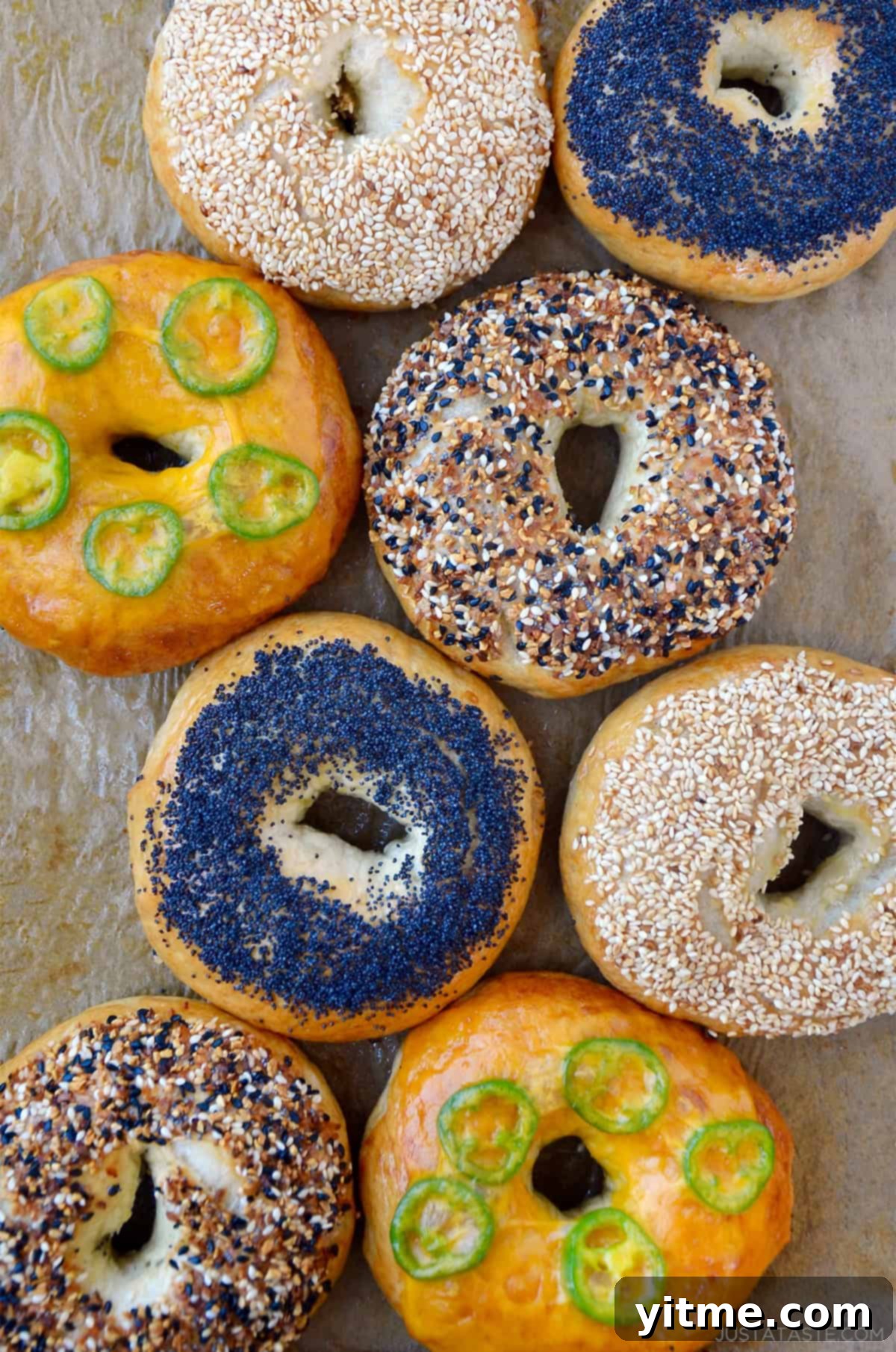
Table of Contents
- Why You’ll Love This Bagel Recipe
- Ingredients
- How to Make Homemade Bagels
- Make the Dough
- Shape the Bagels
- Boil the Bagels
- Add Toppings and Bake
- Bagel Flavor Guide
- Storing & Freezing Instructions
- Serving Suggestions
- More Homemade Bread Recipes To Try
- Easy Homemade Bagels Recipe Recipe
For many, a bagel isn’t just a carb; it’s a nostalgic cornerstone of breakfast, brunch, or a quick snack. My own fondest childhood food memory revolves around a specific bagel creation: an egg bagel generously piled with sliced turkey, sharp cheddar, and a liberal spread of mayonnaise. The distinct taste and texture are etched in my memory, a testament to the bagel’s enduring appeal.
Having spent years soaking in the vibrant food scene of New York City, my appreciation for bagels has only deepened. There’s an undeniable magic in a warm, freshly baked bagel, its perfectly chewy texture offering an inviting canvas for an endless array of toppings and fillings. Yet, despite their iconic status and perceived complexity, I’m here to reveal a delicious secret:
Crafting homemade bagels is remarkably straightforward and incredibly rewarding, making it one of the most foolproof baking projects you can undertake.
This guide demystifies the process, transforming what might seem like a daunting task into an enjoyable and accessible baking experience. Prepare to impress yourself and your loved ones with bagels that rival any artisan bakery, right from your very own oven.
Why You’ll Love This Bagel Recipe
This bagel recipe stands out because it delivers on all the essential qualities of a truly great bagel. You’ll achieve that irresistible crust on the outside, a satisfyingly chewy texture on the inside, making them absolutely perfect for toasting and slathering with your favorite cream cheese or building an epic breakfast sandwich.
The secret behind that signature chewy texture lies primarily in one not-so-secret ingredient: bread flour. Unlike all-purpose flour, bread flour has a higher protein content. This higher protein level is crucial for developing strong gluten networks within the dough, which in turn creates the dense, elastic structure characteristic of a perfect bagel. Without it, your bagels would be much lighter and more akin to standard bread rolls.
But there’s another key ingredient that elevates this recipe, setting it apart from many traditional methods: honey. While classic New York-style bagels often involve a baking soda bath, extensive testing has shown that incorporating honey into the boiling water, much like Montreal-style bagels, makes a significant difference. The honey contributes to a gorgeous golden-brown crust and imparts a subtle, unparalleled sweetness that complements both savory and sweet toppings. It’s this delicate balance that truly makes every bite pure perfection!
Ingredients
One of the most appealing aspects of this bagel recipe is its minimal and accessible ingredient list. You’ll find that many of these items are pantry staples, making it easy to whip up a batch whenever a craving strikes.
Once you’ve gathered these simple ingredients, you’re already halfway to enjoying warm, freshly baked bagels. Picture that finish line, draped in perfectly golden, gloriously chewy bagels, ready to be adorned with all your favorite spreads and toppings.

- Bread flour: This is arguably the most critical ingredient. Its significantly higher protein content, typically 12-14%, is essential for developing strong gluten. Gluten is the protein network that gives bagels their characteristic dense, chewy texture. While all-purpose flour can be used in a pinch, expect a lighter, airier result rather than the classic chewiness.
- Kosher salt: Beyond simply adding flavor, salt plays a vital role in controlling yeast activity and strengthening the gluten structure of the dough, contributing to its elasticity and overall texture.
- Warm water: Precisely warm water is key to activating the active dry yeast, allowing it to “bloom” and begin the fermentation process. The ideal temperature is around 110°F (43°C). Water that’s too cold won’t activate the yeast, while water that’s too hot can kill it, both leading to a dough that won’t rise properly.
- Sugar: A small amount of sugar acts as food for the yeast, kick-starting fermentation and ensuring a vigorous rise. It also contributes to the beautiful golden-brown color of the bagel crust during baking.
- Active dry yeast: This leavening agent requires proofing in warm water with a touch of sugar to become active. This crucial step ensures the yeast is alive and ready to make your bagels rise, resulting in a lighter, more voluminous interior structure.
- Honey: Added to the boiling water bath, honey is a game-changer. It not only imparts a subtle sweetness to the crust but also aids in achieving that perfect golden hue and a wonderfully crisp exterior. It’s a key element in bridging the gap between New York and Montreal bagel styles.
- Egg wash (1 large egg + 2 tablespoons water or milk): Brushing the bagels with an egg wash before baking gives them a beautiful glossy, golden-brown finish. It also acts as a binder, helping toppings like sesame seeds or everything bagel seasoning adhere firmly to the surface.
See the recipe card below for precise quantities and full ingredient details.
How to Make Homemade Bagels
Making bagels from scratch involves a few distinct stages, but each step is straightforward and contributes to the final perfect texture. Follow these instructions carefully, and you’ll be enjoying fresh, warm bagels in no time.
Make the Dough
Bagel dough is categorized as a lean dough, which means it’s made without any added fats like butter or oil (similar to classic pizza dough or a rustic focaccia). This lean composition is fundamental to achieving the characteristic chewiness of a bagel, as fat can tenderize the dough. The process is surprisingly easy, whether you’re using a stand mixer or kneading by hand.
I typically use my stand mixer equipped with the dough hook attachment, allowing it to do the hard work of kneading the dough for about 5-7 minutes until it becomes smooth, elastic, and forms a cohesive ball. If you’re kneading by hand, be prepared for a good arm workout; knead vigorously on a lightly floured surface for about 10-15 minutes until the dough passes the windowpane test (you can stretch a small piece thin enough to see light through it without tearing).
Once kneaded, lightly grease a large bowl with a neutral oil, place the dough inside, and turn it once to ensure it’s fully coated. Cover the bowl snugly with plastic wrap and let it rise in a warm, dark spot. This fermentation process typically takes about 90 minutes, or until the dough has visibly doubled in size. A warm oven (turned off, but slightly preheated and then off again) can be a good spot.
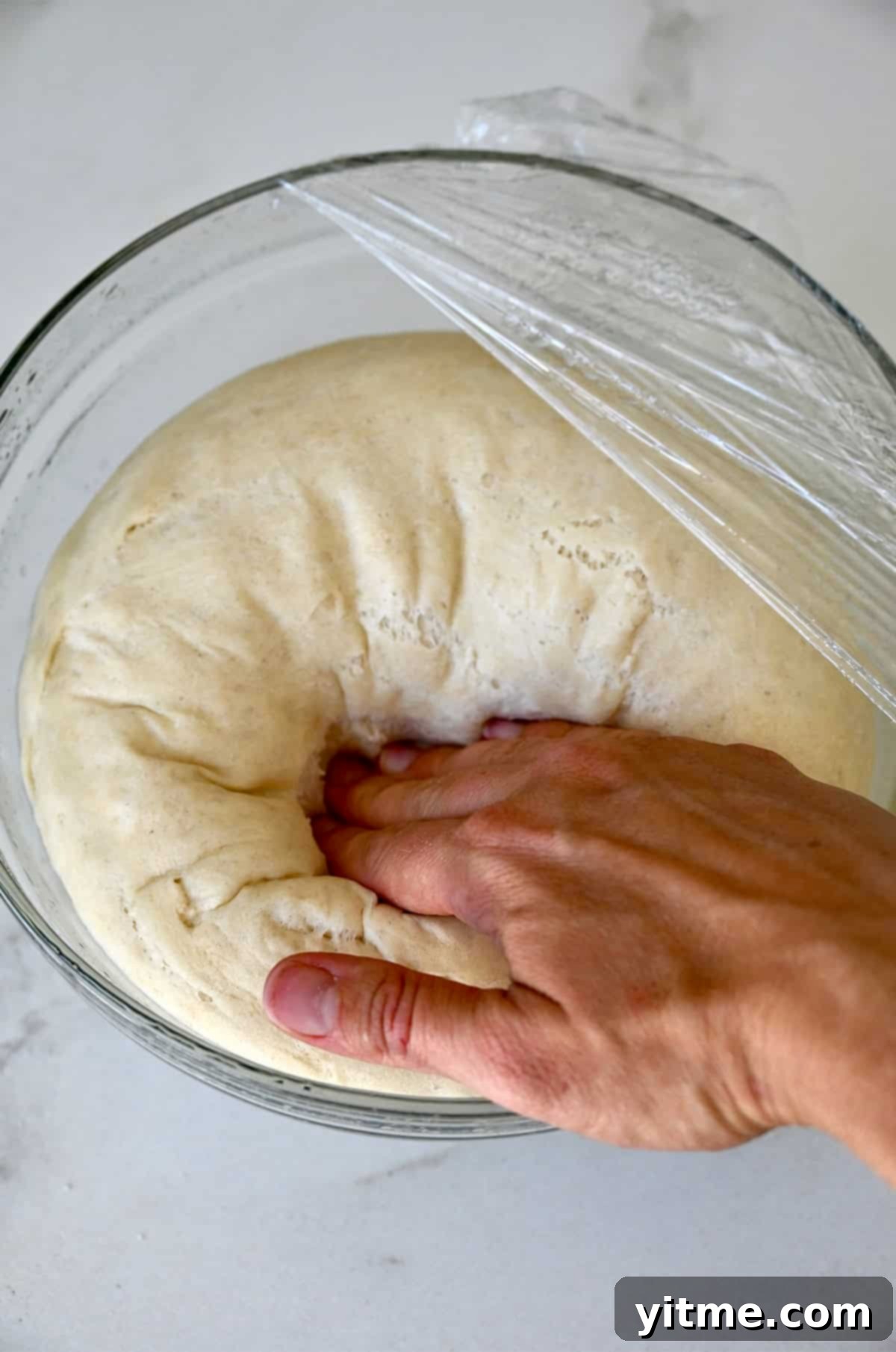
After the dough has proofed, gently transfer it to a lightly floured work surface. Punch it down firmly but gently to release any excess air pockets that formed during the rise. This step helps create a more uniform crumb structure. Now, your dough is ready to be portioned and transformed into those iconic bagel shapes!

Shape the Bagels
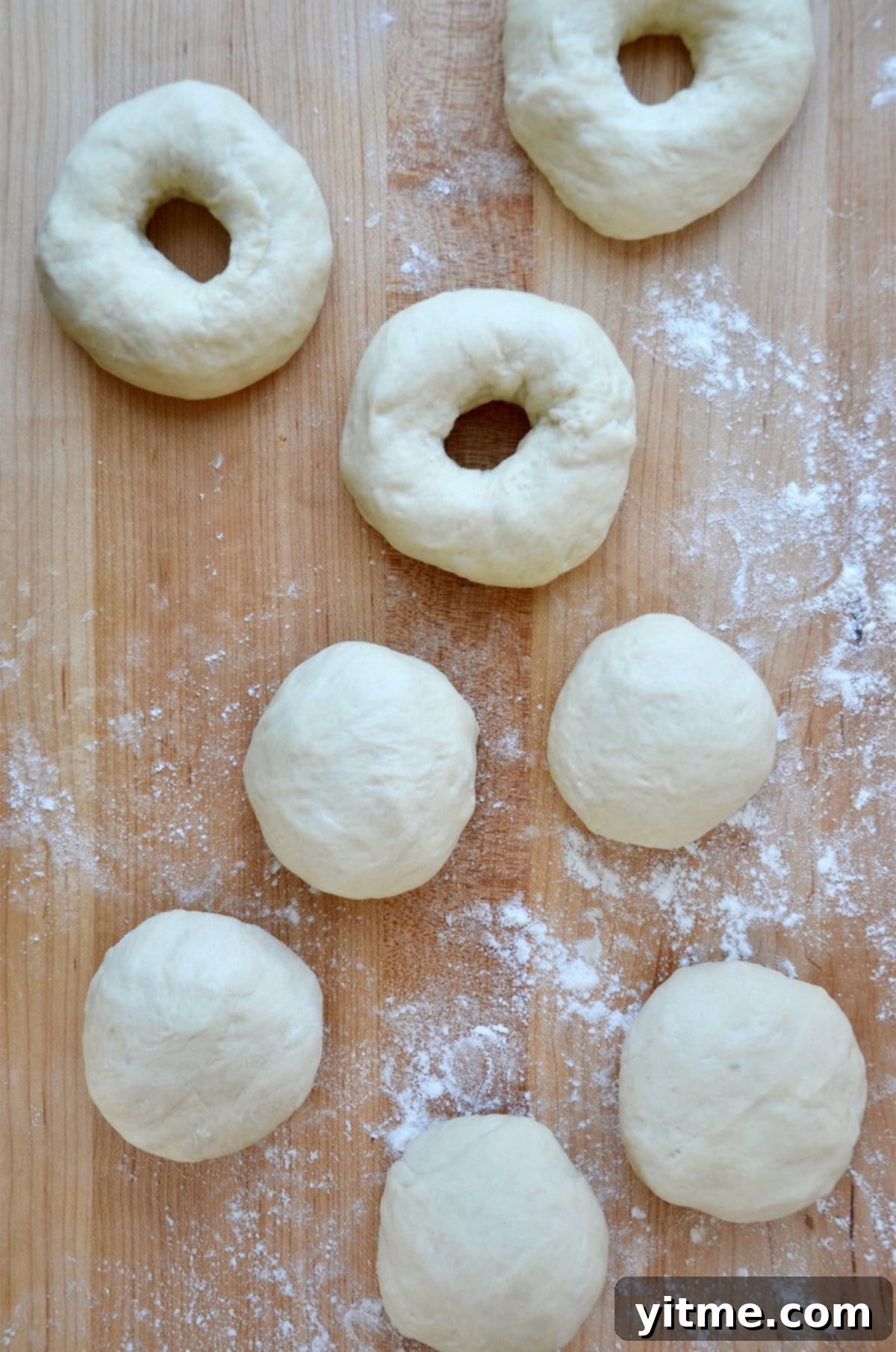
You might be surprised at how simple shaping bagels truly is; no elaborate techniques are required. Begin by dividing your proofed dough into 8 equal portions. For consistency, you can use a kitchen scale to ensure each portion weighs the same. Take each piece of dough and roll it into a smooth, tight ball. Then, using your thumb, poke a hole directly through the center of each ball. Once the hole is formed, gently stretch the dough, rotating it between your fingers, to widen the opening to about 1.5 to 2 inches in diameter. The goal is a uniform ring.
Pro Tip: Don’t be shy about making the hole slightly larger than you initially think it should be! This is a common beginner’s mistake. The hole will inevitably shrink significantly during both the boiling and baking processes as the dough continues to expand. A generous initial hole size ensures you’ll have a perfectly shaped bagel with a distinct center opening, rather than a puffed-up bread roll, after baking.
Boil the Bagels
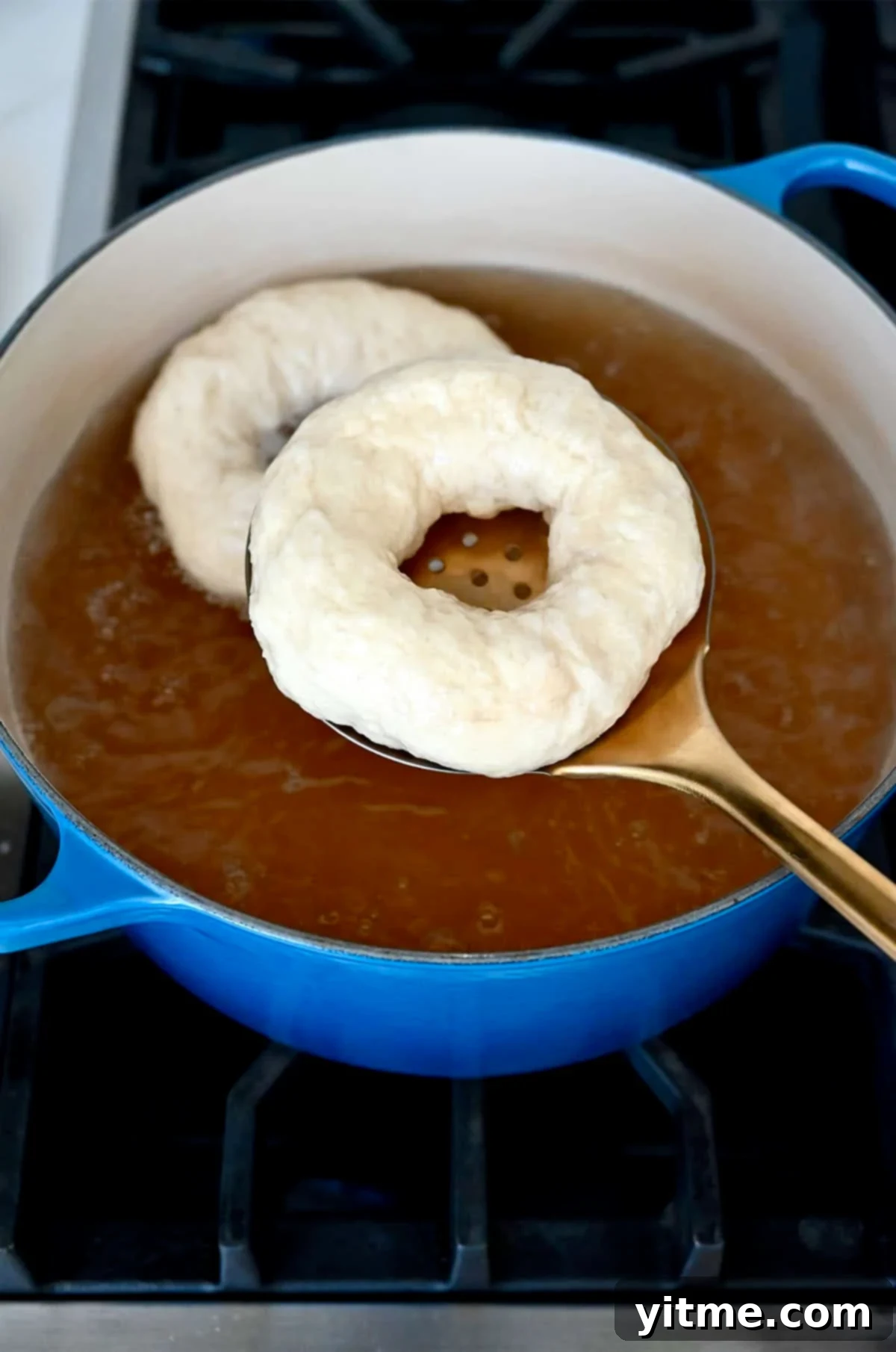
Boiling the shaped bagel dough before baking is, without a doubt, the most crucial step in the entire process. This unique technique is what truly differentiates a bagel from a regular roll of bread, giving it that characteristic dense, chewy interior and helping to set its crust. The hot water bath causes the starch on the surface of the dough to gelatinize, creating a barrier that prevents the bagel from puffing up too much in the oven and locking in that signature texture.
- Prepare the boiling bath: In a large stockpot, add 8 cups of water and bring it to a vigorous rolling boil. Once boiling, stir in the ⅓ cup of honey. The honey contributes to the bagel’s golden color and adds a subtle, delicious sweetness to the crust.
- Boil in controlled batches: Carefully add 2 to 3 bagels into the boiling water at a time. It’s essential not to overcrowd the pot, as this will lower the water temperature and result in uneven cooking. Allow each side to boil for precisely 1 minute.
- Maintain a steady simmer: After each batch is removed, allow the water to return to a steady boil before adding the next set of bagels. Consistency in water temperature is important for uniform results.
Pro Tip: Adhering strictly to the 1-minute-per-side boiling time is vital. Boiling for too long can lead to an overly dense, almost rubbery bagel, while boiling for too short a time will result in a bagel that isn’t chewy enough and may resemble regular bread. This step is a delicate balance that significantly impacts the final texture.
Add Toppings and Bake
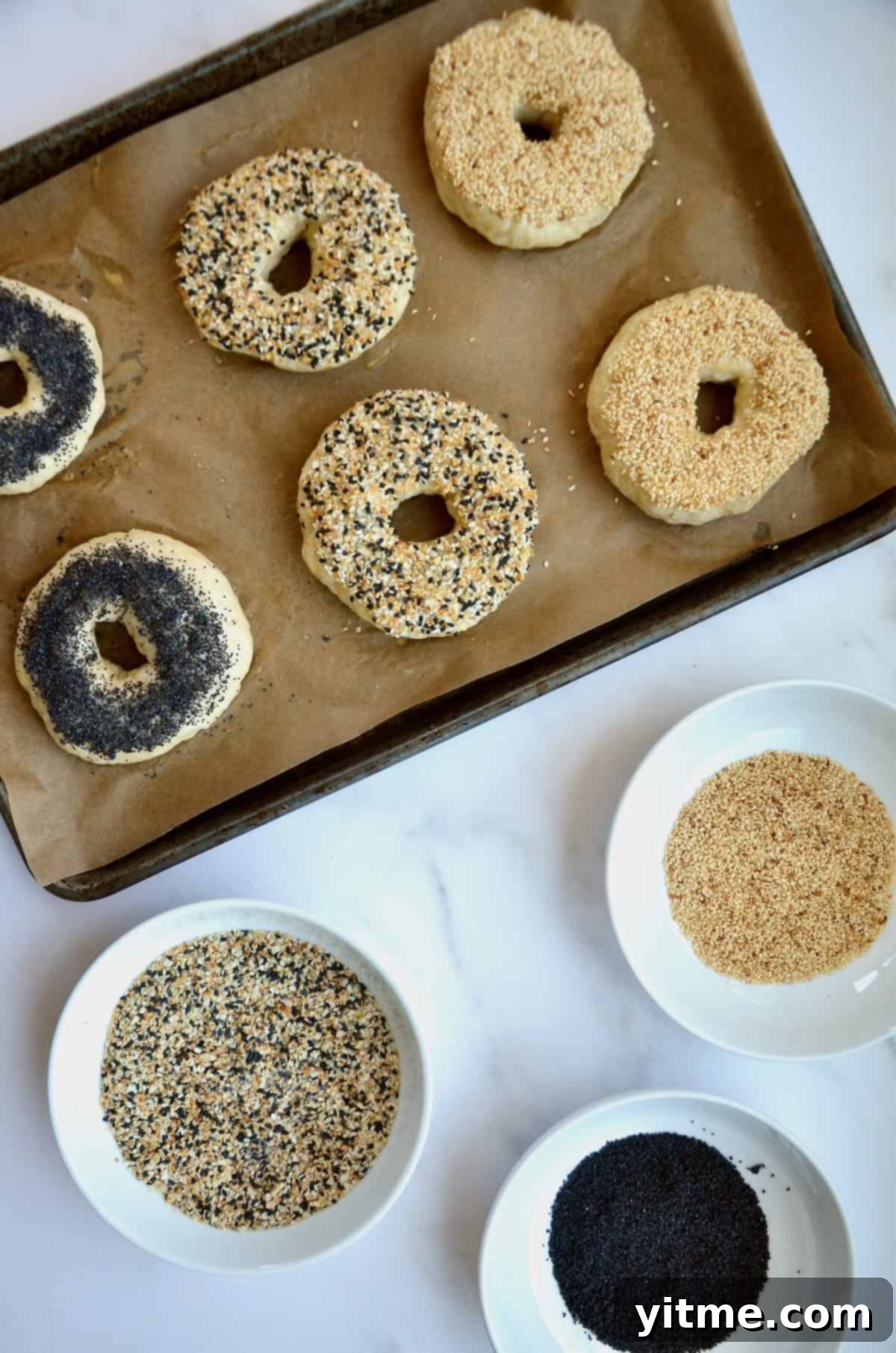
Once boiled, the bagels are ready for their finishing touches before baking. Do not skip the egg wash! A simple mixture of one beaten egg and two tablespoons of water or milk, brushed over the surface of each bagel, serves multiple purposes. It helps to create that wonderfully crisp and glossy golden exterior, and critically, it acts as a sticky base for all your chosen toppings, ensuring they adhere well during baking. After applying the egg wash, you can press the bagels into your preferred toppings, whether it’s everything seasoning, poppy seeds, or sesame seeds.
Transfer the topped bagels to a parchment-lined baking sheet. Parchment paper is important to prevent sticking and ensure even baking. Bake the bagels in a preheated oven at 350°F (175°C) for approximately 25 minutes, or until they achieve a beautiful golden-brown color and feel firm to the touch. Once baked, remove them from the oven and allow them to cool slightly on a wire rack before serving. This cooling period is important for the interior to set and for the crust to develop its ultimate crispness.
Bagel Flavor Guide
The beauty of making bagels at home is the endless creativity you can unleash with flavors! From traditional favorites to exciting new combinations, here are a few ideas to inspire your next batch:
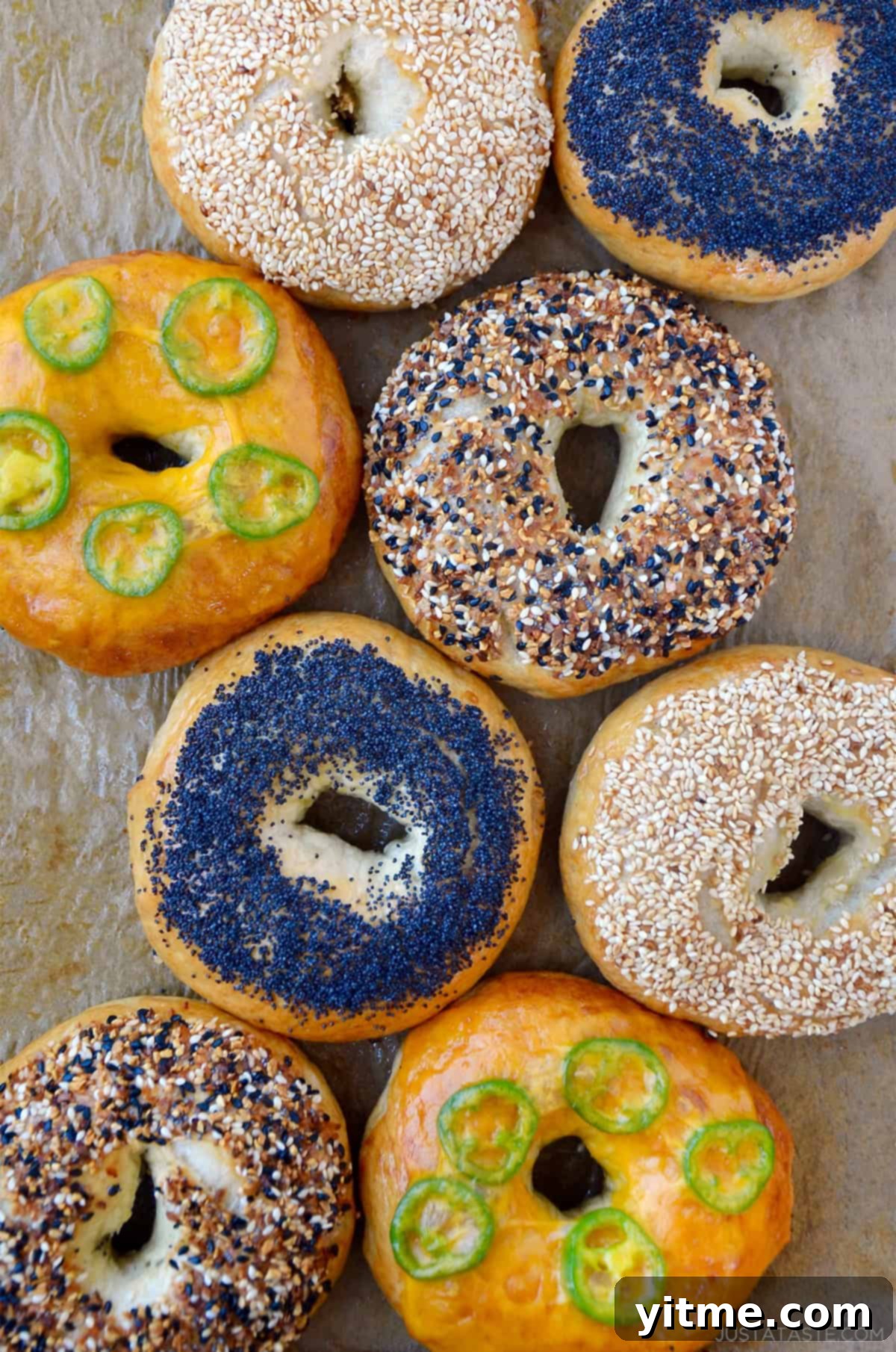
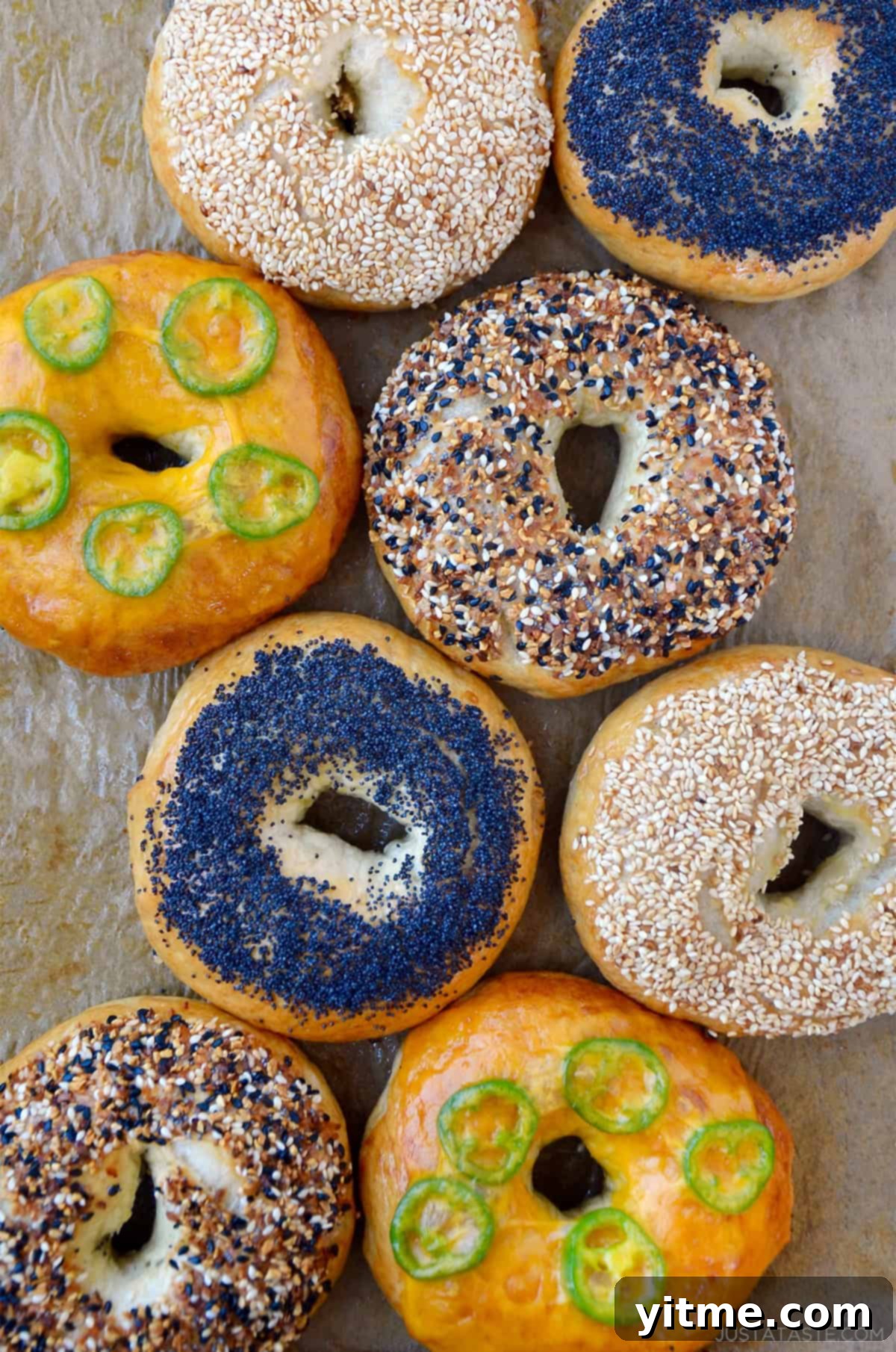
- Everything bagels: A perennial family favorite in our home. Generously sprinkle on your favorite store-bought everything bagel seasoning, or get creative and mix your own with a blend of toasted sesame seeds, poppy seeds, dried minced garlic, dried minced onion, and a touch of flaky sea salt. Ensure even coverage for maximum flavor in every bite.
- Plain: The quintessential classic. Simple, unadorned, and offers the perfect blank canvas for any topping or spread you can imagine. Its pure bagel flavor truly shines.
- Sesame seed: After brushing your boiled bagels with the egg wash, sprinkle them liberally with toasted sesame seeds. For extra adherence and a richer sesame flavor, gently press the bagels into a shallow bowl of sesame seeds to coat them thoroughly.
- Poppy seed: Similar to sesame seeds, first brush the bagels with an egg wash, then either sprinkle generously or press them into a bowl filled with poppy seeds for a robust coating.
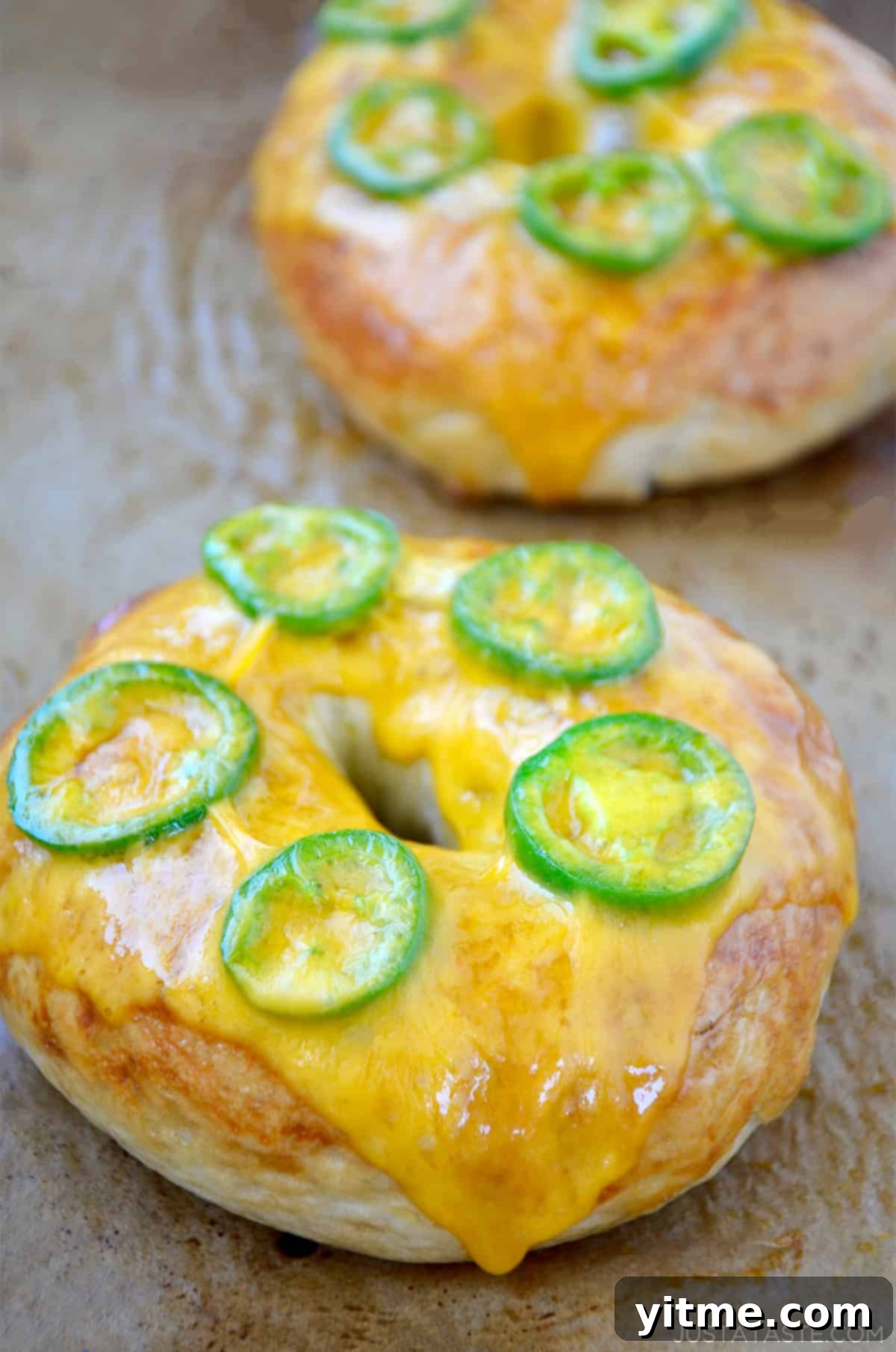
- Cheddar jalapeño: A close second in popularity, especially for those who appreciate a cheesy kick. After the bagels have baked and cooled slightly, arrange a few thin slices of fresh or pickled jalapeño on top, then layer a slice of sharp cheddar cheese over the jalapeños. Broil for just 1 to 2 minutes, watching carefully, until the cheese is beautifully melted and bubbly.
- Cinnamon raisin: For a delightful sweet treat, fold ½ cup of plump raisins and 1 teaspoon of ground cinnamon directly into the dough during the last minute of kneading, before the first rise. This ensures even distribution of flavor and fruit throughout the bagels.
- Salt bagels: After the egg wash, generously top or dunk the bagels into coarse sea salt. Adjust the amount of salt to your personal preference, as these can be quite salty if overloaded. They are fantastic with butter or a sweet cream cheese.
- Garlic: For a bold, savory profile, brush with egg wash and then sprinkle with granulated garlic or finely minced dried garlic. You can also mix in garlic powder into the dough itself for an infused flavor.
- Onion: Add dried minced onion to the egg-washed bagels for a classic onion bagel experience.
- Pretzel bagels: If you’re feeling adventurous, elevate your pretzel game by following my dedicated recipe for easy soft pretzel bagels, combining two beloved baked goods into one!
Storing & Freezing Instructions
To maintain the optimal freshness and chewiness of your homemade bagels, proper storage is key. Store them in an airtight container or a sealed plastic bag at room temperature for up to 3 days. This prevents them from drying out and keeps their crust crisp. For longer-term enjoyment, homemade bagels freeze exceptionally well. Allow them to cool completely after baking, then wrap each individual bagel tightly in plastic wrap before placing them in a freezer-safe bag or container. They can be frozen for up to 3 months without compromising quality. When you’re ready to indulge, there’s no need to thaw! Simply pop a frozen bagel straight into the toaster, or warm them in a 350°F (175°C) oven for 5–10 minutes until heated through and slightly re-crisped.
Serving Suggestions
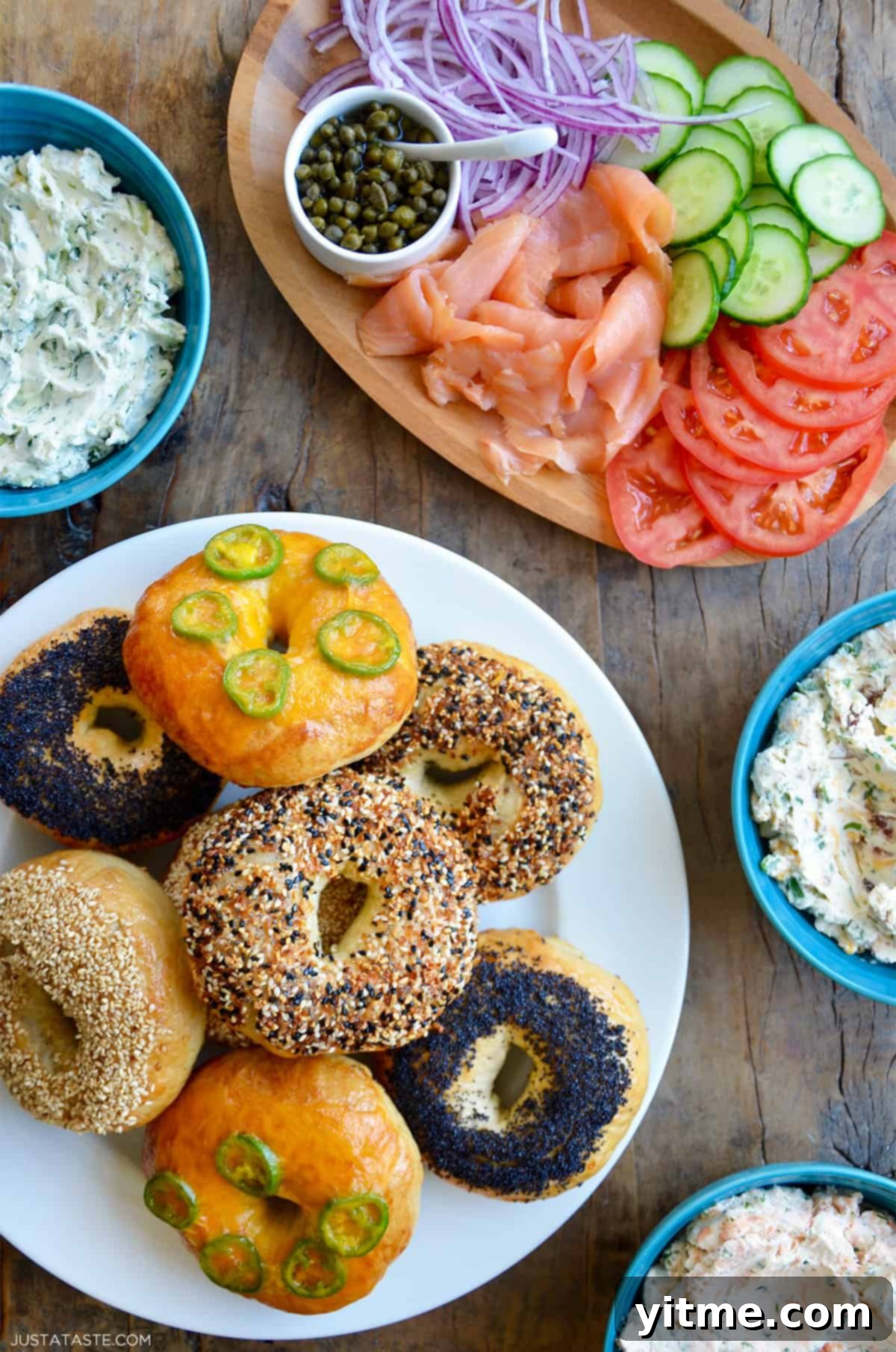
There’s truly nothing quite like a freshly baked bagel, still warm from the oven. While a thick schmear of plain cream cheese is always a classic, don’t be afraid to get creative! Explore my post on flavored cream cheeses for inspiration, or try one of these fantastic serving ideas:
- Classic with spreads: Slather your warm bagel with rich homemade butter and a generous dollop of your favorite fruit jam or marmalade for a simple yet satisfying treat.
- The ultimate breakfast sandwich: Build a hearty breakfast with fluffy scrambled or fried eggs, crispy bacon or sausage, and melted cheese, all nestled within a toasted homemade bagel.
- Deli-style indulgence: Recreate the quintessential deli experience by piling your bagel high with thinly sliced lox (smoked salmon), capers, and slivers of red onion. A dill-infused cream cheese would be divine here.
- Avocado toast reinvented: Mash ripe avocado directly onto a toasted bagel, then sprinkle with a dash of everything bagel seasoning, chili flakes, or a squeeze of lime for a trendy and nutritious start to your day.
- Childhood favorite remake: Indulge in nostalgia with sliced turkey, sharp cheddar cheese, and a spread of creamy mayonnaise, just like that beloved sandwich from earlier memories!
- Fresh veggie delight: Complement your favorite DIY flavored cream cheese by layering on fresh, crisp slices of tomato and cucumber for a lighter, refreshing option.
- Quick pizza bagels: Transform leftover bagels into individual pizzas! Top them with marinara sauce, shredded mozzarella or a blend of your favorite cheeses, and any desired pizza toppings (pepperoni, mushrooms, peppers). Broil until the cheese is bubbly and golden.
Now that you have all the knowledge and inspiration, are you ready to give this fantastic homemade bagel recipe a try? Gather your ingredients, preheat your oven, and prepare for the incredible aroma of fresh bagels filling your home. Don’t forget to let me know how your bagels turn out in the comments below!
More Homemade Bread Recipes To Try
If you’ve enjoyed the rewarding experience of baking your own bagels, you’ll love exploring more delicious homemade bread recipes. Expand your baking repertoire with these tried-and-true favorites, perfect for any occasion.
Pepperoni Pizza Pull-Apart Bread
Easy Homemade Soft Pretzels
Easy Homemade Dinner Rolls
Overnight Cinnamon Rolls with Cream Cheese Frosting
Craving more delicious recipes and kitchen tips? Subscribe to Just a Taste to get new recipes, inspiring meal plans, and a delightful newsletter delivered straight to your inbox! And for all the latest updates, behind-the-scenes glimpses, and culinary adventures, make sure to stay in touch on Facebook, TikTok, Pinterest, and Instagram.
Easy Homemade Bagels Recipe
Ingredients
For the bagels:
- 4 cups bread flour, plus more for shaping dough
- 2 teaspoons kosher salt
- 1 1/2 cups warm water (approximately 110°F)
- 1 Tablespoon sugar
- 2 1/4 teaspoons (one 3/4-oz. packet) active dry yeast
- Vegetable oil, for greasing bowl
- 1/3 cup honey
- 1 large egg beaten with 2 Tablespoons water or milk
For the toppings (optional, for 8 bagels):
- 1 Tablespoon everything seasoning (See Notes)
- 1 Tablespoon poppy seeds
- 1 Tablespoon toasted sesame seeds
- 2 slices sharp cheddar cheese
- 1 jalapeño, seeded and sliced into thin rounds
Instructions
Make the bagels:
- In a medium bowl or a liquid measuring cup, combine the warm water and sugar. Stir well until the sugar is completely dissolved. Then, sprinkle the active dry yeast over the top of the water. Let this mixture sit undisturbed for about 5 to 10 minutes, or until a foamy layer appears on the surface, indicating the yeast is active and ready.
- In the large bowl of a stand mixer fitted with the dough hook attachment, combine the bread flour and kosher salt. With the mixer set to LOW speed, gradually pour in the activated yeast mixture. Continue to knead the dough for approximately 5 to 7 minutes, or until it comes together into a smooth, elastic, and cohesive ball. The dough should pull away cleanly from the sides of the bowl.
- Lightly grease a separate large bowl with a small amount of vegetable oil. Transfer the kneaded dough to this bowl, turning it once to ensure it’s coated in oil. Cover the bowl tightly with plastic wrap to prevent a skin from forming. Place the covered dough in a warm, dark spot (like a slightly warmed, then turned off, oven) for about 90 minutes, or until the dough has impressively doubled in size.
- Once proofed, gently turn the dough out onto a lightly floured work surface. Using your fists or the heel of your hand, punch the dough down to release any accumulated gases. This step helps create a more even texture in the final bagels.
- Divide the dough into 8 equal portions. To ensure uniform bagels, you can weigh each portion to be approximately 100-110 grams. Roll each portion into a smooth ball, then flatten it slightly into a 4-to-5-inch disk. Using your thumb, carefully poke a hole through the center of each disk. Gently stretch the dough around the hole, rotating it with your fingers, to widen the opening to about 1.5 to 2 inches. Remember, the hole will shrink during cooking, so make it a bit larger than you think!
- Preheat your oven to 350°F (175°C). Line two large baking sheets with parchment paper. This will prevent the bagels from sticking and ensures easy cleanup.
- In a large stockpot (at least 5-quart capacity), bring 8 cups of water to a strong, rolling boil. Once boiling vigorously, stir in the ⅓ cup of honey until fully dissolved. Prepare your desired bagel toppings (e.g., everything seasoning, poppy seeds, sesame seeds) in shallow bowls or plates for easy dipping. (Refer to Kelly’s Notes for jalapeño-cheddar instructions).
- Carefully drop the shaped bagels into the boiling water, two or three at a time, to avoid overcrowding the pot. Boil them for exactly 1 minute on one side, then gently flip them over using a slotted spoon or spider, and boil for an additional 1 minute on the other side. This precise timing is crucial for achieving the perfect chewy texture.
- Using a slotted spoon, carefully remove the boiled bagels from the water, allowing excess water to drain. Arrange them on the prepared parchment-lined baking sheets, leaving some space between each bagel.
- In a small bowl, whisk together the large egg with 2 tablespoons of water or milk to create an egg wash. Brush the tops and sides of each bagel with this mixture. Immediately after brushing, gently press the bagels into your preferred toppings, ensuring a good coating.
- Bake the bagels in the preheated oven for about 25 minutes, or until they turn a beautiful golden brown and have a firm crust. Once baked, remove them from the oven and transfer them to a wire rack. Allow them to cool slightly before slicing and serving to ensure the interior sets properly.
Kelly’s Notes
- The topping quantities listed above are generally sufficient to create two everything bagels, two poppy seed bagels, two sesame seed bagels, and two jalapeño-cheddar bagels. Feel free to adjust these quantities based on your desired level of topping coverage.
- For the ultimate jalapeño-cheddar bagel experience, after your bagels are baked and slightly cooled, top each bagel with a few thin slices of fresh or pickled jalapeño, then lay a slice of sharp cheddar cheese over the jalapeños. Place the bagels back under the broiler for just 1 to 2 minutes, carefully watching until the cheese is beautifully melted and bubbly.
- For optimal freshness and to maintain their delightful texture, store your homemade bagels in an airtight container at room temperature for up to 2 days.
- Freezing: These bagels are excellent for freezing! After they have fully baked and cooled to room temperature, wrap each bagel securely in plastic wrap, then place them into sealable plastic bags or an airtight container. They can be stored in the freezer for up to three months. To enjoy, simply toast them directly from frozen or warm them in a 350°F oven for 5-10 minutes.
- ★ Did you make this recipe? Don’t forget to give it a star rating below and share your experience!
Nutrition
Did you try this recipe?
Leave a comment below with your star rating!