The Ultimate Soft & Chewy Kitchen Sink Cookies: A Customizable Recipe for Every Craving
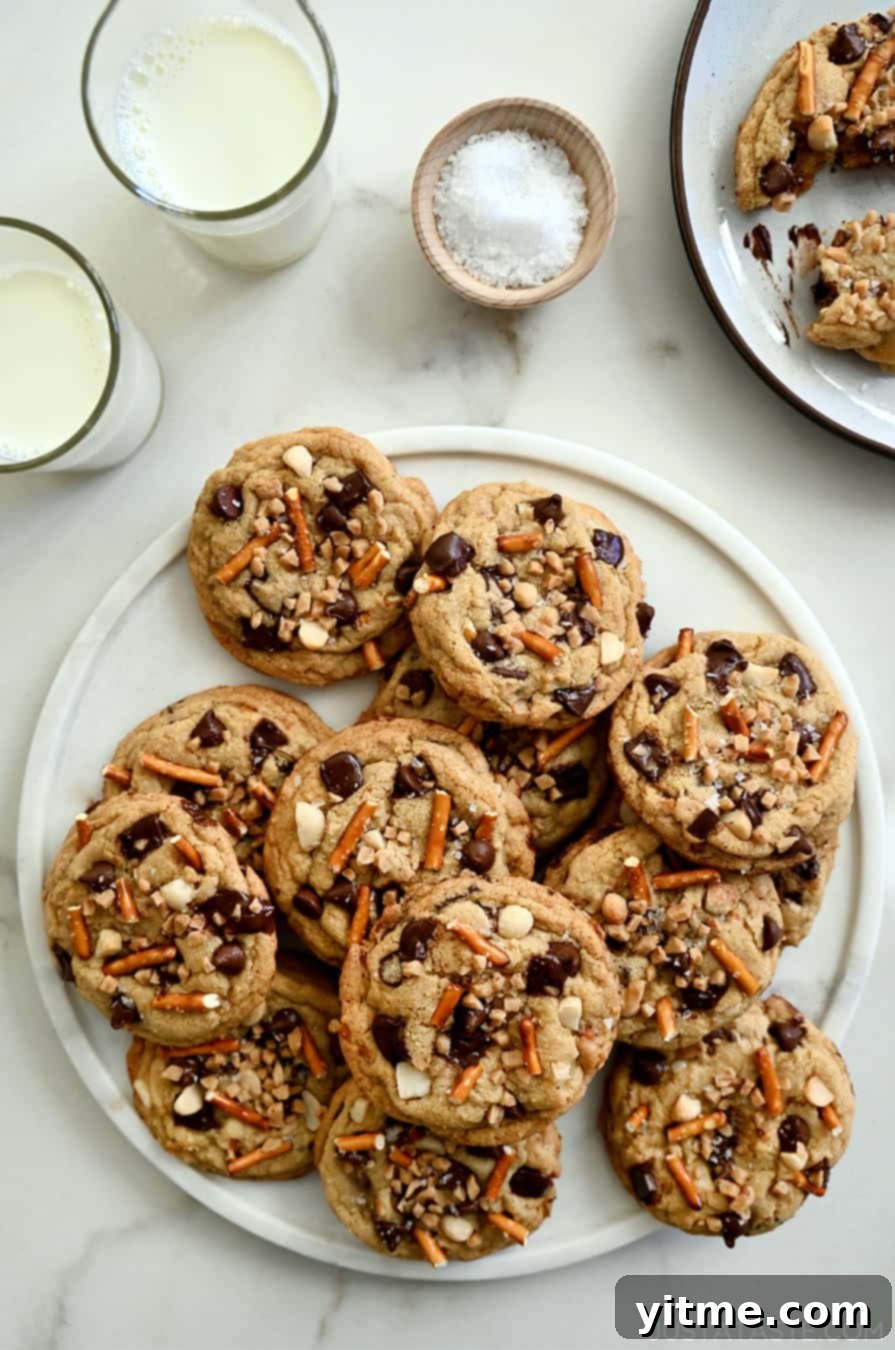
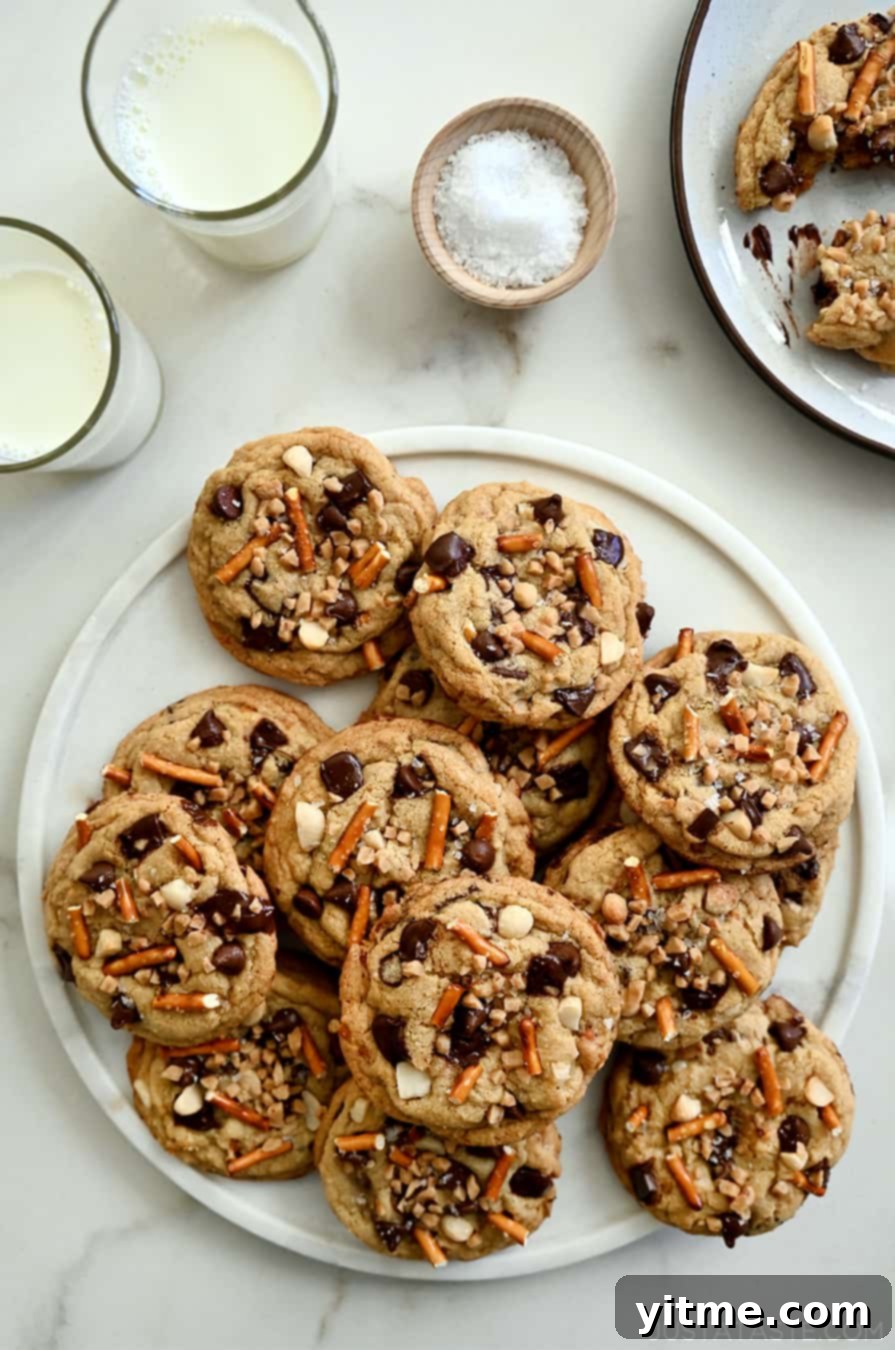
Prepare yourself for an extraordinary cookie experience where every bite is a delightful surprise! These Kitchen Sink Cookies live up to their name by incorporating a medley of sweet, salty, crunchy, and chewy mix-ins, creating a flavor profile that truly has it all. This isn’t just a cookie recipe; it’s a versatile template designed to unleash your creativity and transform pantry staples into a batch of irresistibly delicious, soft, and chewy masterpieces. Get ready to bake a cookie that caters to every craving, every time.
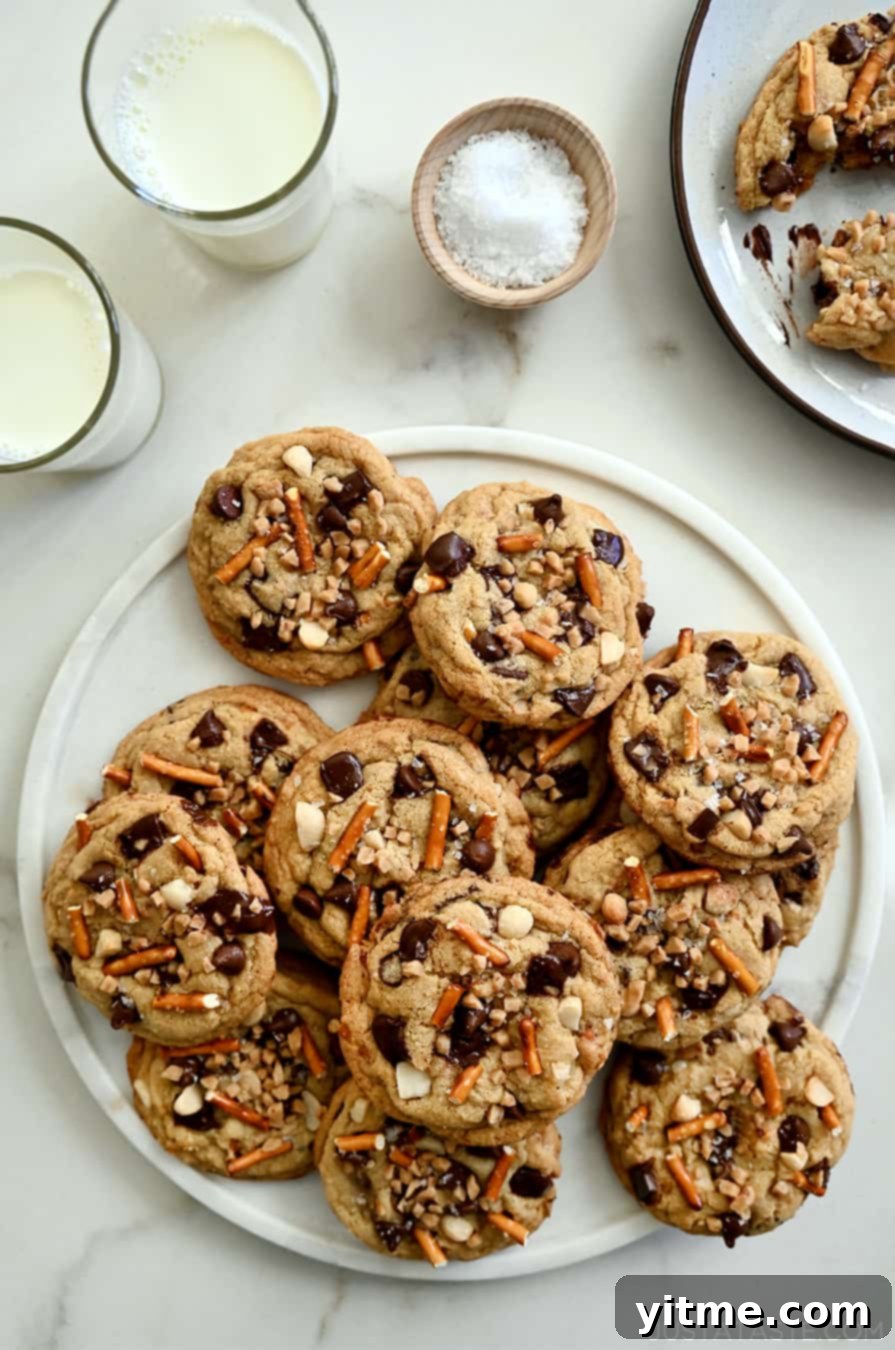
What exactly makes a “Kitchen Sink” cookie so special? The magic lies in its boundless customization. Forget about strict rules; this recipe encourages you to raid your pantry and let your imagination run wild. The harmonious blend of textures and tastes—from the smooth melt of chocolate to the satisfying crunch of pretzels—is what truly sets these cookies apart. They’re designed to be a culinary adventure, a sweet and savory symphony in a single bite. Whether you’re a fan of classic combinations or eager to experiment with new flavors, this recipe provides the perfect foundation.
Here are just a few ideas to get you started on your mix-in journey:
- Chocolate Delights: Milk, dark, or white chocolate chips; chunky chocolate bars roughly chopped; M&M’s, Reese’s Pieces, or other candy-coated chocolates for a pop of color and extra sweetness.
- Salty & Savory Crunch: Pretzels (crushed sticks, mini twists, or even pretzel nuggets); potato chips (crushed, for an unexpected salty-crisp texture); corn chips for a unique savory note.
- Nutty Textures: Chopped walnuts, pecans, macadamia nuts, almonds, or peanuts for a rich, earthy flavor and satisfying crunch. Toasted nuts add an extra layer of depth.
- Fruity Chews: Dried cranberries, cherries, raisins, or apricots for a sweet and tangy chewiness that balances the other elements.
- Caramel & Toffee Infusion: Toffee bits (plain or chocolate-covered) for a buttery, caramel-like sweetness; butterscotch chips for a distinctive flavor.
- Bonus Additions: Shredded coconut for tropical flair; marshmallows (mini size) for gooey pockets; sprinkles for a festive touch.
Ready to transform humble ingredients into an extraordinary treat? Gather your chosen mix-ins, preheat your oven, and let’s embark on the delightful journey of baking the best Kitchen Sink Cookies you’ve ever tasted!
Essential Ingredients for Perfect Kitchen Sink Cookies
Crafting the perfect cookie begins with understanding the role of each ingredient. While the mix-ins bring the fun, the core ingredients lay the foundation for that irresistibly soft and chewy texture that defines these Kitchen Sink Cookies. Here’s a detailed look at what you’ll need and why each component is crucial:
- Unsalted Butter: My go-to for baking, unsalted butter gives you precise control over the salt content in your recipe. Make sure it’s softened to room temperature, but not melted. Softened butter creams beautifully with sugar, creating air pockets that contribute to a light and tender cookie structure. If you only have salted butter, reduce the added kosher salt by about ¼ teaspoon per stick of butter used.
- Granulated Sugar & Packed Brown Sugar: This dynamic duo is key to achieving both structure and chewiness. Granulated white sugar contributes to the cookies’ spread and crisp edges, providing that classic cookie structure. Brown sugar, on the other hand, is rich in molasses, which not only adds depth of flavor but also moisture, resulting in a wonderfully soft and chewy center. Always make sure your brown sugar is packed firmly for accurate measurement.
- Cold Eggs: This recipe cleverly uses cold eggs, as the dough isn’t chilled before baking. The chill from the eggs helps keep the dough firm enough during mixing and initial baking, preventing the cookies from spreading too rapidly and becoming thin. Eggs also act as a binder, adding richness and contributing to the overall structure and texture. Using large eggs is standard for most cookie recipes for consistent results.
- Vanilla Extract: A touch of high-quality vanilla extract elevates the flavor profile of any cookie, adding warmth and sweetness that complements all the diverse mix-ins. Whether it’s store-bought or your own homemade vanilla extract, don’t skimp on this essential flavor enhancer.
- All-Purpose Flour: The backbone of your cookies. All-purpose flour provides the necessary structure without making the cookies too dense. It’s important to measure flour accurately to ensure the right texture. Too much flour can result in dry, crumbly cookies, while too little can lead to excessive spreading. My simple tip for how to accurately measure flour will guarantee perfect consistency every time.
- Baking Soda and Baking Powder: These two leavening agents work in tandem to give your cookies their desired rise and texture. Baking soda, when combined with an acid (like the brown sugar here), helps the cookies spread and become tender. Baking powder, a double-acting agent, provides an initial lift in the oven and then another boost as the cookies bake. For optimal results, always ensure these ingredients are fresh. You can test baking soda by adding a teaspoon to a few tablespoons of vinegar; if it fizzes vigorously, it’s good. For baking powder, mix a teaspoon with hot water; if it bubbles, it’s still active.
- Kosher Salt: A vital ingredient for balancing sweetness and enhancing all the flavors. I prefer fine-grain kosher salt because it dissolves quickly and disperses evenly throughout the dough, ensuring every bite has that perfect hint of salinity. It truly makes a difference, especially when paired with sweet elements.
- Mix-ins of Choice: This is where the “Kitchen Sink” magic happens! Aim for a balance of sweet, salty, and crunchy components. Think chocolate chips, crushed pretzels, toffee bits, chopped nuts, or even crushed potato chips. The possibilities are endless, so feel free to personalize your batch!
How to Master the Art of Kitchen Sink Cookies
Baking these customizable cookies is a straightforward process, but paying attention to a few key details will ensure your cookies turn out perfectly soft, chewy, and loaded with flavor. Follow these step-by-step instructions to create your ultimate batch:
- Prepare Your Baking Environment: Begin by preheating your oven to 375°F (190°C). This ensures the oven is at the correct temperature when your cookies go in, promoting even baking. Line two large baking sheets with parchment paper. Parchment paper is essential for preventing sticking and allowing for easy cleanup, and it helps the cookies bake more evenly by insulating the bottom.
- Cream Wet Ingredients for Optimal Texture: In a large mixing bowl (or the bowl of a stand mixer fitted with the paddle attachment), combine the softened unsalted butter, granulated white sugar, and packed light brown sugar. Beat these ingredients together on medium speed for about 2 minutes, or until the mixture becomes light, fluffy, and noticeably paler in color. This creaming process incorporates air into the butter and sugar, which is crucial for the cookies’ tender texture.
- Incorporate Eggs and Vanilla: Next, add the cold eggs one at a time, beating well after each addition until fully incorporated. The cold temperature of the eggs helps to keep the dough from getting too warm, which can prevent excessive spreading during baking. Once the eggs are mixed in, beat in the vanilla extract until just combined, ensuring its rich flavor is distributed throughout the dough.
- Combine Dry Ingredients: In a separate bowl, whisk together the all-purpose flour, baking soda, baking powder, and kosher salt. This step ensures that the leavening agents and salt are evenly distributed throughout the dry ingredients, preventing pockets of unmixed components and promoting uniform rise.
- Gradually Add Dry to Wet: Slowly add the dry ingredient mixture to the wet ingredients, mixing on low speed until just combined. Be careful not to overmix the dough, as this can develop the gluten in the flour, leading to tough cookies. Mix only until no streaks of flour remain.
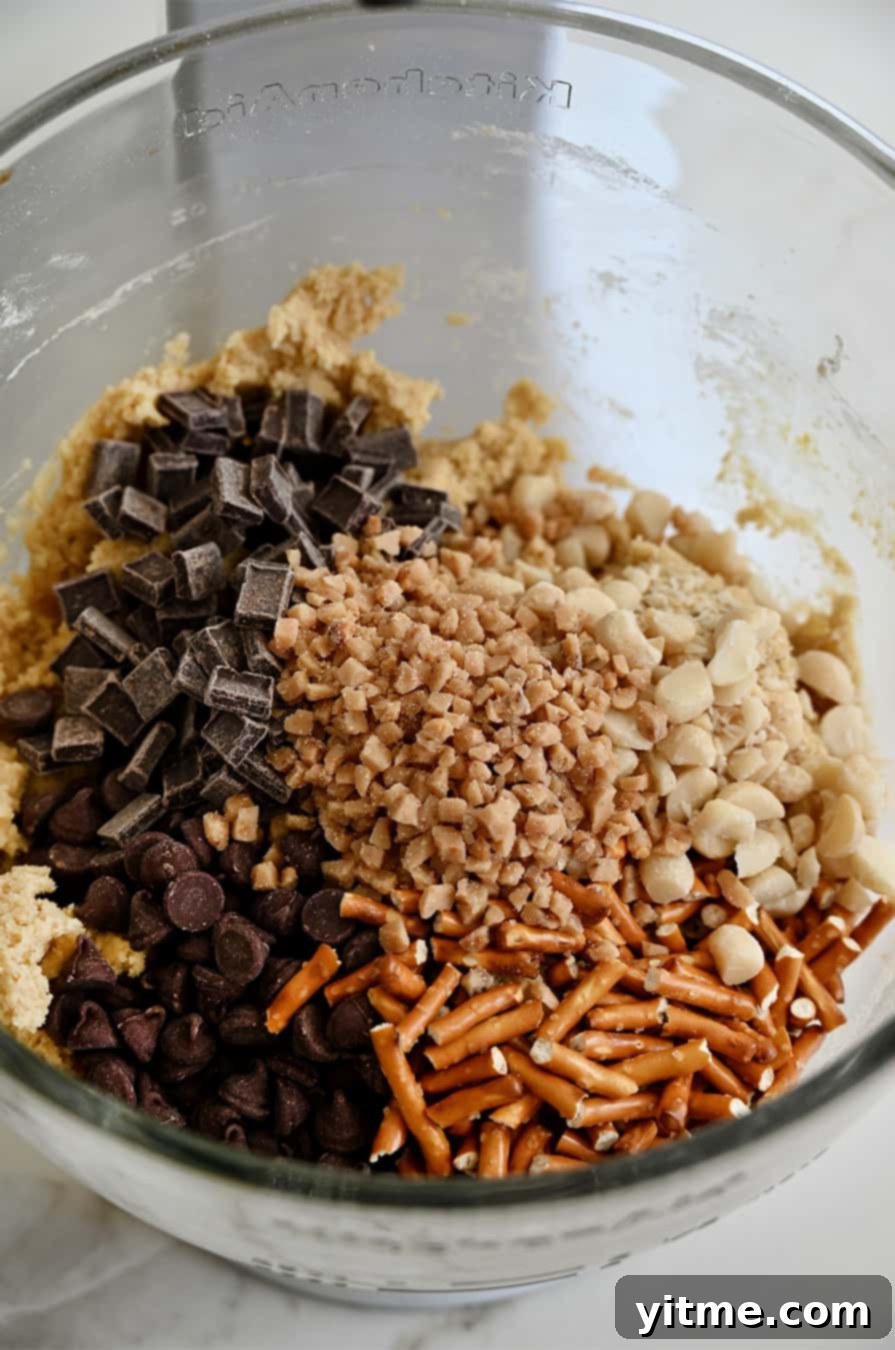
- Fold in Your Signature Mix-ins: Now for the fun part! Gently fold in your chosen mix-ins: the chocolate chips, crushed pretzels, chopped nuts, and toffee bits (or whatever delightful combination you’ve selected). Mix just enough to evenly distribute them throughout the dough. Overmixing at this stage can also toughen the cookies and potentially crush delicate mix-ins.
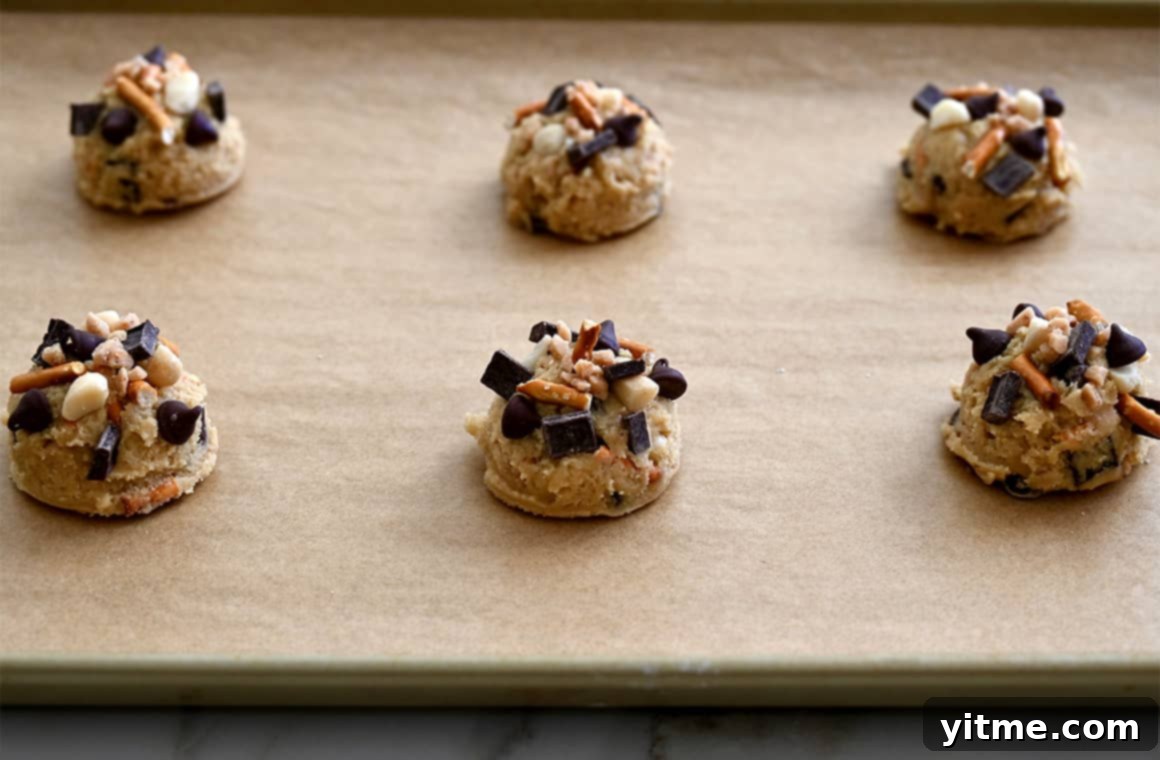
- Scoop and Space the Dough: Using a 2-tablespoon ice cream scoop or a consistent spoon, portion out mounds of dough onto the prepared baking sheets. Ensure each cookie mound is spaced at least 2 inches apart to allow for proper spreading without merging. This consistency in size helps all cookies bake evenly.
- Bake to Perfection: Transfer the baking sheets to your preheated oven. Bake for 9 to 12 minutes. For even cooking and browning, it’s crucial to rotate the baking sheets halfway through the baking time. The cookies are done when their edges are lightly golden and set, but their centers still appear slightly soft and underbaked. This underbaking is key for achieving that ultimate soft and chewy texture after cooling.
- Cool for Chewy Centers: Once out of the oven, resist the urge to move the cookies immediately. Allow them to cool on the baking sheets for a minimum of 5 minutes. During this time, they will continue to set and firm up, but the residual heat will help create that coveted soft and chewy interior. After 5 minutes, carefully transfer them to a wire rack to cool completely.
Pro Tips for Kitchen Sink Cookie Success
Achieving cookie perfection often comes down to a few expert tips. These insights will help you bake a batch of Kitchen Sink Cookies that are consistently delicious, soft, and bursting with flavor:
- The Power of Sweet and Salty Balance: The hallmark of an outstanding Kitchen Sink Cookie is its perfect harmony of flavors. Always strive for a mix that includes both sweet and salty elements. The contrast between, say, chocolate chips and crushed pretzels, or toffee bits and potato chips, creates an incredibly addictive flavor experience that keeps you coming back for more. Don’t be afraid to experiment with different ratios to find your personal sweet-salty equilibrium.
- The Art of Underbaking: This is arguably the most crucial tip for achieving soft and chewy cookies. Remove your cookies from the oven when their edges are just barely set and golden, but their centers still look slightly soft and even a little raw. They will continue to cook from residual heat on the baking sheet. Leaving them on the hot sheet for 5-10 minutes before transferring to a wire rack allows them to firm up without becoming crispy or dry. Overbaked cookies lose their desirable chewiness.
- To Salt or Not to Salt (the top)? That is the Question: A sprinkle of large-flake sea salt on top of warm cookies is a beautiful touch, especially for enhancing the chocolate and caramel notes. However, if you’ve been generous with salty mix-ins like pretzels, salted nuts, or potato chips, you might want to skip the extra sea salt topping. Taste your dough (carefully, before adding eggs if concerned, or just a tiny bit after) or consider your mix-ins before adding more salt. It’s all about balance!
- Don’t Overmix the Dough: Once you add the flour, mix only until the ingredients are just combined and no streaks of dry flour remain. Overmixing develops the gluten in the flour, which can lead to tough, dense cookies instead of soft and tender ones.
- Even Scooping is Key: Using an ice cream scoop (or a consistent measure like a 2-tablespoon spoon) ensures that all your cookies are roughly the same size. This consistency is vital for even baking, preventing some cookies from burning while others are still undercooked.
- Know Your Oven: Ovens can vary widely in temperature. Investing in an inexpensive oven thermometer can help you ensure your oven is truly preheated to 375°F. If your cookies are consistently spreading too much or baking unevenly, your oven temperature might be off.
- Cool Completely for Best Texture: While tempting to devour them warm, allowing cookies to cool completely on a wire rack helps them achieve their final, perfect texture. As they cool, the fats solidify and the sugars set, leading to that ideal chewiness.

Frequently Asked Questions About Kitchen Sink Cookies
Here are answers to some common questions about baking, storing, and customizing your Kitchen Sink Cookies:
Once your Kitchen Sink Cookies have cooled completely to room temperature, store them in an airtight container. They will remain wonderfully soft and chewy for up to 3-5 days at room temperature. For an extra touch, you can place a slice of bread in the container with the cookies; the bread will absorb moisture, helping to keep your cookies soft.
Kitchen Sink Cookies freeze beautifully, either baked or unbaked. For baked cookies, allow them to cool completely. Then, wrap them securely in plastic wrap (individually or in small stacks) and place them in a freezer-safe airtight container or bag. They can be frozen for up to 2-3 months. Thaw at room temperature or warm briefly in the microwave for a fresh-from-the-oven feel.
Absolutely! Freezing raw cookie dough is a fantastic way to prepare for future cravings. Scoop the dough into individual mounds (as if you were going to bake them) and place them on a parchment paper-lined baking sheet. Freeze until solid, typically 1-2 hours. Once frozen, transfer the dough balls into an airtight freezer bag or container. They can be frozen for up to 3 months. When you’re ready to bake, you can bake them directly from frozen, adding an extra 2-4 minutes to the baking time. This method ensures you always have fresh, warm cookies just minutes away!
The beauty of Kitchen Sink Cookies is their versatility! Almost anything sweet, salty, or crunchy can be a great addition. Consider mini marshmallows, caramel bits, white chocolate chips, dried blueberries, crushed candy bars (like Snickers or Butterfinger), peanut butter chips, or even a mix of different nuts. Aim for about 2-3 cups of total mix-ins for a good ratio to the dough. The goal is to experiment and find your favorite combination!
Several factors can cause cookies to spread excessively. The butter might have been too soft or even melted, or the dough could have been too warm. Ensure your butter is softened but still cool to the touch, and use cold eggs as specified. Overmixing the dough can also lead to thinner cookies. Lastly, verify your oven temperature with an external thermometer; an oven that runs too cool will cause cookies to spread before they can set.
Yes, absolutely! While a stand mixer makes the creaming process quicker and easier, you can certainly make these cookies by hand. Use a large bowl and a sturdy whisk or a hand mixer. You’ll need to put in a bit more elbow grease to cream the butter and sugars until light and fluffy, but the delicious results will be well worth the effort.
Explore More Delicious Cookie Recipes
If you loved these versatile Kitchen Sink Cookies, you’re in for a treat! Here are more fantastic cookie recipes to satisfy your sweet tooth and expand your baking repertoire:
- Monster Cookies: Packed with peanut butter, oats, chocolate chips, and M&M’s, these giant cookies are a true crowd-pleaser.
- No-Chill Chocolate Chip Cookies: Get classic chocolate chip cookies faster with this recipe that skips the chilling step!
- Soft M&M Cookies: Perfectly soft and chewy cookies bursting with colorful M&M candies.
- Secret Ingredient Chocolate Chip Cookies: Discover the surprising ingredient that makes these chocolate chip cookies stand out!

The beauty of Kitchen Sink Cookies lies in their endless adaptability and the sheer joy of creating a unique treat every time. With their perfectly balanced blend of sweet and salty, crunchy and chewy, they are truly the ultimate cookie for any occasion. Whether you’re baking for a party, a quiet night in, or simply to satisfy a craving, this recipe is your golden ticket to cookie bliss. Don’t hesitate to experiment with your favorite add-ins – remember, the “kitchen sink” is your oyster!
Craving more delightful recipes and baking inspiration? Subscribe to Just a Taste to get new recipes, expertly crafted meal plans, and an exclusive newsletter delivered straight to your inbox! And stay connected with us on Facebook, Twitter, Pinterest and Instagram for all of the latest updates, behind-the-scenes glimpses, and vibrant food photography. Happy baking!
Kitchen Sink Cookies
Kelly Senyei
15 minutes
12 minutes
27 minutes
24 cookies
Ingredients
- 1 cup unsalted butter, softened
- 3/4 cup granulated white sugar
- 1 1/4 cups packed light brown sugar
- 2 large eggs, cold
- 2 1/2 teaspoons vanilla extract
- 3 cups all-purpose flour
- 1 teaspoon baking soda
- 1/2 teaspoon baking powder
- 1/2 teaspoon kosher salt
- 1/2 cup chocolate chips (or chocolate chunks)
- 1/2 cup crushed pretzels
- 1/2 cup chopped nuts of choice (e.g., walnuts, pecans, macadamias)
- 1/4 cup toffee bits
- Large-flake sea salt, for topping (optional, and only if not using many salty mix-ins)
Instructions
- Preheat your oven to 375°F (190°C). Line two large baking sheets with parchment paper to prevent sticking and ensure even baking.
- In the bowl of a stand mixer fitted with the paddle attachment (or using a hand mixer and large bowl), cream together the softened unsalted butter, granulated white sugar, and packed light brown sugar until the mixture is light, fluffy, and pale, which usually takes about 2 minutes.
- Add the cold eggs one at a time, beating thoroughly after each addition until fully incorporated. Then, beat in the vanilla extract until just combined.
- In a separate bowl, whisk together the all-purpose flour, baking soda, baking powder, and kosher salt. Gradually add this dry mixture to the wet ingredients, beating on low speed until just combined and no streaks of flour are visible. Fold in your chosen mix-ins (chocolate chips, crushed pretzels, chopped nuts, toffee bits) until evenly distributed throughout the dough. Avoid overmixing.
- Using a 2-tablespoon ice cream scoop, portion out mounds of dough onto the prepared baking sheets, ensuring at least 2 inches of space between each mound to allow for spreading.
- Bake the cookies for 9 to 12 minutes, rotating the baking sheets halfway through the cooking time to ensure even browning. The cookies are done when the edges are lightly golden and set, but the centers still look slightly soft and underbaked. Remove them from the oven and let them cool on the baking sheets for a minimum of 5 minutes before carefully transferring them to a wire rack to cool completely. This crucial step helps create their signature soft and chewy texture.
- ★ Did you make this recipe? Don’t forget to give it a star rating below and share your amazing mix-in combinations in the comments!
Nutrition
Carbohydrates: 35g
Protein: 3g
Fat: 12g
Saturated Fat: 6g
Polyunsaturated Fat: 1g
Monounsaturated Fat: 4g
Trans Fat: 0.3g
Cholesterol: 37mg
Sodium: 139mg
Potassium: 55mg
Fiber: 1g
Sugar: 22g
Vitamin A: 293IU
Vitamin C: 0.1mg
Calcium: 29mg
Iron: 1mg
Did you try this recipe?
Leave a comment below with your star rating!