How to Soften Butter Quickly: Easy Techniques for Perfect Baking
Softened butter is essential for successful baking. It can significantly impact the texture and consistency of your baked goods, determining whether your cookies spread too thin or maintain a perfectly chewy center. This guide will explain what “softened butter” truly means and provide foolproof methods to achieve it in under 10 minutes.
In baking, softened butter is more than just butter that isn’t cold. It’s a critical ingredient for creating structure, incorporating air, and achieving the desired fluffy, tender texture we all seek in our baked creations. Whether you’re preparing cutout sugar cookies, whipping up pecan pie bars for the holidays, baking a chocolate cake for a birthday, or making coffee cake muffins for brunch, softened butter is essential for achieving optimal results.
This article covers everything you need to know, including the definition of “softened,” how to determine when it’s just right, and the quickest ways to soften butter when you forget to take it out of the fridge – as I always do!
Understanding Softened Butter
Numerous recipes call for “softened” or “room-temperature” butter, but what does this really mean? It’s more specific than you might think.
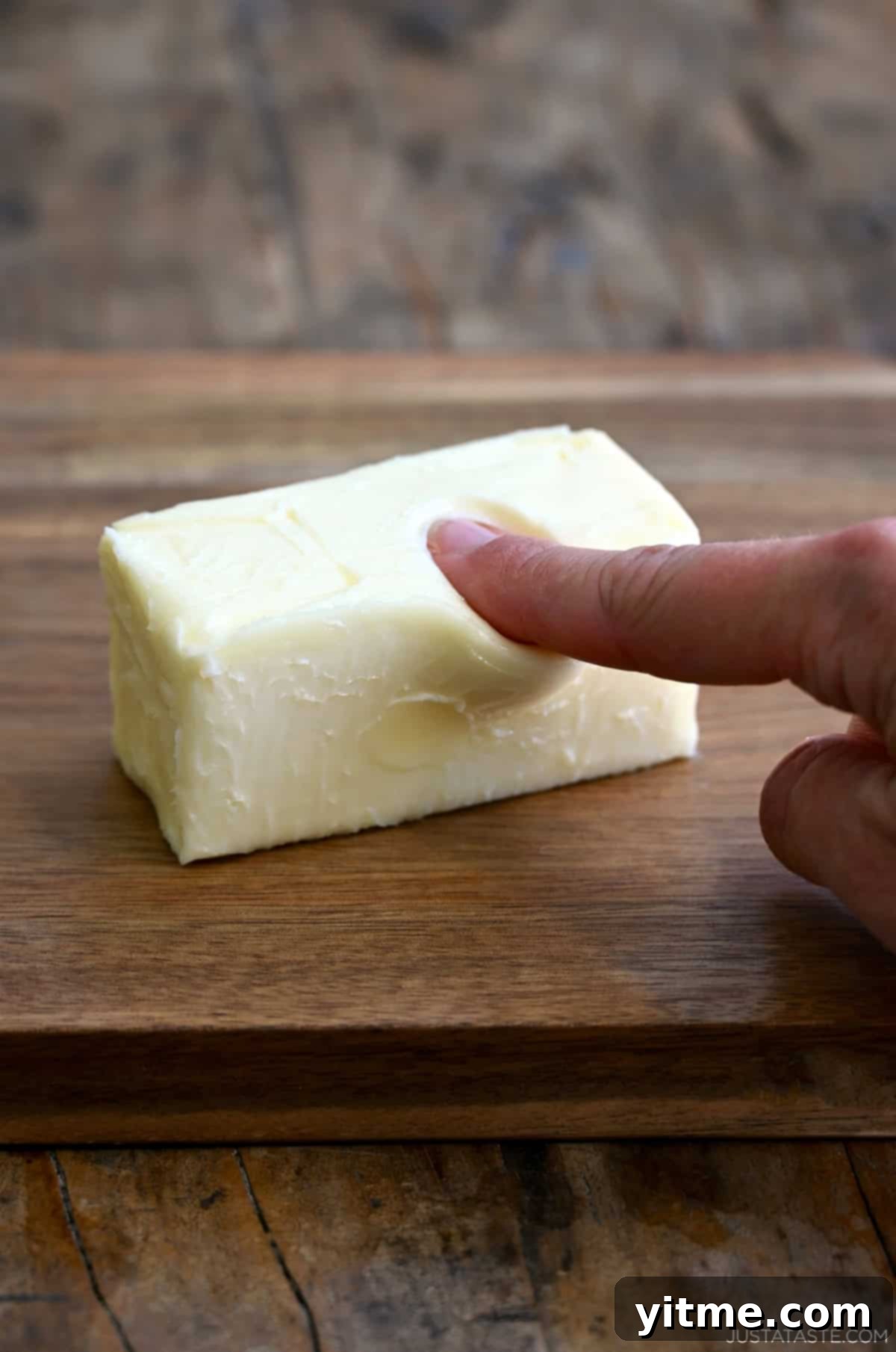
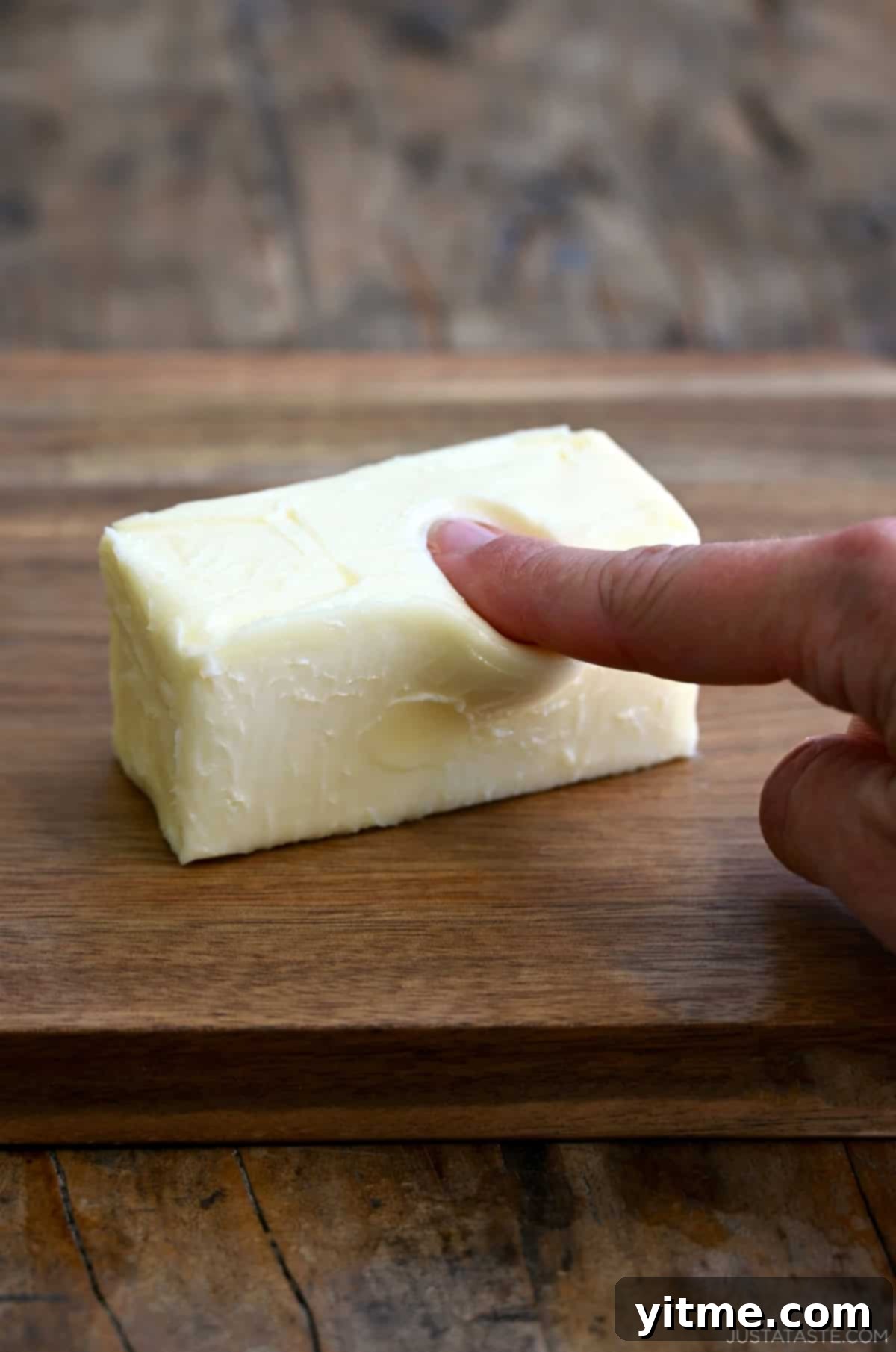
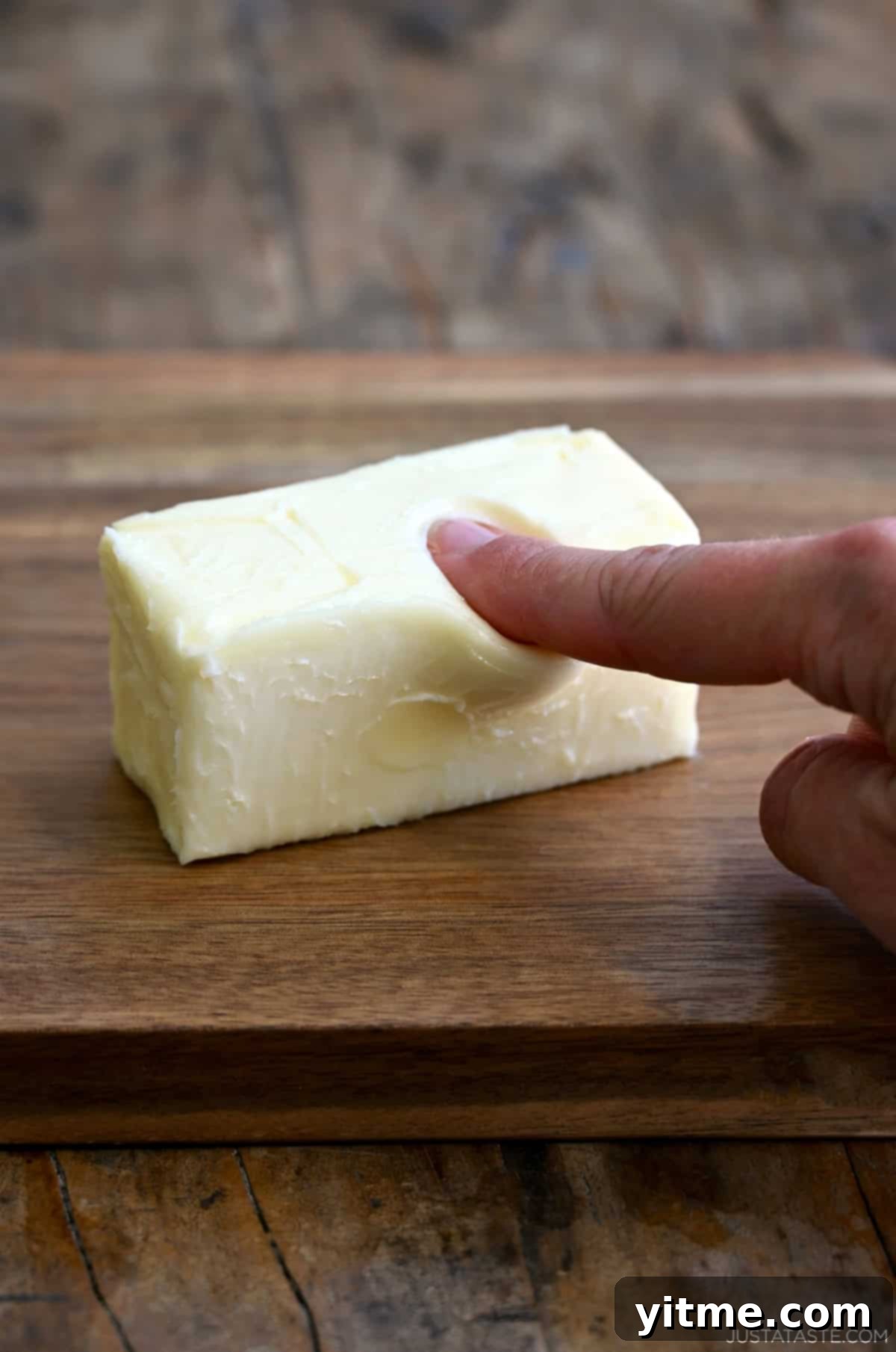
Softened butter should be cool to the touch, ideally between 65°F and 68°F (18°C and 20°C). When gently pressed, it should leave an indentation without your finger sinking in. Aim for a texture similar to playdough – soft but not melted.
Butter that’s too cold won’t properly cream with sugar, leading to dense cookies and heavy cakes. Butter that’s too warm will begin to separate, exhibiting an oily sheen, and your dough or batter won’t maintain its structure. Achieving the correct temperature is key for incorporating air into baked goods, which contributes to their light and airy texture.
Now that we know the target, let’s explore methods to get there quickly, because we often forget to take the butter out in advance.
Four Fast Ways to Soften Butter
The ideal method is to let butter sit at room temperature for about an hour, but realistically, we often forget or decide to bake at the last minute. Here are four popular tricks to quickly bring butter to room temperature.
Spoiler alert: My favorite method involves a hot glass.
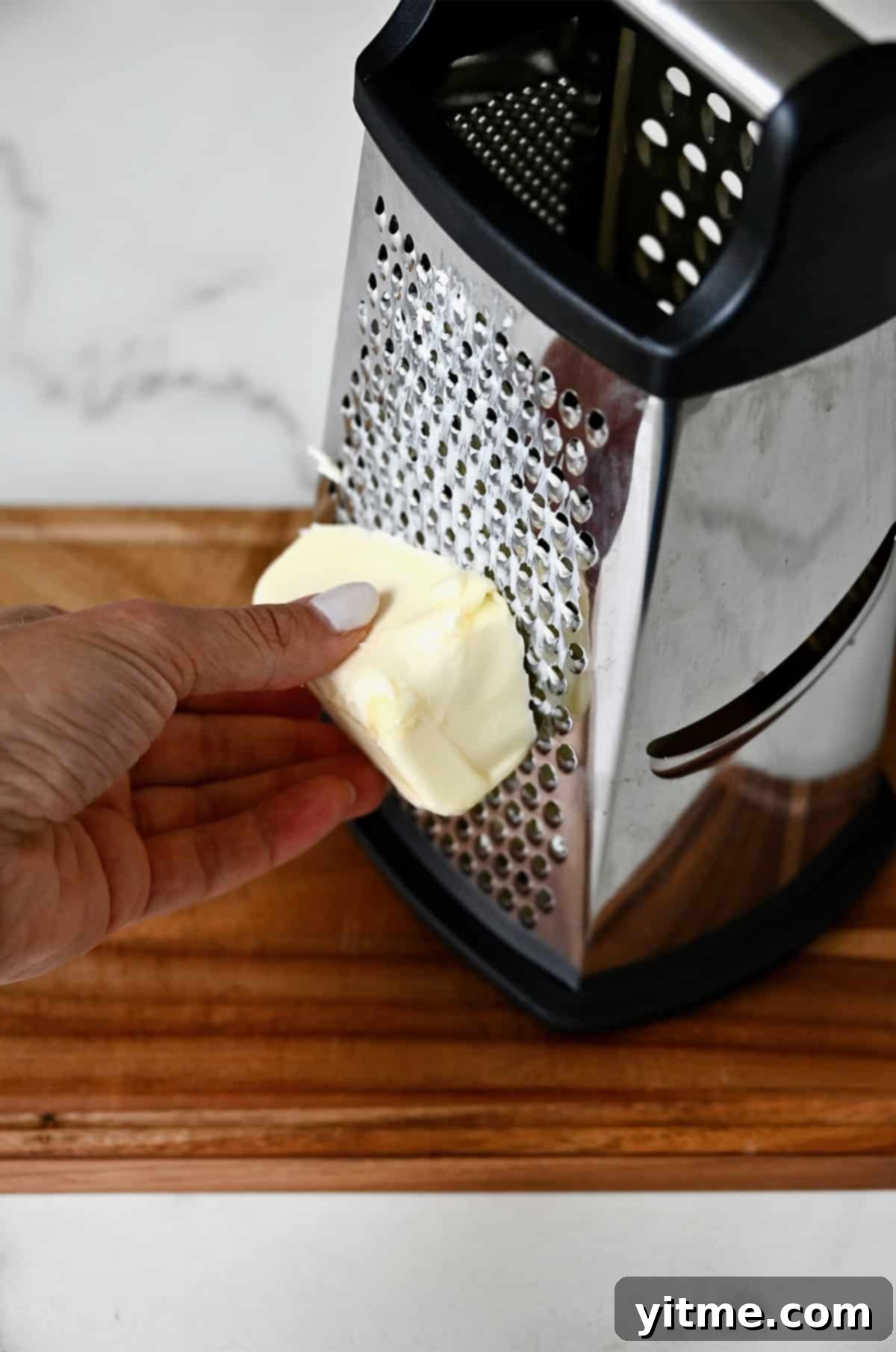
Method 1: Grate It
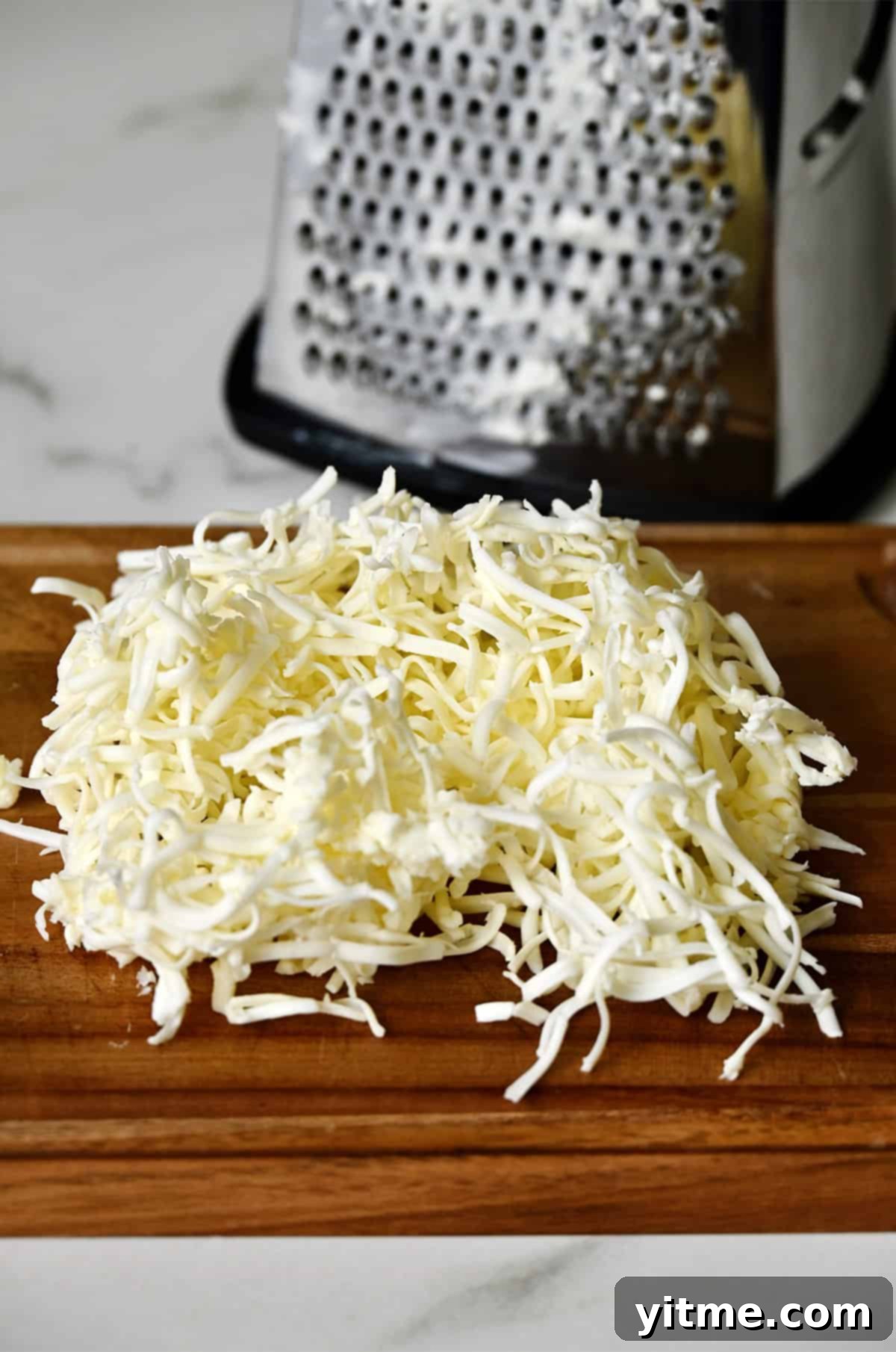
This is the fastest heat-free method. Grate a cold stick of butter using the large holes of a box grater. The thin shreds will soften in just a few minutes, increasing the surface area and allowing for quicker temperature adjustment.
Tip: This trick works exceptionally well when creaming butter with sugar, as it jumpstarts the aeration process.
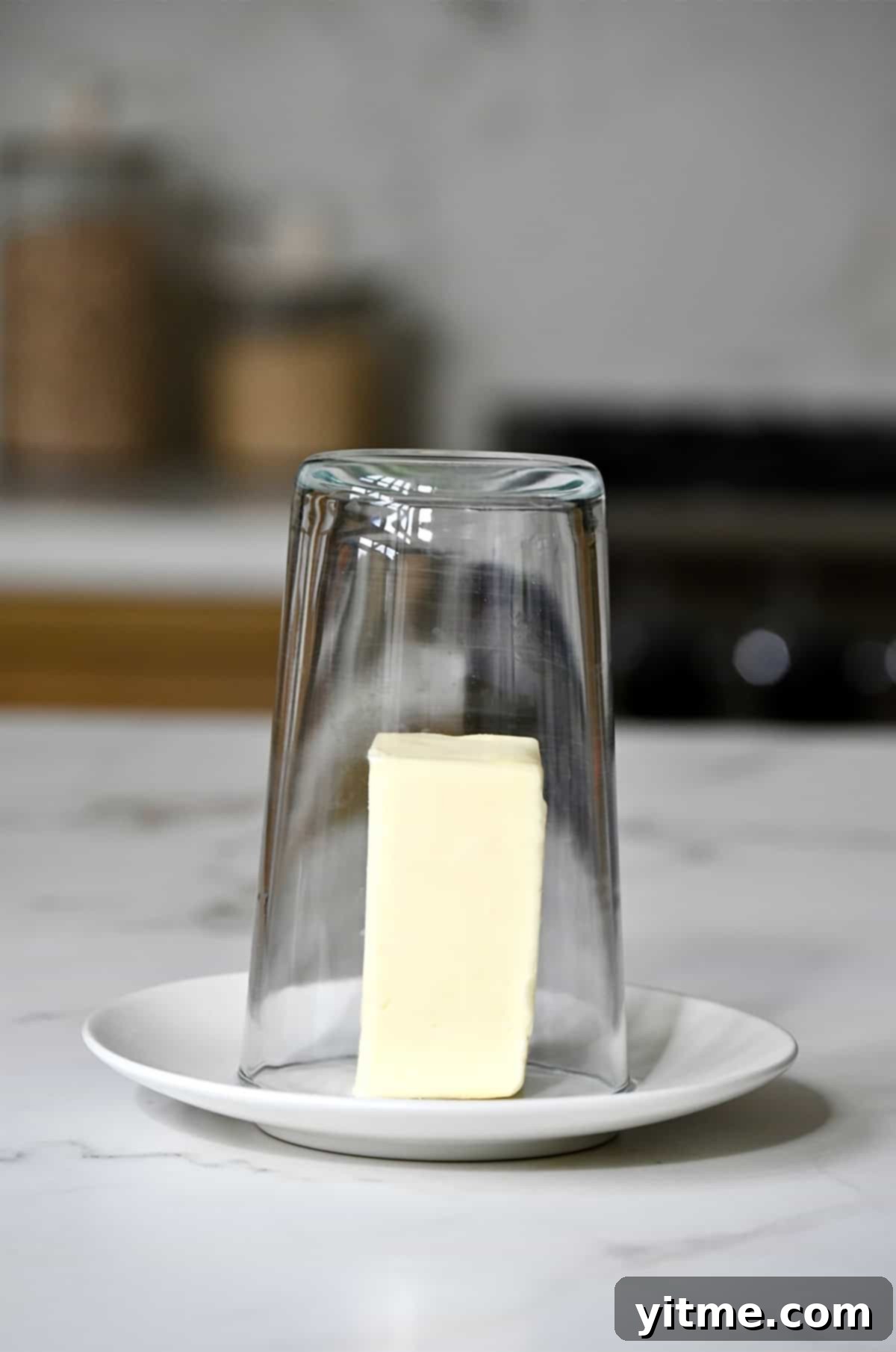
Method 2: Use a Hot Glass
Fill a heatproof glass with hot water, let it sit for a minute, then empty the water and place the warm glass upside down over the butter. The trapped heat will gently soften it in about 5 to 10 minutes, creating a miniature greenhouse effect.
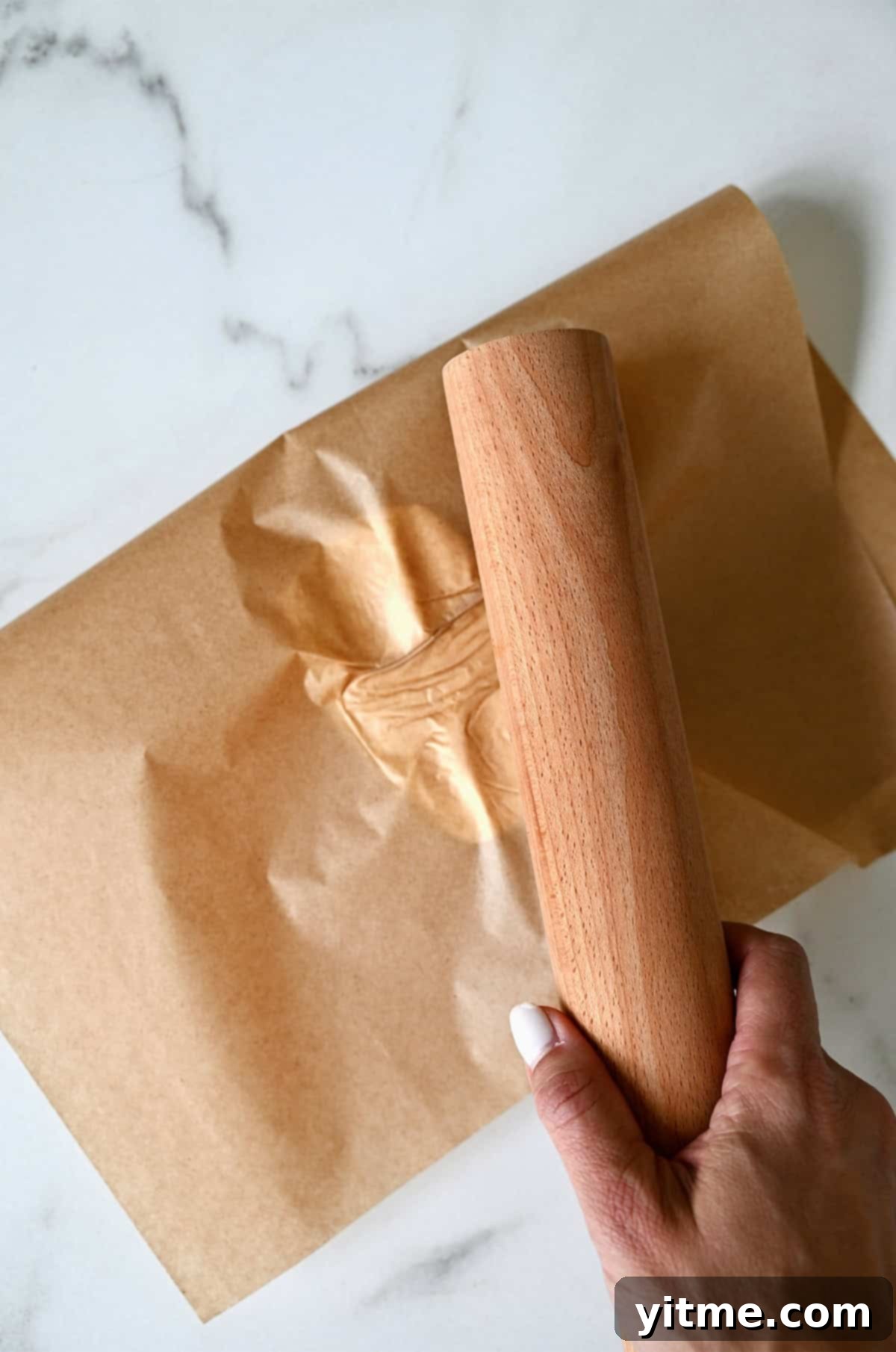
Method 3: Pound It Out
Place the butter between two sheets of parchment paper or plastic wrap and use a rolling pin to flatten it into a thin slab. More surface area equals faster softening. Pounding the butter breaks down the fat structure, enabling it to warm up more quickly.
Tip: This is a great stress reliever if your holiday baking list is long.
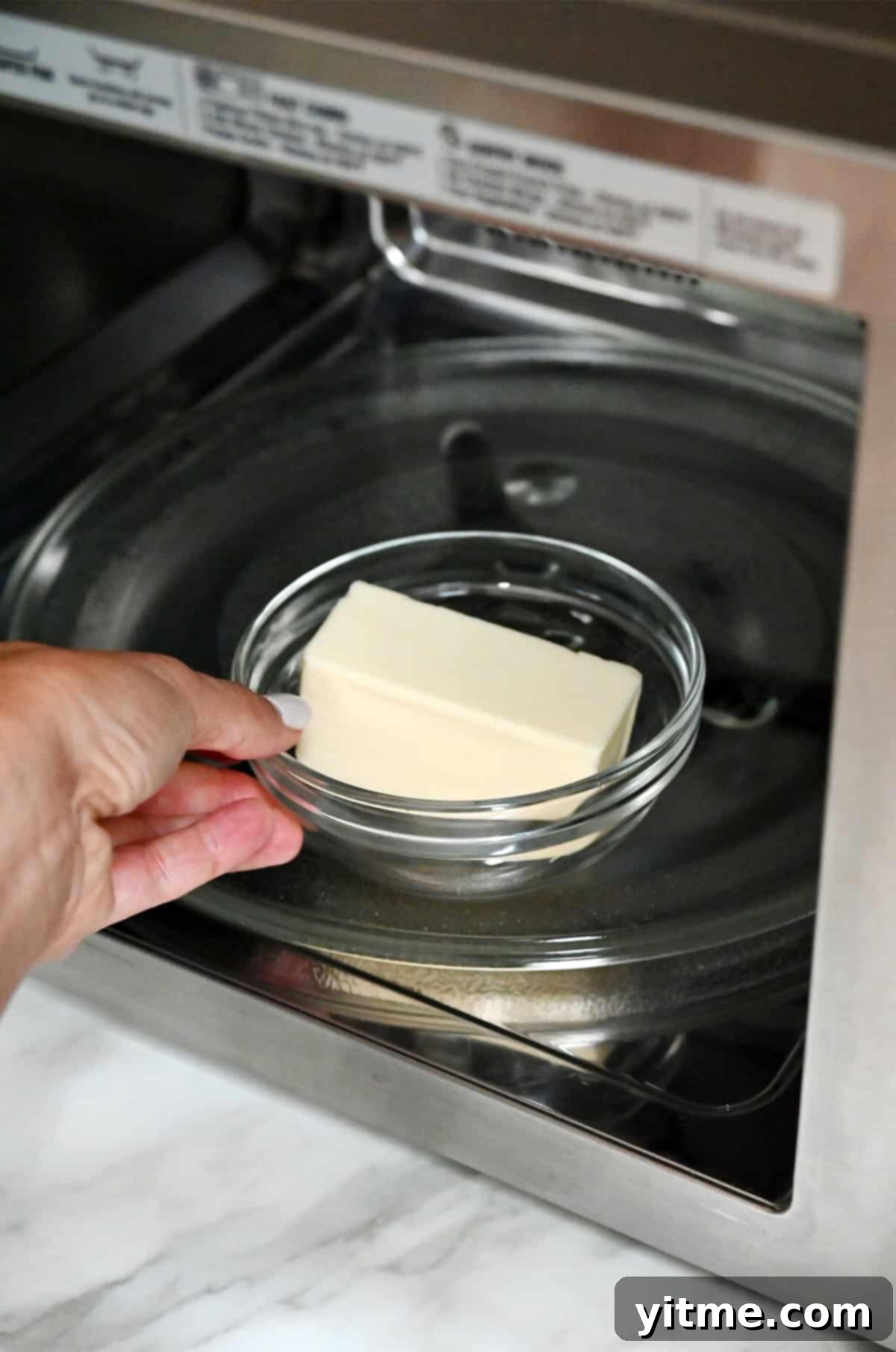
Method 4: Microwave (Carefully!)
This method requires extreme caution. Place the butter on a cool plate and microwave on low power (30%) in 5-second intervals, rotating the stick each time to prevent uneven melting. Stop as soon as it’s soft to the touch but still holds its shape. Microwaving can easily lead to melted butter if not carefully monitored.

Can You Save Over-Softened Butter?
Yes, but perhaps not for the intended recipe. Over-softened butter can’t properly trap air when creamed with sugar, resulting in dense, heavy baked goods and flat, greasy cookies. If the butter has melted, it won’t provide the necessary structure for your dough or batter.
Here’s what to do instead:
- Chill it: If the butter is slightly too soft, refrigerate it for 5 to 10 minutes until it firms up slightly but remains pliable.
- Repurpose it: If it’s completely melted, save it for a recipe calling for melted butter, such as sugar cookie icing, honey butter, homemade dinner rolls, brownies, or quickbreads like brown butter banana bread.
Final Takeaway
Butter temperature is as crucial as measuring flour correctly. The difference between soft, cold, and melted butter can drastically change a recipe’s texture. Explore more of my cookie baking tips for consistently perfect cookies. Properly softened butter ensures that your cookies will be light and airy, with a perfect texture.
By following these tips, you can ensure that your butter is always at the ideal temperature for baking, no matter how last-minute your baking plans might be. Experiment with these methods to find the one that works best for you and your kitchen setup.
Craving more baking tips and delicious recipes? Subscribe to Just a Taste to get new recipes, meal plans, and a newsletter delivered straight to your inbox! Stay connected on Facebook, TikTok, Pinterest, and Instagram for the latest updates.
How to Soften Butter Quickly (Hot Glass Method)