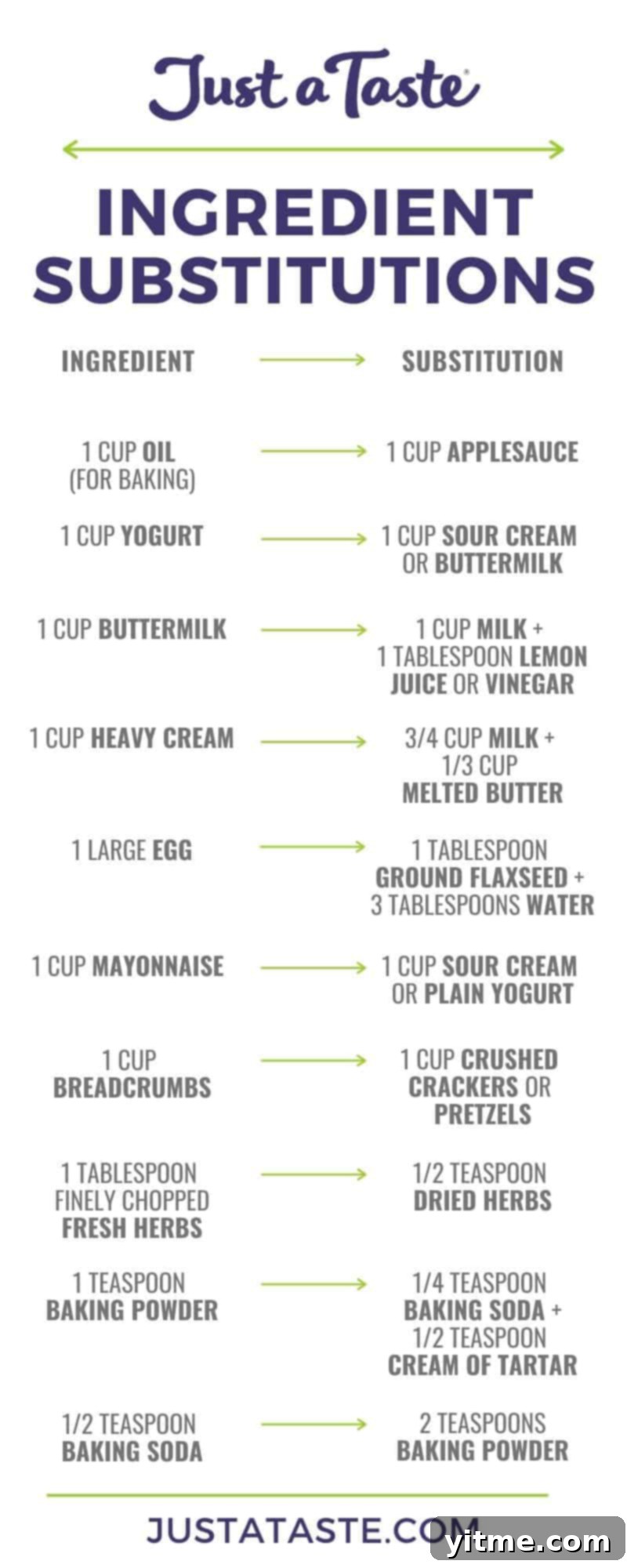
The Ultimate Guide to Smart Ingredient Substitutions: Never Be Stuck in the Kitchen Again
There’s nothing more frustrating in the kitchen than being in the middle of a recipe and realizing you’re missing a crucial ingredient. The thought of a last-minute trip to the grocery store can be disheartening, often leading to abandoned recipes or disappointing results. But what if you could confidently navigate these culinary hurdles without ever leaving your home? This comprehensive guide is designed to empower you with the knowledge of the best ingredient substitutions, ensuring your recipes are saved, your pantry is utilized, and your kitchen success is guaranteed. From common baking dilemmas to everyday cooking swaps, we’ve got you covered.
Why Master Ingredient Substitutions?
Understanding how to substitute ingredients goes beyond just convenience. It’s a valuable skill that offers numerous benefits for every home cook:
- Save Time and Effort: Avoid those sudden, inconvenient trips to the grocery store when you’re already half-way through cooking.
- Reduce Food Waste: Use what you have on hand instead of letting ingredients expire or buying something new for a single recipe.
- Save Money: You don’t need to buy a specific ingredient if a cheaper, readily available alternative works just as well.
- Increase Culinary Flexibility: Adapt recipes to dietary restrictions, allergies, or simply what’s in season and available.
- Boost Confidence: Become a more resourceful and adaptable chef, ready to tackle any recipe challenge.
Essential Principles of Ingredient Substitution
While substitutions can be incredibly helpful, it’s crucial to approach them with a basic understanding of how ingredients function in a recipe. Not all swaps are created equal, and some careful consideration can prevent a culinary disaster.
Understand the Role of the Ingredient
Before making any substitution, ask yourself: What role does this ingredient play in the recipe? Is it primarily for:
- Flavor: Herbs, spices, extracts.
- Texture: Thickening agents, leavening, tenderizers, crispiness.
- Structure: Eggs (binding), flour.
- Moisture: Fats, liquids, fruits.
- Leavening: Baking soda, baking powder, yeast.
- Acidity/Base: Buttermilk, lemon juice, vinegar, baking soda.
Understanding its primary function will help you choose a substitute that performs similarly.
Not All Substitutions Are Equal
The original ingredient is chosen for a reason. While a substitute might work, it could result in slight variations:
- Flavor Impact: A substitution might introduce new flavors or dull existing ones.
- Texture Changes: Baked goods might become denser, chewier, or more crumbly.
- Color Alterations: Some substitutes can change the final appearance of your dish.
- Chemical Reactions: Especially in baking, precise chemical balances (like acid and base for leavening) are crucial. Be mindful of these interactions.
For best results, especially in baking, try to replace no more than half of the original ingredient with a substitute in your first attempt. This allows you to assess the outcome and adjust in future endeavors.
Test and Adjust
Cooking is often an art of experimentation. Did your buttermilk substitution create the light texture you desired, or did it fall flat? Did the applesauce provide enough moisture, or was it too dense? Take note of what worked and what didn’t. This feedback loop is invaluable for refining your substitution skills.
Measure Carefully
Ratios are key! While some substitutions are a direct 1:1 swap, many require specific measurements to achieve the desired outcome. Always refer to reliable sources (like the chart above and the detailed notes below) for accurate ratios.
Common Ingredient Substitutions and How to Use Them
Buttermilk
Buttermilk, with its distinct tangy flavor and creamy texture, is a fantastic ingredient for tenderizing baked goods and adding moisture. However, it’s not a common pantry staple for many, and when you do buy it, you might be left with an almost-full carton. Fortunately, buttermilk substitutions are incredibly effective and work wonderfully in everything from fluffy pancakes to crisp waffles and flaky biscuits.
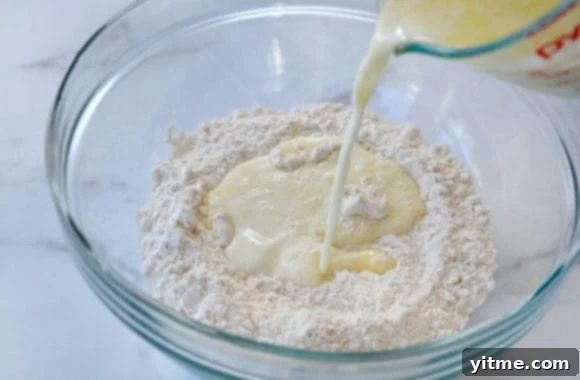
Buttermilk Substitutions:
- Milk + Acid: For 1 cup of buttermilk, combine 1 cup of regular milk (dairy or non-dairy) with 1 tablespoon of lemon juice or white vinegar. Let it sit for 5-10 minutes until it slightly curdles. The acid activates baking soda, creating a light and airy texture.
- Plain Yogurt: For 1 cup of buttermilk, use 2/3 cup of plain yogurt (dairy or non-dairy) thinned with 1/3 cup of milk or water.
- Sour Cream: For 1 cup of buttermilk, use 2/3 cup of sour cream thinned with 1/3 cup of milk or water.
- Kefir: A direct 1:1 substitute for buttermilk due to its similar consistency and tang.
If you find yourself with leftover buttermilk, don’t let it go to waste! You can use it to make delicious ranch dressing, as a tenderizing marinade for pork chops or chicken before breading and baking, or even freeze it in ¼-cup portions for future use (it may separate when thawed, but it’s still good!).
Eggs (Beyond Just Flax)
Eggs serve multiple functions in recipes: they bind ingredients, add moisture, provide structure, contribute to leavening, and enrich flavor. Finding the right egg substitute depends heavily on the egg’s primary role in your specific recipe.
Flax Egg: This vegan-friendly egg substitute is made by mixing 1 tablespoon of ground flaxseed with 3 tablespoons of water. Allow the mixture to sit for 5-10 minutes until it thickens to a gel-like consistency. Flax eggs work best as a binder in baked goods that call for one or two eggs, such as cookies, muffins, and brownies. They are not ideal for recipes requiring more than two eggs, as the center may become gooey, and the dish won’t rise as well.
Other Egg Substitutions:
- Chia Egg: Similar to a flax egg, combine 1 tablespoon of chia seeds (ground or whole) with 3 tablespoons of water, let sit for 5-10 minutes. Works well as a binder.
- Mashed Banana: For 1 egg, use 1/4 cup of mashed ripe banana. This adds moisture and binding, but also imparts a banana flavor, making it suitable for sweet baked goods like muffins or quick breads.
- Applesauce/Pumpkin Puree: For 1 egg, use 1/4 cup of unsweetened applesauce or pumpkin puree. These add moisture and some binding, but can make baked goods denser. Best for cakes, muffins, and quick breads where a fruit flavor is welcome.
- Silken Tofu: For 1 egg, use 1/4 cup of pureed silken tofu. This works as a binder and adds moisture, especially suitable for denser baked goods, quiches, or savory dishes.
- Commercial Egg Replacers: Various brands offer powdered egg replacers that are designed to mimic the binding and leavening properties of eggs. Follow package instructions carefully.
Oil and Butter (Fat Substitutions)
Fats like oil and butter contribute significantly to a recipe’s moisture, tenderness, flavor, and browning. Substituting fats can alter the texture and taste, so it’s good to know the common swaps.
Applesauce as an Oil Substitute: Substituting applesauce for oil in your baked goods will generally result in a creamier, more moist, and denser texture. For 1 cup of oil, you can typically replace it with 1 cup of unsweetened applesauce. However, it’s often recommended to replace only half of the oil with applesauce (e.g., if a recipe calls for 1 cup of oil, use 1/2 cup applesauce and 1/2 cup oil) to avoid a significant change in texture and prevent the baked good from becoming too dense or gummy. Applesauce works best in cakes, muffins, and breads.
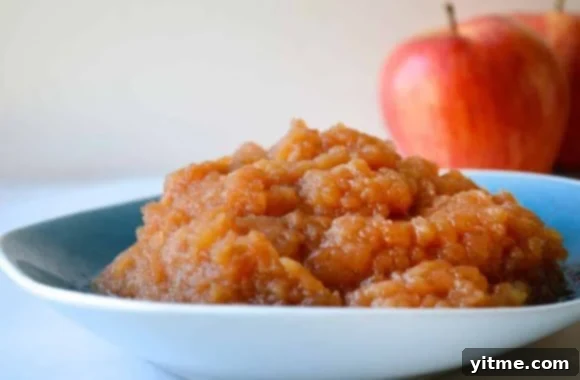
Important Note: Avoid using applesauce as an oil substitute for recipes where crispiness or chewiness is desired, such as many cookie recipes, as it will make them too fluffy rather than crispy and chewy. Bonus points if you use homemade applesauce with just three simple ingredients!
Other Fat Substitutions:
- Other Fruit Purées: Mashed banana, pureed pumpkin, or other fruit purées can be used similarly to applesauce, offering moisture and some binding, but also imparting their own flavors.
- Plain Yogurt (Full-Fat): Can replace some oil or butter in baked goods to add moisture and a slight tang. For 1 cup of oil/butter, try 1 cup of yogurt, adjusting consistency as needed.
- Avocado (Pureed): Offers healthy fats and a creamy texture. For 1 cup of butter, use 1 cup of pureed avocado. It can add a subtle green tint and flavor, so best for recipes where this is acceptable.
- Substituting Butter for Oil: Generally, you can substitute butter for oil at a 1:1 ratio by weight. However, butter contains some water, so it might slightly alter the final texture. Melted butter works best as a direct swap for liquid oils.
- Substituting Oil for Butter: If a recipe calls for melted butter, you can often use oil (e.g., vegetable, canola, or a mild olive oil) in a 1:1 ratio. For solid butter, you might need slightly less oil, as butter has solids that contribute to structure.
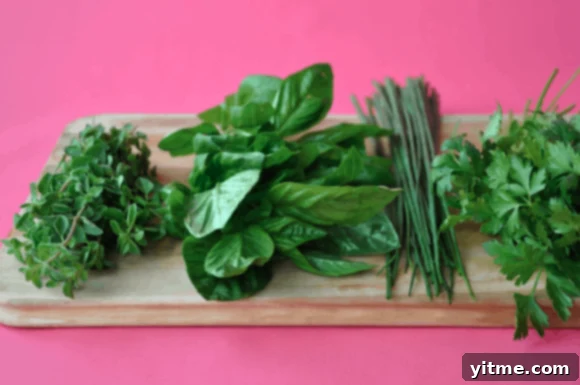
Dried Herbs for Fresh Herbs
Herbs are vital for adding fresh, aromatic flavors to dishes. When faced with a recipe calling for fresh herbs and only having dried ones on hand (or vice-versa), knowing the correct conversion is key.
The most important thing to remember when replacing dried herbs for fresh herbs is that the flavor of dried herbs is much more concentrated than fresh. As a general guideline, use 1 teaspoon of dried herbs for every 1 tablespoon of fresh herbs. This 1:3 ratio accounts for the intensified flavor and reduced volume of dried herbs. However, taste and season to your personal preference, as some dried herbs retain their potency better than others.
Timing is Everything:
- Fresh Herbs: Are often added towards the end of the cooking process, or as a garnish, to preserve their delicate color, vibrant flavor, and often their texture, which can be diminished by prolonged heat.
- Dried Herbs: It’s best to add dried herbs toward the beginning of cooking, especially in dishes that simmer or braise, to allow their concentrated flavor to slowly seep into and meld with the dish. This gives them time to rehydrate and release their aromas.
Keep in mind that while the flavor of dried herbs is more concentrated, the fresh, bright notes of fresh herbs are hard to replicate. Choose your substitution based on the desired outcome for your dish.
Milk
Milk adds moisture, richness, and contributes to the texture of many recipes, from sauces to baked goods.
- Non-Dairy Alternatives: Almond milk, soy milk, oat milk, or coconut milk (from a carton, not canned) can often be used as a 1:1 substitute for dairy milk. Be aware of flavor differences (e.g., coconut milk has a distinct taste) and fat content, which can affect richness.
- Evaporated Milk/Powdered Milk: If you have evaporated milk, you can dilute it with an equal amount of water to make regular milk. Powdered milk can be reconstituted according to package directions.
- Water: In some savory recipes, water can be used for moisture, but the dish will lack the richness and body that milk provides.
Baking Powder and Baking Soda
These are leavening agents that create lift and tenderness in baked goods, but they are not interchangeable as they function differently.
- Baking Soda: Needs an acid (like buttermilk, yogurt, lemon juice, or vinegar) to react and produce carbon dioxide bubbles. It’s often paired with acidic ingredients.
- Baking Powder: Contains its own acid and only needs liquid to activate. Most baking powders are “double-acting,” meaning they react once when wet and again when heated.
- Baking Powder for Baking Soda: For 1 teaspoon of baking soda, you’d typically need 3 teaspoons of baking powder. You also need to adjust any acidic ingredients in the recipe since baking powder already has acid. This can significantly alter the taste and texture.
- Baking Soda for Baking Powder: Not recommended as a direct swap unless the recipe contains enough acid to activate the baking soda. You would need 1/4 teaspoon of baking soda plus 1/2 teaspoon of cream of tartar (which is acidic) to replace 1 teaspoon of baking powder.
- Self-Rising Flour: If a recipe calls for all-purpose flour plus baking powder and salt, you can sometimes use self-rising flour. For 1 cup all-purpose flour + 1½ teaspoons baking powder + 1/4 teaspoon salt, use 1 cup self-rising flour.
Sugar (Granulated)
Sugar provides sweetness, but also moisture, browning, and acts as a tenderizer in baking.
- Brown Sugar: Can substitute granulated sugar 1:1, but it will add a molasses flavor and more moisture, resulting in a chewier, denser texture.
- Honey/Maple Syrup: For 1 cup of granulated sugar, use 2/3 to 3/4 cup of honey or maple syrup. These are sweeter than sugar, add liquid to the recipe (so reduce other liquids by about 1/4 cup per cup of sweetener), and can affect browning.
- Artificial Sweeteners: Many brands offer baking-specific artificial sweeteners. Always check the package for conversion ratios, as they often have different properties and bulk than granulated sugar.
All-Purpose Flour
Flour provides structure to baked goods. Different types of flour have varying protein contents, which affect the final texture.
- Whole Wheat Flour: Can replace up to half of the all-purpose flour for a nuttier flavor and denser texture. You might need to add a little more liquid, as whole wheat flour absorbs more moisture.
- Gluten-Free Flour Blends: If you need a gluten-free option, use a specifically formulated gluten-free all-purpose flour blend (often a mix of rice flour, tapioca starch, potato starch, etc.) as a 1:1 substitute. Results may vary depending on the blend and recipe.
- Cake Flour: Has lower protein, resulting in a more tender, delicate crumb. For 1 cup all-purpose flour, use 1 cup + 2 tablespoons cake flour.
- Bread Flour: Has higher protein, yielding a chewier texture. For 1 cup all-purpose flour, use 1 cup minus 2 tablespoons bread flour.
Yogurt and Sour Cream
These dairy products add moisture, richness, and tang to many dishes, often used in baking, sauces, and dips.
- Greek Yogurt: Can be used as a 1:1 substitute for sour cream or regular yogurt in many recipes, especially for dips and toppings, but it’s thicker so you may need to thin it slightly with milk for baking.
- Buttermilk: Can replace yogurt or sour cream (especially in baking where tang is desired) as a 1:1 substitute, though it’s thinner so adjust accordingly.
- Crème fraîche: Offers a richer, less tangy alternative to sour cream in savory applications or as a topping.
- Cottage Cheese (Blended): Can be blended smooth and used as a substitute in some creamy sauces or baked goods where texture isn’t paramount.
Pro Tips for Successful Swaps
- Keep a Well-Stocked Pantry: The best way to avoid missing ingredients is to have common alternatives on hand. Keep staples like lemon juice, vinegar, baking soda, different flours, and various milks in stock.
- Don’t Be Afraid to Experiment: Culinary growth often comes from trying new things. Start with less critical recipes if you’re nervous, and slowly build your confidence.
- Read the Recipe Carefully: Before making any substitution, understand the role of the ingredient in the recipe and potential impacts.
- Trust Your Palate: Ultimately, cooking is about taste. If a substitution works for you and your family, then it’s a success!
Conclusion
Mastering ingredient substitutions is a powerful tool for any home cook. It transforms potential kitchen crises into opportunities for creativity and resourcefulness. By understanding the function of each ingredient and knowing reliable alternatives, you can confidently tackle any recipe, save time, reduce waste, and truly make the kitchen your domain. So next time you find yourself with an empty jar or a missing item, don’t despair – consult your guide to smart substitutions and cook on!
Craving more delicious recipes and helpful kitchen tips? Subscribe to Just a Taste to get new recipes, meal plans, and a newsletter delivered straight to your inbox! And stay in touch on Facebook, Twitter, Pinterest, and Instagram for all of the latest updates.