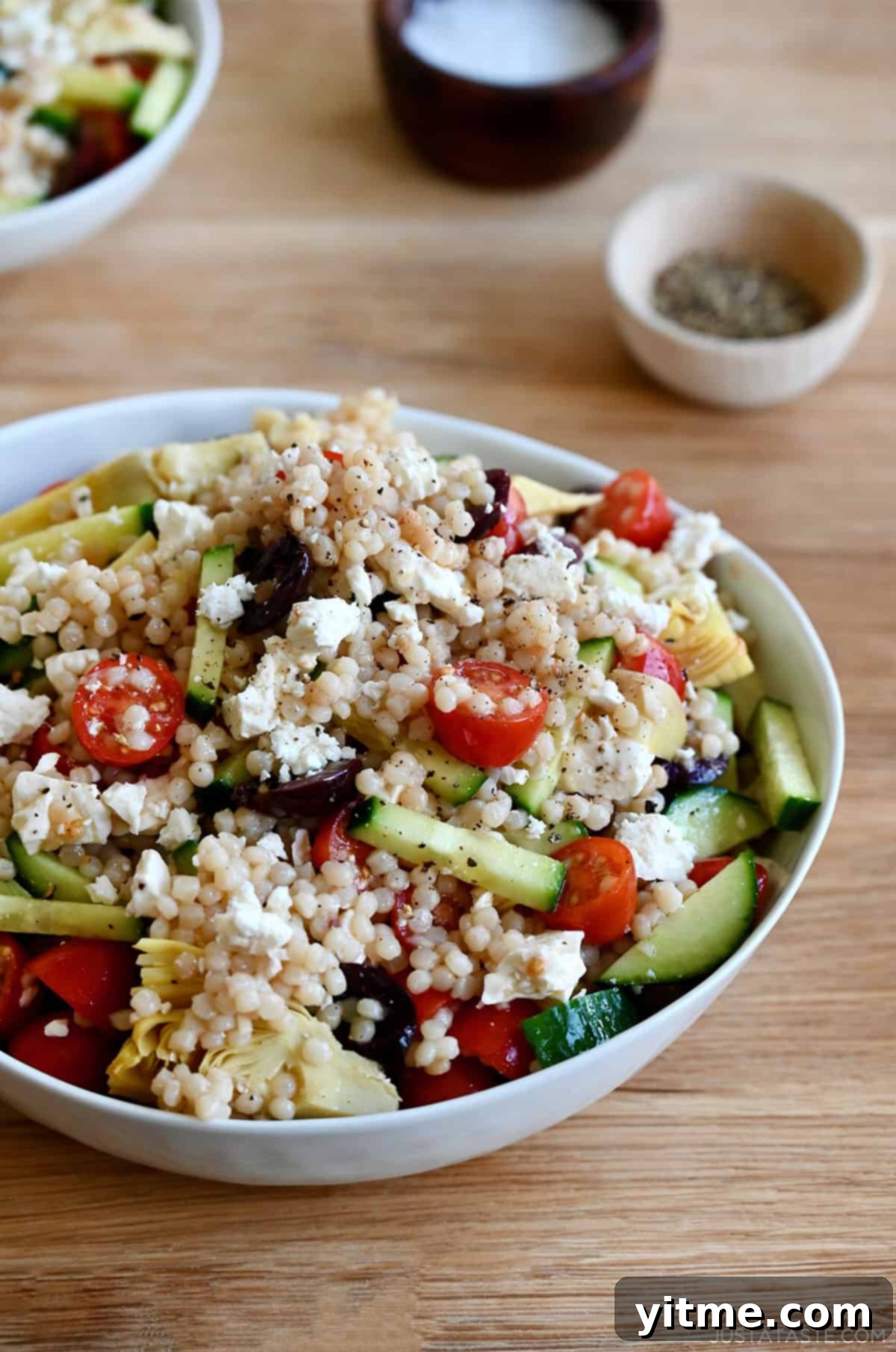
The Ultimate Mediterranean Pearl Couscous Salad: Fresh, Flavorful & Perfectly Portable
This **Mediterranean couscous salad** is a vibrant and undeniably delicious dish, bursting with fresh flavors and tossed in a bright, tangy red wine vinaigrette. Crafted with chewy pearl couscous, savory feta, and an array of crisp, colorful vegetables, it’s the quintessential make-ahead side that’s ideal for any gathering. Whether you’re planning a potluck, a backyard barbecue, a holiday spread, or simply seeking a light and satisfying summer lunch, this salad effortlessly fits the bill. Its irresistible combination of textures and tastes makes it a guaranteed crowd-pleaser, perfect for enjoying chilled or at room temperature.
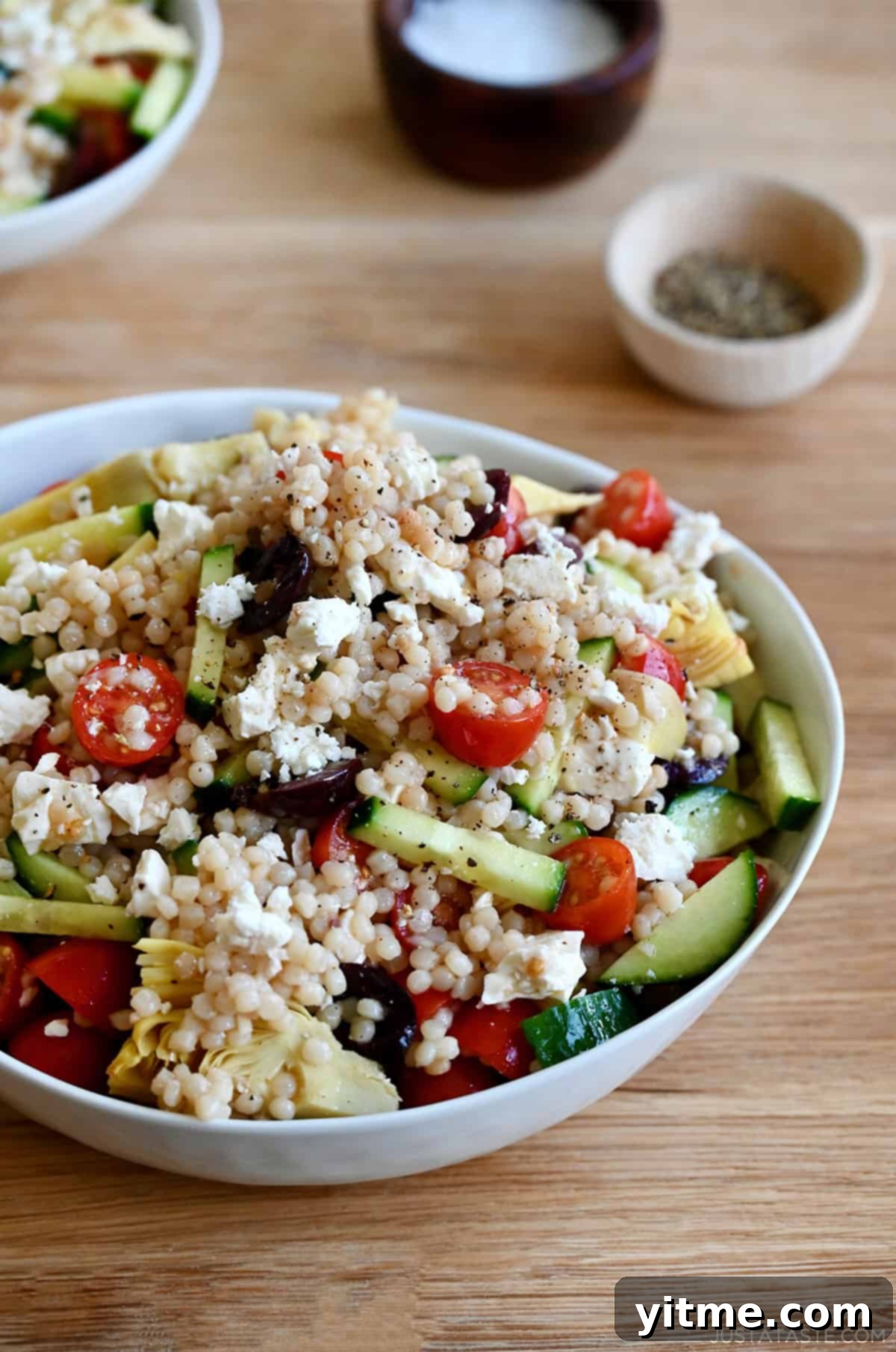
Table of Contents
- What Is Pearl Couscous?
- Grab These Ingredients
- How to Make Mediterranean Couscous Salad
- Variations
- Make-Ahead & Storage Tips
- Serving Suggestions
- More Summer Salads to Try
- Mediterranean Couscous Salad Recipe
Just a few weeks ago, I introduced this Mediterranean couscous salad to my family, and it instantly became a phenomenal hit. Plates were emptied, and everyone eagerly reached for seconds – and possibly even thirds! It’s truly no surprise, given its delightful composition: perfectly chewy pearl couscous, crisp and refreshing vegetables, the sharp brininess of Kalamata olives, creamy crumbled feta cheese, and that perfectly balanced homemade red wine vinaigrette. This irresistible combination has cemented its place as my ultimate go-to pasta salad recipe for the warmer months.
Beyond being a family favorite, this versatile salad is a fantastic option for any seasonal festivity or casual get-together. It shines at potlucks, elevates barbecues, and is a welcome addition to holiday spreads like Memorial Day, the 4th of July, and Labor Day. One of its greatest advantages is its make-ahead potential; you can prepare it in advance, and it tastes equally fantastic whether served chilled straight from the fridge or allowed to come to room temperature. It’s effortless to prepare, beautifully presented, and universally approved by all who taste it.
What Is Pearl Couscous?
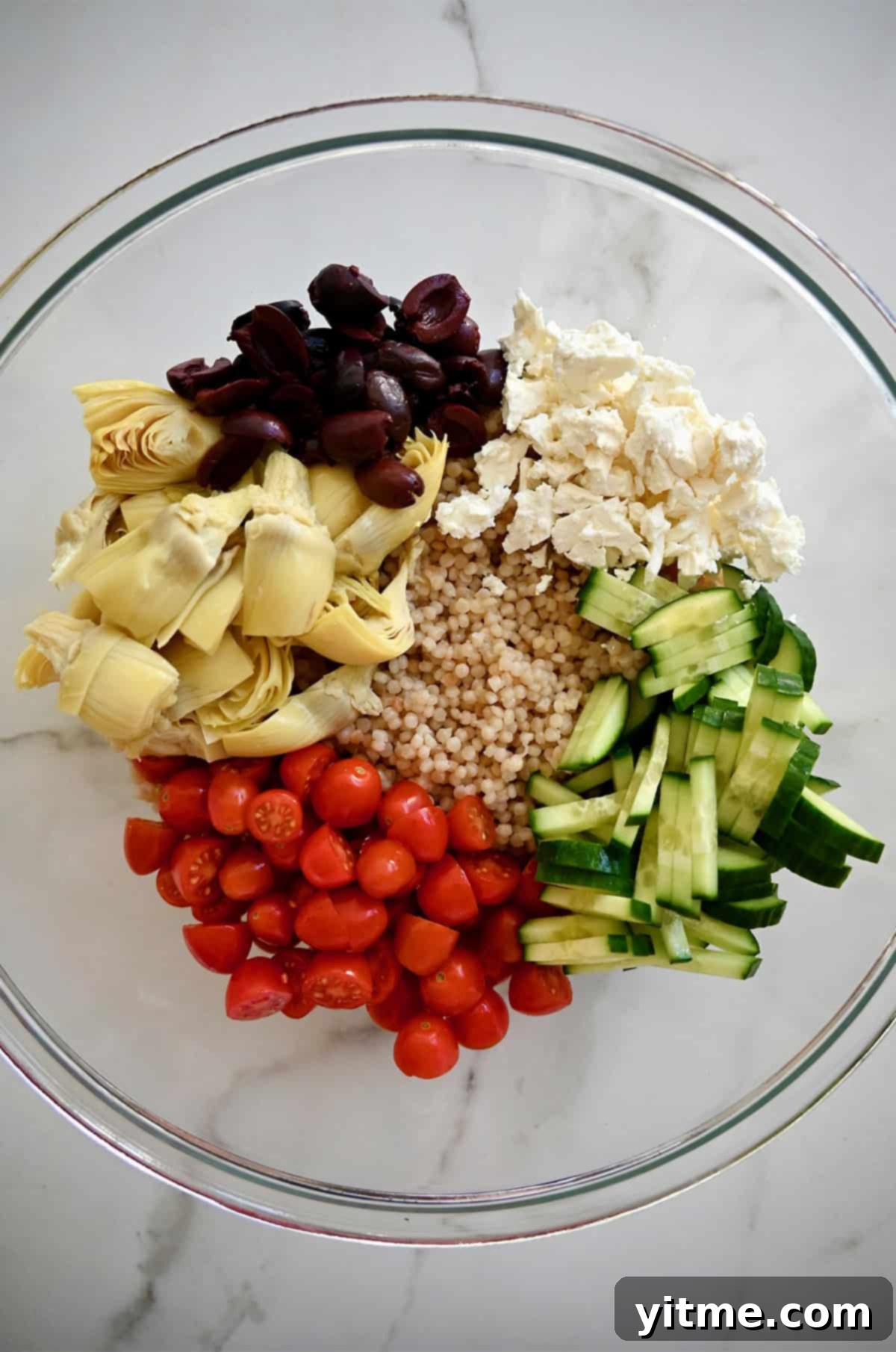
Here’s a fun culinary fact that often surprises people: couscous, despite its grain-like appearance, is not actually a grain! It’s a type of tiny pasta, traditionally made from semolina flour. Among its varieties, pearl couscous, also widely known as Israeli couscous, has become one of my absolute favorite “secret weapons” for crafting exceptional summer salads. What makes it so special is its unique texture: each little pearl cooks up to be wonderfully chewy, providing a satisfying mouthfeel that’s distinct from finer pastas or grains. This texture is perfect for salads because it holds its shape beautifully and, crucially, soaks up dressing without becoming soggy or mushy, ensuring every bite is flavorful and robust.
Pearl couscous differs significantly from traditional Moroccan couscous, which is much finer in texture and typically cooks almost instantly by simply steeping it in hot liquid. Pearl couscous, being larger, requires a more traditional pasta-like cooking method, involving simmering until tender. I always recommend an extra step that truly elevates its flavor: toasting the dry couscous in a little olive oil before adding liquid. This simple technique brings out a subtle, nutty depth that you’ll distinctly taste in every single pearl, adding an extra layer of complexity to your salad. It’s this robust structure and nutty flavor that allows it to stand up so beautifully in hearty salads, especially ones like this Mediterranean version that are generously loaded with fresh, crunchy vegetables and a vibrant, tangy vinaigrette.
Beyond salads, pearl couscous is incredibly versatile. I also frequently use it in my comforting Avgolemono Soup (Greek Lemon Chicken Soup), where its texture adds substance and makes it a perfect shortcut when you crave something cozy and fast, without compromising on flavor.
Grab These Ingredients
The beauty of this Mediterranean couscous salad lies in its simplicity and the quality of its components. Because the recipe relies on just a handful of core ingredients, selecting fresh, high-quality produce and authentic Mediterranean staples is key to achieving truly outstanding flavor. Each element contributes significantly, bringing serious taste without the need for an exhaustive grocery list or complicated preparations.
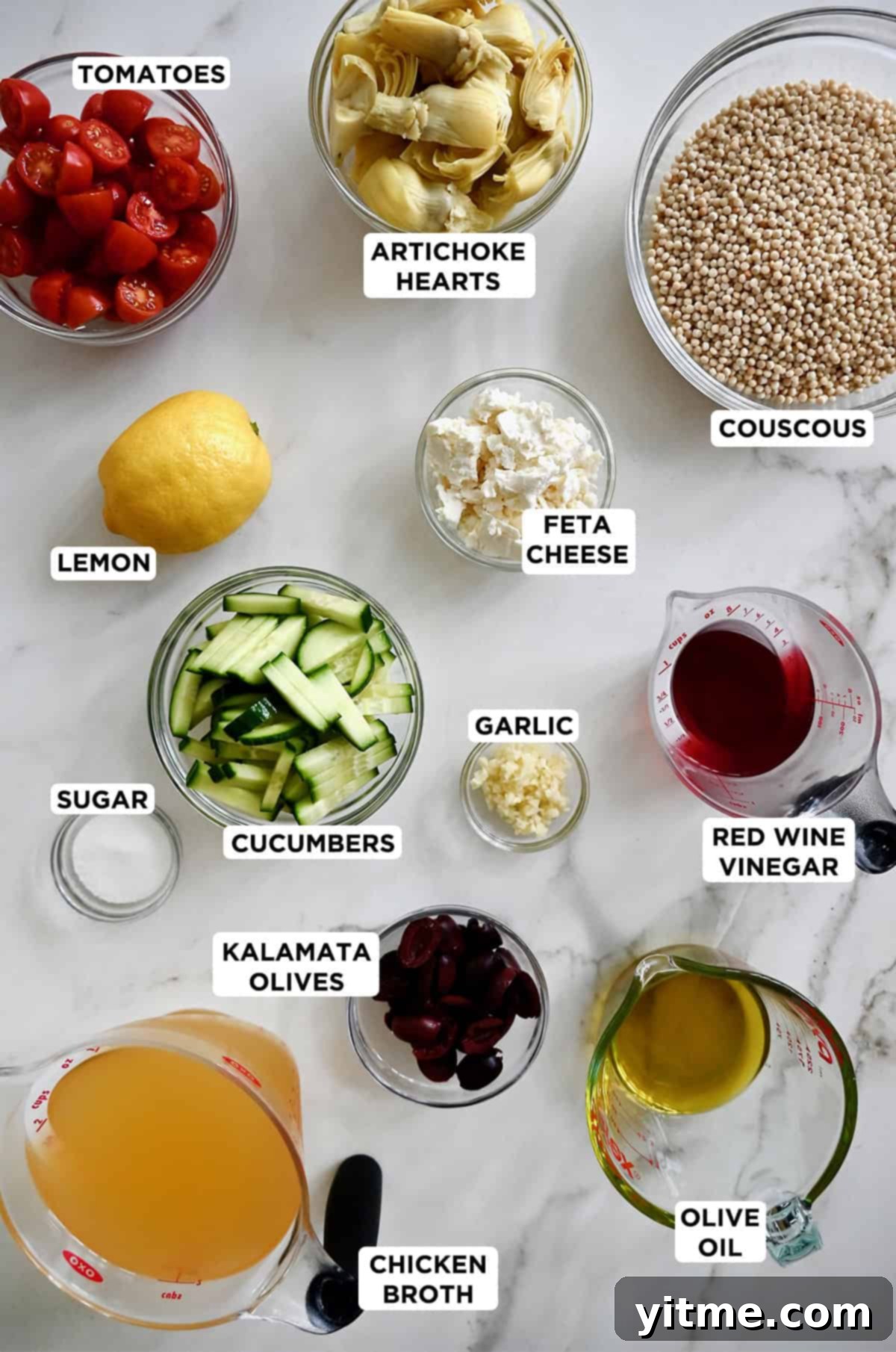
- Couscous: For this specific recipe, I highly recommend using **pearl couscous** (also known as Israeli couscous). Its larger size and chewy texture make it incredibly resilient and perfect for absorbing the dressing without becoming mushy, which is essential for a vibrant, satisfying salad. Traditional Moroccan couscous, with its much finer grain, is less suitable as it tends to get too soft. If pearl couscous isn’t available, orzo or other small, sturdy pasta shapes like ditalini can serve as excellent substitutes, providing a similar satisfying chew.
- Chicken broth: Elevate the flavor of your couscous by cooking it in broth instead of plain water. This simple swap infuses every tiny pearl with a savory depth, preventing the salad from tasting bland. For a delicious vegetarian option, feel free to use vegetable broth.
- Tomatoes: I prefer using sweet, juicy cherry or grape tomatoes for this salad because they hold their shape beautifully and burst with flavor. Simply slice them in half, or quarter larger ones for easy eating. However, any ripe, flavorful tomato will work. If using larger varieties like Roma or beefsteak, be sure to core and remove the seeds to prevent excess moisture from making your salad soggy.
- Cucumbers: These add a wonderfully crunchy and refreshing element to the salad, offering a cooling contrast. I typically opt for Persian or English cucumbers because they are conveniently seedless and generally don’t require peeling, saving you prep time. Their crisp texture is a must-have.
- Kalamata olives: These distinctive, briny, purple-hued olives are a cornerstone of Mediterranean cuisine, bringing a bold, salty, and slightly fruity flavor that’s irreplaceable. I always buy them pitted for convenience and slice them in half or into rings to ensure even distribution and easier eating. If olives aren’t your favorite, consider replacing them with finely chopped roasted red peppers or a spoonful of briny capers for a similar savory kick.
- Artichoke hearts: Canned or jarred artichoke hearts (packed in water) are a fantastic pantry shortcut I always keep on hand. Simply drain them thoroughly and roughly chop for easy incorporation. Marinated artichoke hearts are also an excellent choice; they will contribute even more depth of flavor to your salad.
- Feta cheese: This salty, tangy, and creamy cheese is crucial for rounding out all the fresh flavors in the salad. For the best flavor and texture, I highly recommend buying a block of feta packed in brine and crumbling it yourself. Pre-crumbled feta often lacks the same creamy consistency and intense flavor. If feta isn’t to your taste, crumbled goat cheese or small mozzarella balls (bocconcini) make delightful alternatives.
- Dressing ingredients: The vibrant homemade vinaigrette is simple yet essential, combining red wine vinegar, fresh lemon juice, minced garlic, a touch of sugar, high-quality olive oil, salt, and pepper. This dressing is perfectly bright and balanced, and it’s crucial not to skip the sugar! It doesn’t make the dressing sweet, but rather softens the acidity of the vinegar and lemon juice, ensuring all the flavors harmonize beautifully.
See the recipe card below for full information on specific ingredient quantities and detailed instructions.
How to Make Mediterranean Couscous Salad
Crafting this vibrant Mediterranean couscous salad is a straightforward process that yields incredibly rewarding results. Follow these simple steps to bring this fresh and flavorful dish to life:
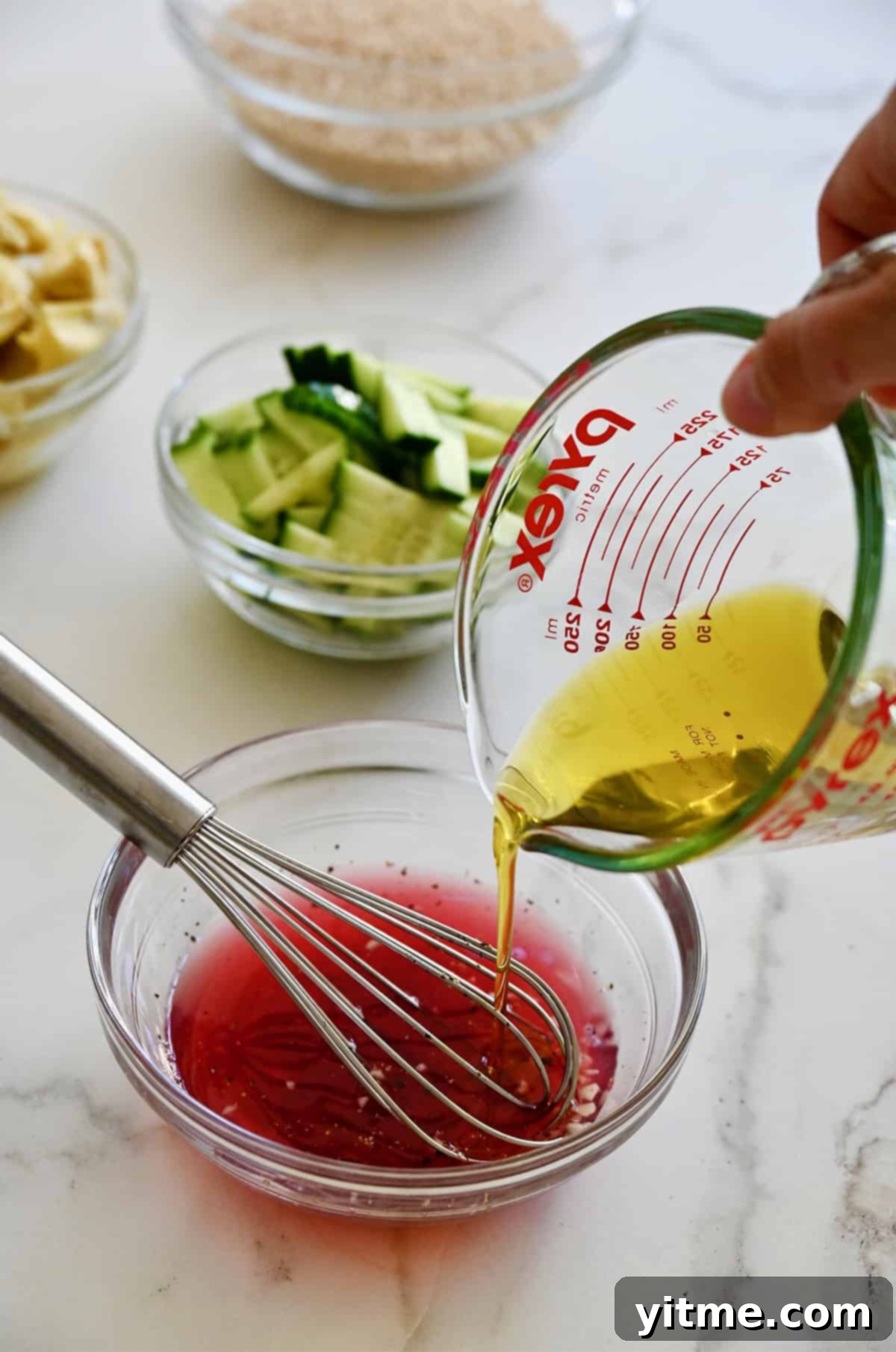
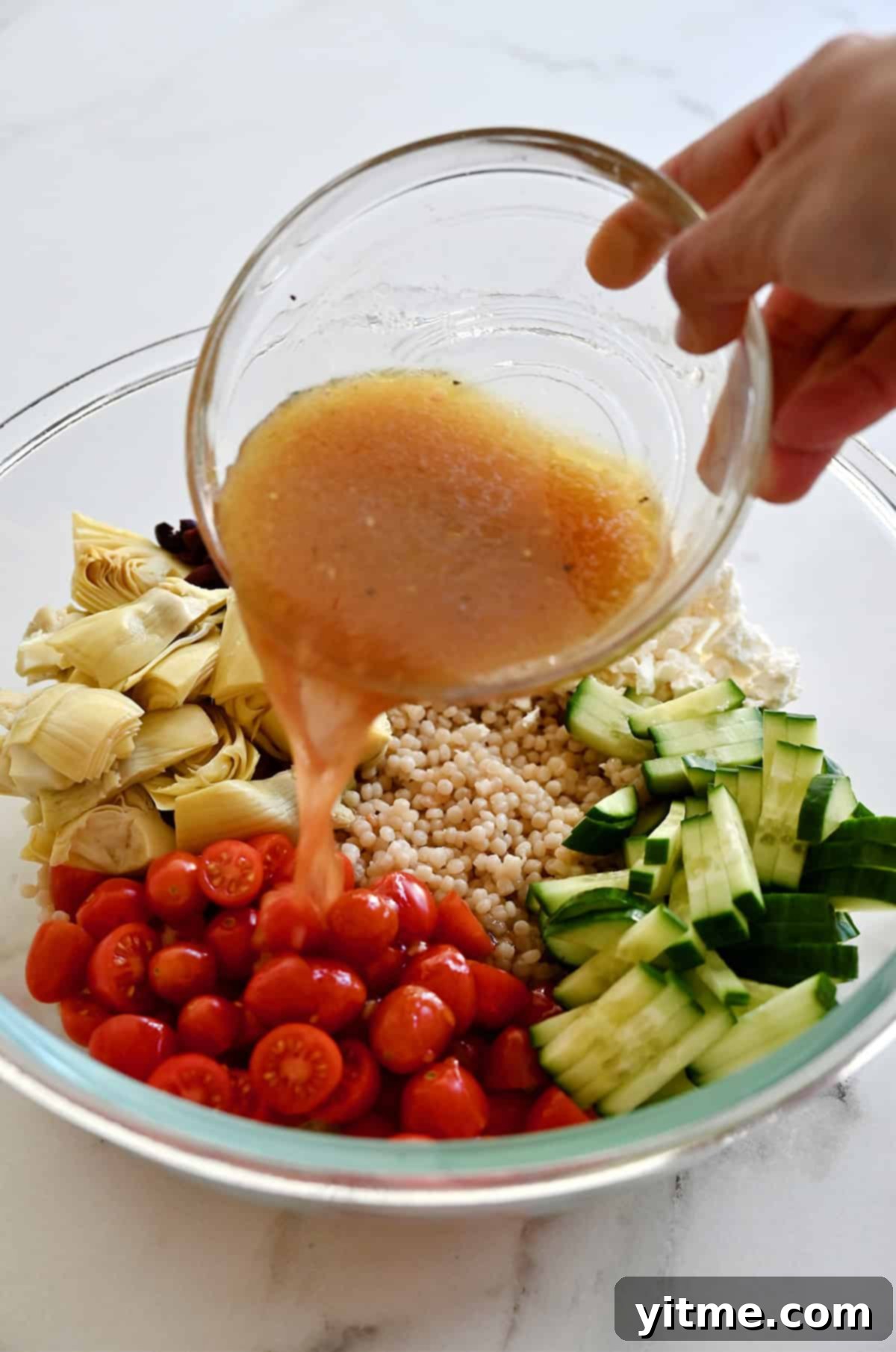
- Prepare the Vinaigrette. Begin by whisking together the red wine vinegar, fresh lemon juice, finely minced garlic, and sugar in a large mixing bowl. This bowl will serve double duty, as you’ll use it later to toss all the salad ingredients together, minimizing cleanup! Slowly drizzle in the extra-virgin olive oil while continuously whisking. This gradual addition is key to properly emulsifying the dressing, creating a smooth and cohesive sauce. Once combined, season with ½ teaspoon of kosher salt and ¼ teaspoon of freshly ground black pepper. Set the dressing aside; allowing it to rest while you cook the couscous gives the garlic time to mellow and infuse its wonderful flavor throughout the vinaigrette.
Kelly’s Note: Using the same large bowl for both making the dressing and tossing the salad is a clever trick to save yourself an extra dish to wash! Efficiency in the kitchen is always a win.
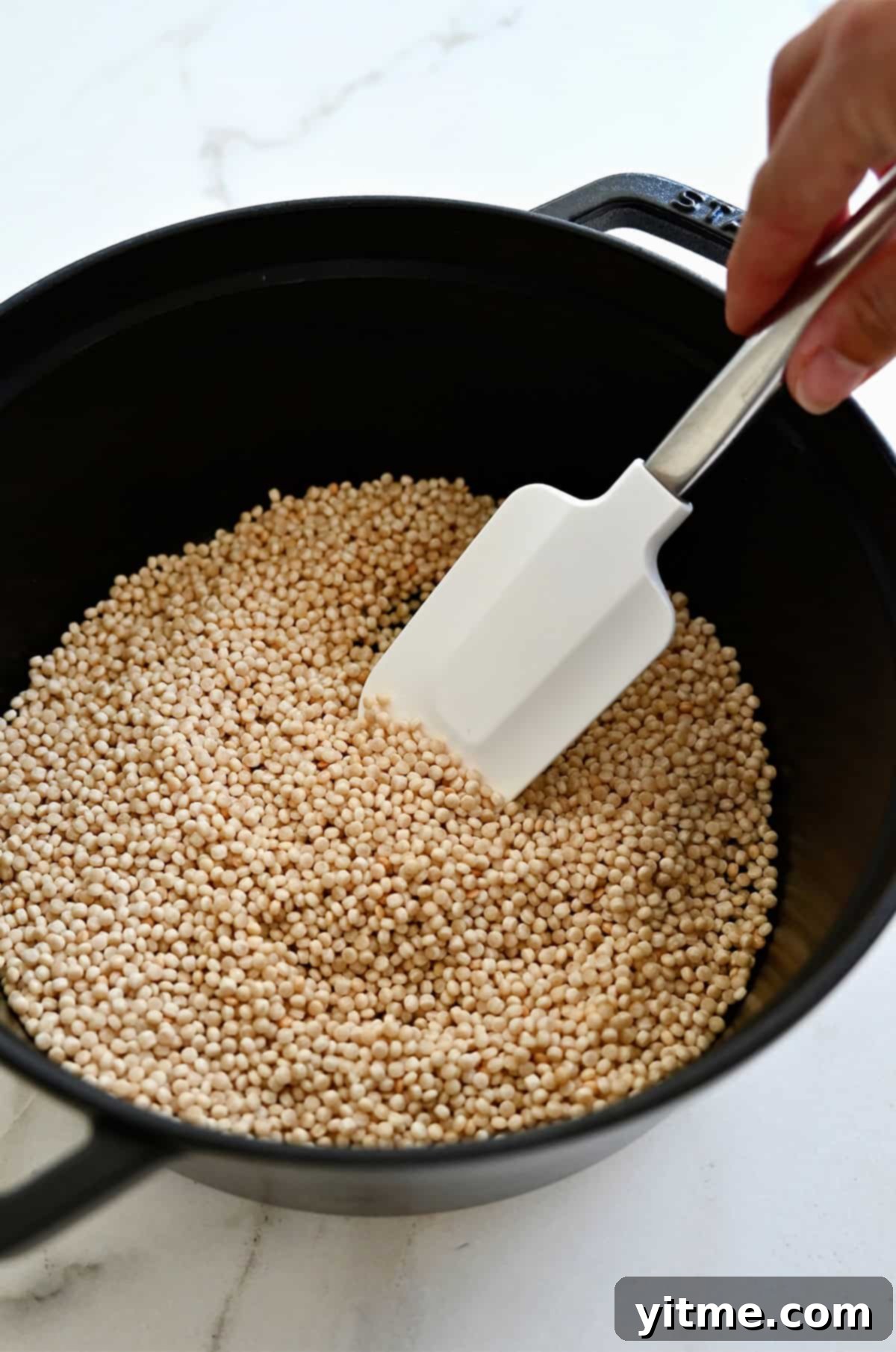
- Toast the Couscous. In a medium saucepan, heat 1 tablespoon of olive oil over medium heat. Once shimmering, add the dry pearl couscous. Cook the couscous, stirring frequently with a spatula or wooden spoon, for approximately 3 minutes, or until the tiny pearls turn a delicate, lightly golden color. This crucial toasting step isn’t just for appearance; it deepens the flavor profile of the couscous, imparting a lovely nutty depth that you’ll savor in every bite. It also helps the couscous maintain a firm, non-mushy texture even after it’s cooked and dressed.
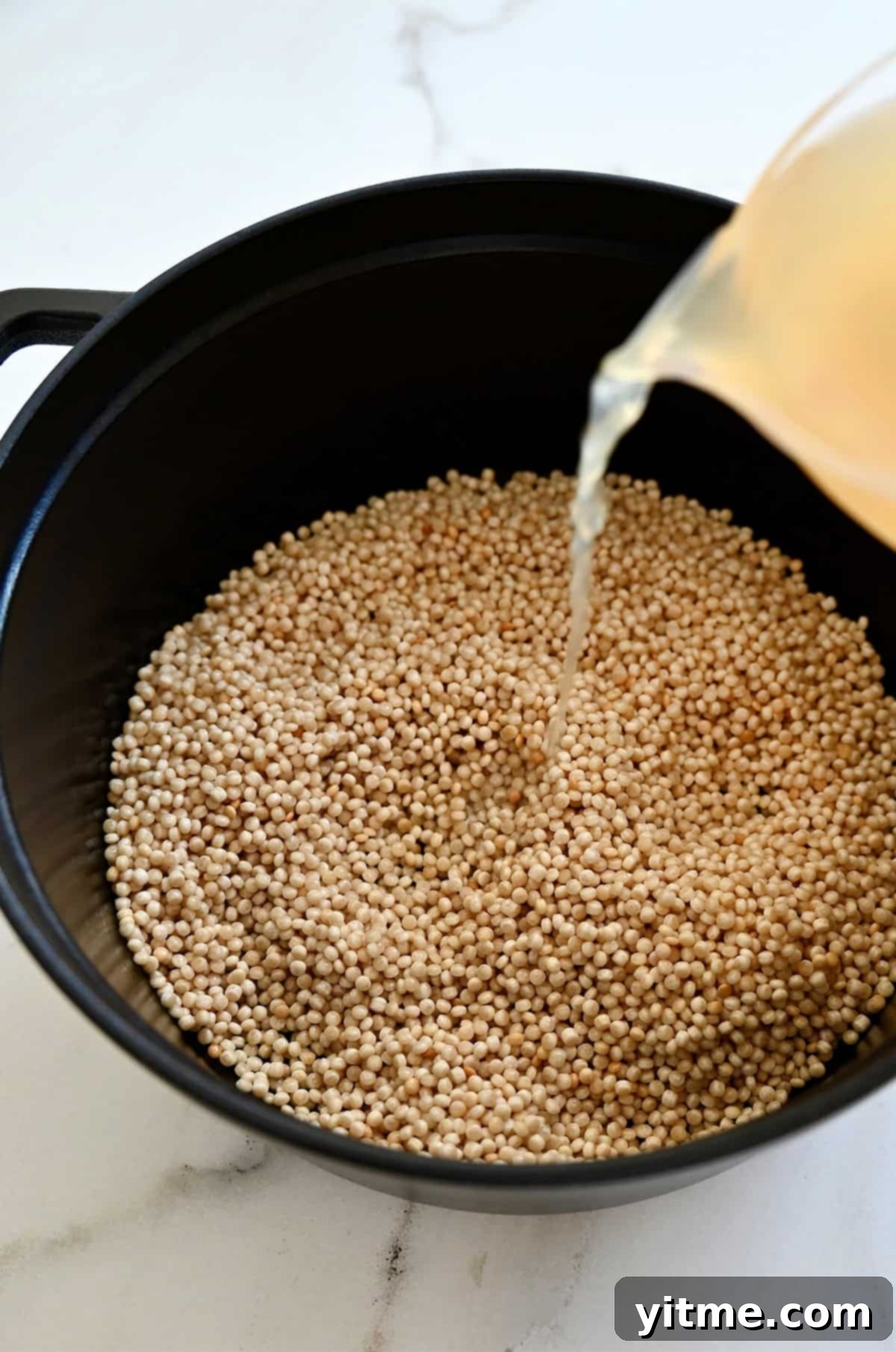
- Cook the Couscous. Once the couscous is lightly toasted, carefully pour in the chicken broth. Bring the mixture to a rolling boil, then immediately reduce the heat to a gentle simmer. Cover the saucepan tightly with a lid and allow the couscous to cook undisturbed for 8 to 10 minutes, or until it becomes tender and all the liquid has been fully absorbed. The couscous should be plump and soft, but still have a pleasant chew.
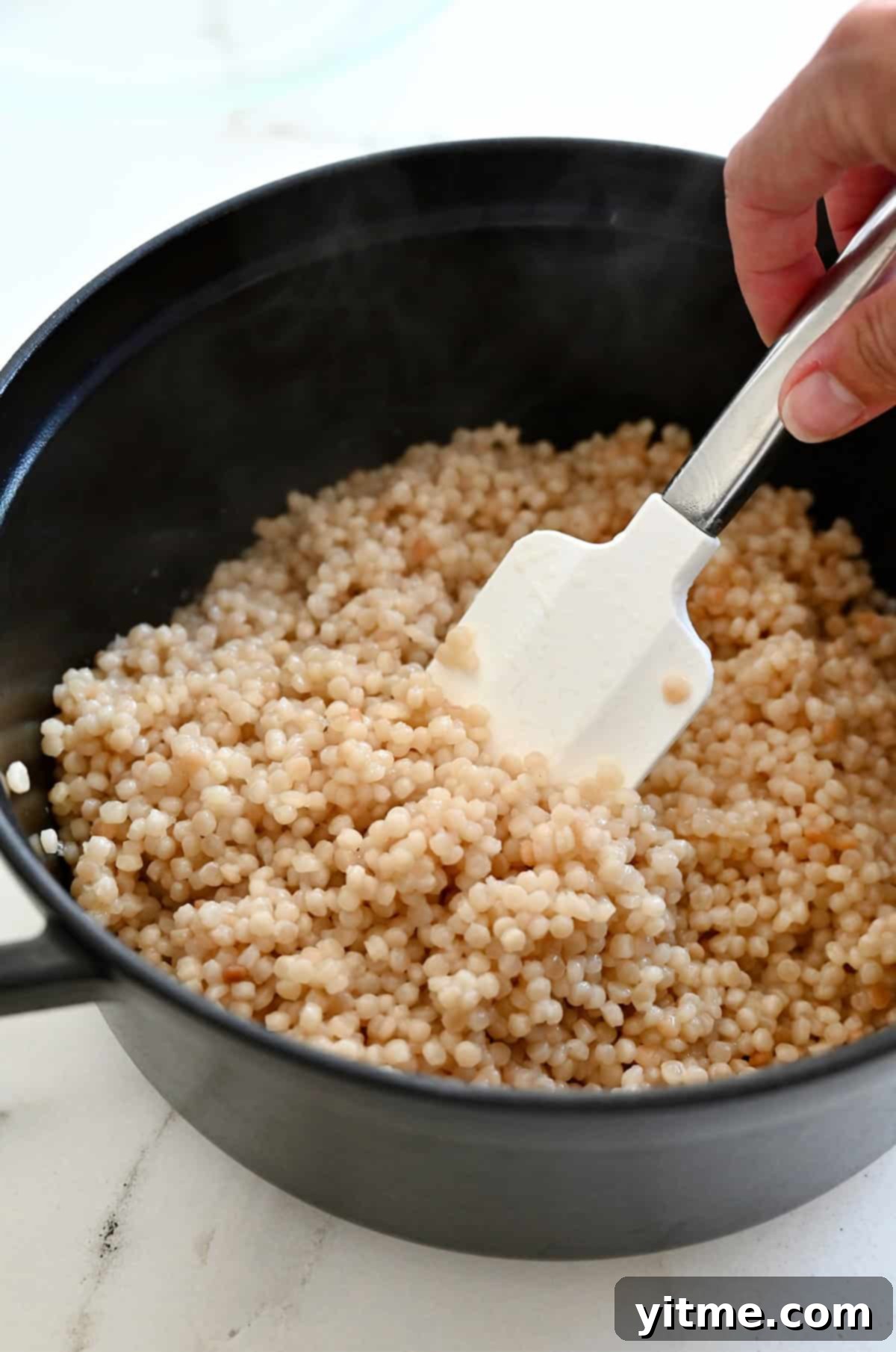
- Fluff and Cool. Once cooked, remove the saucepan from the heat. Use a fork to gently fluff the couscous, separating the pearls and releasing steam. It’s important to let the couscous cool for 5–10 minutes before you combine it with the other ingredients. This brief cooling period is vital; it helps prevent the feta cheese from melting into the warm couscous and ensures that your fresh vegetables remain delightfully crisp and vibrant, rather than becoming soft.
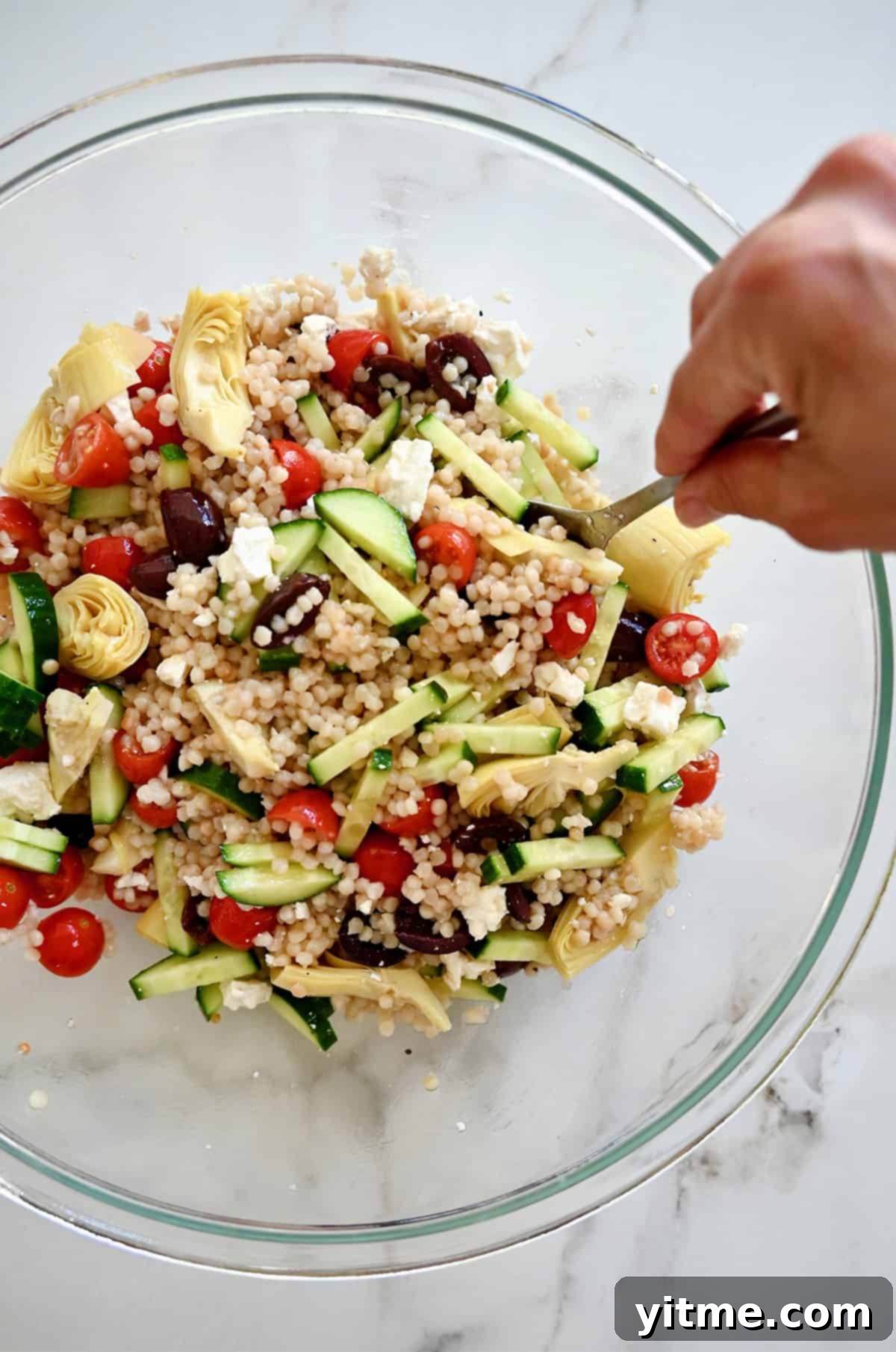
- Combine, Taste, Season, and Serve. Add the slightly cooled couscous to the large bowl with your prepared vinaigrette. Incorporate the diced tomatoes, cucumbers, sliced Kalamata olives, and chopped artichoke hearts. Toss everything gently but thoroughly to ensure every ingredient is beautifully coated in the tangy dressing. Finally, delicately fold in the crumbled feta cheese. Give your Mediterranean couscous salad a final taste test. This is your moment to adjust the seasonings to your preference: add more salt, black pepper, a squeeze of fresh lemon juice, or even an extra splash of olive oil if you desire.
This versatile salad is ready to be enjoyed immediately at room temperature, or you can pop it in the fridge to serve chilled later. Either way, its delicious flavors truly shine – and it holds up beautifully for several days, making it an excellent choice for meal prep throughout the week or for effortless make-ahead entertaining when you have guests.
Variations
One of the best things about this Mediterranean couscous salad is its incredible adaptability! Once you have the flavorful base down, it transforms into an endlessly customizable dish. Think of it as your flavorful blank canvas, ready for you to add your personal touch and creativity. Here are a few simple swaps and exciting add-ins to make this salad uniquely your own and keep things fresh:
- Add protein: Easily transform this side dish into a hearty main course by incorporating your favorite protein. Succulent grilled chicken (or try my speedy stovetop chicken recipe!), tender steak strips, juicy shrimp, or even a can of high-quality tuna or salmon (drained and flaked) all work wonderfully. For a fantastic meatless option that’s rich in plant-based protein, simply toss in a rinsed and drained can of chickpeas – they add great texture and satiety.
- Mix-ins to try: Broaden the flavor and texture profile with additional fresh ingredients. Consider finely diced red onion for a pungent kick, sun-dried tomatoes (either oil-packed or rehydrated) for concentrated sweetness, colorful bell peppers (red, yellow, or orange) for crunch and mild sweetness, or fresh herbs like bright parsley, aromatic basil, or cooling mint for an extra layer of freshness. For an added textural contrast and nutty flavor, a handful of toasted pine nuts or slivered almonds makes a superb addition.
- Switch up the cheese: While feta is traditional and beloved, don’t hesitate to experiment with other cheeses. Crumbled goat cheese offers a milder tang and creamier texture, mini mozzarella balls (bocconcini) provide a soft, milky counterpoint, shaved Parmesan adds a sharp, salty depth, or even pan-fried or grilled halloumi cheese brings a delightful squeaky texture and salty flavor.
Ultimately, this is truly a “clean-out-the-fridge” kind of salad in the absolute best way – so don’t be afraid to get creative and tailor it to whatever fresh ingredients you have on hand!
Make-Ahead & Storage Tips
This Mediterranean couscous salad is a dream for meal preppers and entertainers alike, thanks to its excellent make-ahead potential and robust storage capabilities. Prepare it in advance to save time and enjoy its flavors throughout the week.
- Make-ahead: One of the greatest advantages of this salad is its suitability for advance preparation. You can assemble the entire salad, including the dressing, up to 1 day before you plan to serve it. This allows the flavors to meld beautifully, often making the salad even more delicious. Store it securely in an airtight container in the refrigerator. For optimal texture and presentation, I personally prefer to add the crumbled feta cheese just before serving; this keeps it from becoming too soft or dissolving into the dressing.
- Storage: Any leftover Mediterranean couscous salad will keep wonderfully in an airtight container in the fridge for 3 to 4 days. If, after chilling, the salad appears a little dry or needs a refresh, simply stir in an extra splash of good quality olive oil or a squeeze of fresh lemon juice. This simple trick will bring back its vibrant moisture and zing, making it taste freshly made again.
Serving Suggestions
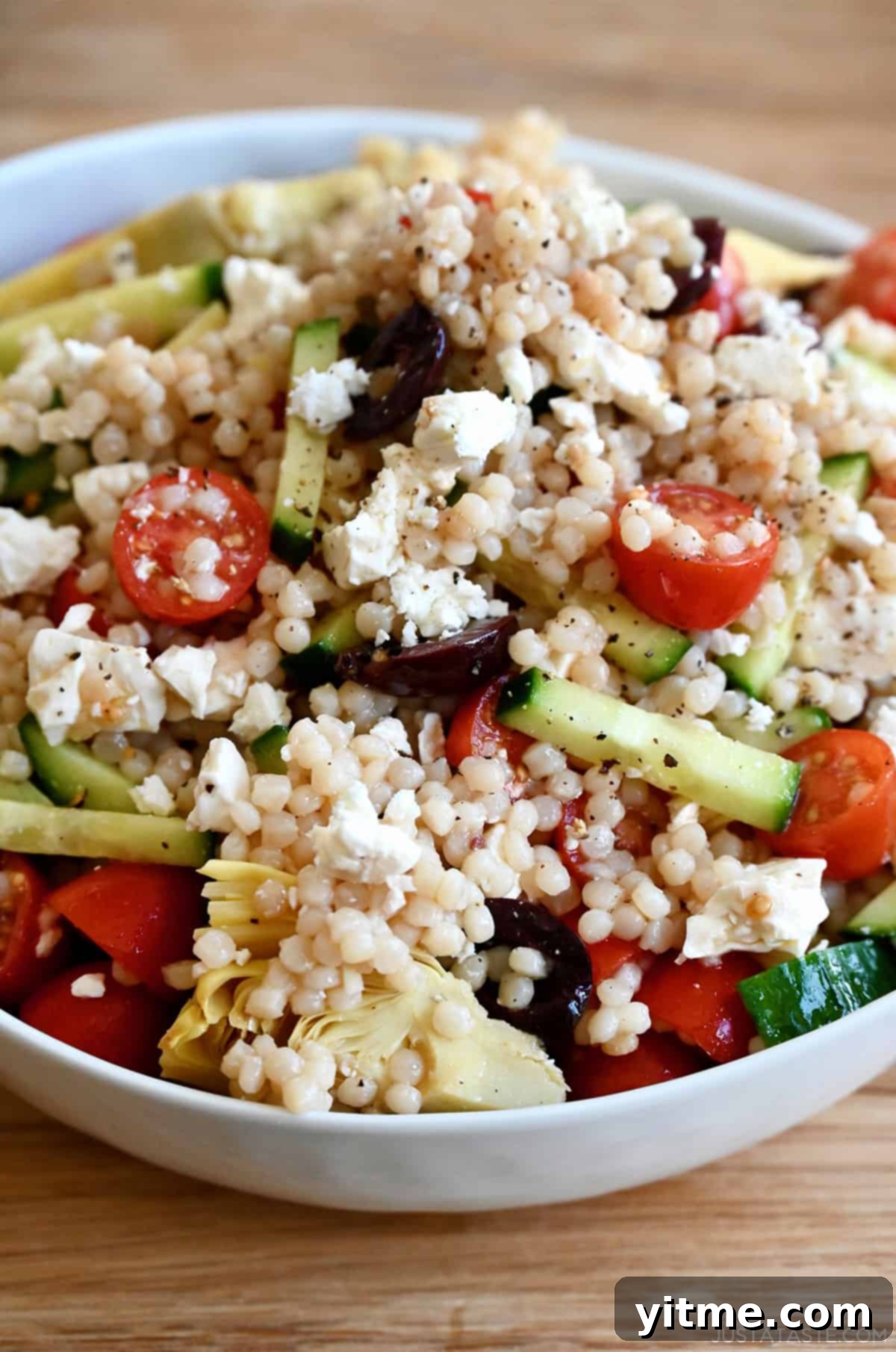
This versatile Mediterranean couscous salad truly shines in a multitude of culinary roles. It can easily stand alone as a satisfying and healthy light lunch or a delightful vegetarian main course. However, it’s also an absolute star player on any summer table, acting as the perfect complement to a variety of dishes. Here are some of my favorite ways to serve it:
- With Dips and Breads: Pair it with creamy green goddess avocado hummus or classic chickpea hummus, alongside warm, fluffy pita bread or crispy pita chips for a delightful mezze platter experience.
- Mediterranean Mains: It’s an ideal accompaniment to other Mediterranean-inspired dishes such as crispy homemade falafel, flavorful lamb kebabs, or tender chicken souvlaki.
- Grilled Proteins: This salad is a superb side for anything fresh off the grill. Think perfectly grilled chicken breasts, juicy pork tenderloin made with my go-to pork marinade, grilled fish like salmon or swordfish, or even succulent shrimp skewers.
- Summer Staples: It complements classic summer fare like veggie burgers, grilled halloumi, or a simple grilled steak.
- Light & Refreshing Pairings: For an exceptionally refreshing meal, serve it alongside a chilled soup such as bright gazpacho, creating a harmonious balance of temperatures and flavors.
Its vibrant flavors and textures make it a welcome addition to almost any meal, effortlessly enhancing your dining experience.
More Summer Salads to Try
If you love the fresh, vibrant flavors of this Mediterranean couscous salad, you’re in for a treat! Summer is the perfect season for light, refreshing, and flavorful salads, and there are countless delightful options to explore. Here are some more of my favorite summer salad recipes that are sure to impress and keep your meal planning exciting:
- Greek Cucumber Tomato Salad: A classic, simple, and incredibly fresh salad bursting with garden flavors.
- Greek Tortellini Pasta Salad: A heartier pasta salad featuring cheese tortellini and a zesty Greek dressing.
- Zucchini Pasta Salad: A creative and light pasta salad perfect for using up fresh summer zucchini.
- Melon Salad with Basil Vinaigrette: A surprisingly refreshing and sweet-savory combination, ideal for a hot day.
- Classic Macaroni Salad: The ultimate nostalgic side dish, creamy and comforting.
- Quinoa Salad with Warm Goat Cheese: A sophisticated and hearty salad featuring earthy quinoa and tangy warm goat cheese.
Craving even more delicious inspiration? Subscribe to Just a Taste to get new, exciting recipes, carefully curated meal plans, and a delightful newsletter delivered straight to your inbox! And be sure to stay connected with us on social media: follow us on Facebook, TikTok, Pinterest and Instagram for all of the latest updates, behind-the-scenes glimpses, and culinary adventures.
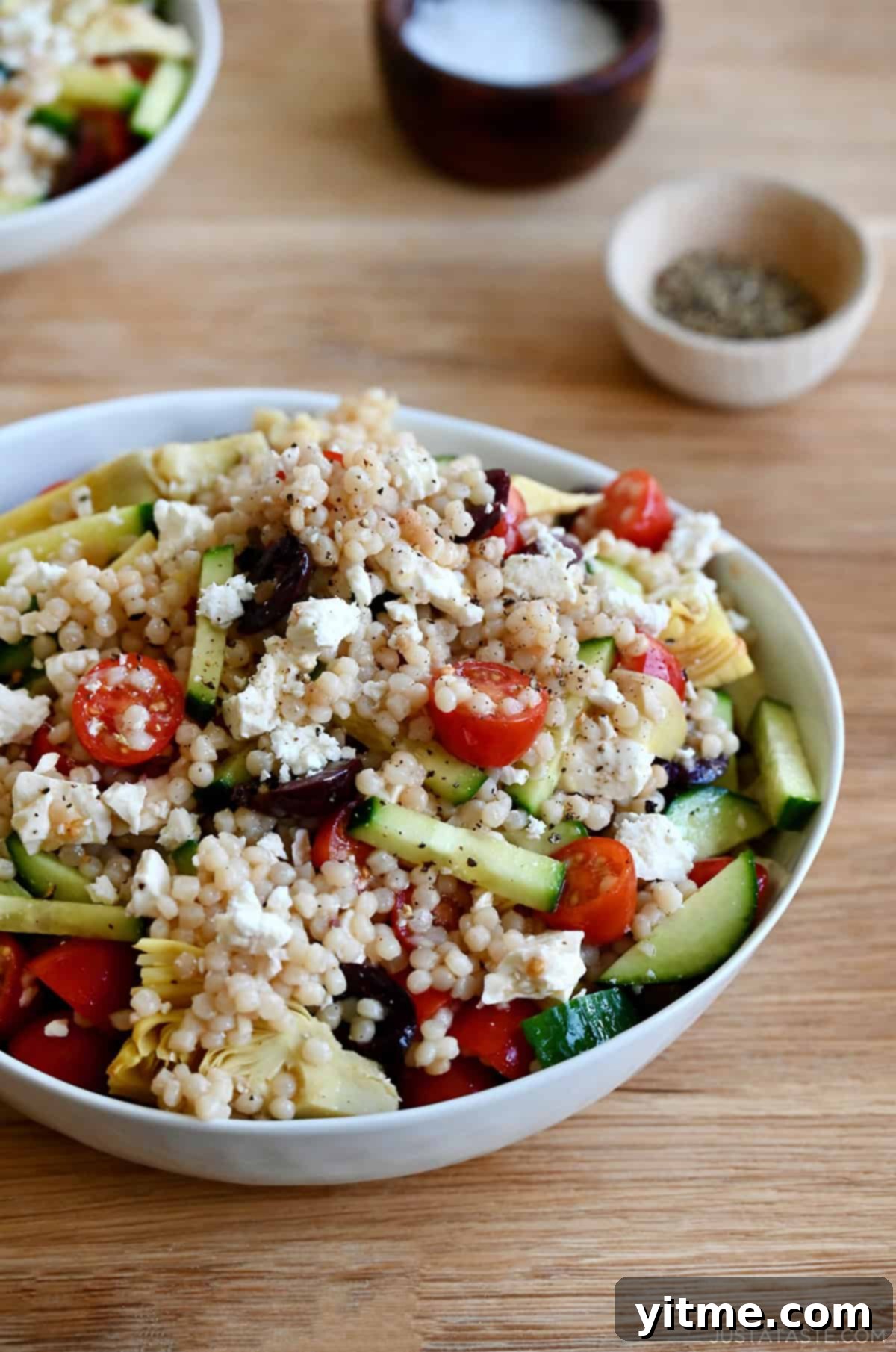
Mediterranean Couscous Salad
Ingredients
For the Zesty Red Wine Vinaigrette:
- 1/3 cup red wine vinegar
- 1 Tablespoon fresh lemon juice
- 1 1/2 teaspoons minced garlic
- 1 1/2 teaspoons granulated sugar
- 1/4 cup extra-virgin olive oil
For the Couscous Salad:
- 1 Tablespoon extra-virgin olive oil
- 2 cups pearl couscous (Israeli couscous)
- 2 cups chicken broth (or vegetable broth for vegetarian)
- 1 cup diced tomatoes (cherry or grape, halved)
- 1 cup diced cucumbers (Persian or English preferred)
- 1/2 cup sliced Kalamata olives (pitted)
- 1 (13.75-oz.) can quartered artichoke hearts, drained and roughly chopped
- 2/3 cup crumbled feta cheese (from a block in brine for best flavor)
Instructions
Make the Dressing:
- In a large mixing bowl (which you’ll use later for the entire salad), whisk together the red wine vinegar, lemon juice, minced garlic, granulated sugar, and extra-virgin olive oil. Season the dressing with ½ teaspoon of kosher salt and ¼ teaspoon of freshly ground black pepper. Set this zesty vinaigrette aside to allow the flavors to meld.
Prepare the Couscous:
- In a medium saucepot, heat 1 tablespoon of extra-virgin olive oil over medium-low heat. Add the pearl couscous to the pot and cook, stirring occasionally, for about 3 minutes, or until the couscous pearls are lightly toasted and fragrant. This step significantly enhances their nutty flavor.
- Pour in the chicken broth, then bring the mixture to a boil. Once boiling, reduce the heat to a gentle simmer, cover the saucepan tightly with a lid, and cook until the couscous is tender and all the liquid has been absorbed, typically 8 to 10 minutes.
- Remove the pot from the heat. Use a fork to gently fluff the cooked couscous, then allow it to cool slightly for about 5-10 minutes. This cooling period is important to prevent the feta from melting and to keep the vegetables crisp. Once cooled, transfer the couscous to the large bowl with the dressing, along with the diced tomatoes, cucumbers, sliced Kalamata olives, and chopped artichoke hearts. Stir everything gently to combine, ensuring the dressing evenly coats all ingredients. Finally, delicately fold in the crumbled feta cheese just before serving.
Kelly’s Notes
- This Mediterranean couscous salad is incredibly versatile. Feel free to customize it with your favorite ingredients, such as finely diced red onion for a sharper bite, canned chickpeas for added protein and fiber, or sweet sun-dried tomatoes for concentrated flavor.
- This salad is wonderfully adaptable and can be served either chilled straight from the refrigerator or at comfortable room temperature, depending on your preference and the occasion.
- Make-ahead Tips: For optimal convenience, you can fully prepare the entire salad, including whisking together the dressing, up to 1 day in advance of serving. Store it in an airtight container in the refrigerator to allow the flavors to deepen. For the freshest texture and appearance, I recommend adding the crumbled feta cheese just before you plan to serve the salad.
- Storage: Any remaining leftovers of this delicious salad will keep perfectly well when stored in an airtight container in the fridge for 3 to 4 days. If you find that the salad appears a little dry after being chilled, simply stir in an extra splash of olive oil or a squeeze of fresh lemon juice to refresh its moisture and brighten its flavors.
- ★ Did you make this recipe? Don’t forget to give it a star rating below and leave a comment sharing your experience!
Nutrition
Did you try this delicious and easy recipe?
We’d love to hear your thoughts! Please leave a comment below with your star rating and share your experience with this Mediterranean Couscous Salad!